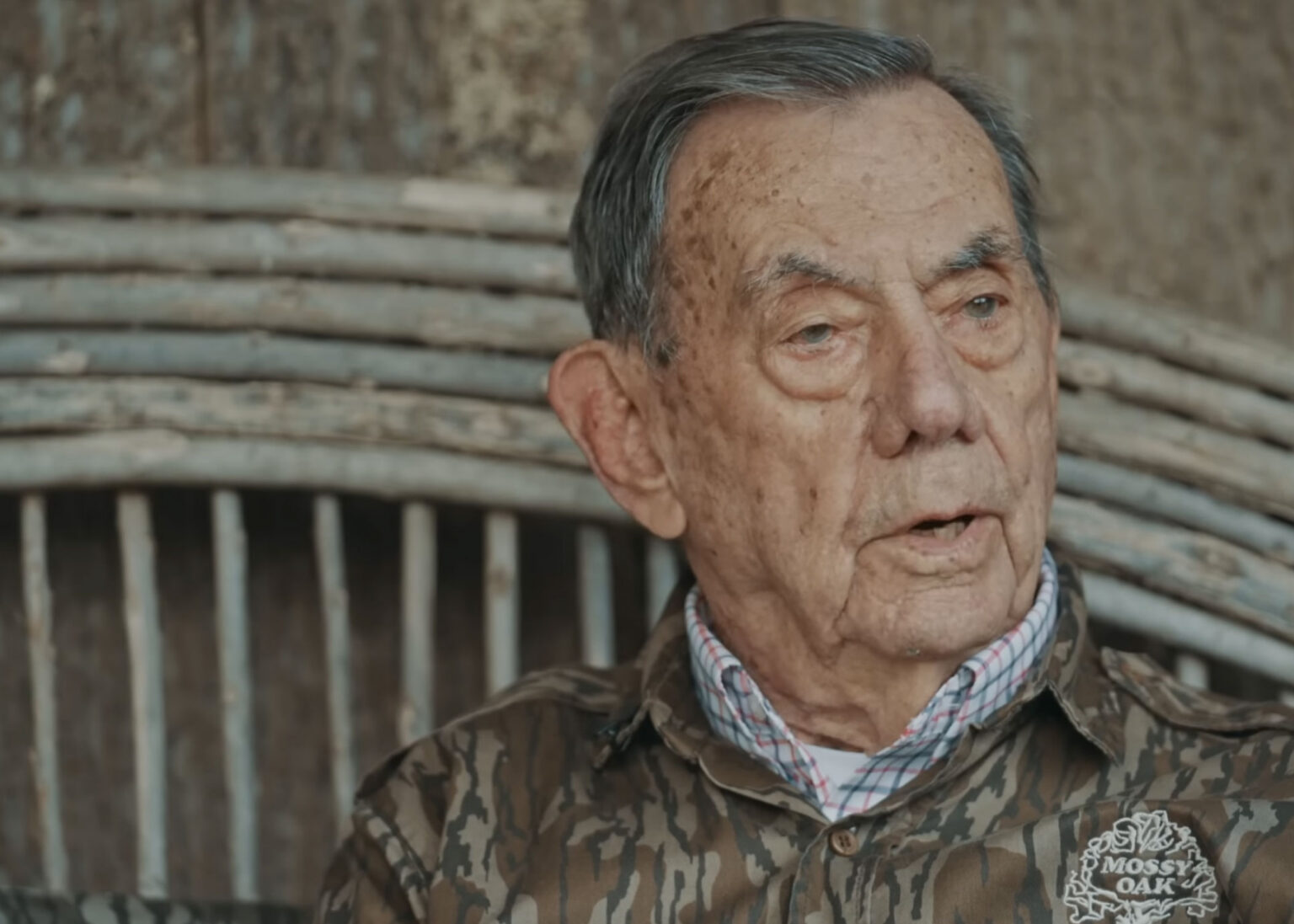
When Colonel Tom Kelly was born in 1927, wild turkeys were a rare site. By the time he killed his first turkey in the swamps around Mobile, Alabama at age 11, the iconic game birds were all but winking out in the Southeast. During his lifetime, though, wild turkeys became one of the greatest wildlife conservation success stories North America has ever seen—thanks in no small part to Tom Kelly’s efforts.
The author of 30 books and numerous articles, some that graced the pages of Field & Stream, Kelly passed away on October 3. He was 99 years old.
Kelly was a self-taught writer and a true southern gentleman with a flair for oral story telling, his daughter, Laura Bates, tells F&S. He enlisted in the Navy at age 17 during World War II and then re-joined as an Army Artillery Officer during the Korean War. When he returned home to Alabama, he went to work as a forester for a local paper company.
“The work gave him a great sense of the land,” Bates says. “And I think it fed into what he called his lifelong ‘compulsion’ for hunting turkeys. He really understood the woods very well.”
Kelly self published his first book, Tenth Legion, at age 46. More than 50 years later, it is still considered the seminal text on turkey hunting culture. “I remember him sitting at a little card table tapping it out on an old typewriter in our guest bedroom,” Bates recalls. “The first run was for 555 copies. He always said that if it didn’t sell, at least he’d have a lifetime worth of Christmas presents to hand out.”
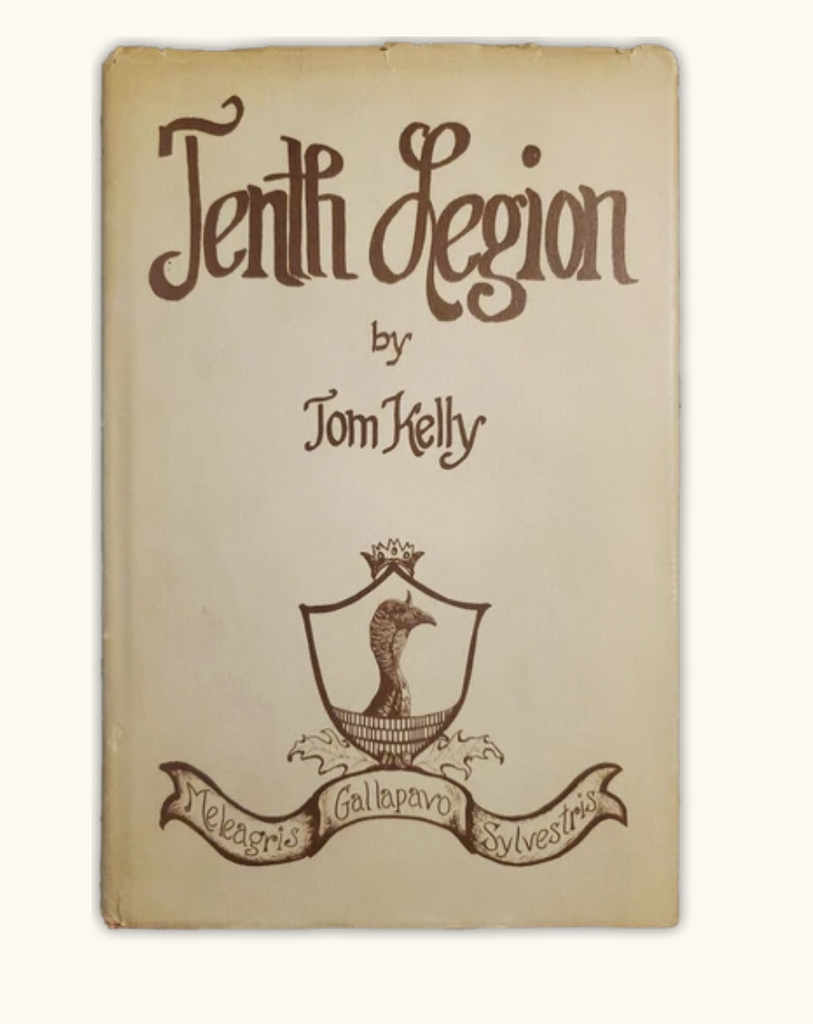
Despite his doubts, Kelly’s book quickly gained traction. When a local outdoorsman began bootlegging Xeroxed copies, he formed Spur Enterprises and printed another 1,000 copies in 1974.
It inspired turkey hunters at a time when the birds themselves were on the verge of a comeback. The National Wild Turkey Federation was formed in 1973, the same year that Kelly self published his first copies. And state wildlife agencies were engaged in capture-and-release efforts that would bring huntable populations back to the entire country.
“It’s been called the Bible of turkey hunting,” Bates says. “It’s as much about the mindset and philosophies of turkey hunters as it is about hunting turkeys—how people think and act and feel when they’re hunting turkeys.”
Bates’ description of her father’s book comes through in one of its most-quoted passages. “The first turkey that ever came to me on the ground did it a long time ago,” Kelly wrote in the book’s final chapter. “I sat there with my hands shaking and my breath short and my heart hammering so hard I could not understand why he could not hear it. The last turkey that came to me last spring had exactly the same effect, and the day that this does not happen to me is the day that I quit.”
Kelly didn’t quit hunting completely until after the spring of 2023, when he was just a few days shy of his 96th birthday. He killed his last gobbler that April alongside friends from Mossy Oak and Bates, who he taught to turkey hunt when she was a young girl.
“It was cold, and we had him bundled up with heavy jackets and blankets in the blind,” Bates remembers. “Eventually, turkeys came in from our right and walked right in front of him. He held his aim for a long time and then, boom, one of them went down. He still had it, even at 96. It’s a morning I’ll relish forever.”
All new! 1871 Club Field Trips