We may earn revenue from the products available on this page and participate in affiliate programs. Learn more
My archery targets are my most-used pieces of gear by far. Each year, I test no less than seven new compound bows, 10 new types of arrows, and more broadheads than I can count. With all the shooting that this testing routine requires, I go through targets like water.
Because I’m using so many of them, it’s easy to pinpoint the top six in terms of shootability, durability, and overall target performance. These are quality targets that allow me to field-test field points and broadheads alike, and I’m confident that any one of them would provide you with seasons of no-fail use. Here are the pros and cons of each so you can decide which one is right for your shooting regimen.
- Best Overall: Block Infinity 22″
- Best 3D: Delta McKenzie Big Daddy QuivAR Buck
- Best Cube: Rinehart RhinoBlock XL
- Best Bag: Morrell Yellow Jacket MOD Pro
- Best Budget: Morrell Yellow Jacket Swarm
- Best for Travel: Morrell High Roller Foam
Best Overall: Block Infinity 22″
best overall
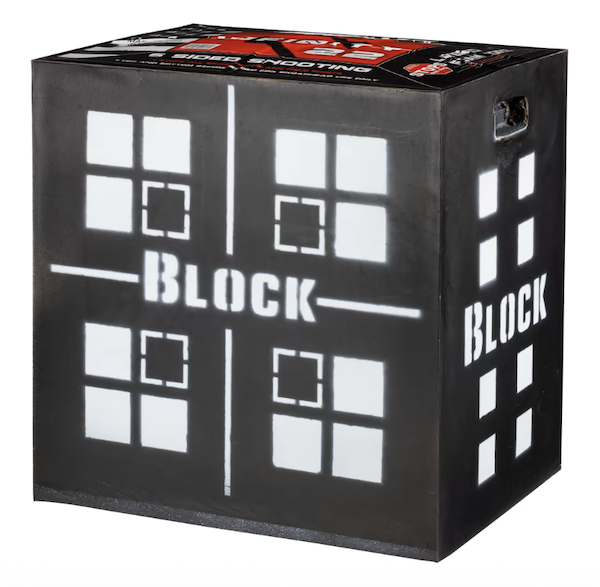
Block Infinity 22″
Pros
6-sided shooting
Stops field points and broadheads
Foam rated to 500 fps
Easy arrow removal
Cons
Outer foam pulls away over time
Specs
Materials: PolyFusion layered foam
Weight: 24 lbs
Dimensions: 22″ x 22″ x 22″
Each year, I test a number of new bows, arrows, broadheads, bow sights, rests, and releases. All of these field tests have one thing in common: They all require the shooting of arrows—lots of them—into targets.
My number one go-to is Block’s Infinity 22″. Block also offers this six-sided square target in a 20-inch model, but I highly recommend the extra two inches. The target is ideal for close and long-range shooting, and I appreciate that each side features different graphics. From deer vitals to solid/open square clusters and single squares, there’s a lot you can do with Block’s Infinity 22″.
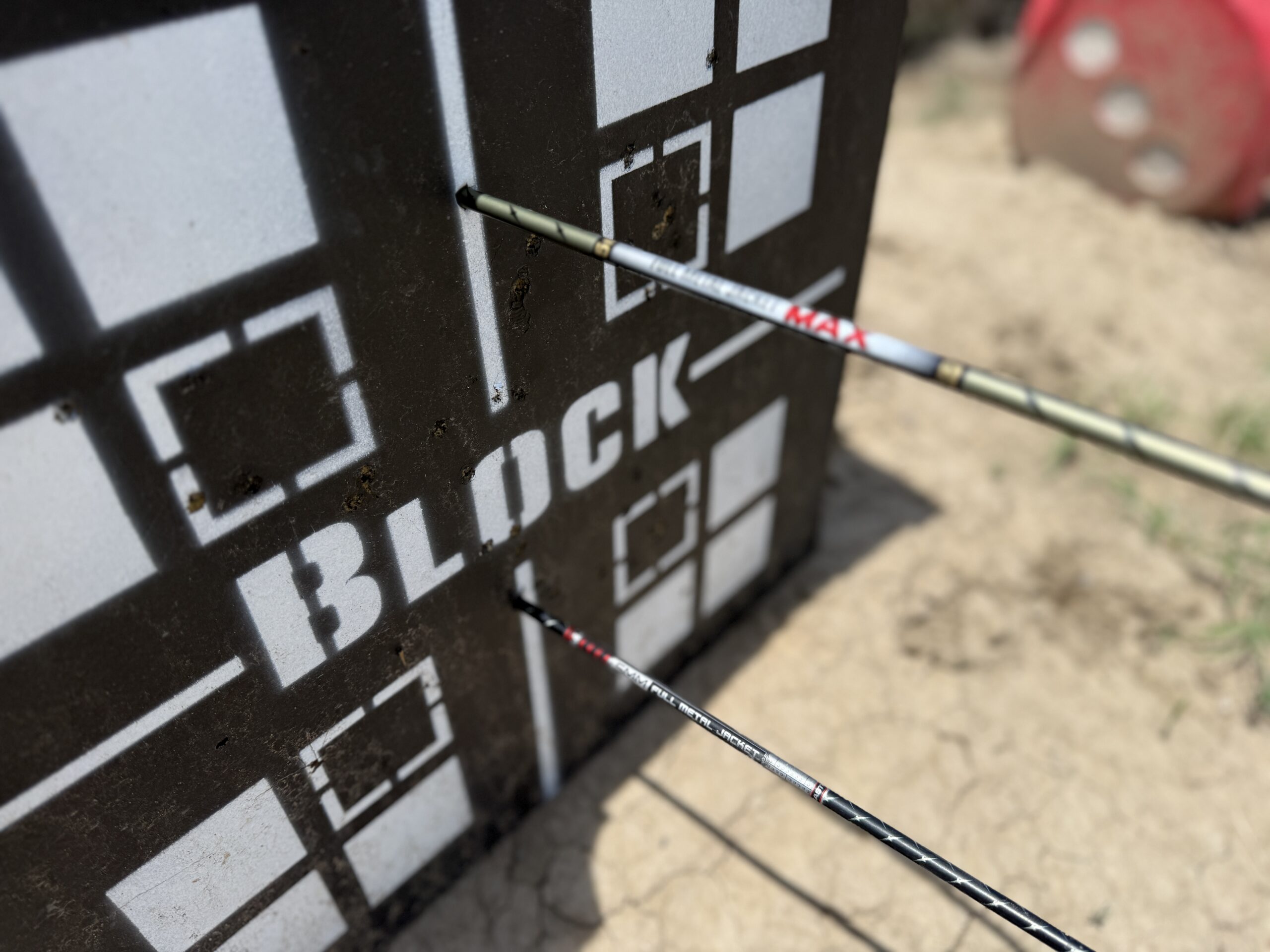
I don’t cover my targets. They stay out in the heat, snow, and rain, and Block’s Infinity 22″ holds up. I shoot the target with field points and every type of broadhead on the market, and the high-density layered foam inner core, with an exterior foam that delivers maximum stopping power, means these targets will take severe abuse. It’s important to note, however, that large-cut mechanicals and fixed-blade broadheads—especially those with offset blades—will reduce this target’s life more quickly.
Best 3D: Delta McKenzie Big Daddy QuivAR Buck
best 3d
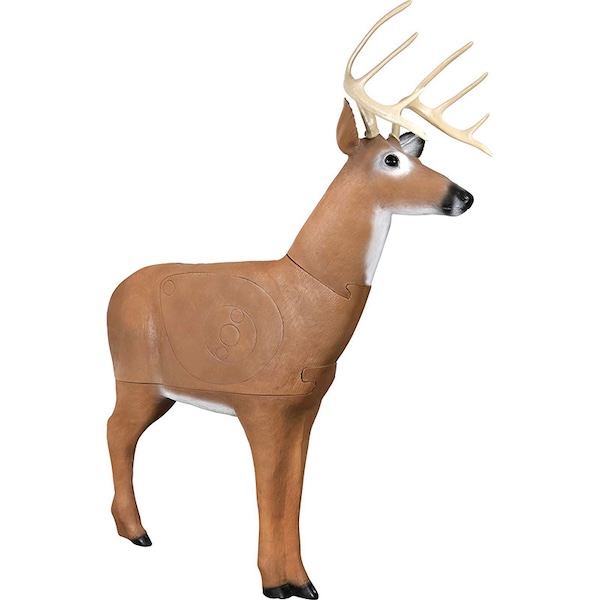
Delta McKenzie Big Daddy QuivAR Buck
Pros
Actual size of a mature whitetail buck
Stops field points and broadheads
Anatomically correct view of the vitals and bone structure
Easy arrow removal
Cons
- Could use a better antler system
Specs
Materials: Self-healing foam
Weight: Heavy
Dimensions: 41″ x 48″ x 54″
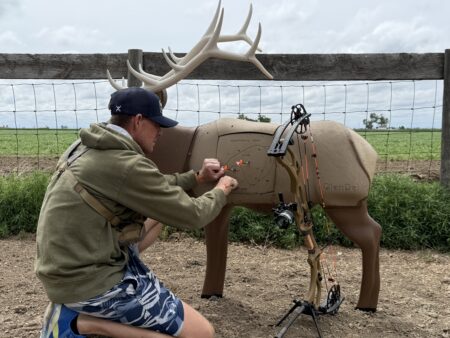
My favorite 3D archery target last year—and one I shoot a lot—is Delta MCKenzie’s Big Daddy QuivAR Enabled Buck target. With scoring rings on one side and a small circle over the heart on the other, this target is life-size and ultra durable, and the 100 percent self-healing foam is remarkable. I’ve shot this target with field points, fixed-blade, mechanical, and hybrid broadheads, and it stops them all.
What I love most about the target is the integrated QuivAR chip. Download the QuivAR app, scan the chip located in the target’s rear, and get exact digital anatomy to see exactly where your arrow hits. Better yet, the app lets you add or remove bone structure and organs. The app’s scan feature is 360 degrees so that you can scan the target’s anatomy from all sides, including the top and bottom.
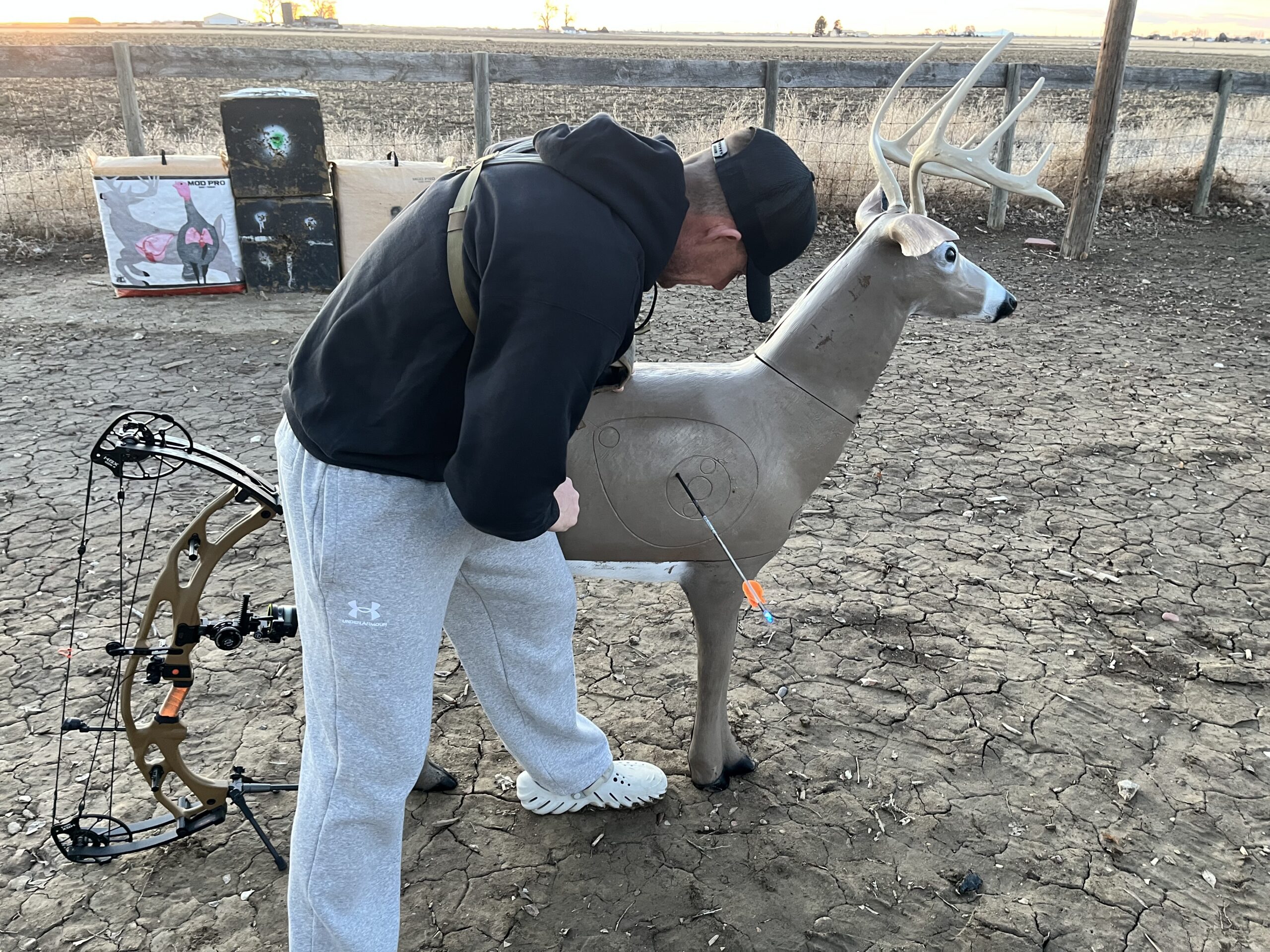
This ultra-realistic target came in handy last fall when I made a marginal shot. I used the video I took of the arrow’s actual placement in the animal, then came home and shot the target in the same place. The target’s vitals are extremely accurate, and I was confident I caught the liver. I did, and I recovered that buck.
Like all Delta McKenzie 3-D targets, the Big Daddy QuivAR Enabled 3D is a blast to shoot, allows for easy arrow removal, and after 360 days in the field, my QuivAR chip still works like a charm.
Best Cube: Rinehart RhinoBlock XL
best cube
Rinehart RhinoBlock XL
Pros
Amazing self-healing foam
Stops field points and broadheads
Rope carry handle
Easy arrow removal
Cons
- Pricey
Specs
Materials: Self-healing, replaceable foam inserts
Weight: 17 lbs
Dimensions: 18″ x 18″ x 13″
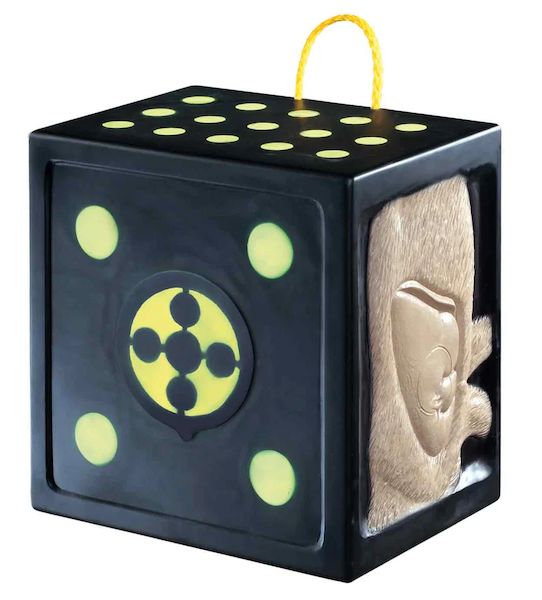
It’s hard to beat Rinehart’s self-healing foam, and now, with replaceable solid foam inserts available, you can always have one on the sidelines that’s ready to come in and save the day. An excellent target for any range or any trip, I like the tan deer-vital side, and the individual dots in various sizes let you dial in at short and long distances.
I’m not a big fan of targets with only small and large circles or squares. For some shooters, me included, smaller, more precise dots are excellent at 20 and 30 yards, but larger dots help with aiming beyond 30 yards. The target’s durability is impressive, and it will handle field points and all types of broadheads. Plus, arrows pull from this target like butter. The target is 100 percent weatherproof, and the paint doesn’t fade even after a year in the hot sun.
Best Bag: Morrell Yellow Jacket MOD Pro
best bag
Morrell Yellow Jacket MOD Pro
Pros
Replaceable shooting wraps
Rated to 435 fps
E-Z tote carry handle
Cons
Weather takes its toll
Arrows with oversized outserts make arrow removal difficult
Specs
Materials: Polypropylene
Weight: 56 lbs
Dimensions: 29″ x 13″ x 31″
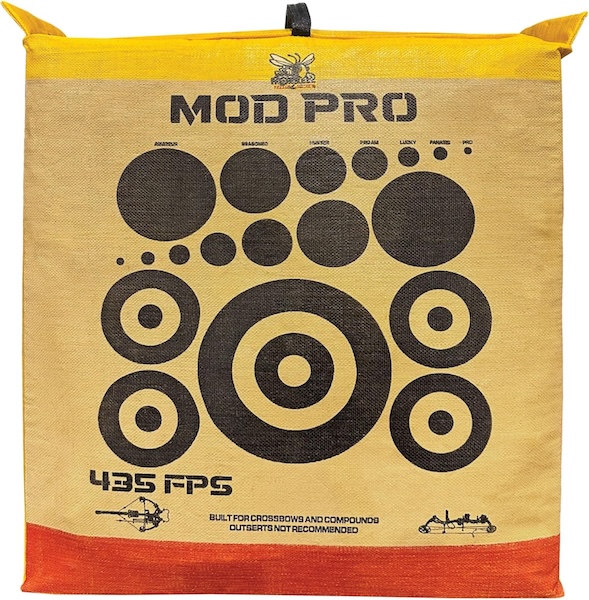
Morrell owns the bag target space, and its MOD Pro with replaceable target wraps is the best I’ve found. It’s big enough to be a range target, but not too big to take on trips. It’s also the best target I have found for tuning a bow, especially with the included MOD Pro Tuning + Precision wrap, which has elevation and horizontal lines every 1/2-inch in a scope-style reticle pattern.
The target also has dots and squares in sizes of 1/2-, 3/4-, and 1-inch, as well as blank squares. This wrap reduces sight-in time, and while the wraps are weatherproof, you don’t want to leave the actual target out in the weather.
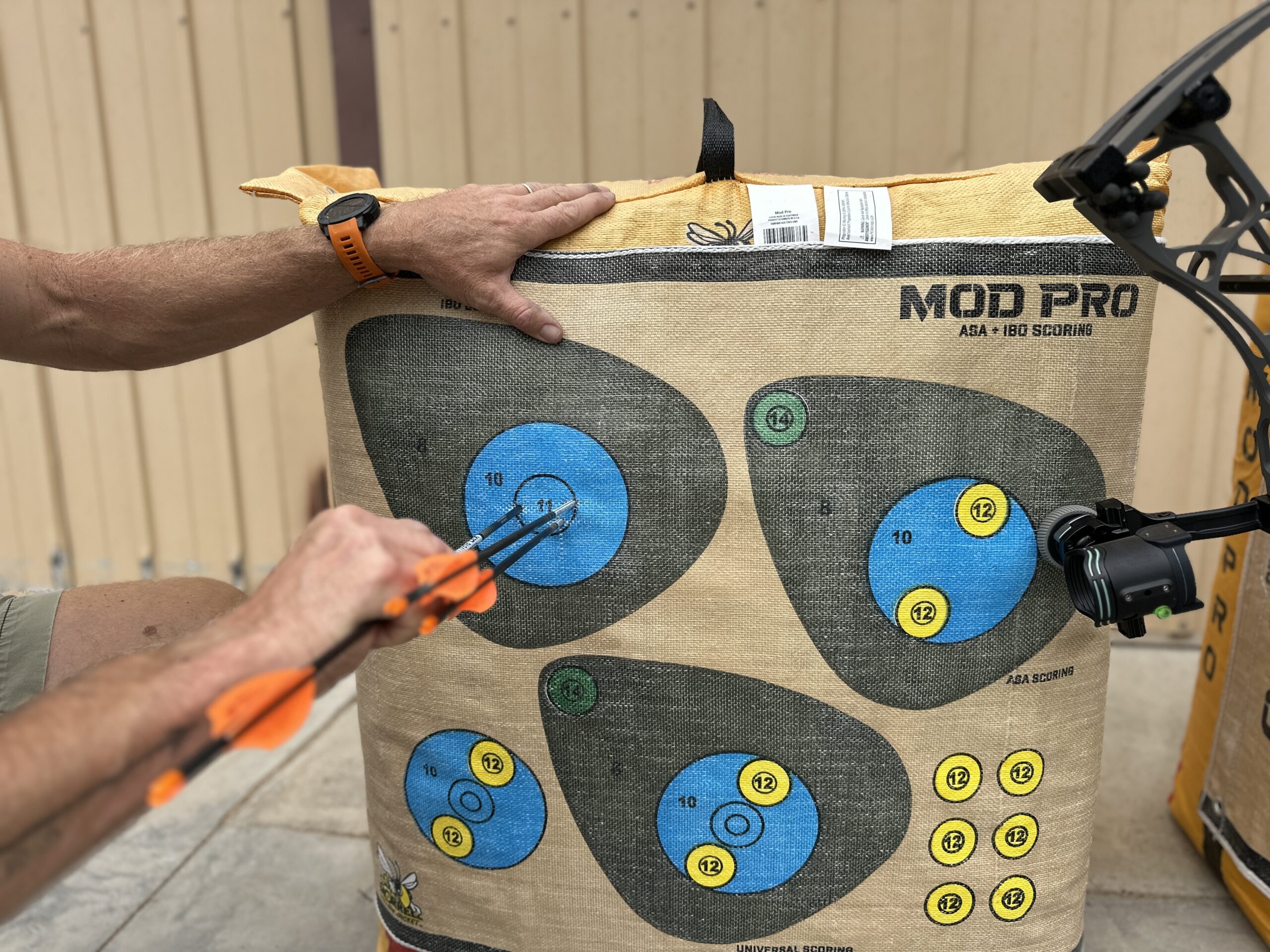
This target stops arrows dead. However, it’s not recommended for arrows with an outsert that is larger than the arrow’s diameter. Still, I shoot my Easton Half-Out inserts into the target all the time, and I’ve yet to have to get out the X-acto knife and start cutting.
Best Budget: Morrell Yellow Jacket Swarm
best budget
Morrell Yellow Jacket Swarm
Pros
Two-sided shooting
Rated to 335 fps
38 layers of stopping power
Cons
Arrows with oversized outserts make arrow removal difficult
Don’t shoot groups into the same spot
Specs
Materials: Polypropylene
Weight: 19 lbs
Dimensions: 20″ x 11″ x 20″
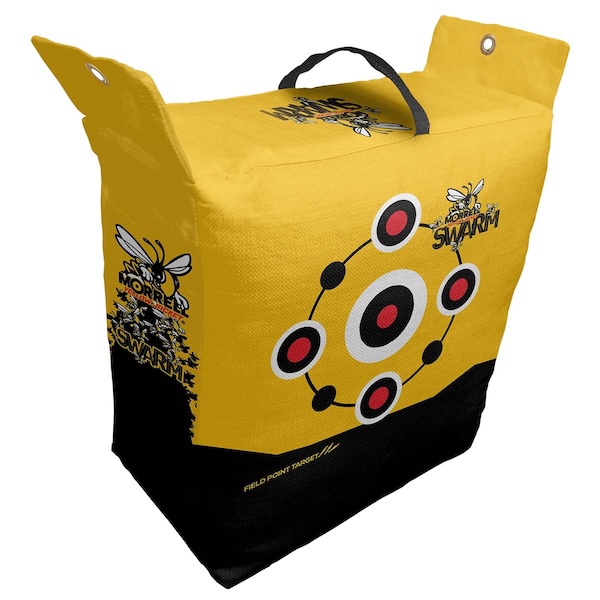
This is a budget bag designed to take a beating, and if you’re the type of hunter that only slings a few arrows a few times a year, this is the bag target for you. Rated to 335 fps, I don’t recommend this target for crossbows, and the internals will wear out if you shoot the center bullseye-style dot every time. Spread your arrows out, though, and this target will last.
The Swarm has 38 layers of arrow-stopping power, and arrow removal is generally smooth. Like the MOD Pro, Morrell doesn’t recommend outsetters or field points larger than the arrow shaft. The E-Z Tote carry handle is nice for transport, and the top wings with brass rings let you hang the target from chains if you wish.
Best for Travel: Morrell High Roller Foam
best for travel

Morrell High Roller Foam
Pros
6 sides; 21 bullseyes
Rated to 500 fps
Weather-resistant
Stops field points and broadheads
Cons
Too small
Specs
Materials: High Roller Foam
Weight: 18 pounds
Dimensions: 16″ x 16″ x 16″
If this target were a little bigger, it would have won our Best Target award. You can’t beat the 2-inch diameter dice-style dots. My only problem is that I always shoot out the single center dot first, and though that takes hundreds of arrows, I recommend shooting all six sides. I’d also advise using the single-dot dice side for long-range sight-in, then switching to any of the other sides for close-range sight-in.
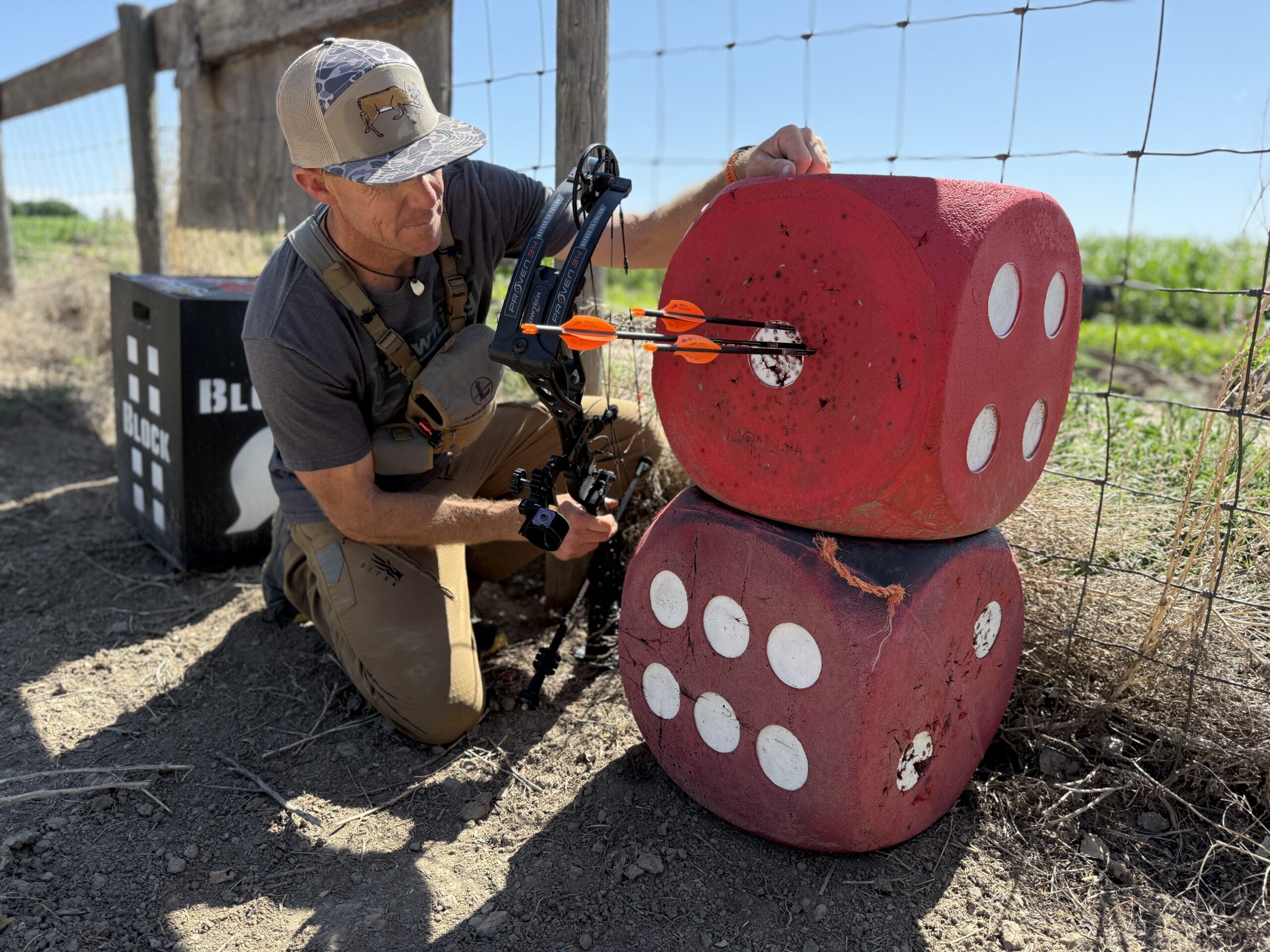
The High Roller Foam is ultra-durable. Last year, I put over 700 broadhead-tipped arrows into my High Roller Foam cube-style target, and it still stops arrows. I appreciate the rope-style handle that lets me tote the target anywhere, and sometimes, it’s fun to roll the dice and play an archery game or two. Removing the arrow from this target is ultra-easy, and it will hold up to anything Mother Nature can throw at it.
How We Tested Archery Targets
We did our best only to include archery targets that made our list were ones that have been used by staff members at Field and Stream. These targets have been put to the test and are well-loved by many writers and editors while they do their archery practice at home. While not all targets have the same durability rating, they all get the job done and are sure to fit your target practicing needs. If you didn’t find the perfect archery target on our list, use the buying considerations section above for further guidance before you buy.
What to Look for When Choosing an Archery Target
Type of Target
One of the top considerations when choosing an archery target for you is the type of target you’d prefer to use. There are three primary types of targets on the market, including foam blocks, bags, and 3D targets.
- Foam Blocks: Foam block targets can be called either foam targets or block targets. They are either layered polyethylene or highly compressed, self-healing foam. Foam targets are one of the most versatile options because you can shoot from various angles and with different arrow designs. Depending on the durability of the foam target, they will last quite a while, and we also like that they are relatively portable. Pay attention to the block target you buy and the draw weight of your bow to ensure you get one that properly fits your target practice needs.
- Bags: Bag targets are an affordable archery target option and decent for a high volume of arrows. We only recommend that bag targets be used if you use field points, not broadheads. Some bags can take higher feet per second (FPS), depending on the specific target. Bag targets are perfect for beginners and generally also work well for kids learning because they can easily remove the arrows after shooting.
- 3D: The biggest draw to 3D targets is that it helps you make the most ethical shot while bowhunting. It gives a more realistic target practice experience and will likely improve your accuracy in the field. Most 3D targets are lightweight enough to easily move around, allowing you to practice from various angles like from a tree stand.
Another budget option is to make a target at home. Homemade targets tend to be made from things like pieces of foam, hay, straw, cardboard, or compressed carpet. Homemade targets are not generally recommended for compound bows but they can work well for recurve bows.
Stopping Power
The stopping power of your target is very important and needs to line up with your bow’s FPS limit. The most common arrow speed limits are 350 fps, 450 fps, or 500 fps. It’s generally determined by the type of bow you are using.
The stopping power should also depend on the type of arrow you use. Consider the target type and whether or not it’s compatible with broadhead arrows or only field tip arrows. Most bag targets only work with field tip arrows, but foam targets work well with either variety. We recommend finding one versatile enough to use different bows and arrows with so you can improve your skills across the board.
Ease of Use
Other considerations to make when choosing the best archery targets for your needs are the shootable sides, durability, arrow removal, and portability.
To practice a variety of angles and positions, look for a target that you can shoot on several sides and that’s portable so you can take it into the field to practice instead of only using it in your backyard.
Arrow removal generally isn’t a top priority, but if you are a beginner or buying a target for a young archer, it may be more of a consideration. Bag targets are often the easiest to remove arrows from and work well for beginners.
Durability should be a major factor. Unless you are on a tight budget, we recommend finding a target that can last you several seasons of target practice. While it needs to withstand being shot with arrows, it should also be able to withstand various weather conditions as you’ll likely keep it outside. If the core materials of the target are high quality, a replaceable cover is worth investing in so you can use the target for much longer and replace the exterior as it gets beat up.
FAQs
Q: How big should a target be for archery?
How big a target for archery should be depends on the type of bow you are using and the distance you are shooting from. On average, recurve shooters use a target with a 122-centimeter face from 70 meters away. Compound bow shooters may shoot from over 50 meters at a target 80 centimeters in diameter. These are averages, and traditional targets can have a five-color, 10-ring target sizing from 40 centimeters to 122 centimeters.
Q: What makes a good archery target?
A common and reliable material for archery targets is foam. Not all foam targets are of the same quality or durability, but good foam targets have ideal stopping power, don’t leave residue on arrows, and are easy to pull arrows from after shooting. Targets may also be made from cloth, compressed carpets, straw, cardboard, or hay. Many of those target materials are used when making the target yourself at home.
Q: What type of archery target is the best choice for deer hunting?
Any target is a good target for deer hunting because you are improving your accuracy and precision in your shooting. Many people enjoy using 3D targets for deer hunting practice because it allows them to aim for certain parts of the body.
Q: How long do archery targets last?
How long an archery target lasts depends on the materials and quality of the product. On average, any target should endure at least 2,000 arrows. Higher-end targets should last anywhere from 10,000 to 30,000 shots. Individual brands and products should estimate how long the product will last.
Q: What archery target lasts the longest? Across the board, many experts agree that Rinehart archery targets are the longest-lasting. Other target brands and even homemade targets can still have good results, but the Rinehart brand is very reliable if you’re looking for a long-lasting product.
Why Trust Us
For more than 125 years, Field & Stream has been providing readers with honest and authentic coverage of outdoor gear. Our writers and editors eat, sleep, and breathe the outdoors, and that passion comes through in our product reviews. You can count on F&S to keep you up to date on the best new gear. And when we write about a product—whether it’s a bass lure or a backpack—we cover the good and the bad, so you know exactly what to expect before you decide to make a purchase.

THE 1871 CLUB