
For pure cost-per-yard efficiency beyond 200 yards, the 6.5 PRC outperforms the .308 Winchester despite its higher box price. For hunters who rarely shoot past 200 yards, the .308 remains a practical choice. The article's framework—dividing ammo cost by maximum point-blank range—reveals that premium long-range cartridges often deliver better value than their sticker price suggests.
- The 6.5 PRC costs 75¢ per yard beyond 200 yards versus $1.06 per yard for the .308 Winchester.
- The .308 Winchester and 6.5 PRC both calculate to 24¢ per yard when measured across full point-blank range.
- The 6.5 PRC's 37-yard reach advantage over the .308 makes it the stronger pick for open-country hunters.
- Every comparison uses box pricing — hunters who reload will see entirely different cost-per-yard results.
What does it cost for every yard you shoot with a modern big-game cartridge? If you’ve never thought about shooting that way, maybe you should. It’s kind of like miles per gallon in your truck. If you can go 17 miles on a gallon of gas that costs $3.74, then it costs you 22¢ per mile. Well, you calculate cost per yard about the same way. We need to know how much your ammunition costs and how far you’re shooting. But because shot distances and the price of ammo vary, we need a standard to make the comparisons by.
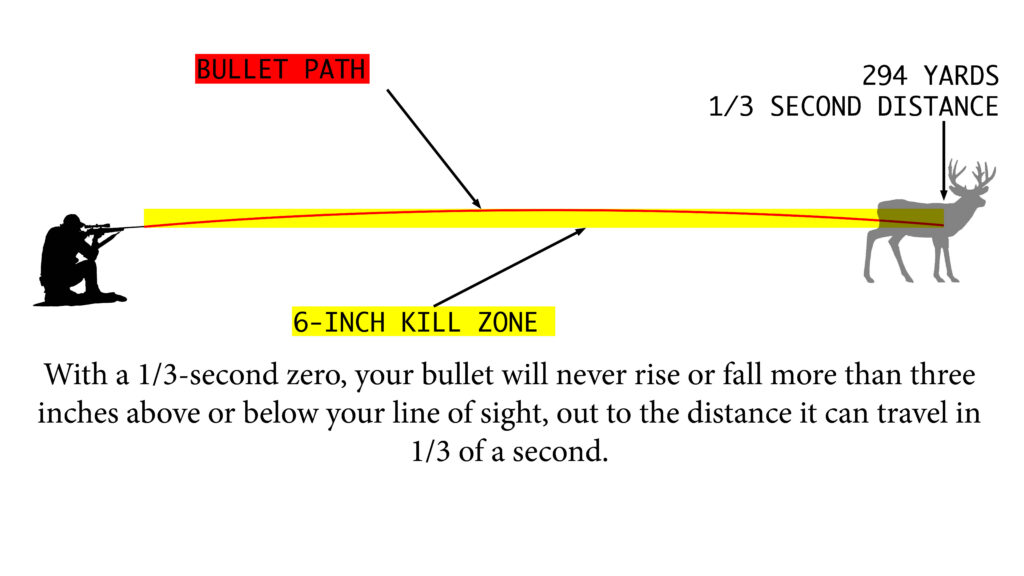
For big-game hunting, the standard is the maximum distance you can get a kill zone hit with a dead-on hold (that is, without making a sight correction). Some call this a “maximum point blank range,” but I call it the 1/3-second distance.
Because gravity pulls on all bullets the same, they all drop the same amount in 1/3 of a second. If you zero your rifle so the bullet strikes three inches below you line of sight at the distance it can travel in 1/3 of a second, the bullet’s path will never be more than three inches above or below your line of sight—outside the kill zone—out to that 1/3-second distance. This works for any rifle cartridge, but because of faster muzzle velocities and higher ballistic coefficients, some bullets travel farther in 1/3 of a second. So, our standard is the distance a cartridge can push a bullet in 1/3 of a second, because that is the maximum distance kill zone hits can be made without dialing in a correction or holding high.
Related: 270 Winchester vs 7mm Remington Magnum
Cost Per Yard: 308 Vs 6.5 PRC
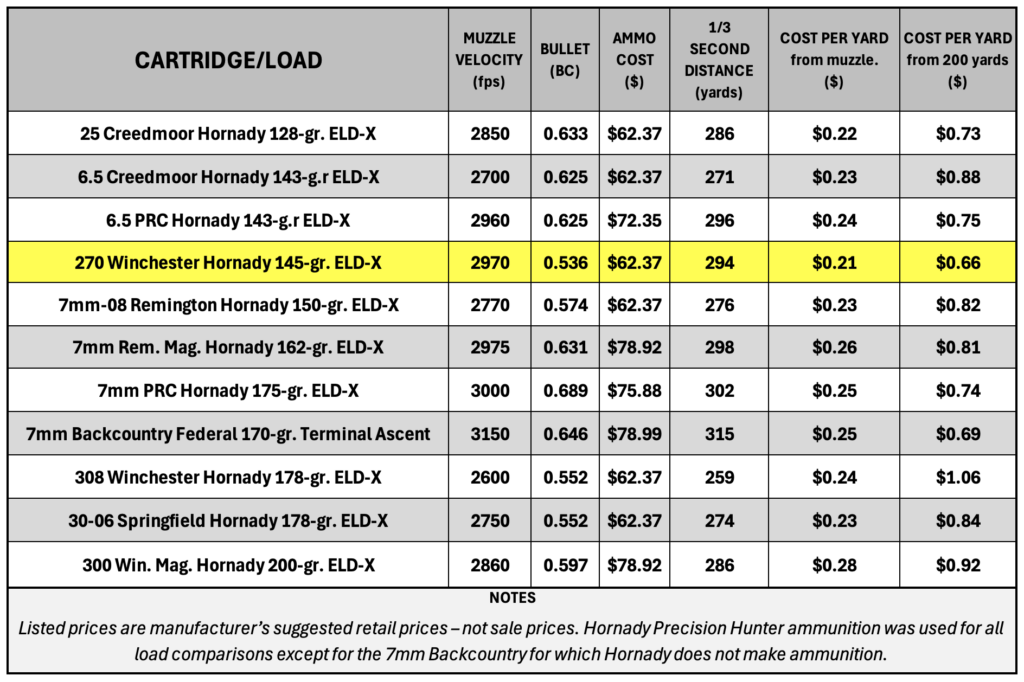
To figure out how much money it costs us to shoot out to that 1/3 second distance, all we need to do is divide the cost of a box of ammo—since you cannot purchase a single round of ammunition—by that 1/3-second distance. For example, given the advertised velocity of Hornady’s Precision Hunter 308 Winchester load, it has a 1/3-second distance of 259 yards. Since a box of that ammo retails for $63.27, it costs you 24¢ for every yard the bullet travels from the muzzle out to 259 yards. However, if you compare it to Hornady’s 6.5 PRC Precision Hunter load, which has a 1/3-second distance of 296 yards and costs $72.35, it also works out to 24¢ per yard. Since the 6.5 PRC has a 1/3-second distance advantage of 37 yards, it seems like it gives you more for your money. It does, so maybe a better way to determine cost per yard is to look at the 1/3 second distance beyond 200 yards.
Most every big game cartridge—including the 30-30 Winchester—will allow you to hold dead on out to 200 yards and still hit the kill zone. If we make the same comparison between the 308 Winchester and the 6.5 PRC out beyond 200 yards, you’re paying $1.06 for every yard with the 308 Winchester and only 75¢ for every yard with the 6.5 PRC. That makes more sense because it rewards the 6.5 PRC’s greater reach. What might surprise you is that regardless which way you make this calculation there’s one cartridge that beats all others, and that cartridge has been around for 100 years.
And The Cheapest Long Range Cartridge Is…
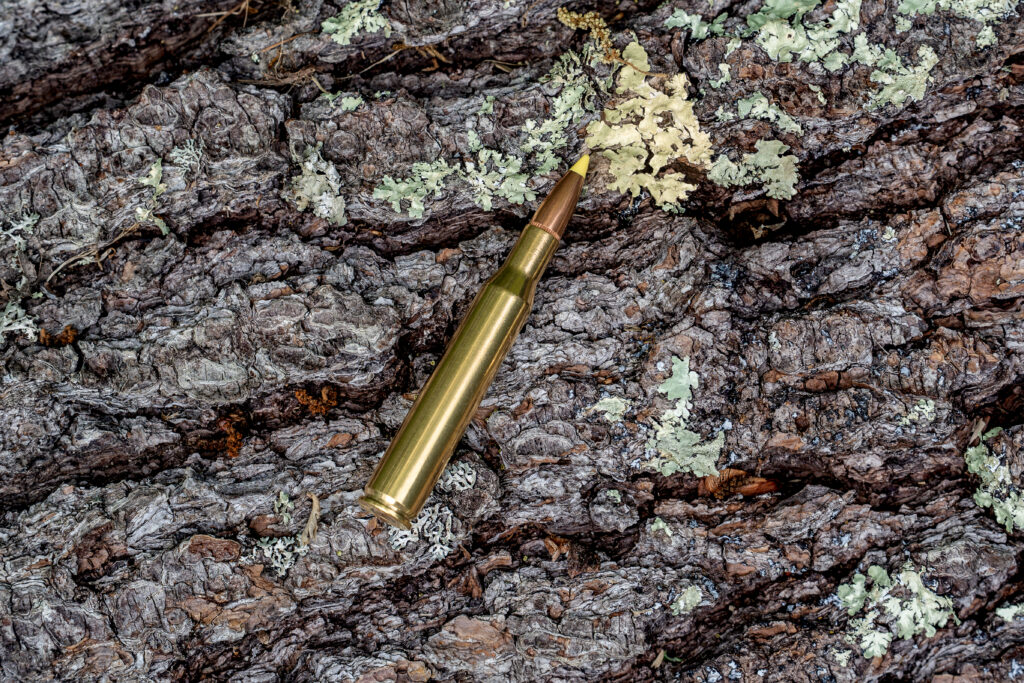
When you tally everything up, the cartridge that gives you the longest 1/3-second distance for the least money is the tried and true 270. Winchester introduced the 270 Winchester in 1925, and it became a favorite of big-game hunters. In his 1970 book, The Hunting Rifle, well-known 270 enthusiast Jack O’Conner wrote, “I have written at length about the .270 cartridge because I have had a great deal of experience with it and because I think that cartridges on the order of the .270 are better suited to hunting than most others.” Now, 55 years later, nothing has come along to prove Jack O’Connor wrong. But how is it possible this antique cartridge can outperform all others in terms of cost per yard? It’s simple—ballistics; Winchester got the ballistics right 10 decades ago.
I’ve used the Hornady Precision Hunter loads for comparison because in most cases they offer very flat trajectories, and it provides an even playing field. If you take the Hornady Precision Hunter load for the 270 Winchester that costs $62.37, with its 1/3 second distance of 294 yards, from the muzzle to that distance, you pay 21¢ per yard. If you base the calculation on the distance beyond 200 yards, the 270 only costs you 66¢ per yard.
Related: 270 Winchester vs 308 Winchester
How does this compare to one of the most modern big game cartridges often chosen for its long-range capabilities? The Hornady Precision Hunter load in the 7mm PRC has a 1/3 second distance 8 yards farther than the 270. But with a box of this ammo costing $75.88, from the muzzle to 302 yards, the 7mm PRC costs you 25¢ per yard. Beyond 200 yards, each additional yard costs you 74¢. The chart above details this and how the 270 Winchester compares with other popular big-game cartridges hunters often choose for their long-reach capabilities. Additionally, no other rifle cartridge with a 1/3 second distance the same or beyond the 270 Winchester’s can get you there with less recoil.
Admittedly, ammo costs will vary and in the big scheme of things a few cents per yard does not make a lot of difference. If you can afford a $62 box of ammo, you can probably afford a $75 box of ammo. But what all this math illustrates is that when it comes to cartridge performance efficiency, you get more bang for your buck with the 270 Winchester than any other rifle cartridge.
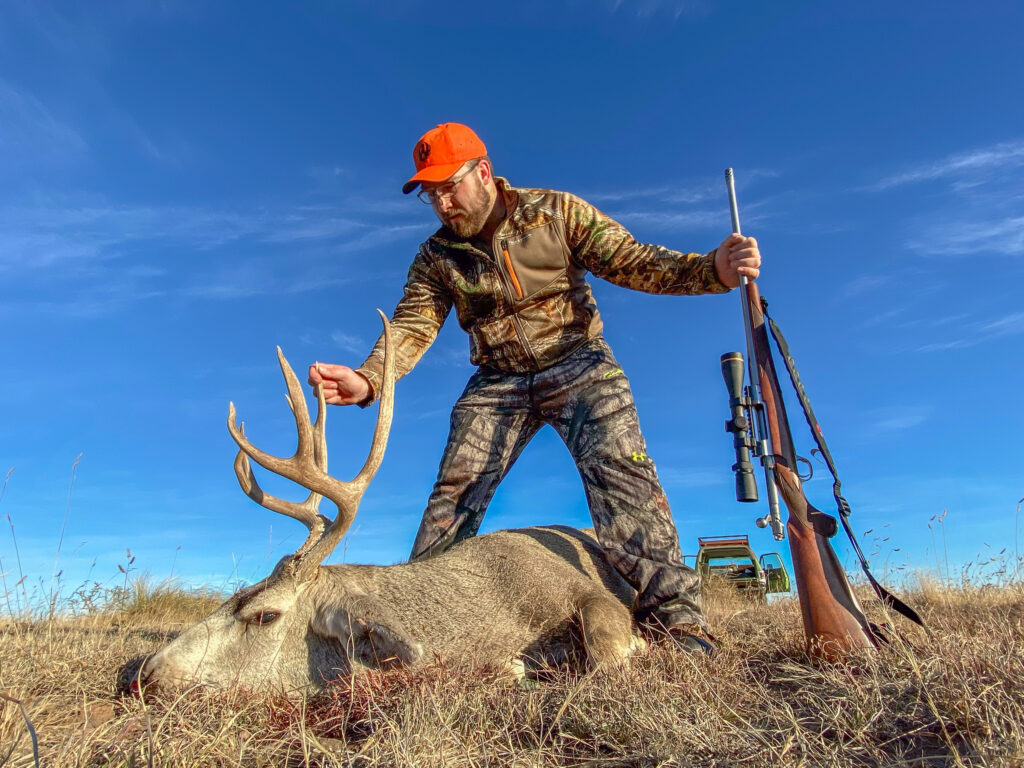
Sure, at greater distances a 270 Winchester bullet will drop and drift a couple inches more than a bullet from a 6.5 PRC, 7mm Remington Magnum, or the 7mm PRC. On the other hand, most shots at big game animals are taken within a cartridge’s 1/3-second distance, and if you can hunt, you don’t need to shoot farther than that anyway. You could make the argument that the 270 Winchester is simply the best big game cartridge. It’s all the average big-game hunter will ever need, and when it comes to dollars, cents and distance, the century old 270 Winchester is the commonsense choice. So, why don’t you have one?

EXCITING NEWS
Membership Now Includes



5 Comments
Excellent analysis! I’d like to see .30-06 150gr with this method.
30.06 is the best all around cartridge with several bullets available with varying velocities and it will take care of any North American game.
This is an excellent analysis: creative and insightful! I own rifles in a myriad of cartridges from 0.224 centerfire up to 0.416. This variety, coupled with an ever improving grasp of external and terminal ballistics, is leading me to be a little agnostic as to what shape of brass is launching the bullet.
I think I’ll knock the dust off the old 270 Win!
Thanks Richard!
P.S. “Ghosts of Africa” is also one of my all-time favorite articles.
Why not just calculate MPBR and get your distance value, and then cost per yard?
This one-third second BS seems to be an intentional skew– to push newer SKUs…
Trying to account for time of flight as it relates to distance traveled from the muzzle and the cost of the ammo is not worth the effort.
Ammo cost (if you don’t roll your own), your shot placement ability and the hunting situation are all vastly more important.