

If you’re a deer hunter who plants food plots, you already know that Potential of Hydrogen, or pH, is the standard indicator of soil health. If your dirt’s pH is in the right range, your plots can flourish and potentially draw in big bucks. The problem for the average hunter-turned-weekend-food-plotter is that balancing pH requires lime—tons of it. The very idea of spreading this amount of chemical in potentially remote wooded locations can be a headache, causing many to seek alternatives.
It’s no surprise then that companies offering alternatives have sprung up like weeds, or that some of their products claim to offer the literal solution with just a few gallons of their magic liquid blend and a backpack sprayer. These products are often referred to as “liquid lime,” but whereas real liquid lime is simply lime dissolved in water, these additives are something else altogether. No matter what you call them, the real question for food plotters is: Can big claims, some scientific-sounding jargon, and a simple chemical—calcium chloride—really replace the traditional lime farmers have sworn by for decades to balance soils and boost biomass production? If you struggle getting your food-plot grocery bar to flourish and are wondering if a liquid-calcium spray help, listen up. Here’s the truth.
Related: The Best Food Plot Seeds
The Basic Formula for Food-Plot Soil Health

The chemistry of good food plots isn’t too complicated to understand if you keep it simple. Plants need to absorb certain key nutrients from the soil in order to flourish. These include calcium (Ca2+) for growth and development, phosphorus (P) for photosynthesis and energy transfer, and potassium (K+) for water uptake, stress resistance, and metabolism regulation among other things. If these nutrients are absent or if they bind to or leech out of the soil and can’t be absorbed, plants suffer, die, or fail to grow in the first place.
The measure of Hydrogen ion concentration (H+), or pH, generally indicates how well this happens, and most plants thrive between a pH of 6.0 and 7.0. If soil is out of balance, it tends to be a lower pH (acidic), due to various factors like excess fertilizing, acidic rain, or decaying organic matter that leaves excess H+ ions in the soil. A low pH hinders nutrient absorption, but that’s not the whole story. Heavy elements like aluminum and manganese can also reach toxic levels with low pH, and nitrogen-fixing microbes desperately needed by plants for N uptake cannot thrive in these poor soil conditions. Bottom line: proper pH is critically important for a healthy food plot and is important to get right.
How Lime Works to Balance pH
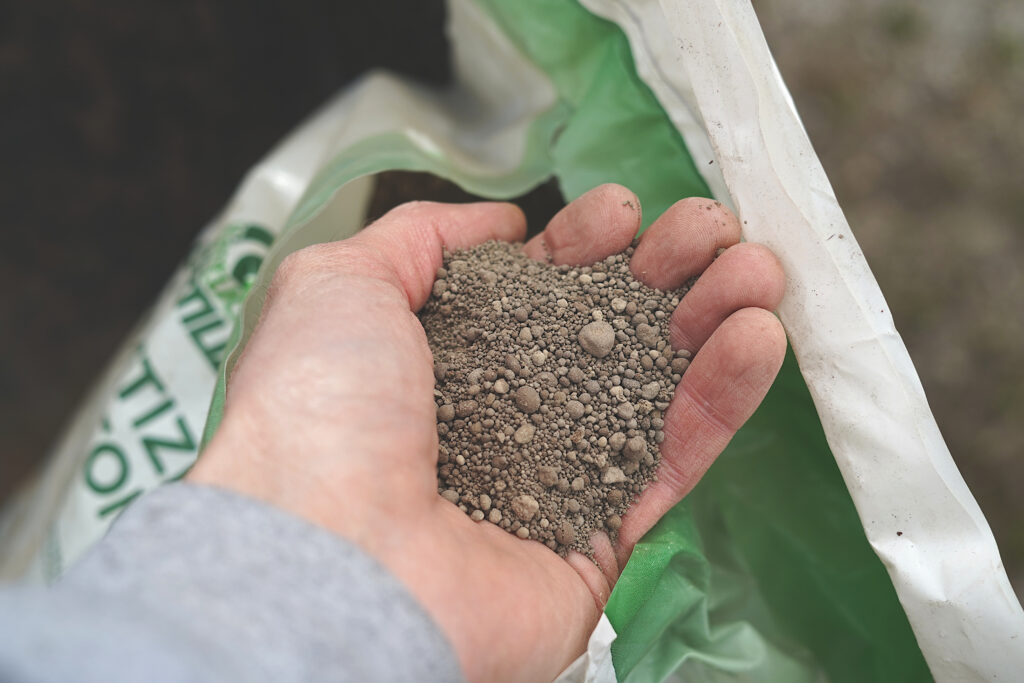
When soils tend toward the acidic side of the pH scale, a farmer or food plotter needs to introduce a base to neutralize it. Acidic substances donate a H+ ion, while bases accept it, therefore removing it from the soil. Liming agents, being bases, do this exceptionally well and include calcium carbonate (CaCO3) also known as ag lime, calcium magnesium carbonate (CaMg(CO3)2) also called dolomitic lime, hydrated lime (Ca(OH)2), and calcium oxides (CaO) known as quicklime. They can be granular, pelletized, or dissolved in solution, but they react the same to remove the excess hydrogen.
For example, here is the gold standard of liming—calcium carbonate—in equation form showing how two excess H+ ions are turned into water and excess calcium ions: CaCO3 + 2H+ → H2CO3 → H2O + CO2 + Ca2+. This works very well at doing two things: raising the pH of soil and also adding more calcium, which is great for boosting plant growth. But the problem, again, is that it usually takes anywhere from hundreds to thousands of pounds of lime per acre (depending on soil composition) to make a significant difference.
Clay soils require more lime to alter pH, while sandy soils need much less to do the same. Here’s an example of what it may take to raise a 1-acre food plot from a pH of 6 to just 6.5.
- Sandy ~ 500-1,500 lbs/acre
- Loamy ~ 1000-2000 lbs/acre
- Clay ~ 2000-3000 lbs/acre
So, it’s easy to see why a few gallons of liquid-calcium product promising to accomplish the same would be so alluring to an equipment-light food plotter. But most of these products do not include any of the calcium-based liming agents listed above. Instead, they offer calcium chloride, the same salt added to roads for de-icing and knocking down summertime dust. So, the question is, can adding road salt to your plots really balance pH, or be good for plants and soil?
Related: When to Plant Food Plots—a Hunter’s Timeline
What Calcium Chloride Does and Doesn’t Do
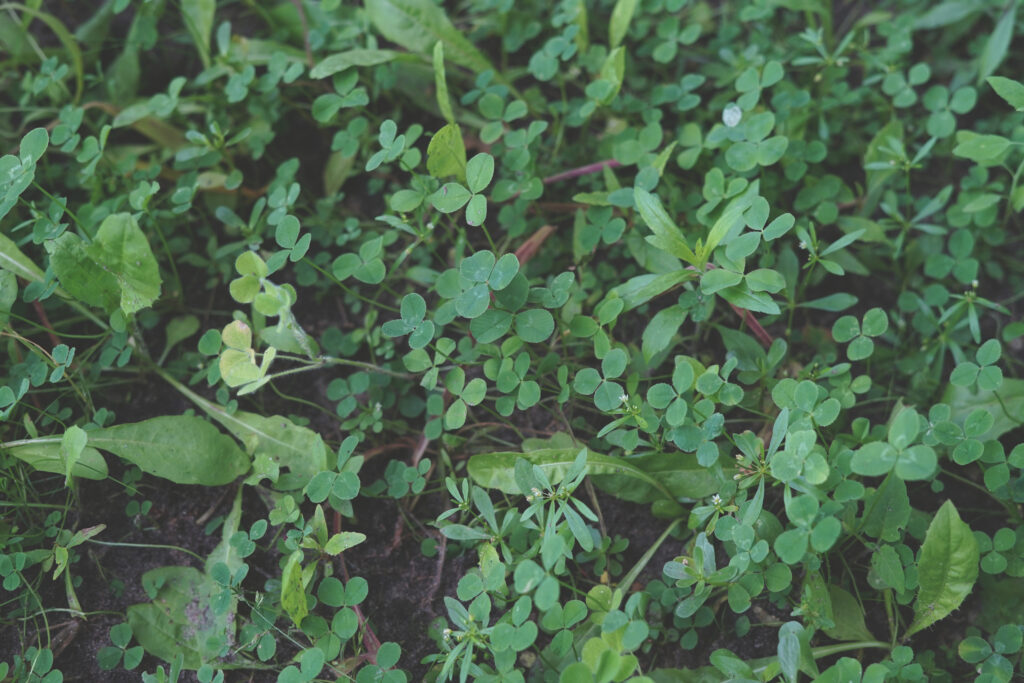
To be fair, not all calcium-liquid products claim to boost pH or to replace lime, and they can provide a short-term boost to your plots. But it is important for plotters to know exactly what these sprays do and don’t do. I recently talked to Brian Haynes of Cisco Seeds, supplier of a wide variety of agricultural and lawn products throughout the Midwest. His take on calcium-chloride-based products as a food plot additive isn’t exactly glowing. “Chlorides do not change pH at all. They only introduce calcium. The salt will build up in the soil, may look good for a year or so due to some extra calcium the plants take in, but is not a good solution.”
A University of Kentucky Research and Education Center study backs this up. In a test by Ritchey, Teutsch, and Grove, soil treatments of pelletized lime, ag lime, and liquid calcium chloride were applied to separate soils over a year. They found increased pH in the lime treatment areas, and no change in pH for the calcium chloride, leaving them to conclude that “Calcium chloride does not neutralize acidity and calcium carbonates do.” Similar studies from the University of Pennsylvania, Delaware, and Cornell University agree. And the chemistry is clear, as the same 2 H+ ions that were converted to water with lime, simply remain after the liquid calcium is added: CaCl2 + 2H+ → Ca2+ + 2H+ + 2Cl–.
“Any ‘liquid lime’ product containing material other than oxides, hydrates, carbonates, or silicate forms of Ca and Mg are not lime, and cannot be sold as such,” according to the Cornell Cooperative Extension. In other words, look closely at what you’re being sold; if it does not include any of the real liming agents listed above (you should see CaCO3, CaMg(CO3)2, Ca(OH)2, or CaO right on the bag), then beware of overblown claims.
What about testimonies of these products actually making plots improve? Haynes has an explanation for that as well. “It’s hard to get calcium in a plant,” says Haynes, ”and these products do add a bit of that, but they are not a solution to amending soil pH. Fertilizer, herbicides, and insecticides all work better with correct pH too.” Granular lime is the most effective way to do it. If adding calcium chloride does raise pH very slightly, it’s possibly due to the positive Ca2+ ions pushing H+ ions deeper into the soil profile, not chemically removing them. And as the studies above show, the change in pH will be minute or nonexistent compared to real liming agents.
If you really want more calcium in your soil, calcium carbonate or other traditional liming agents will do a much better job of that, too. For raising our same 1 acre from a pH of 6.0 to 6.5 with roughly a ton of lime, you get about 800 pounds of calcium equivalent, where 2 to 3 gallons of diluted calcium chloride will be no more than 5 to 6 pounds, maximum.
With so many advertisements promising the moon to food plotters, it’s easy to be taken in. It’d be great if there were a quick fix that saves us time, effort, and money. But buyer beware. These sprays can improve the look of your plots in the short term, but claims that a few gallons of magic liquid can replace a few tons of lime should only inspire you to take a closer look at the fine print. Check the math and the chemistry, because in this case, neither adds up.
Related: Why You Should Add Perennial Plots to Your Hunting Property

All new! 1871 Club Field Trips