
We may earn revenue from the products available on this page and participate in affiliate programs. Learn more
Three years ago, in the name of research (and fun), a crew of Field & Stream editors assembled for the most rigorous fly rod test we’ve ever done. Since then, the limited release of new rods and scheduling conflicts prevented us from doing another fly rod shootout. Finally, we decided it was time to get the team back together (at least partially) and conduct a second full-blown test of the best trout fly rods on the market. So, this spring we reconvened at the unofficial home waters of F&S—the Upper Delaware River—to put a new collection of fly rods through the wringer.
We reached out to manufacturers and asked them to send us their best new 5-weight fly rods, as well as some budget and value models. While some companies have released new rods since our last test, many manufacturers kept their lineup the same. No problem. Since this is a test of the best trout fly rods and not just the newest, we kept many of our original reviews because these rods are still top performers. However, this year’s test allowed us to include new rods, replace older models, and add anything we missed the first time around. In total, we tested over 20 rods, but only 17 made the cut. Here are the best trout fly rods you can buy today.

Best Fly Rods
- Best Overall: Sage R8 Core
- Best of the Test: Douglas Sky G
- Best Value: Douglas DXF Gen 2
- Best Budget: Orvis Clearwater
- Best for Small Streams: Orvis Superfine
The Rest of the Best Fly Rods
- Hardy Marksman
- G. Loomis IMX Pro V2
- Orvis Helios
- St. Croix Technica
- Scott Centric
- St. Croix Evos
- Epic Reference 590G Carbon Fiber
- Airlite Vitesse
- G. Loomis NRX+Fly
- Temple Fork Outfitters Blue Ribbon
- Temple Fork Outfitters LK Legacy
- Thomas & Thomas Paradigm
Best Overall: Sage R8 Core
best overall
Sage R8 Core
Pros
- Lightweight with surprising power
- Highly versatile
- Classic looks
Cons
- Expensive
Specs
- Length: 9 feet
- Line Weight: 5
- Action: Fast
- Pieces: 4
- Warranty: Original-owner lifetime
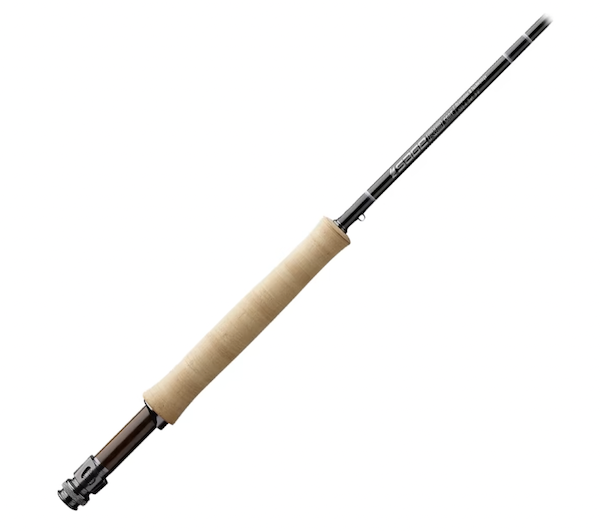
You’re looking at the back-to-back winner for the Best Overall trout fly rod. On the lawn, there’s a tendency to favor the purest caster or the biggest bomb-thrower. On the water, you take in everything. And that is what sets the R8 apart: It does everything really, really well. Most rods are an either/or proposition; you get distance or feel, lightweight or power. But the R8 is different. At just 2 11/16 ounces, it’s light and lively and has enough power to cut the wind. It finished right near the top of our test for distance and provided wonderful feel and line control on the water. It’s accurate at short and long ranges, a rare combo.
All of this makes the R8 extremely versatile: it’s as good a nymphing rod as it is a dry-fly rod, and while you wouldn’t call our 9-foot, 5-weight test model a streamer rod (nor expect it to be one in this age of monster meat flies), it’s got more than enough backbone for Zonkers, Buggers, Muddlers, and other traditional trout streamers. Anything you’d ask a 5-weight to do on the water, our test rod did, in spades.
Speaking of traditional, the aesthetics on this rod are classic Sage, which I really appreciate. (Like my own good looks, it’s understated.) The R8 Core replaced the excellent X series, with the goal of putting more flex and feel deeper into the butt section to boost control and accuracy. The company pulled it off beautifully. As good as the X was, the R8 is a lighter, better overall trout rod. I have only two quibbles: the components, while very good, are not the absolute latest, and—surprise—the rod is pricey. A few other rods in this lineup will shoot line a little farther or cast a bit more effortlessly, but the R8 rules on the water. Which, as you may know, is where the trout live. —Dave Hurteau
Best of the Test: Douglas Sky G
best of the test
Douglas Sky G
Pros
- Extremely lightweight
- Versatile
- A joy to cast
- Affordable compared to other top-end rods
Cons
- Reel seat is a bit much
Specs
- Length: 9 feet
- Line Weight: 5
- Action: Fast
- Pieces: 4
- Warranty: Limited Lifetime
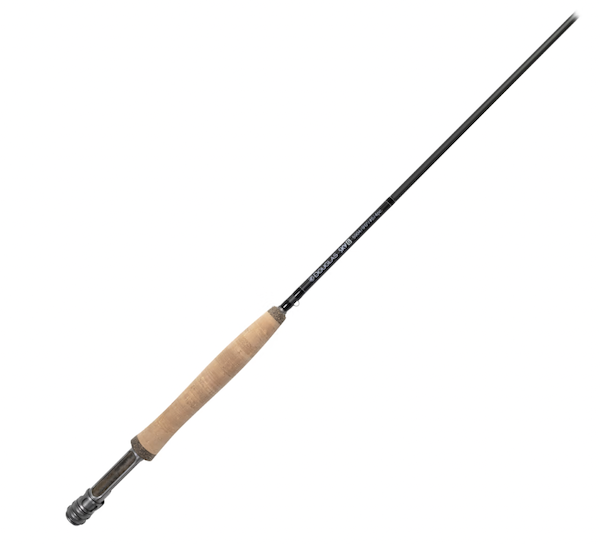
The Sky G is hardly a new rod, but, for whatever reason, we have never reviewed it. So, we included it in this year’s test, and, lo and behold, it wound up being our favorite all-around rod among the newly tested models. Given the Sky G’s popularity among serious trout anglers, we figured it would do well. But it’s when you cast and fish it side-by-side with the competition that you really appreciate why people love this rod: It does so many things so well, all while feeling virtually weightless in your hand.
By rights, a rod this light, both in terms of overall weight and swing weight, should not be so versatile, and yet the Sky G excels at most everything you can reasonably ask an all-around 5-weight to do. The butt and mid sections have enough power to reach far-off fish and land the biggest of them, while the softer tip section delivers good feel and excellent accuracy at short and mid-range targets. It was near the top, too, at managing line on the water.
The Sky G has a reverse half wells grip, matt-black blank, REC titanium recoil guides, and a skeletonized double-uplocking reel seat with burled blackwood insert, which brings me to my only real nitpick: On this otherwise classic-looking rod, I would much prefer a classic-looking reel seat, as opposed to the skeletonized one. But that’s it. There’s nothing else not to love about the Sky G. —D.H.
Best Value: Douglas DXF Gen II
best value
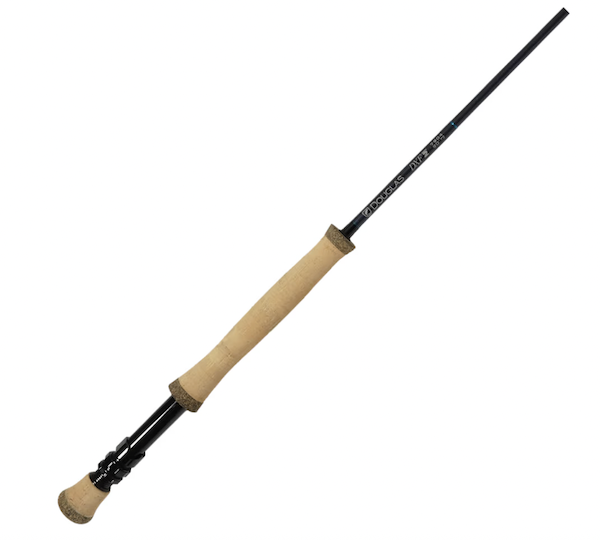
Douglas DXF Gen II
Pros
- Powerful but accurate
- Lightweight
- Versatile
- Excellent value
Cons
- Not a fan of the emerald-flake look
Specs
- Length: 9 feet
- Line Weight: 5
- Action: Fast
- Pieces: 4
- Warranty: Limited Lifetime
The Douglas DXF Gen 2 was actually in the running for the best fly rod in this year’s test. As we debated the winners, we kept circling back to the great value that the DXF offers. It is almost $400 cheaper than the Sky G and not far off in performance, which made it an easy pick for the Best Value award.
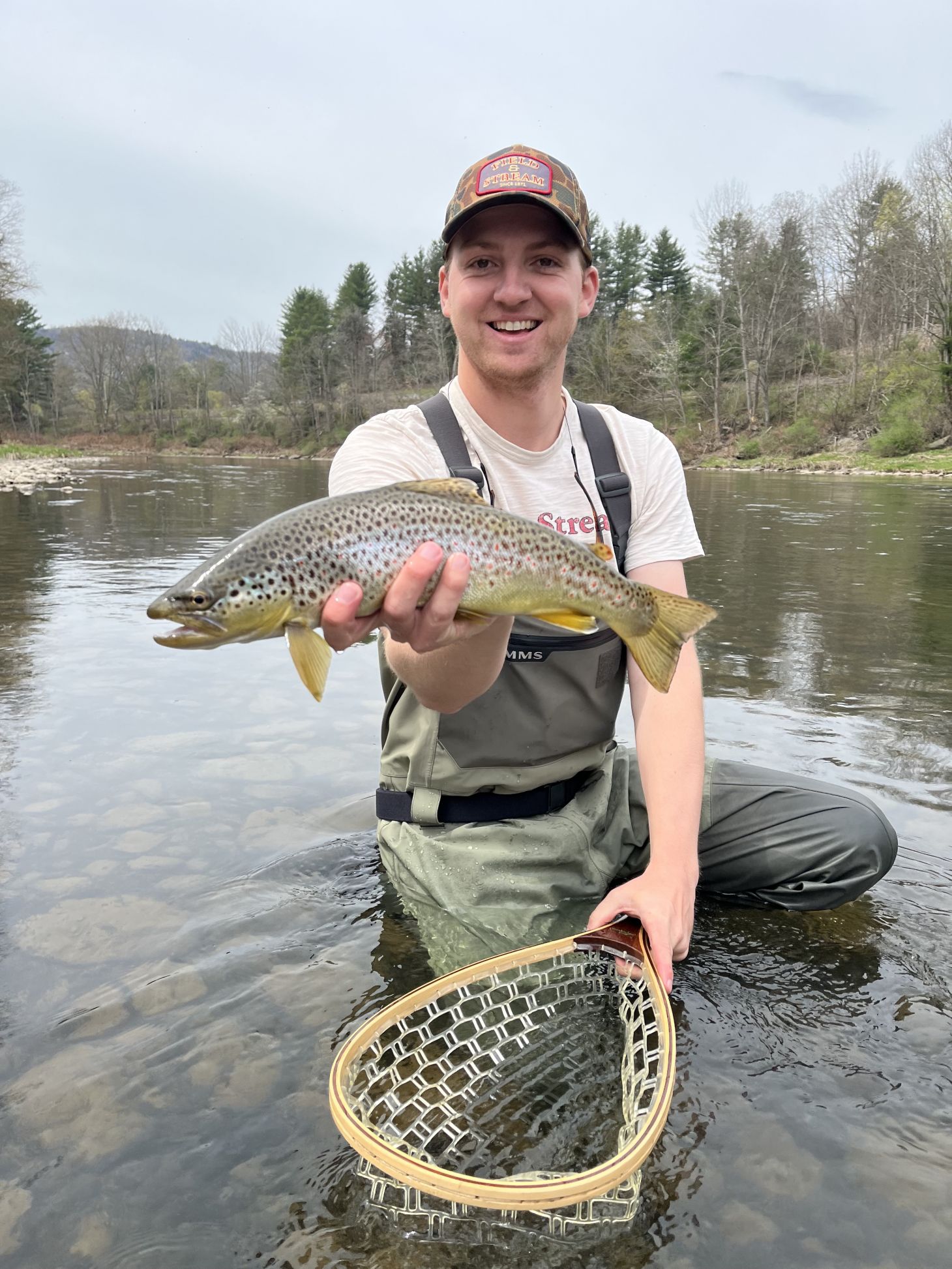
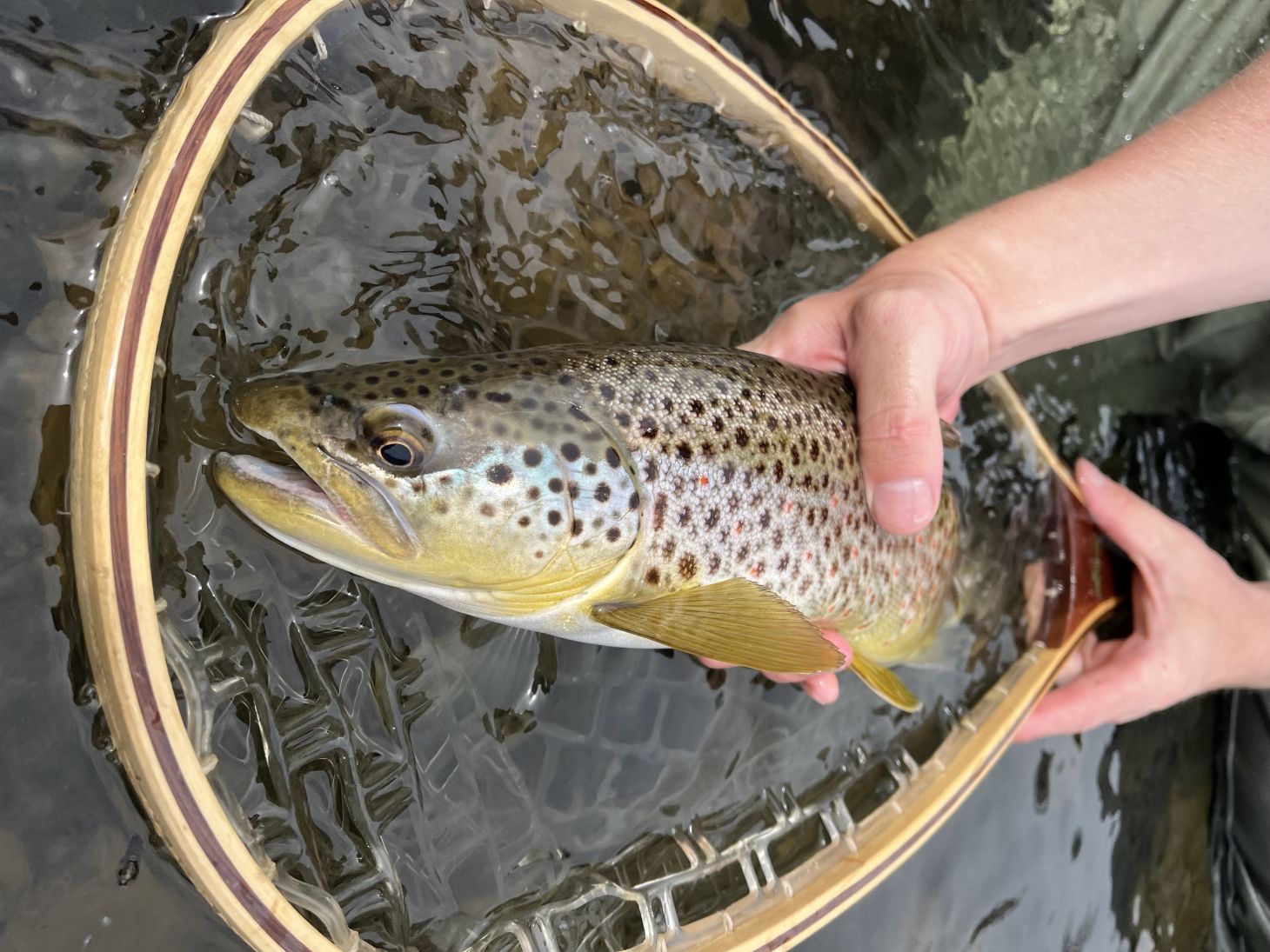
This is a moderate-fast action rod that can throw accurate bombs across the river. How do I know? During our second day of testing, I waded out to my chest to try and reach a rising brown. On my second cast, the DXF Gen 2 easily delivered a 70-foot cast right on target. I stuck the 16-inch brown and brought it to hand after a good fight in strong current. Time and again, the DXF Gen 2 proved to be powerful and accurate. Something that many rods don’t achieve.
You’ll be hard pressed to find a rod as good as the DXF Gen 2 for $500. No matter what we threw with the DXF—dries, nymphs, or streamers—it was up for the task. Better yet, the rod felt great in hand no matter the technique. The 5-weight version has a reverse half wells grip and stainless steel guides. On the lawn and the river, the DXF Gen 2 outperformed many premium rods that cost over a grand. The only thing I didn’t like was the green emerald flake design in the blank, but that wouldn’t stop me from making this my go-to trout rod for any situation. —Ryan Chelius
Best Budget: Orvis Clearwater
best budget

Orvis Clearwater
Pros
- Killer bargain
- Remarkably forgiving
- Powerful
Cons
- A tad heavy and unwieldy
- Basic components
Specs
- Length: 9 feet
- Line Weight: 5
- Action: Medium-Fast
- Pieces: 4
- Warranty: 25-Year
The Orvis Clearwater is the best budget all-purpose trout rod by a mile. You won’t find anything better for this price and you might even like it better than some fly rods that cost four times as much. How do I know? Because I did, at least briefly. As a little experiment, we decided to do a blind-casting test. We covered up the logos of a few of our favorite high-end rods and a few of our favorite low-end rods to compare them—and almost all of the testers put the Clearwater ahead of one or more of the high-end rods.
To be fair, this was a quick lawn-casting test, where we were focused more on distance and castability than on all-day fishability. But still, I found it as easy to shoot 90 feet of line from the Clearwater as with almost any other rod—and as effortless to throw tight consistent loops, too. Sure, the rod is comparatively heavy and might feel a little cumbersome to cast at the end of a long day. And on closer inspection, you’ll find that close-range accuracy isn’t great.
But from 25 feet out to 90, the Clearwater is an incredibly forgiving medium-fast rod with surprisingly good feel and decent line control. It requires a little more patience on the backstroke, but you get used to it quickly enough. The components are basic but fine, and there’s nothing wrong with the look of this rod, either. All in all, it is an astoundingly good rod for the money, and easily wins our Best Budget award. —D.H.
Best for Small Streams: Orvis Superfine Graphite
best for small streams
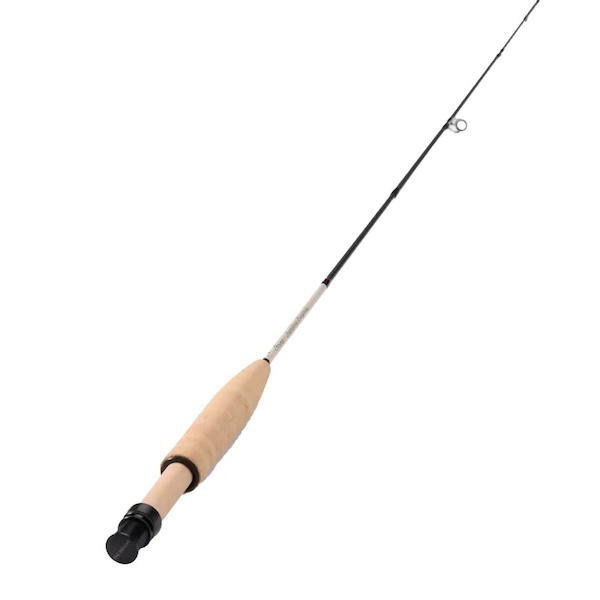
Orvis Superfine Graphite
Pros
- Shorter length is perfect for small water
- Lightweight
- Easy to cast
Cons
- Can’t handle big rivers
- Not cheap for a specialty rod
Specs
- Length: 7 feet, 9 inches
- Line Weight: 5
- Action: Medium-fast
- Pieces: 4
- Warranty: 25-Year
I didn’t know how much I needed a small stream rod until I picked up the new Orvis Superfine. For years, I fished with a 9-foot, 5-weight on my local stream—Clear Creek in Golden, Colorado—until I switched to the more compact Superfine this spring. I haven’t looked back since.
A good small stream fly rod needs to be short (but not too short), lightweight, and have some backbone for the occasional big fish. The Superfine does all of this in spades. I rarely make casts longer than 40 feet on my home waters, but this rod can throw to 60 feet if need be. When I do make longer casts, it is easy to throw tight, accurate loops. Speaking of managing line, the Superfine is surprisingly good at mending and kicking line for a long, drag-free drift.
The length of this rod—7 feet, 9 inches—makes it perfect for maneuvering small streams and overhanging brush. Of course, you’re somewhat limited with high-sticking capabilities, but the compact design is more important on small waters. That said, the Superfine still excels at traditional nymphing and dry fly fishing. It can lay out delicate casts for small dries and manage an indicator like any other rod.
Small fish are a blast to fight on this rod, and I’ve even brought a couple of 18-inch browns to hand. Trout of that size are pushing this rod’s capabilities, but it’s nice to know it can get the job done if a big one decides to eat. As far as looks are concerned, the Superfine has a white patch similar to the Helios at the end of the blank. But this is more of a cream color, which I like better. Not only was the Superfine an easy choice for Best Small Stream Fly Rod, but it is one of the best new fly rods for 2025. —R.C.
Hardy Marksman
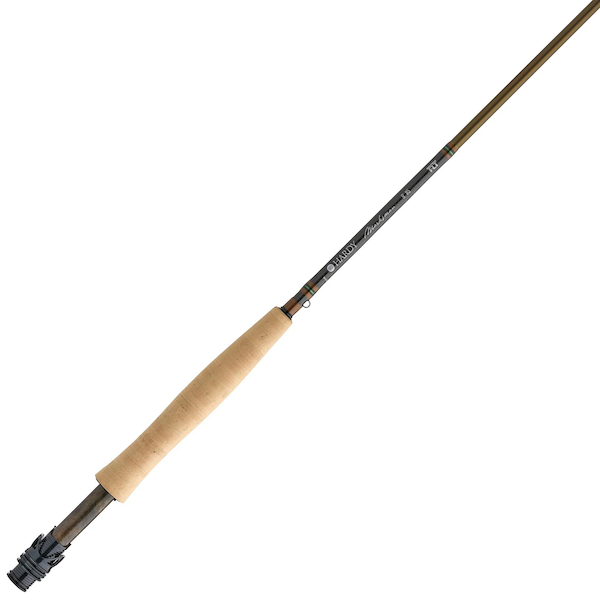
Hardy Marksman
Pros
- Great dry fly rod
- Extremely lightweight
- Nice mix of power and accuracy
Cons
- Expensive
- Not particularly versatile
Specs
- Length: 9 feet
- Line Weight: 5
- Action: Medium-Fast
- Pieces: 4
- Warranty: Hardy’s Worldwide Extended Warranty (you pay $75 to cover repair/replacement, handling, administration, and return postage and packing charge per claim)
Remember the old Hardy Marksman? Well, you might want to forget it. This one shares the name but is an entirely new and different rod, not to mention a much better one in our opinion. For one thing, it is wonderfully light in the hand—one of the lightest in our test. The medium-fast blank, made of the company’s new Sintrix FLT graphite material, has a soft feel, especially in the tip section, yet it has surprising power.
I’m not saying it’ll run with the powerhouses here, but you don’t expect a rod this light and supple to have the reach it does. In one test on the lawn, I threw it 85 feet with two false casts. Accuracy was also very good, especially at close and medium-range targets. On the water, it threw tidy, consistent loops right where I aimed them. The rod is so lightweight that it seemed to take a little extra manipulation to make effective mends—a minor quibble—but it kicked line like a champ, which is something we really look for. Getting long, perfect drifts to fussy trout often means quickly and smoothly feeding line downstream, and the Marksman did that better than any other rod in this year’s test.
As you’d expect with Hardy, the looks are classy and, for the most part, understated. The Marksman comes with a reverse half wells grip and a matt gold/olive finish with a clear section that shows the graphite matrix in the butt section, for a little pop.
In the end, the Marksman was my favorite dry-fly rod. I wouldn’t call it a specialty rod, per se. It’s versatile enough to handle some nymphing and light streamer work. But if you fish mostly dry flies, you’ll want to take a close look at Hardy’s latest. —D.H.
G. Loomis IMX Pro V2
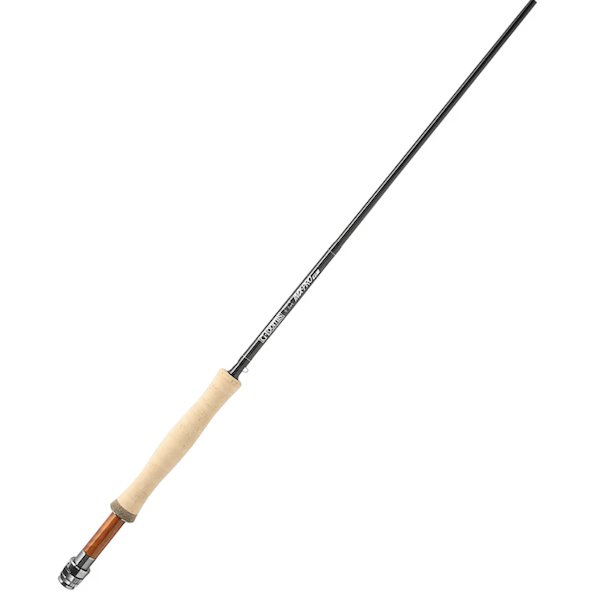
G. Loomis IMX Pro V2
Pros
- Cast well for accuracy and distance
- Quality reel seat
- Affordable for a premium rod
Cons
- Can feel beefy in hand
Specs
- Length: 9 feet
- Line Weight: 5
- Action: Fast
- Pieces: 4
- Warranty: Limited Lifetime
If you’re looking to target big trophy trout, then the IMX Pro V2 is the rod for you. It was one of the beefier blanks in our test, but that’s by design. On the lawn, my casts reached 80 feet consistently, and I even hit the 90-foot mark several times. Accuracy was surprisingly good, too. These results carried over to the on the water portion of the test. This was one of the few rods that could reach fish across the river while maintaining a good drift.
Beefier rods aren’t usually great for nymphing or casting dry flies. Not the IMX Pro V2. I spent all of last summer nymphing with this rod in Colorado, and it impressed me time and again. Now, nymphing streams in Colorado is much easier than presenting a nymph in the technical conditions of the Delaware River. But the IMX Pro V2 came through in New York while high-sticking a couple of runs. As for dry flies, this rod doesn’t have the same soft touch and feel as some of the other high-end models in our test, but it can still get the job done.

One of my notes from this year’s test reads, “The IMX Pro V2 is a big fish stick.” That’s the perfect way to describe this rod. If big fish are on the menu, this is what you want in your hand. It has more than enough backbone to fight and land 20-plus-inch trout and has a fighting butt to help. I caught one of my biggest CO trout to date with this rod (see below) while nymphing last summer. The fish took me into heavy current, and without the backbone of the IMX Pro V2, I’m not sure I would’ve landed that fish. It isn’t the cheapest rod on the market, but it certainly offers great value for what you get. —R.C.
Orvis Helios
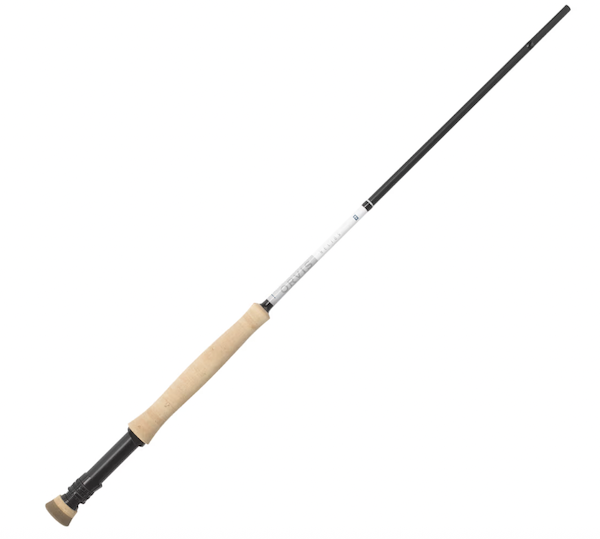
Orvis Helios
Pros
- Excellent accuracy
- Lightweight
- Good line control
Cons
- Expensive
- White label on rod butt is ugly
Specs
- Length: 9 feet
- Line Weight: 5
- Action: Fast
- Pieces: 4
- Warranty: Orvis 25-Year
The newest iteration of Orvis’s flagship Helios comes in two versions, the Helios F, for finesse, and the Helios D, for distance. We tested the D, and despite what that letter stands for, the rod did not blow us away in that test category. It did perfectly fine. We had no problem getting 80 to 85 feet out of it, which should be enough for most anglers. But there were longer-casting rods in this year’s lineup.
Where the Helios dominated was in accuracy, which is exactly what it was designed to do. The action is on the slower side of “fast,” delivering lots of feel that translates into control. According to the company, this Helios is four times more accurate than its predecessor, and they say they can prove it. Can they really? Who knows? But there must be something to the tip-displacement-reduction technology they introduced in the very accurate Helios 3 and enhanced in this newest version, because this rod was noticeably more precise than others we tested, both at short and especially at medium and longer ranges.
The newest Helios is also lighter in the hand than its predecessor, for all-day casting. On the water, it was one of the best for mending and general line management, as the softness of the blank allows you to manipulate line without disturbing your fly’s drift. Our test rod had a snub-nose half wells grip and a matt-black finish that would be very tasteful if it weren’t for the white label at the butt section. I’ve been told that some people like the white label, but I’ve never met any of them. On the other hand, if you want everyone else on the water to know you’ve got a Helios, it’ll help there, and, in truth, it’s not such an abomination that it should keep you from buying what is a truly excellent rod. —D.H.
St. Croix Technica
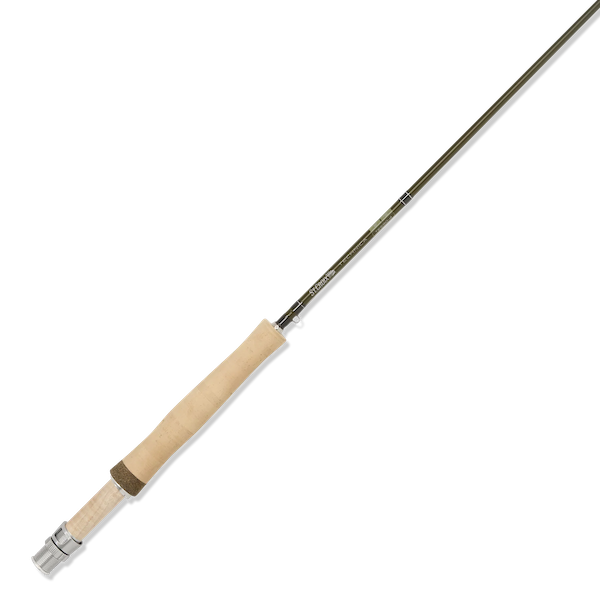
St. Croix Technica
Pros
- Great for finesse dry-fly fishing
- Classic look
- Excellent line management
Cons
- Expensive
- Not very versatile
Specs
- Length: 9 feet
- Line Weight: 5
- Action: Medium-Fast
- Pieces: 4
- Warranty: Warranty Charge Exist
St. Croix’s latest flagship trout rod balances out the company’s top-end offerings. Whereas the fast-action Evos is a power rod, the newer Technica is all about finesse. The action is listed as medium-fast, but it feels slower than that—in a good way for those of us who remember that “soft” and “slow” are good things when you’re trying to put dry flies on the noses of selective trout.
The slower butt and mid-sections make for a smooth-loading rod, while the slightly faster tip helps with picking up line, unfurling long leaders, kicking line for long downstream drifts, and quick hooksets. Obviously, the Technica couldn’t hang with the distance rods on the lawn (it wasn’t made for that), but it’s performance on the water—making accurate casts and delicate presentations; mending and manipulating drifts—was right there with the best.
The Technica has a snub-nose full wells grip and uplocking aluminum reel seat with tiger-maple insert; overall the look is classic and understated. As long as you understand what the Technica is made for—not power or versatility, but for finesse dry fly fishing—you won’t be disappointed. If you’re game is trying to fool the savviest trout on spring creeks, long tailouts, or still waters, it’s just the thing. —D.H.
Scott Centric
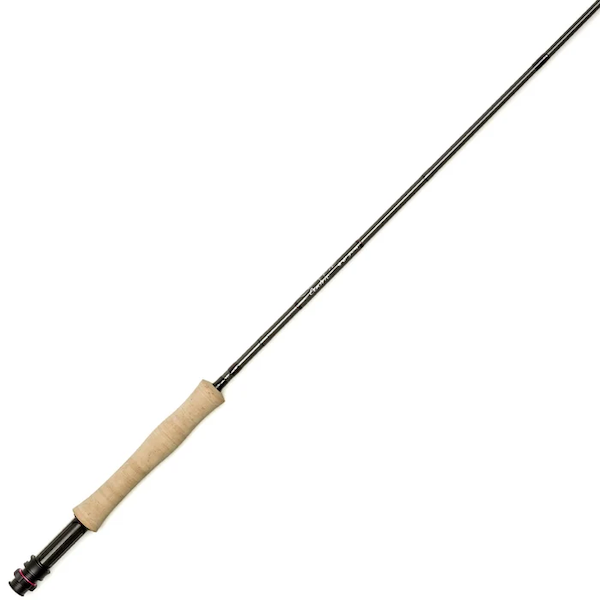
Scott Centric
Pros
- Easy to cast
- Surprising distance
- Responsive tip for roll casting and mending
Cons
- Not quite as accurate at short range
Specs
- Length: 9 feet
- Line Weight: 5
- Action: Fast
- Pieces: 4
- Warranty: Original-owner lifetime
If you told me that you like the Centric better than the Sage R8 Core, I’d disagree but wouldn’t argue. Unlike the ultra-fast Radian model it replaced, the Centric is a fast-action rod with tremendous feel and control. It throws consistent, flat loops almost by default, and the job of opening or closing those loops—to cast nymphs or to fire a long cast—requires not much more than a thought. The rod’s responsive tip makes for easy roll casting and mending, too, and the Centric was superbly accurate at medium and long ranges.
You don’t expect a rod with this much feel to go long, but the Centric surprised us. It’s not the rifle that the Radian was but casting the whole fly line with a few false casts was not a problem. Like the R8, the Centric is very good on the water. (We just felt the R8 was a fraction better.) Short-distance accuracy was good, but not great. Personally, I could take or leave the micarta reel-seat insert, but all in all, it’s a great-looking rod with high-end components. Ultimately, the R8 nipped the Centric in our test, but if the No. 1 thing you want from a fly rod is the pleasure of throwing perfect loops, cast after cast, I’d say get this one. —D.H.
How We Tested Fly Rods
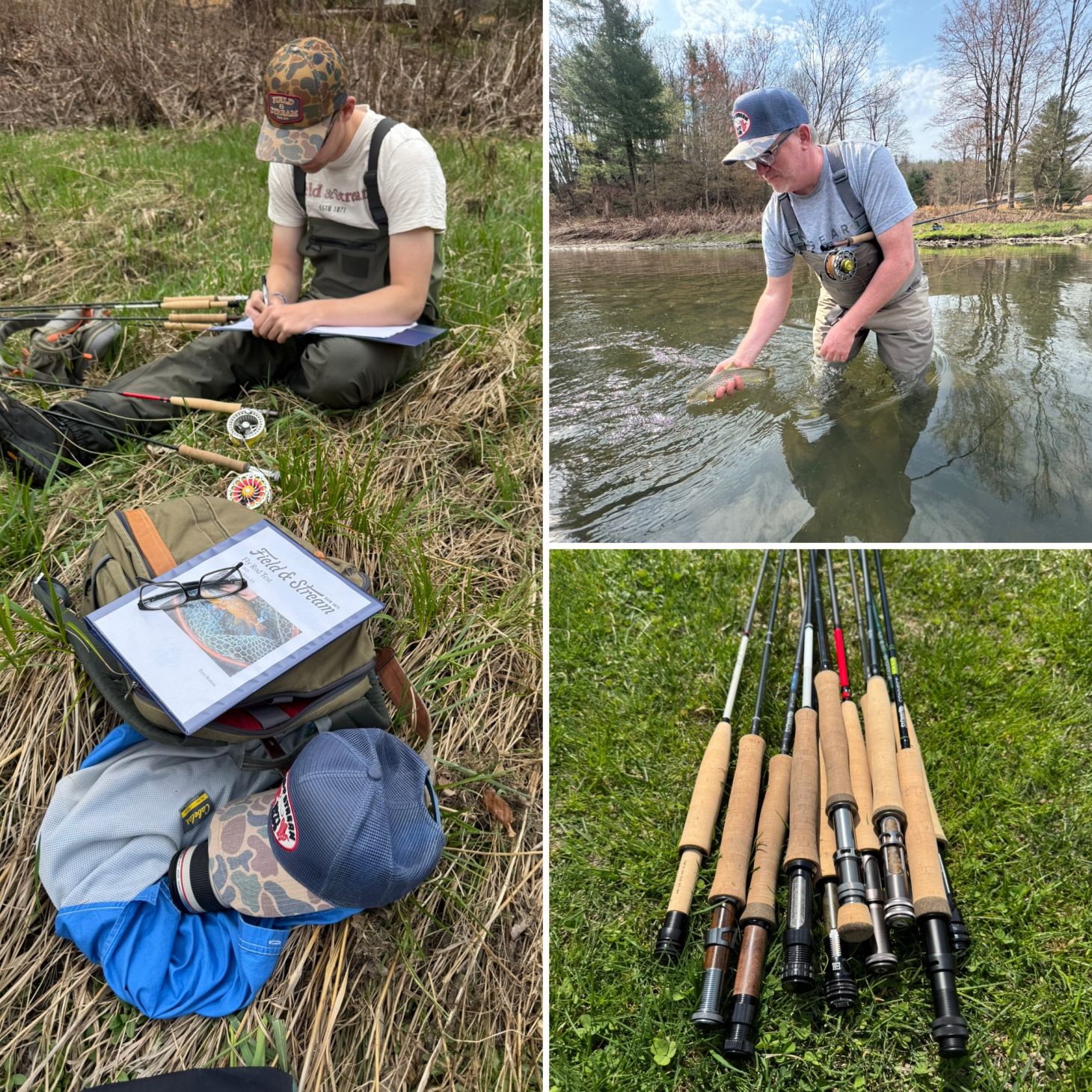
For our test, we traveled to one of the most famous—and challenging—trout rivers in the country: the West Branch of the Delaware River. There are certainly easier places than the Upper D to catch trout, but easy is not what this gear test was about. We wanted to see how today’s best fly rods performed under the toughest and most technical fishing conditions possible, which the Delaware offers in spades.
We booked a motel room in Hancock, NY, and arrived with 12 fly rods, plus a few models from our previous test in a wide variety of prices (sub-$200 to $1,000-plus), actions (glass noodles to graphite broomsticks), and lengths (7 ½ feet to 10 feet). One specification they shared was line weight: We limited the test to 5-weights only. Another common thread across the test was the fly line we used. Similar to shooting the same load through every gun in a shotgun test, we spooled every fly reel with the same fly line—Rio Gold WF5F.
This year’s testers included Executive Editor Dave Hurteau and Senior Editor Ryan Chelius. As with our previous test, we spent a full day on the lawn casting for distance, accuracy, and power. We set targets at 40, 60, 70, 80, 90, and 100 feet. Then we split up into lanes to judge and compare the rods side-by-side. We recorded test-panel notes on each rod’s power, feel, control, and overall castability.
On the second and third day of the test, we took all the rods on the river to see how they performed in real conditions. The Hendrickson hatch offered sporadic dry fly fishing, and we also hooked into a few fish on nymphs. Most importantly, we were able to evaluate the rods for line management. How easy is it to mend? How much line can you kick out? How well does the rod control line for a perfect drift? Again, we considered distance, accuracy, and castability—plus aesthetics and warranty.
By the end of the third day, a few rods emerged as front runners for Best of the Test and Best Value. For over an hour, we stood side by side on the river, taking turns casting and comparing each of the finalists. We even conducted a blind casting test to eliminate any bias. After three days of casting, fishing, and more casting, we had our winners.
Why Trust Us
For more than 125 years, Field & Stream has been providing readers with honest and authentic coverage of outdoor gear. Our writers and editors eat, sleep, and breathe the outdoors, and that passion comes through in our product reviews. You can count on F&S to keep you up to date on the best new gear. And when we write about a product—whether it’s a bass lure or a backpack—we cover the good and the bad, so you know exactly what to expect before you decide to make a purchase.
All new! 1871 Club Field Trips