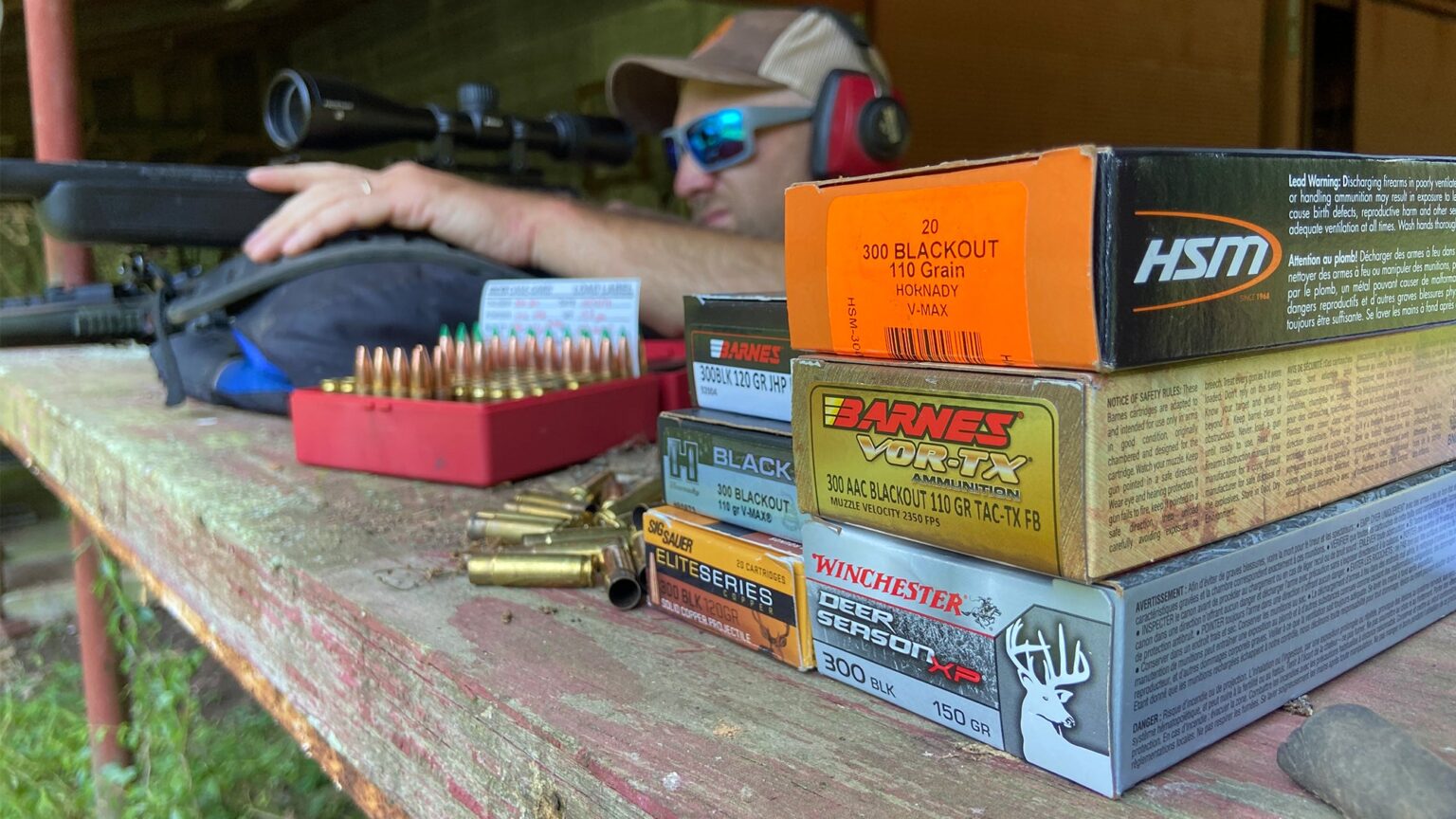
The best 300 Blackout ammo depends on your use case. For deer and hog hunting with copper bullets, Barnes VOR-TX 110-Grain TAC-TX FB is the top pick. For the best heavy-bullet value, Winchester Deer Season XP wins. For suppressed shooting and subsonic performance, look to heavyweight loads in the 200-grain range. The right load depends on whether you're hunting, running a suppressor, or shooting varmints.
- Barnes VOR-TX 110-Grain TAC-TX FB is the best overall pick for close- to mid-range deer and hog hunting.
- Hornady Black 110-Grain V-Max earns the fastest hunting load designation among the field-tested options.
- Winchester Deer Season XP delivers the best combination of heavy-bullet performance and overall value in the roundup.
- Subsonic 200-grain loads work suppressed but carry ballistics similar to 45 ACP. The author would not use them on whitetails beyond bow range.
- Remington Core-Lokt Copper is the best value among all-copper hunting loads tested.
We may earn revenue from the products available on this page and participate in affiliate programs. Learn more
Next to the original 5.56mm NATO/223, the 300 AAC Blackout (BLK for short) is the most popular chambering for the AR-15 platform, and, as a result, manufacturers now pump out a wide variety of 300 Blackout ammo. The cartridge was commercially introduced in 2010 by Advanced Armament Corporation, but it had actually been around since the early 1990s as the 300 Whisper, a wildcat developed by J.D. Jones with SSK Industries.
The Whisper was based on the 221 Fireball case, but most describe the 300 BLK as being a 223 case, necked up to .308 and trimmed. It’s short and stubby, with a bullet that seems too big for the case. But its versatility and performance are surprising. It works in standard 5.56 AR magazines and with AR-15 bolts. All you need to do to change your 5.56 to an 300 BLK is swap barrels, though most shooters opt for a separate upper receiver.
The 300 BLK is intended to be a defensive cartridge, but it serves dual roles. When loaded with 200-or-so-grain bullets moving at about 1,000 feet per second, it is subsonic, with ballistics similar to a 45 ACP handgun, but with a far more aerodynamic bullet. It will reliably cycle AR actions and is quiet as a mouse with a good suppresser. As such, suppressed ARs and the 300 BLK go together like corn feeders and Texas. Subsonic factory ammunition abounds for recreational shooting and defensive use, and there are even a few subsonic loads loaded with bullets designed for deer hunting. Personally, I wouldn’t use those on whitetails beyond bow range.
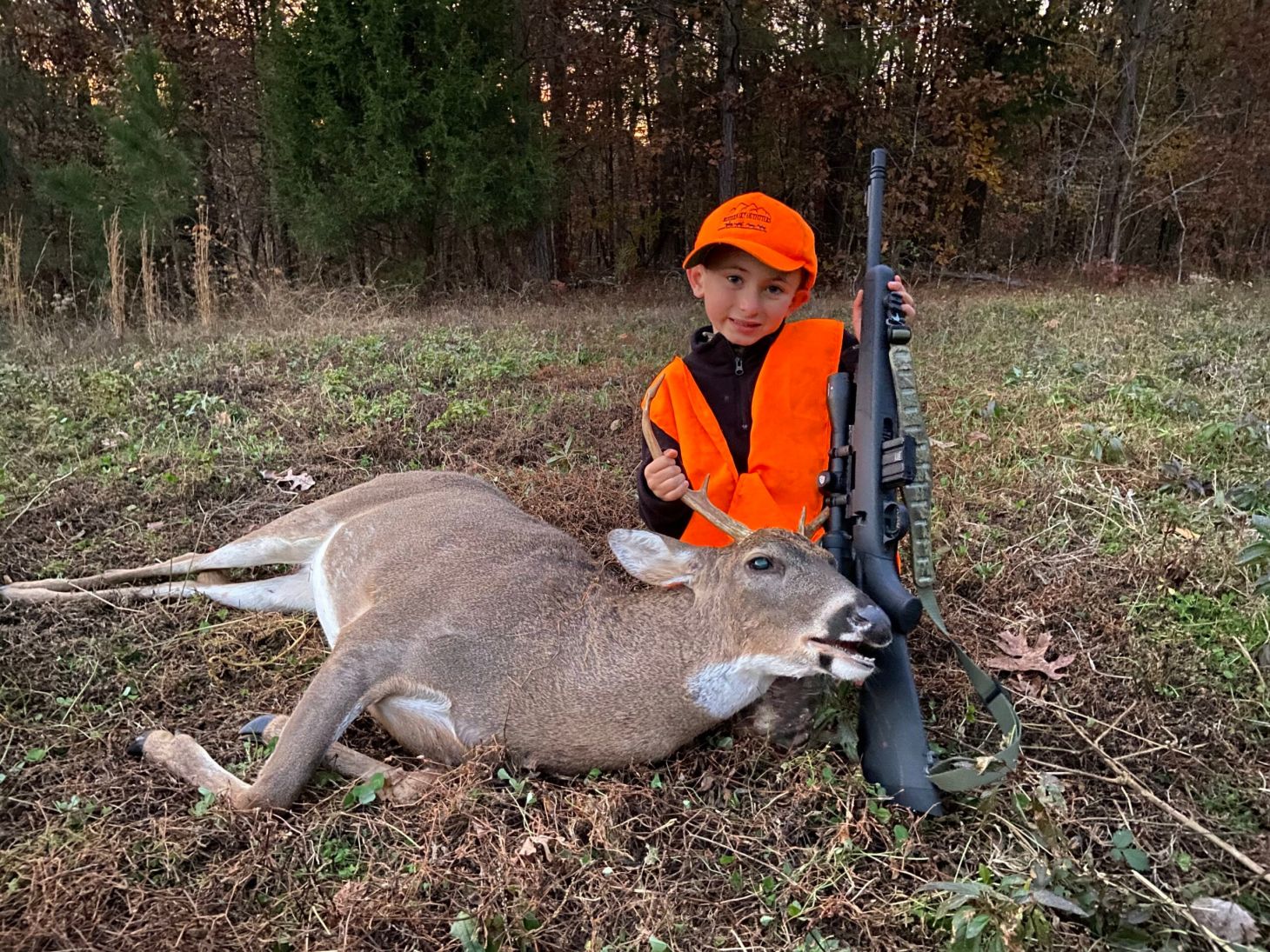
I think the cartridge is more interesting when it’s loaded with good hunting bullets in the 110- to 150-grain range, traveling to 2,300 fps—similar to the legendary 7.62x—39 cartridge chambered in service rifles like the AK-47 and SKS. Those ballistics are said to give it an edge in close-range combat over the 5.56. I can’t speak to that, but I can say they make it a very useful close- to mid-range hunting cartridge that has minimal recoil. For years, my young son used my bolt-action Mossberg MVP 300 BLK as his go-to rifle for whitetails and hogs. He killed a dozen or more animals with it, and in the process, I learned quite a bit about what I like to see in a 300 BLK hunting round. I put all of the loads below to the test with the above criteria in mind.
Because the cartridge is so versatile, what constitutes “the best loads” depends on what you’ll use them for, so I split the ammo tested into four categories: 110-grain all-copper hunting rounds, frangible varmint rounds, mid-weight all-purpose loads, and heavyweight hunting loads. Here’s how they all stacked up.
- Best Overall: Barnes VOR-TX 110-Grain TAC-TX FB
- Fastest Hunting Load: Hornady Black 110-Grain V-Max
- Best Value Copper Load: Remington Core-Lokt Copper
- Best Heavy-Bullet Load/Best Overall Value: Winchester Deer Season XP
- Hornady Custom 110-Grain CX
- Black Hills 110-gr TTSX
- Nosler Varmageddon 110 grain FB Tipped
- HSM 110-Grain V-Max
- Nosler Ballistic Tip
- Barnes JHP Rifle
- Federal Power Shok 120-gr Copper HP
- Federal Fusion MSR
110-Grain All-Copper Loads
My Mossberg seems to shoot best with lightweight, 110-grain bullets. Pair that weight with solid copper construction, and you get a blend of good velocity and outstanding penetration. Here are the top 110-grain copper loads.
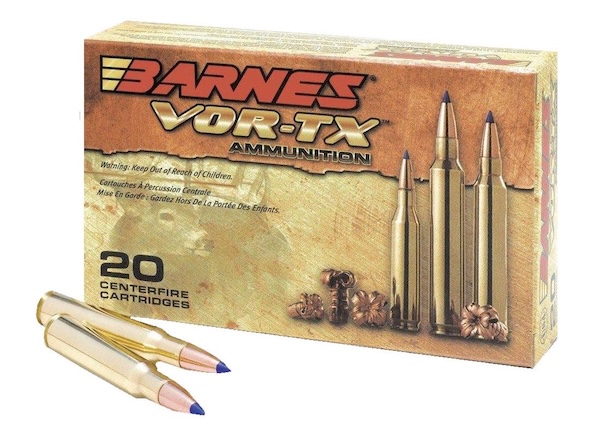
Best Overall: Barnes VOR-TX 110-Grain TAC-TX FB
best overall
Barnes VOR-TX 110-Grain TAC-TX FB
Pros
- Tough, all-copper bullet for maximum penetration
Cons
- Most expensive load tested
Specs
- 110-grain copper, polymer-tipped bullet
- 2,340 fps velocity
- About $2.50 per round
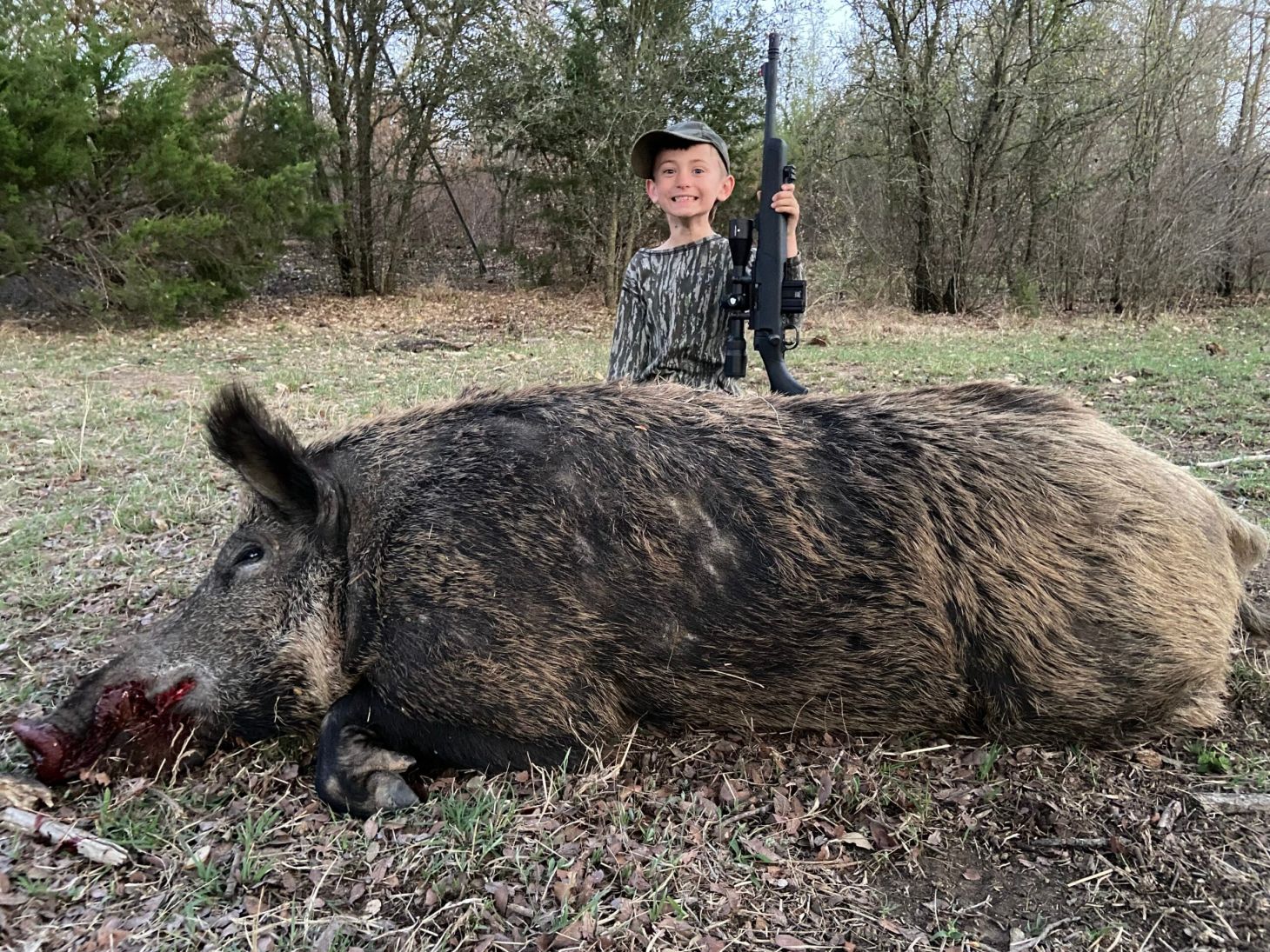
This all-copper bullet is the one my son has used the most while hunting, and it’s performed exceptionally well on both whitetails and hogs, including the giant boar Anse is posing with in the photo below (under “What to Consider”) and a whitetail buck he hammered with a quartering-to shot at 90 yards. This round was a good performer on the range, too, averaging just under advertised speeds from both rifles. My Mossberg, which likes 110-grain bullets, shoots it especially well, with .75-inch average groups. As an all-around hunting round, especially if you favor penetration over quick-expansion, this one is tough to beat.
Hornady Custom 110-Grain CX
Hornady Custom 110-Grain CX
Pros
- Tough bullet design
- Accurate
- Hard-hitting
- Good value
Cons
- None
Specs
- 110-grain copper-alloy expanding bullet
- 2,344 fps
- About $2 per round
This is Hornady’s latest 110-grain 300 Blackout load, and its performance is virtually identical to the Barnes VOR-TX 110-grain. This load features Hornady’s CX (Copper alloy eXpanding) bullet pushed to about 2,340 fps (faster than advertised, but remarkably consistent on my Garmin chronograph). Predictably, it shot very well out of my Mossberg with sub-1-inch average groups, and performance on game should be virtually identical to the Barnes load listed above. That I haven’t personally used this one in the field is about the only thing keeping me from naming it as the best overall.
Black Hills 110-gr TTSX

Black Hills 110-gr TTSX
Pros
- High-performance copper bullet
- Solid value
Cons
- Slower than the competition
Specs
- 110-grain Barnes TTSX copper bullet
- 2,283.5 fps
- About $2.10 per round
This one is also loaded with the polymer-tipped Barnes copper bullet and was another consistent, accurate shooter from my rifle, although average speeds were quite a bit slower than the Barnes and Hornady options. Online pricing shows the Black Hills TTSX to be a bit less expensive than the other two, however, and it certainly gets my vote as one of the top hunting loads on this list.
Frangible Varmint Loads
Not every 110-grain bullet needs to be an expensive copper one, particularly if you’re hunting coyotes, groundhogs, and other varmints. Cup-and-core lead bullets like these are more economical to shoot and provide explosive performance on thin-skinned critters. I’d never choose a bullet like this for whitetails from a 223, but the added heft of a .30-caliber slug will provide the momentum needed for adequate penetration on whitetails. Hit the lungs and avoid heavy bone, you’ll get your buck. I’ve seen it happen.
Fastest Hunting Load: Hornady Black 110-Grain V-Max
fastest load
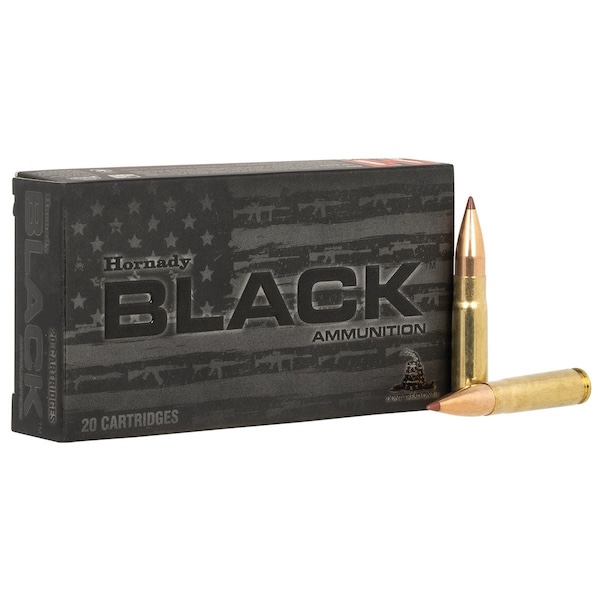
Hornady Black 110-Grain V-Max
Pros
- High velocity
- Great value
Cons
- Frangible bullet design impedes penetration
Specs
- 110-grain jacketed lead bullet
- Polymer tip
- 2,400 fps
- About $1.70 per round
This was the fastest hunting load I tested, averaging 2,400 fps. It shoots exceptionally well from my Mossberg. The polymer-tipped V-Max is a highly frangible varmint bullet, and not something I’d ever recommend for deer hunting with a 22 centerfire. But it’s a different animal in 300 BLK. Anse killed a nice 8-point buck at 60 yards with this very load a few seasons ago, and I was impressed.
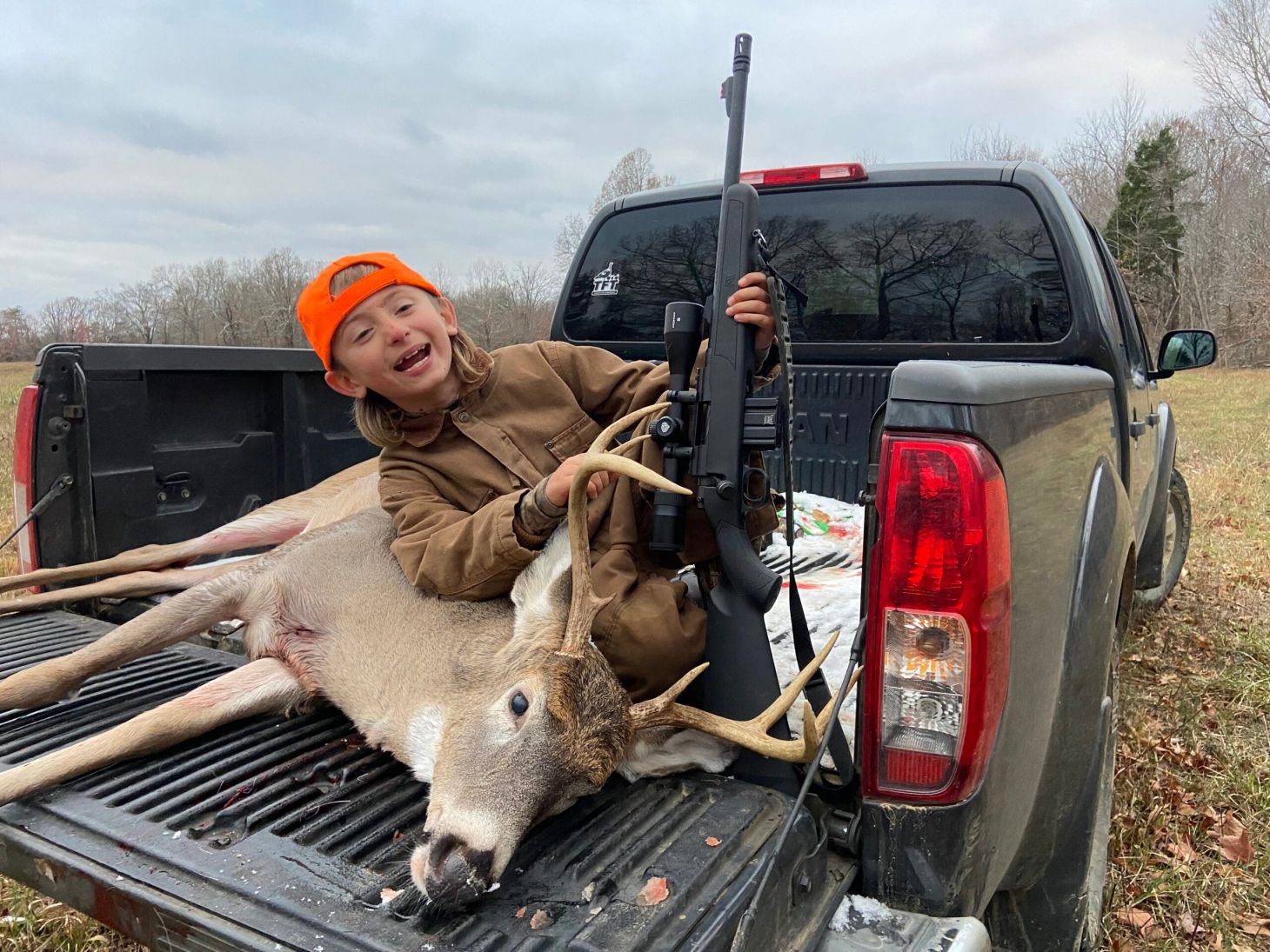
The deer was quartering-to, and Anse hit him on the point of the shoulder. The bullet crushed bone, obliterated the heart and lungs, and created a blood trail that could be seen from space. My niece borrowed the rifle the next day, and she killed another good buck from the same stand, also with a Hornady Black V-Max and one good shot.
Nosler Varmageddon 110 grain FB Tipped
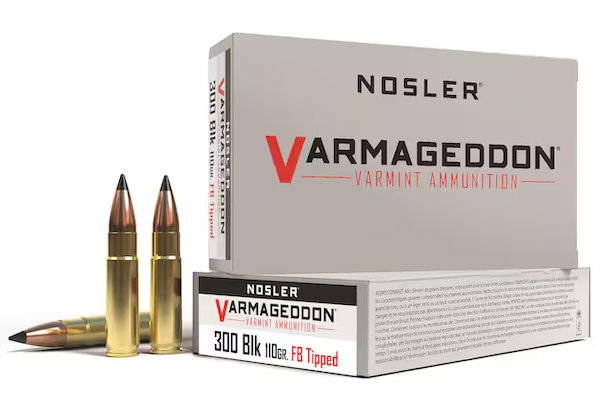
Nosler Varmageddon 110 grain FB Tipped
Pros
- High velocity
- Good accuracy
- Economical
Cons
- Sticky feeding in some guns
- Inconsistent velocity
Specs
- 110-grain flat-based tipped lead bullet
- 2,244 fps
- About $1.90 per round
This is another newer load that I tested while updating this story. It shot great groups from my rifle (which I’ve come to expect with just about any 110-grain load), and it’s designed for high-volume shooting at varmints (think prairie dogs). At that, it should be exceptional, with a frangible FB Tipped bullet that’s designed for rapid expansion and a good per-round price. This load will work on whitetails if heavy bone is avoided, but there are better options on the list.
HSM 110-Grain V-Max
best value
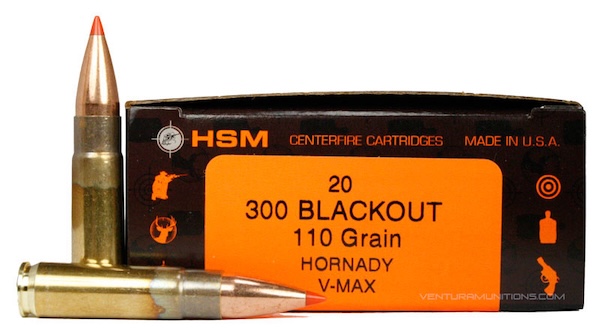
HSM 110-Grain V-Max
Pros
- Least expensive ammunition tested
Cons
- Not as fast or accurate through the guns we used as Hornady Black with the same bullet
Specs
- 110-grain jacketed lead bullet
- Polymer tip
- 2,315 fps velocity
- About $1.40 per round
I’ve been seeing HSM ammunition at local gun shops around here recently, and I picked up a couple boxes of 300 BLK loaded with 110-grain V-Maxes last fall. I knew my rifle shot the 110 V-Max bullet well, and I figured they were worth a try for the price. Though these were a little slower and a little less accurate than the same bullets in the Hornady Black series, they nonetheless shot well out of both rifles, and were the least-expensive cartridges I tested. HSM also loads a 125-grain Sierra Pro Hunter that’s worth a look. If you’re on a tight budget, you can save a few bucks with this load and still get solid performance.
Mid-Weight All-Purpose Hunting Loads
Factory 300 BLK loads are offered in a range of bullet weights, and your gun is likely to prefer a particular weight depending on barrel twist and length. The 120- to 125-grain options here include classics like the Remington Core-Lokt Copper and Nosler Ballistic Tip, and were some of the hardest-hitting loads tested. I wouldn’t hesitate to use them on big wild hogs or black bears over bait.
Nosler Ballistic Tip
best quick expander
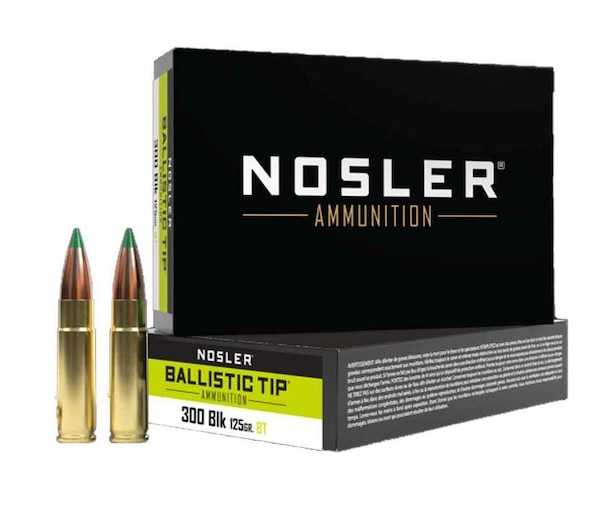
Nosler Ballistic Tip
Pros
- Proven design in a mid-weight bullet
- aerodynamic and fast
Cons
- Not cheap
Specs
- 125-grain spitzer bullet
- Ballistic tip
- 2,231 fps velocity
- Around $2.10 per round
I was able to get my hands on these factory loads when I updated this story, and the results were a bit better than the handloads I used originally, with an average velocity increase of more than 100 fps. The 125-grain Ballistic Tip is a great bullet for the BLK. Though I personally prefer the copper bullets, my buddy has handloaded these for years for his daughter’s suppressed Model 700, and she’s used it to kill a pile of Tennessee whitetails and a couple Texas pigs, too.
Barnes JHP Rifle
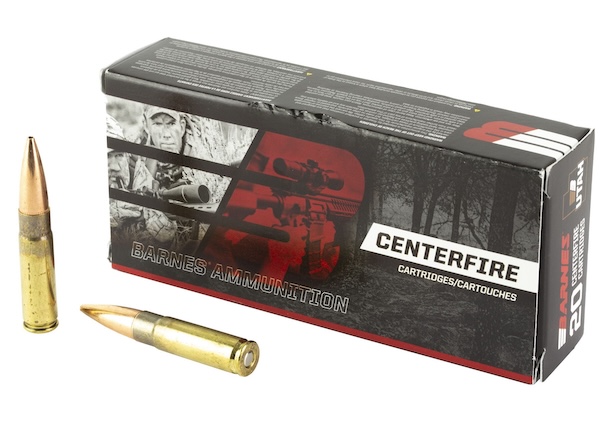
Barnes JHP Rifle
Pros
- Classic jacketed hollowpoint bullet
- Inexpensive
Cons
- Sluggish ballistics compared to the competition
Specs
- 120-grain lead-core hollowpoint
- 2,175 fps velocity
- About $1.45 per round
If you’re looking to stockpile some range or general-purpose ammo that’ll do for hunting in a pinch, this lead-core jacketed hollowpoint is a good bet. It shot well across the board, and a good many deer and pigs have been slain with a JHP bullet. Velocity was a little slow, but the price it right.
Federal Power Shok 120-gr Copper HP
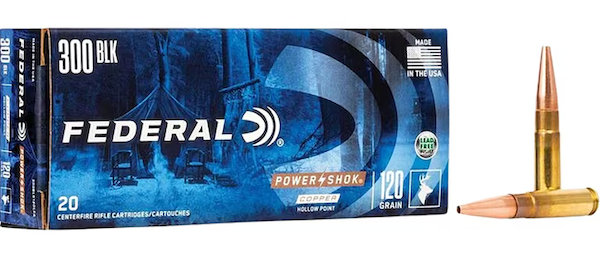
Federal Power Shok 120-gr Copper HP
Pros
- Hard-hitting hollow point
- Economical for an all-copper load
Cons
- Slower than some of the other 120-grain+ bullets tested
Specs
- 120-grain copper hollowpoint
- 2,183.6 fps
- About $2.00 per round
This is another new load I tested while updating this story. This one sports a 120-grain all-copper hollowpoint that was extremely accurate out of my Mossberg. Velocities were consistent and fast enough at 2,183.6 fps on average, but a fair bit slower than the Nosler Ballistic Tip.
Best Value Copper Load: Remington Core-Lokt Copper
best value copper load
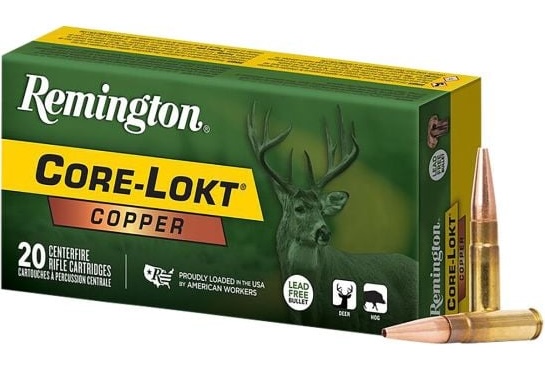
Remington Core-Lokt Copper
Pros
- Hard-hitting all-copper hollow point
- Extremely accurate
- Great value
Cons
- Slightly slower than the similar Federal load
Specs
- 120-grain copper hollowpoint
- 2,172 fps
- About $1.80 per round
This 120-grain load is virtually identical to the Federal Power-Shok load listed above, albeit about 10 fps slower on average—and 15 cents per round cheaper. Although I didn’t shoot enough groups with any of these loads to declare a serious difference in accuracy, I will say the Remingtons all clustered themselves into nice little clover-leaf groups. If you like all-copper bullets—which, I do in smaller rifles—then this one is one of the best values on the list.
Heavyweight Hunting Loads
Those who routinely shoot subsonic 300 BLK ammo are accustomed to extremely heavy bullets of 190 to 200 grains—stuff that will, again, render performance similar to a 45 ACP handgun. Plenty of rifles shoot the heavier stuff a bit better, and fortunately there are several excellent full-power hunting loads on the market with 150-grain+ bullets. You’ll see a reduction in velocity with these, but you can expect excellent performance on whitetails inside 100 yards. The two loads tested here were both excellent values.
Best Heavy Bullet Load/Best Overall Value: Winchester Deer Season XP
best heavy bullet load
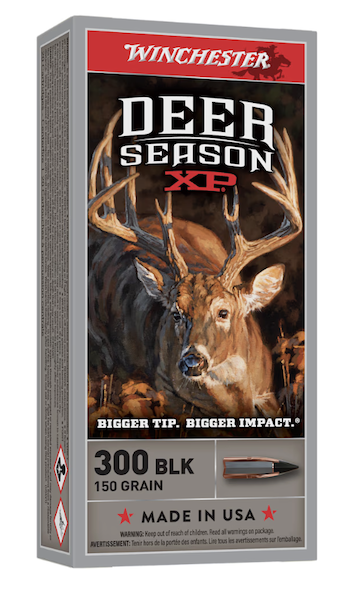
Winchester Deer Season XP
Pros
- Proven deer bullet design in a heavier weight
Cons
- Significantly slower muzzle velocity
Specs
- 150-grain jacketed lead bullet
- Oversized polymer tip
- 1,950 fps velocity
- About $1.40 per round
The Extreme Point bullet with oversized polymer tip in Winchester’s Deer Season XP is known for violent expansion that puts whitetails down quickly. This one was one of the two 150-grain bullets tested in this lineup, and it averaged 1,950 fps. Previous experience had shown me that my Mossberg doesn’t particularly care for heavy bullets, and that trend held true with the 1.5-inch groups I got with Deer Season XP, but it shot as well as anything else through my buddy’s AAC Model 7. Best of all, this load was only a penny more per shot than the very cheapest load in this test, but it’s a far better option for deer hunting—and available just about everywhere.
Federal Fusion MSR
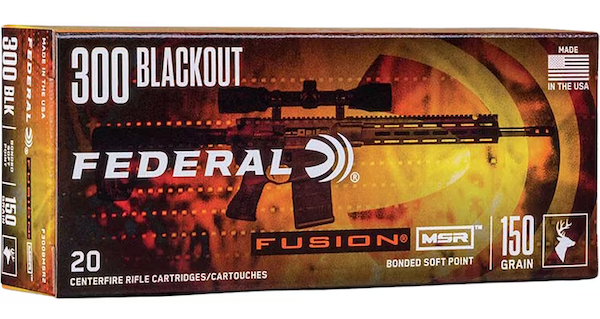
Federal Fusion MSR
Pros
- Bonded softpoint design for better weight retention
- Faster than Winchester Deer Season XP
Cons
- More expensive
Specs
- 150 Grain Fusion bullet (bonded softpoint)
- 1984 fps
- About $1.60 per round
If you want a heavy, rugged, controlled-expansion bullet for your 300 BLK that doesn’t cost a fortune, the Fusion MSR is it. If I were hunting black bears over bait and expected a big one to show up, this load would be on my short list to ensure adequate penetration and plenty of upset (black bears aren’t all that difficult to kill when they’re eating donuts at 18 yards). The Fusion bullet is a proven performer on whitetails and hogs, and a great value for anyone looking for a quality 150-grain hunting load.
How We Tested 300 Blackout Hunting Ammo
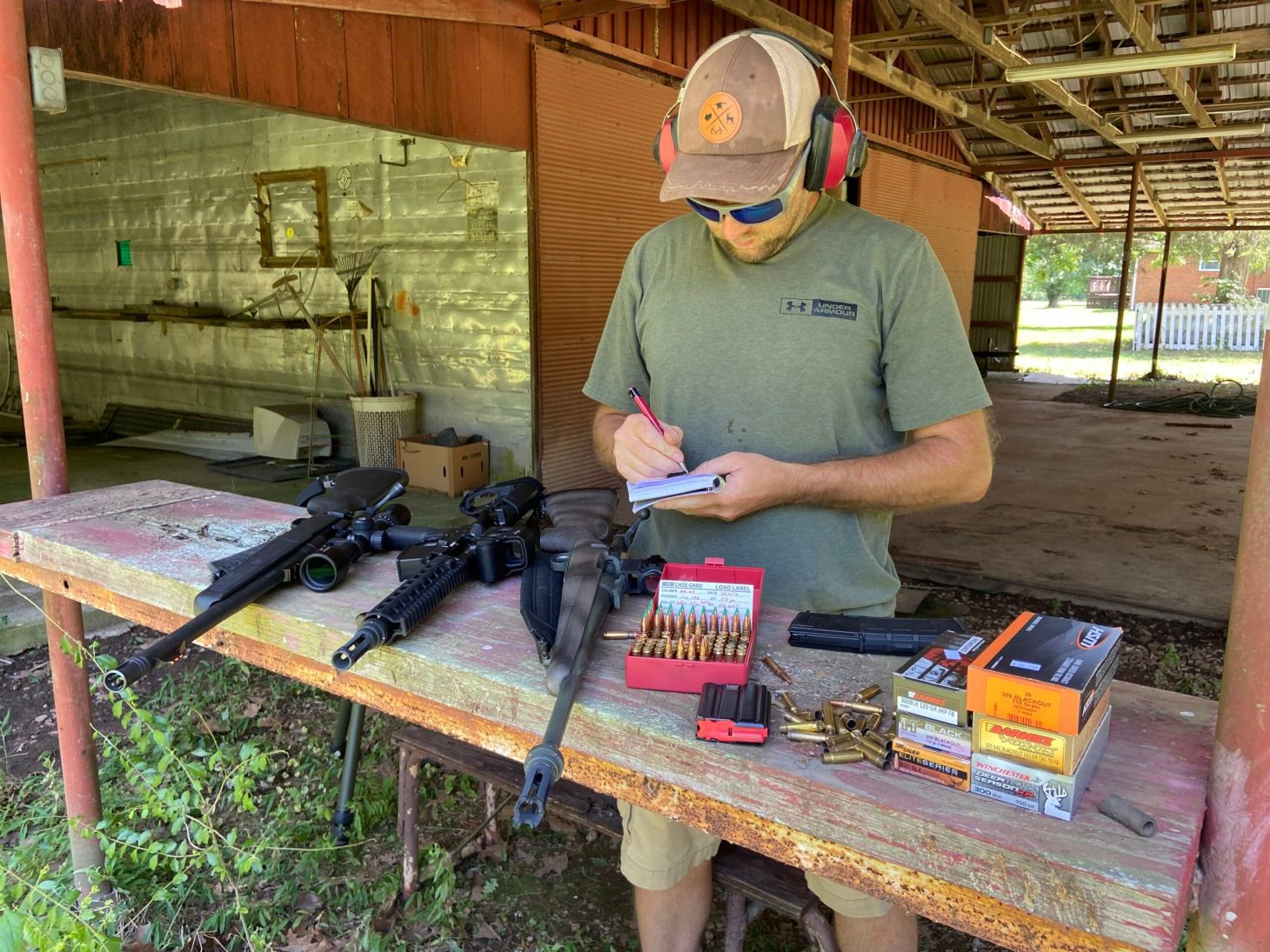
For this test, I went ammo shopping at two local gun shops, a Wal-Mart and a Bass Pro Shop, to make sure I tested what is actually out there on store shelves. I also shot up a bunch of my own stash, all loads that I was already quite familiar with and trust to be good performers based on what I’ve seen on the range and in the woods. I started by chronographing each load through a couple rifles, including my Mossberg MVP Patrol Rifle (16.5-inch) and my buddy’s AAC Model 7 (16.5-inch). Both have a 1:7 twist rate. I used a Garmin Xero chronograph.
I then shot a sampling of 50-yard groups through each gun, not to compare group sizes but to look for accuracy trends.
What to Look for When Choosing 300 Blackout Ammo
In a hunting context, the 300 BLK is frequently compared to the .30-30 Winchester, but any glance at a ballistics table shows that to be a stretch. The .30-30 is much more powerful. For hunting purposes, it’s better to just compare the 300 BLK to the 223 because, again, those are the two most popular cartridges chambered in America’s most popular style of rifle. Both are easy to find and relatively inexpensive. Neither was designed for deer hunting, but lots of people hunt deer and other critters with them anyway, and so manufacturers have responded with an assortment of factory-loaded hunting ammunition for both.
I’ve shot several deer with a 223 and have seen plenty of others shot with it. It works, but the 300 BLK works better. The .30-caliber bullets punch bigger holes all the way through whitetails and break bone with no trouble at all. My 9-year-old son, Anse, has been using a 300 BLK the past several seasons in a Mossberg MVP Patrol Rifle, and he’s taken five deer and a couple hogs with it, including a Texas boar that’s still one of the biggest wild pigs I’ve ever seen on the hoof. All shots taken have been between 50 and 100 yards, all have been one-shot kills, and none of those critters have made it more than 50 yards.
Anse’s comfort level with the cartridge puts the spotlight on the 300 BLK’s other great attribute: It recoils only a bit more than a 223, whether it’s chambered in a semi-automatic or bolt-action rifle. Unless you’ve hunted with small kids, you can’t appreciate how delicate the issue of recoil can be. When Anse was younger, the first thing he’d ask when sitting down with a rifle at a shooting bench was, “How much does this gun kick?” With the 300 BLK, the answer is not much. It recoils less than a 30-30. Less than a 6.5 Creedmoor. Even less than a 243. If cartridges were assigned a deer-killing-power-to-lack-of-kick ratio, I’d put the 300 BLK near the top, inside 100 yards (right there with the 350 Legend).
FAQS
Ammo is easy to find and relatively inexpensive. Hunters can use the 300 BLK in AR-15-style rifles and magazines but with significantly heavier and larger-diameter than the .223. Recoil is minimal, making it an ideal hunting cartridge for young shooters. And you can use subsonic ammo with a suppressor to have so much fun at the range that the federal government put a tax and extra laws on it.
I’ve seen the 300 BLK work wonders at 100 yards, but this is not a long-range hunting cartridge. Keep shots on deer inside 150 yards, and think of 75 yards as the ideal distance.
Having just returned from a bear hunt in Alberta, I’d have 100-percent confidence using the 300 BLK and a good hunting bullet on black bears over bait, where shots are close and controlled. And I’d damn sure choose a compact AR and 30-round magazine full of those copper bullets over a magnum revolver for bear protection, too. Check out the rest of the best cartridges for bear hunting.
No, it will work fine in standard 5.56 magazines. But if you have a 5.56/223 rifle as well as a 300 BLK, it’s a good idea to keep magazines labeled and separated, so you don’t accidentally chamber the wrong round into the wrong gun. That’ll cause problems you don’t want.
Why Trust Us
For more than 125 years, Field & Stream has been providing readers with honest and authentic coverage of outdoor gear. Our writers and editors eat, sleep, and breathe the outdoors, and that passion comes through in our product reviews. You can count on F&S to keep you up to date on the best new gear. And when we write about a product—whether it’s a bass lure or a backpack—we cover the good and the bad, so you know exactly what to expect before you decide to make a purchase.

All new! 1871 Club Field Trips