We may earn revenue from the products available on this page and participate in affiliate programs. Learn more
I should recuse myself from reviewing this book, given that I wrote the foreword and I consider Will Brantley a good friend. But no one recuses themselves from anything these days. Plus, as I mentioned in that forward, our friendship is built mainly on arguing about who’s right and who’s full of sh*t. I’m not going to pass up this opportunity to be right without so much as a whimper from him.
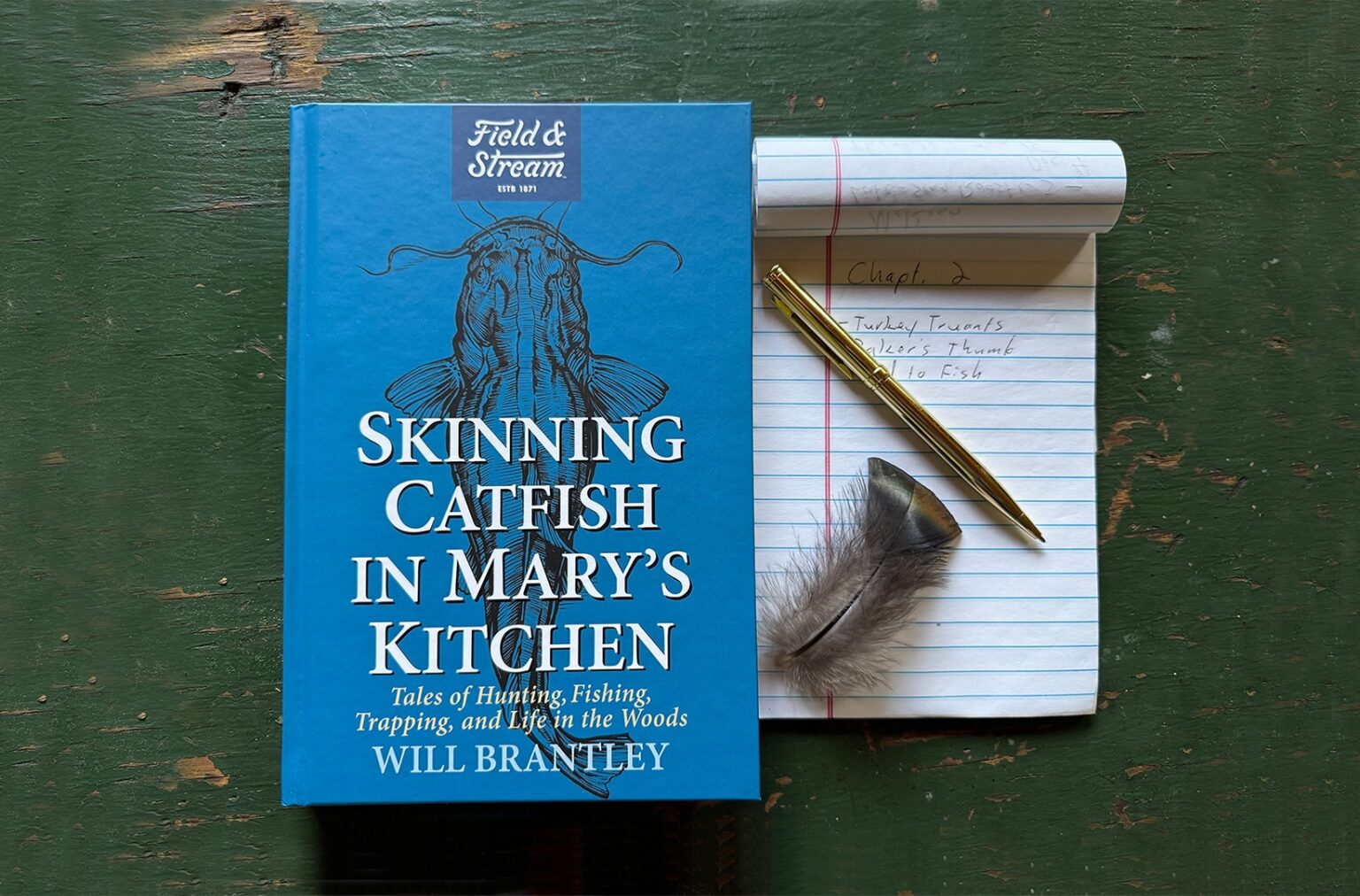
Will Brantley’s Skinning Catfish in Mary’s Kitchen is a wonderful read and, for my money, just what an outdoor book should be. Delightfully free of advice and mercifully short on unsolicited musings, it is straightforward, unadorned storytelling—a collection of tales taken from the daily lives of a died-in-the-wool Southern outdoor family, told with subtly and deft. It is charming and funny and occasionally crude and poignant, sometimes all in the same paragraph.
Will Brantley sold his first story (about catfish noodling) to F&S in 2006 and became hunting editor in 2015. Early on, we’d pegged him as a how-to writer, but we quickly learned that his real gift was for narrative storytelling, with a sort of diary-of-a-redneck flare that’s all his own.
It doesn’t hurt that Brantley lives in a part of Kentucky where you can catch giant bass and slab crappies, noodle catfish, bowfish carp, and chase squirrels and ducks and spring gobblers and monster bucks all on half a tank of gas. It hurts even less that he does all these things with his wife, Michelle, and their boy, Anse, who are frequent and colorful characters in his stories. It especially helps that Michelle is smarter, tougher, and more country than him. And that Anse is more eaten up with the outdoors than either of them. But it’s Brantley’s talent as a writer that brings it all together.
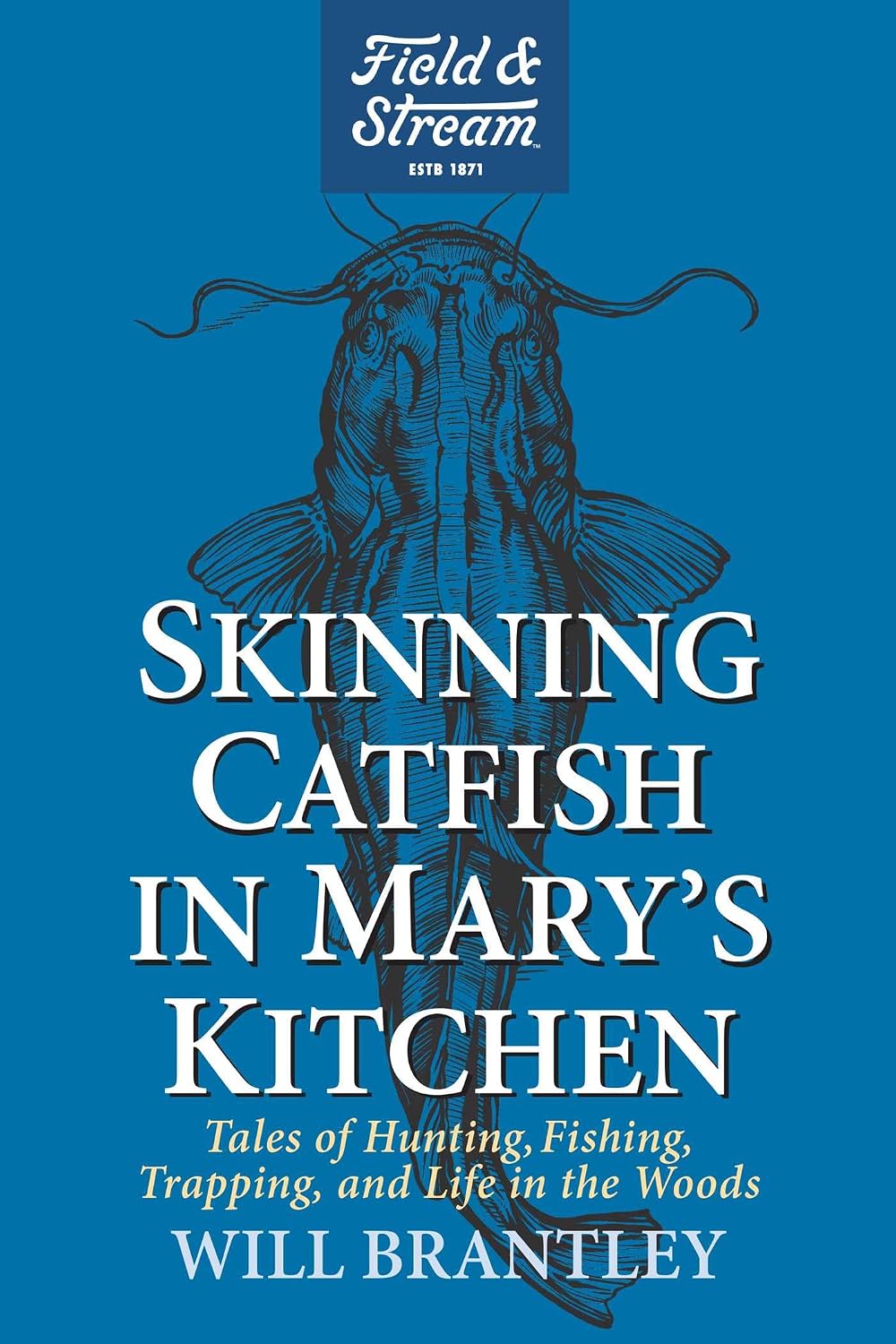
Will Brantley’s Skinning Catfish in Mary’s Kitchen
Most of the stories in Skinning Catfish in Mary’s Kitchen originally appeared in pages of Field & Stream or on fieldandstream.com, and many have been expanded (at least enough to put the curse words we deleted back in.) There are also stories from Brantley’s many other outlets, including Realtree.com, Peterson’s Hunting, and Game & Fish, plus five new stories original to this work.
I do have my favorites. “Bull frogs in Aunt Tammy’s Sh*t Pond” is the picture of early summer for a school-age country boy, with dusty gravel roads, bullfrogs harrumphing in the darkness, and flashlight beams piercing the night woods. That, plus crap. “Beavercue” is like having a seat at the Brantley family supper table, and you’re in luck because Granny from The Beverly Hillbillies seems to be doing the cooking. “Lil’s Last Hunt,” which recounts a final quail shoot with his dad’s last bird dog—and which shows off Brantley’s range as a writer—is just lovely. (Sorry Brantley, but there’s no other word for it.)
I could name half a dozen others. (“Lockjaw,” “The Turkey Truants,” “Old Trusty,” “Baker’s Thumb,” “The Craig’s List Camper,” “Trout Bums.” See?) But what I recommend is that you get yourself a copy of Skinning Catfish in Mary’s Kitchen and read the stories for yourself. As you do, it might be helpful to know what I appreciate most about Brantley’s writing, something rare and hard to pull off as a writer: It’s that Brantley never overdoes it. Many lesser writers try to elevate the outdoors with lofty prose. Others want to tell you what hunting and fishing is all about. Not Brantley. Brantley just wants to tell you a story—and chances are very good that it will be one of your favorites. —D.H.
Title Story
The title story of Skinning Catfish in Mary’s Kitchen first appeared right here, on fieldandstream.com, and was dedicated to Brantley’s mother-in-law, Mary Francis Adams, on Mother’s Day in 2023. She passed away in July of 2025. In her final moments, she asked her son-in-law if he planned on naming his book after her, and he told her that he was. Here is the story.
Skinning Catfish In Mary’s Kitchen
It can take a while for a potential son-in-law to earn his keep, and it didn’t seem like I was off to a great start with Mary, seeing as I’d slapped her in the face with a catfish tail. It sounds worse than it was; the catfish was dead, and I’ve seen live ones slap harder, and it was an accident besides that. Maybe I shouldn’t have been cleaning catfish in Mary’s kitchen, but it was her idea, and she was just standing too close while I was using the skinning pliers. A good piece of hide ripped free faster than I meant for it to, and the momentum of it all sent the tail and a rope of guts right into Mary’s cheek with a liquid plop. She looked at me, and her eyes narrowed. I recalled a few years earlier when I’d splashed Michelle, Mary’s daughter, in the face with deer piss right before our first date. That had turned out okay, but I wasn’t sure about this.
I took a moment of silence just to observe, and there was catfish blood and slime running off my knuckles and Mary’s cheek both all the while. But I didn’t dare speak first. Mary had never scolded me before, but I thought that might be about to change. Instead, she wiped her cheek with her hand and said, “Well, finish that one up.” So, I twisted the catfish’s head off, and it cracked like smashing a bag of pork rinds. I dropped the severed head into the trash can, split the belly with my pocketknife, sloughed out the rest of the guts, and handed the skinned fiddler to Mary. She walked it to the sink and rinsed it off.
Mary technically wasn’t my mother-in-law yet, but Michelle and I had been dating for a few years, and I was trying to earn my keep. We’d all gone catfishing that day—Larry, Mary, Michelle, and I. I’d taken them to one of my favorite bank-fishing spots, in a bay that’s choked with lily pads in the summer but that loads up with channel cats and bullheads in the early spring before the pads get too thick.
I’ve tried worms there but have never done much good on them. It’s always a chicken liver bite, and Mary didn’t like that we were using up good livers for fish bait when we could’ve been frying them instead. But she came around because the cats were biting. You could barely bait a hook and set your rod in a forked stick before a catfish would run with it. Larry caught three nice ones in a row, just off a chunk of yellow liver gristle. If you’ve done any liver fishing at all, then that tells you how hot the bite was because they almost never hit that stuff. We only brought one tub of livers with us and soon, we were out of bait.
We’d parked the truck and hiked a quarter mile into the spot, and we hauled our fish out on a rope stringer, wound around a hickory limb that Larry and I carried on either end. It was a March day, when the woods still looked like winter, but the warm air and daffodils said otherwise. Still, the sun set early, and by the time we were home, it was dark.
I don’t remember exactly how the suggestion to clean the fish in the kitchen came up. Catfish skinning is an outside job. But probably, we didn’t have a flashlight handy, and Mary’s kitchen was well lit. She’s always had a pragmatic “solve the problem right in front of you first” type of attitude.
I couldn’t have made a bigger mess of her kitchen with a bucket of puke, and to top it off, I slapped her in the face with a dead catfish. I’d say mother-in-law/son-in-law relationships have been severed by less. But that’s been 25 years—and many meals and laughs and a few tears ago—in that same kitchen. I bet today, if I had a mess of catfish to clean and it was getting dark with no flashlights handy, Mary would suggest we clean them in the kitchen, and she’d help, too.
She might just stand back a bit while I was working the skinning pliers. —Will Brantley

All new! 1871 Club Field Trips