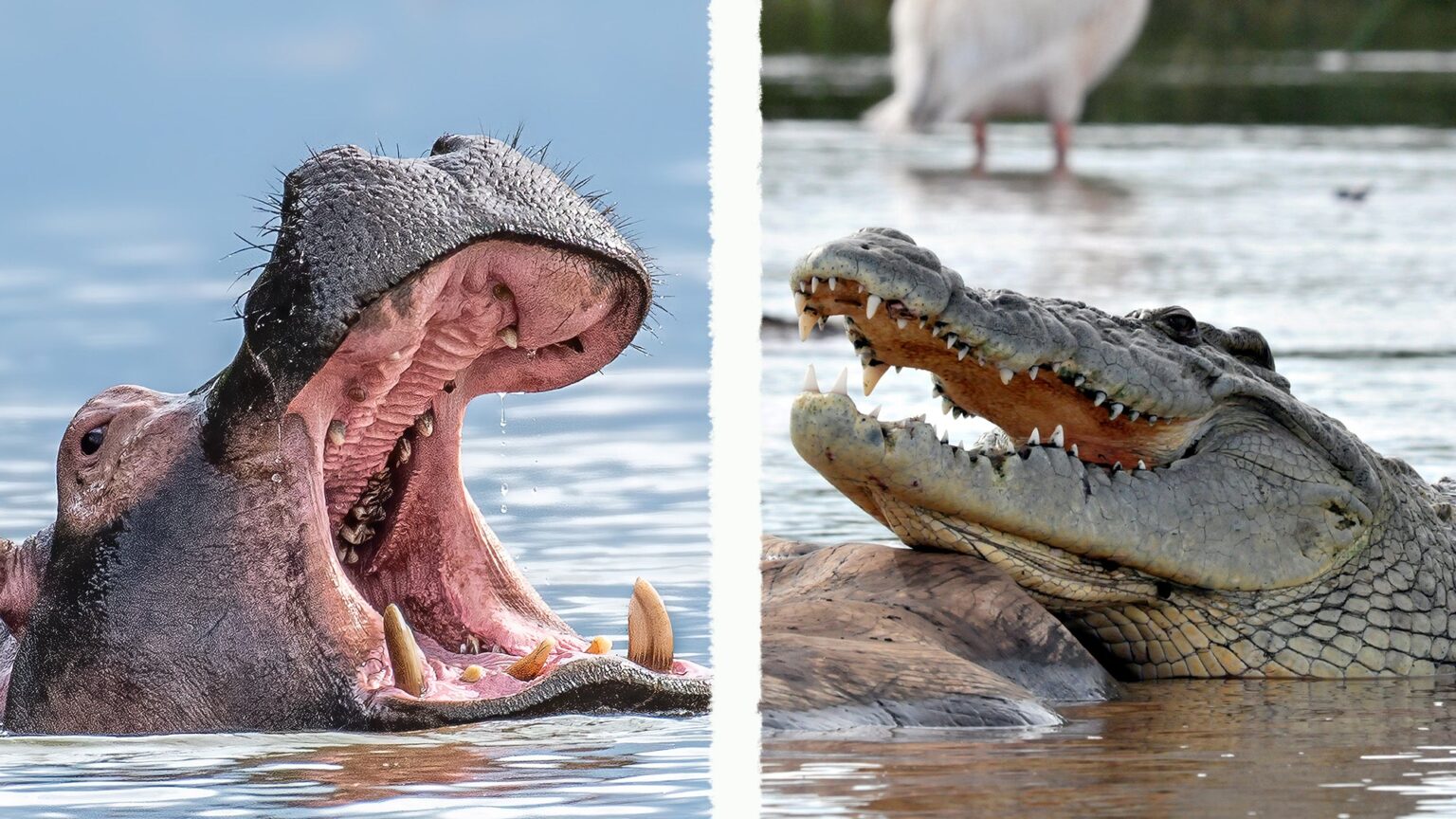
In a direct confrontation, the hippo would likely win due to its massive size advantage—weighing up to seven times more than a crocodile at nearly 5 tons. While crocodiles have twice the bite force and more teeth, hippos have significantly larger mouths and 18-inch canines. However, crocodiles rarely engage adult hippos directly, instead targeting vulnerable calves through ambush tactics.
- Hippos have a massive size advantage, weighing 3,000-9,900 pounds compared to crocodiles' 500-1,300 pounds.
- Crocodiles possess nearly double the bite force at 3,700 PSI versus hippos' 1,800 PSI.
- Hippos have significantly larger mouths (3-4 feet when open) and 18-inch canines, the largest teeth of any land animal.
- Crocodiles rely on stealth and ambush tactics rather than direct confrontation with adult hippos.
Crocodiles and hippos are the largest and fiercest denizens of Africa’s freshwater habitats. While they are not natural rivals—they do not compete for the same food, nor do they normally eat each other—they do occasionally clash when territorial disputes arise. That’s a lot of heft, a lot of teeth, and a lot of power. So, who exactly would win in a heavyweight showdown of hippo vs crocodile? In this article, we’ll explore this bruising scenario.
Key Points
Hippos are far bigger than crocodiles and have much bigger mouths. Crocodiles have more teeth and a more powerful bite.
Crocodiles are carnivores and stealthily ambush their prey. Hippos are herbivores, but aggressively protect their territory.
Hippos are too big for crocodiles to attack and they will chase crocs from their territory if necessary.
Hippo vs Crocodile: Tale of the Tape
Let’s start by measuring up the combatants:
Hippopotamus
- Class: Mammal
- Food Chain Rank: Primary Consumer
- Trunk Color: Brown
- Body Shape: Round
- Weight: 3,000-9,900 pounds
- Height: 4-5.5 feet at shoulder
- Length: 10.5-16.5 feet
- Open Mouth Measurement: 3-4 feet
- Speed: 22 mph on land; 5 mph in water
- Bite Power: 1,800 PSI
- Number of Teeth: 36
- Size of Teeth: Up to 18-inch canines
- Greatest Assets: Size, aggressiveness, thick skin, speed
- Greatest Liabilities: Calves are vulnerable
- Senses: Excellent sense of smell; good underwater eyesight; good underwater hearing
- Go-to Attack Moves: Charge, bite in half
Crocodile
- Class: Reptile
- Food Chain Rank: Apex Predator
- Trunk Color: Olive gray with yellow underneath
- Body Shape: Long, Pointy, Tapered
- Weight: 500-1,300 pounds
- Height: 12-19 inches
- Length: 12.5-19.5 feet
- Open Mouth Measurement: Up to 2.75 feet
- Speed: 22 mph on land; 15 mph in water
- Bite Power: 3,700 PSI
- Number of Teeth: 64-68
- Size of Teeth: 2-4 inches
- Greatest Assets: Stealth, camouflage, teeth, tough scaly back
- Greatest Liabilities: Low to the ground
- Senses: Excellent night vision; excellent underwater vision; pressure receptors allow them to sense things around them in water
- Go-to Attack Moves: Ambush, bite, death roll
The numbers above give the hippo the clear pre-fight nod. It is the second largest land animal on the planet, after the various elephant species. It weighs in up to seven times heavier than a crocodile, topping out at nearly 5 tons. Toe to toe, on land, the hippo towers over its lowly opponent. It also has a significantly larger mouth, one in which, when fully opened, an adult human could comfortably (or uncomfortably) sit. The crocodile does score points for nearly doubling the hippo’s bite power and number of teeth, but the hippo counters with massively outsized canines, the largest teeth of any land animal (that isn’t a tusk).
Crocodiles Do Eat Hippos?
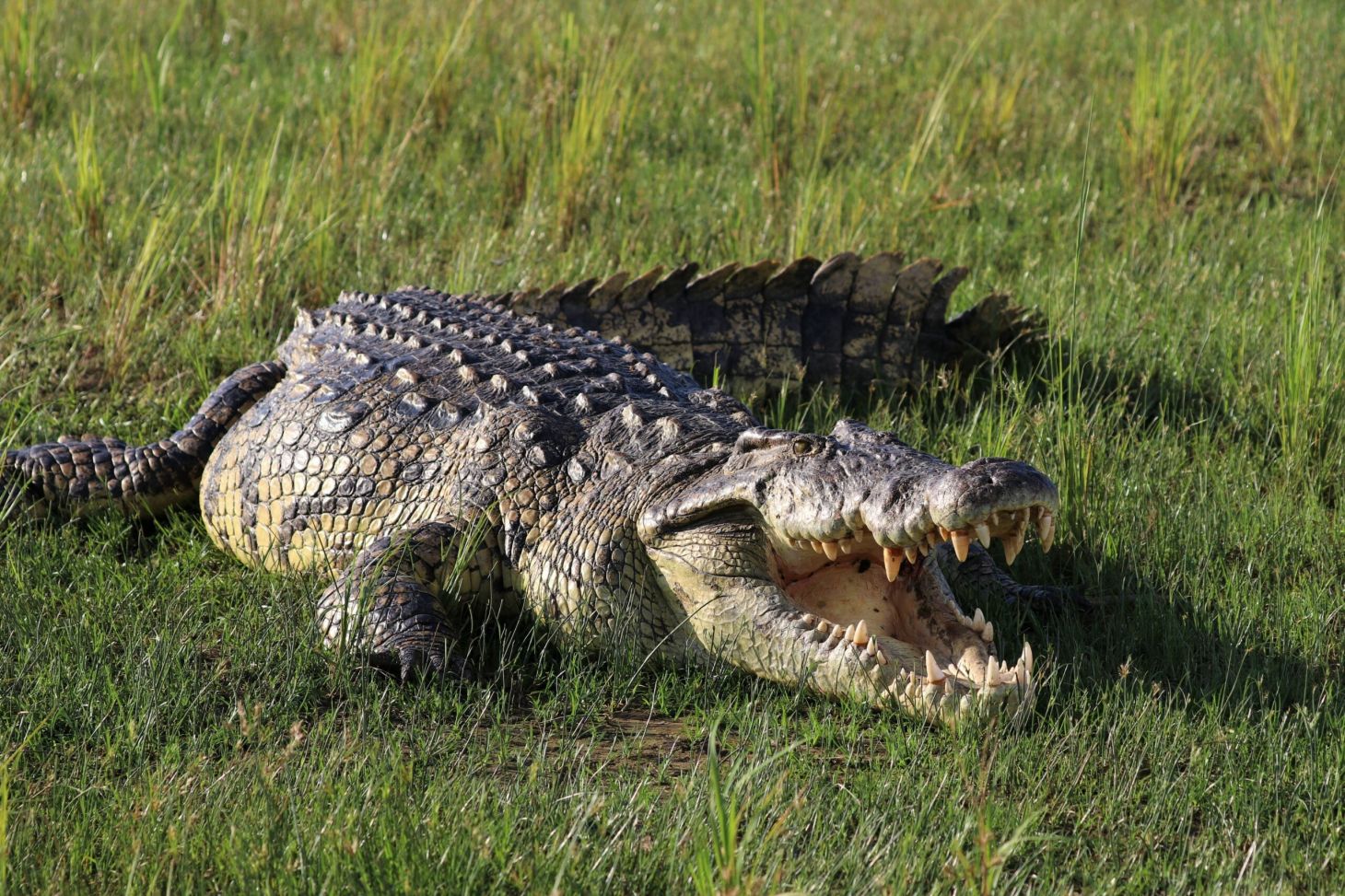
Despite the major size differential, crocodiles remain the only apex predator in the ring. While hippos may opportunistically munch on random hunks of carrion, they do not actively hunt and are predominantly vegetarians, eating up to 80 pounds of grass and other vegetation on a nightly basis. Crocodiles, on the other hand, are exclusively carnivorous. Crocs will occasionally kill and eat a baby hippo that wanders too far from the protection of its bloat. And, they will eat any dying or dead adult hippos they encounter.
But, Hippos Are the Boss
But in the rivers, lakes, and wetlands of Africa, hippos are still the alpha. They are simply too big for crocs to get their mouths around. Even if a crocodile were to grab a hippo’s leg and deploy its go-to move, the death roll, it would likely fail to budge its much larger neighbor. Hippos, on the other hand, can bully crocodiles by throwing their weight around, asserting a clear dominance.
Hippo vs Crocodile: Natural Stalemate
The result is a natural stalemate. Crocodiles would love to eat hippos. That’s a lot of meat—and crocs do not normally discriminate. But they shy away from tangling up with any animal with such a size advantage. Hippos, for their part, are fiercely territorial and will challenge any animal, human, or fellow hippo that crosses the line. (They kill up to 500 people every year.) But, they seem to consider most crocodiles part of their territory.
As a result, hippos and crocodiles can often be observed sharing the same water pool or sunning alongside each other on the shore. Hippos are even known to nibble on crocodile tales, as if using them as a toothpick. Even baby hippos seem to be comfortable swimming near large crocodiles when there are adult hippos near.
And the Heavyweight Champion of the African Wetlands Is…
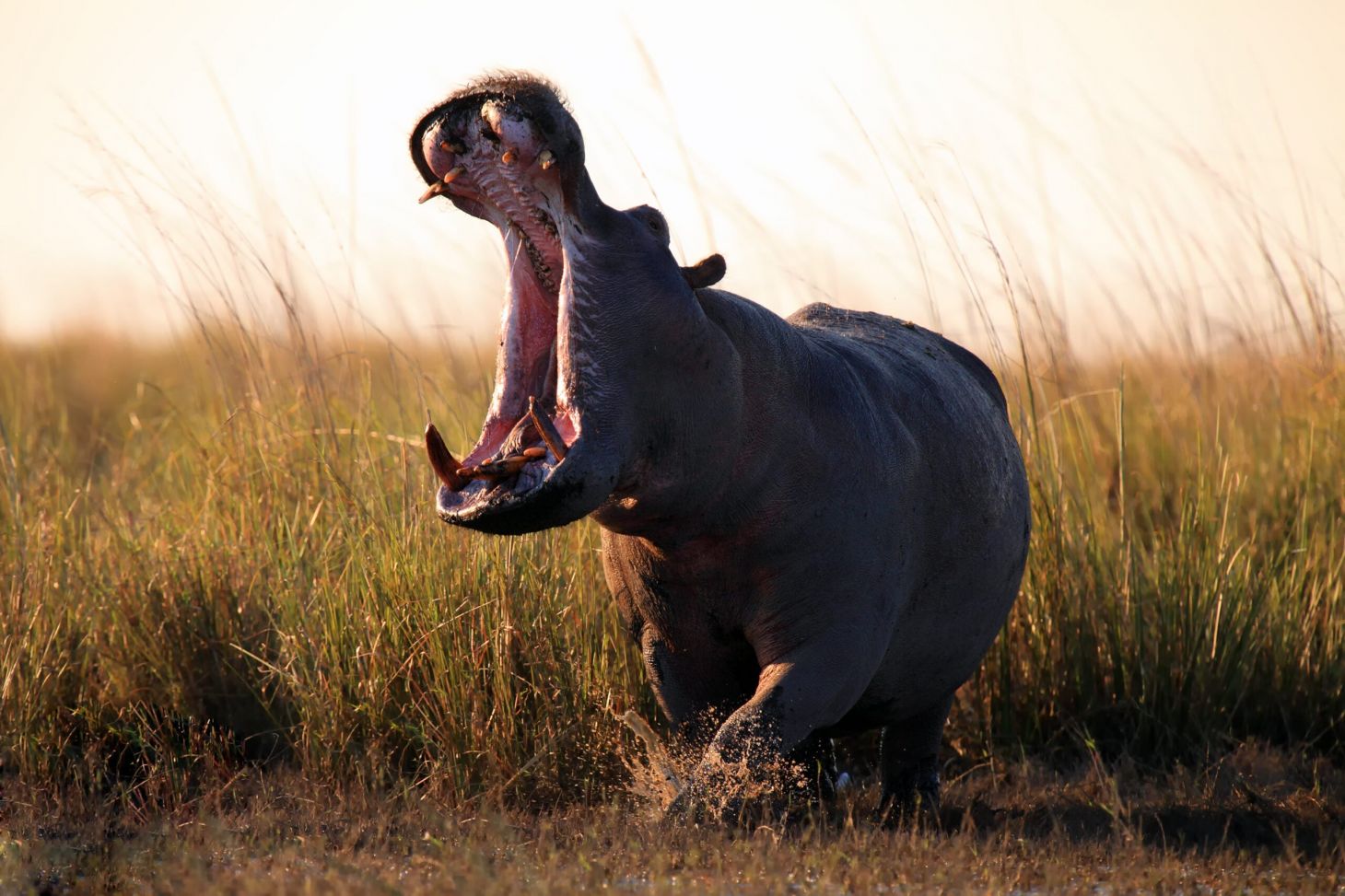
When push comes to shove, though, this matchup results in a clear winner: the hippopotamus. They may not be apex predators, but they are herbivorous mountains alongside carnivorous crocodilian hills. A hill cannot take down a mountain and would get crushed if it tried. So, crocodiles nearly always cede to the mountains they share their waters with, even offering them a neighborly smile.

EXCITING NEWS
Membership Now Includes