

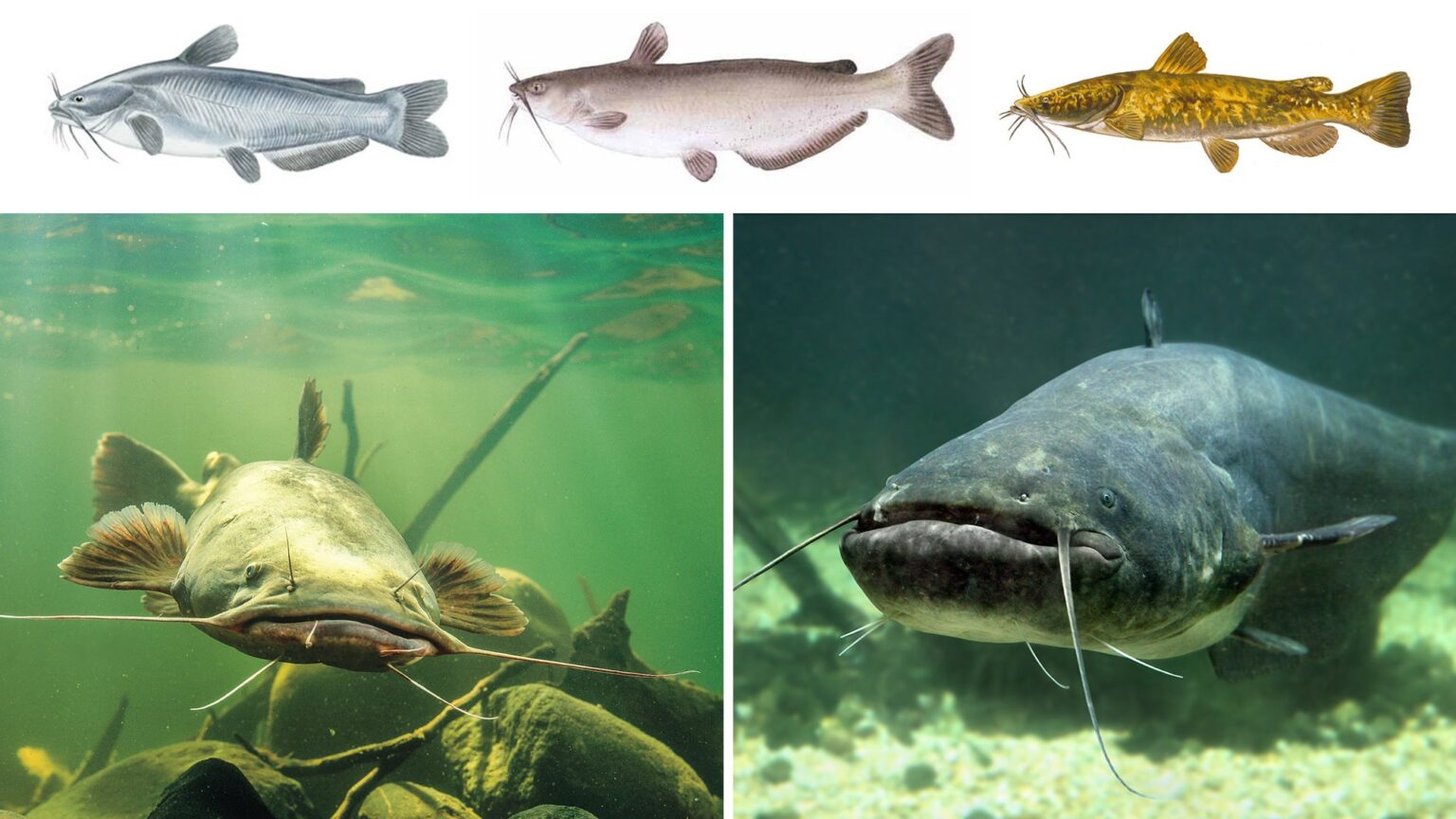
There are more than 3,000 types of catfish swimming the waters of Planet Earth at present, with at least 30 of them calling the U.S. home. The majority of them, here and abroad, provide excellent sport and exceptionally good table fare, too.
The great thing about America’s catfish—including bullhead, flathead, channel, and blue catfish—is that as a group, these fish provide something for just about every angler and any skill level. From the 6-year-old armed with a Barbie rod to the professional tournament angler plying the waters with a $60,000 boat to those intrepid individuals not afraid to stick their arms into muskrat holes
, just about every angler in every part of the country has caught or tried to catch a catfish.
But what type of catfish exactly? Let’s break it down. Here are the major types of catfish sought by anglers in the U.S., plus some of the biggest trophy cats from around the world.
The Big Three Types of Catfish in the US

Illustrations Courtesy of the American Catfish Association
Among American anglers, channel, blue, and flathead catfish are the big three—both in the sense that they are the most sought after by serious anglers and they are the biggest species in the U.S. Two of three, blues and flatheads, can top the 100-pound mark, making them highly desirable as hard-pulling trophies.
Channel Catfish

Channel catfish.
The channel catfish is the popular of the big three simply because it is the most widely distributed. Channel cats can be found from coast to coast and in part of almost every state, including in lakes, reservoirs, ponds, and most of the country’s larger river systems such the Ohio, Mississippi, Missouri, Snake, St. Lawrence, and The Columbia.
Channel catfish range widely in color from a silver to various shades of gray. Young channels cats, often called “croakers” after the grunting sound they make when held, will usually sport black spots on their body. All age classes will exhibit a deeply forked tail and long sensitive barbels, aka “whiskers,” sprouting from their top and bottom jaws. Most channel catfish weigh less than 10 pounds; however, some can reach 40 pounds or more, with the world record, caught in 1964, weighing 58 pounds.
As for table fare, channel cats are typically rated as a close second to flatheads, with smaller fish in the 1- to 4-pound range being the most palatable. Channel cats can be caught by a wide variety of methods, including stationary trot-lines, jug-fishing, drifting, jigging, and traditional bank-based tight-lines. Often aggressive, these catfish will hit artificial lures, such as jigs and crankbaits, too.
Blue Catfish
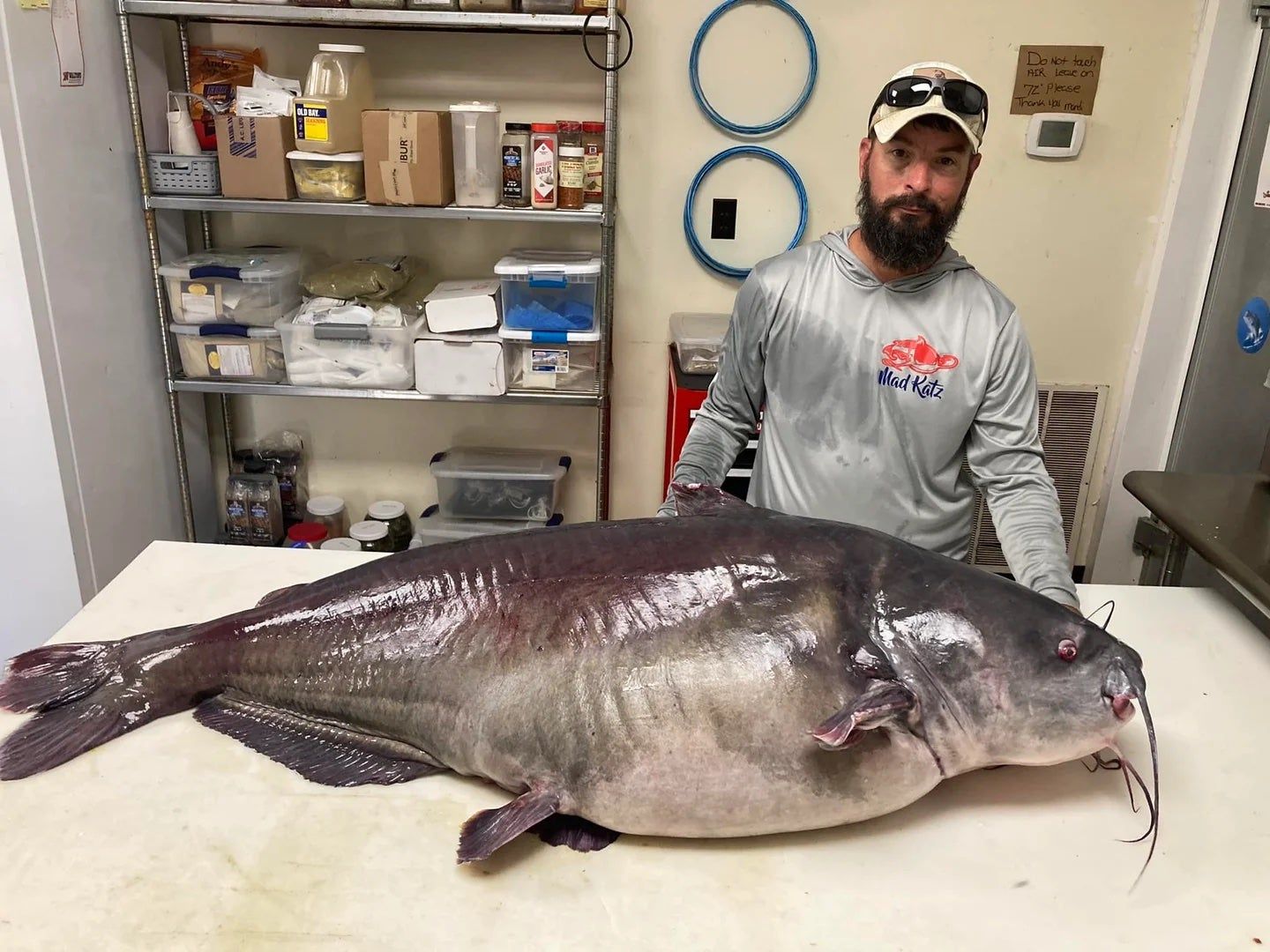
This record blue catfish was landed by Mika Burkhart in Tennessee. TWRA
The blue catfish is the largest species that U.S. anglers will encounter, with 100-plus pounders being somewhat common. That said, blues in the 4 to 10 pound-class are far more typical. The world-record blue catfish was caught in 2011 from John Kerr Reservoir on the Virginia/North Carolina border and weighed 143 pounds. Blues can be found in the eastern and southeastern part of the U.S., specifically in the Ohio, Mississippi, Missouri, and Rio Grande river systems; however, blues today populate waters as far west as California, and as far east as The Chesapeake Bay.
Despite their size, blue catfish are in the same family as are the foot-long bullhead catfish (see below). Smaller blue cats can be mistaken for channel cats, with a greyish coloration and deeply forked tail; however, blues have none of the channel cat’s black spots, and they have a straight-edged anal fin, as opposed to the channel cat’s slightly rounded fin.
Although blue catfish can be caught on jugs and either by drifting or trolling, those targeting these trophy blues typically soak scented cut baits, such as herring, shad, menhaden, or even carp and suckers, directly on the bottom. Big tackle is highly recommended for subduing these hard-fighting heavyweights. Like both channel cats and flatheads, blue catfish make excellent table fare; however, larger specimens can have what many describe as a “muddy” in taste. All catfish can carry consumption advisories due to accumulated heavy metals, namely mercury, so it’s best to check with the state fish and wildlife agency for any such warnings.
Flathead Catfish
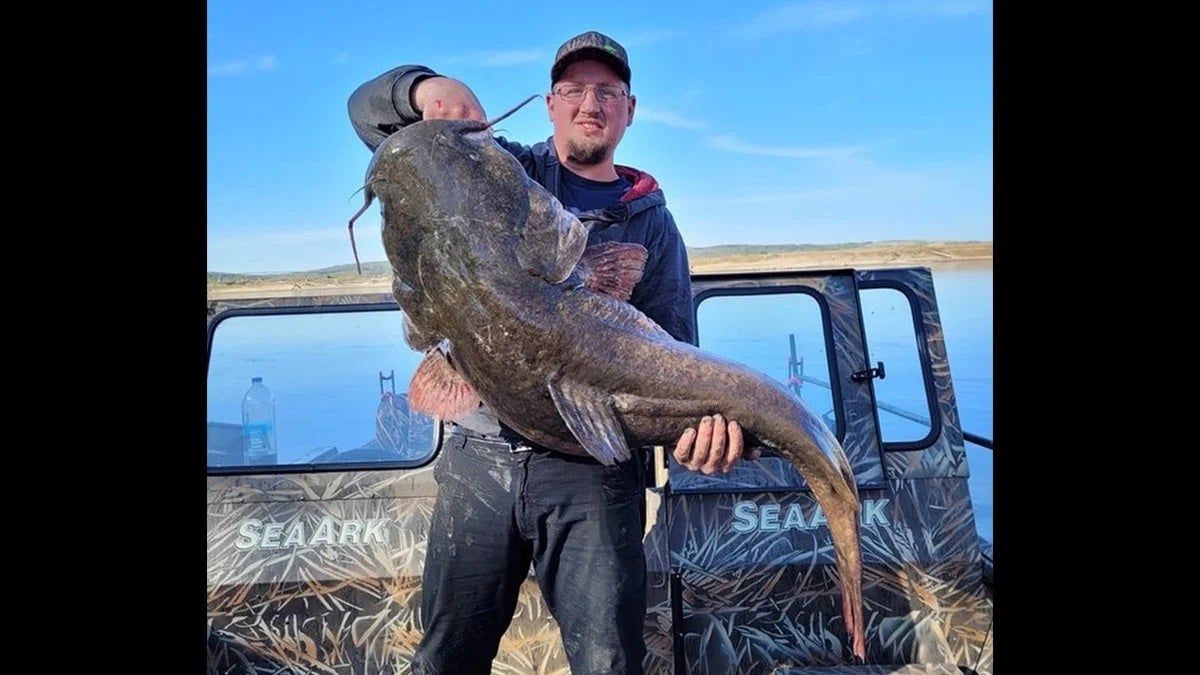
A monster flathead caught by Ethan Evink in South Dakota. SDGFP
Second only in size to blue catfish, the flathead catfish is considered by many to be the best of The Big Three on the table, regardless of how big the fish. And they does get big, with 75-plus pounders not uncommon. Typically, though, flatheads will weigh from 4 to 40 pounds, and measure 24 to 36 inches. The flathead makes his home primarily in the larger river systems of the eastern U.S., with good populations in the Mississippi, Missouri, Ohio, Susquehanna, Tennessee, and Illinois rivers. The species has been introduced beyond the Missouri Drainage, to include California and the Pacific Northwest.
Aside from his yellowish-brown mottled coloration, the flathead can be differentiated from both channel and blue catfish by its rounded (rather than forked) tail, its namesake flat head, pale belly, and under-slung lower jaw. Good flathead habitat includes deeper (15- to 25-foot) holes and slower current around structure, often logjams. Sport anglers use heavy tackle for these strong fish, and, as flatheads are active predators, a variety of large live baits, such as green sunfish, suckers, bluegills (where legal), carp, and even bullheads, are top offerings. Bank or “ditty” poles—8- to 10-foot, limber green timber poles or PVC pipe driven into the bank and strung with stout nylon twine and a hook baited with a live fish—are often used for flatheads, as are limb lines, short dropper lines tied to branches over the water and baited. Although all of the big three can be caught by noodling
, or handfishing, flatheads are the catfish most often targeted by noodlers.
Three Types of Bullhead Catfish
Bullhead catfish—or simply bullhead—are found nationwide in ponds, lakes, streams, and rivers. They eagerly hit a wide range of baits, and when cleaned quickly and properly, are quite tasty on the table. Because of their smaller size, they’re not as glamorous (if that word can be used for any catfish) as any of the big three, but they make fast, fun fishing for anyone, and especially for young anglers. There are three types of bullhead catfish:
Brown Bullhead
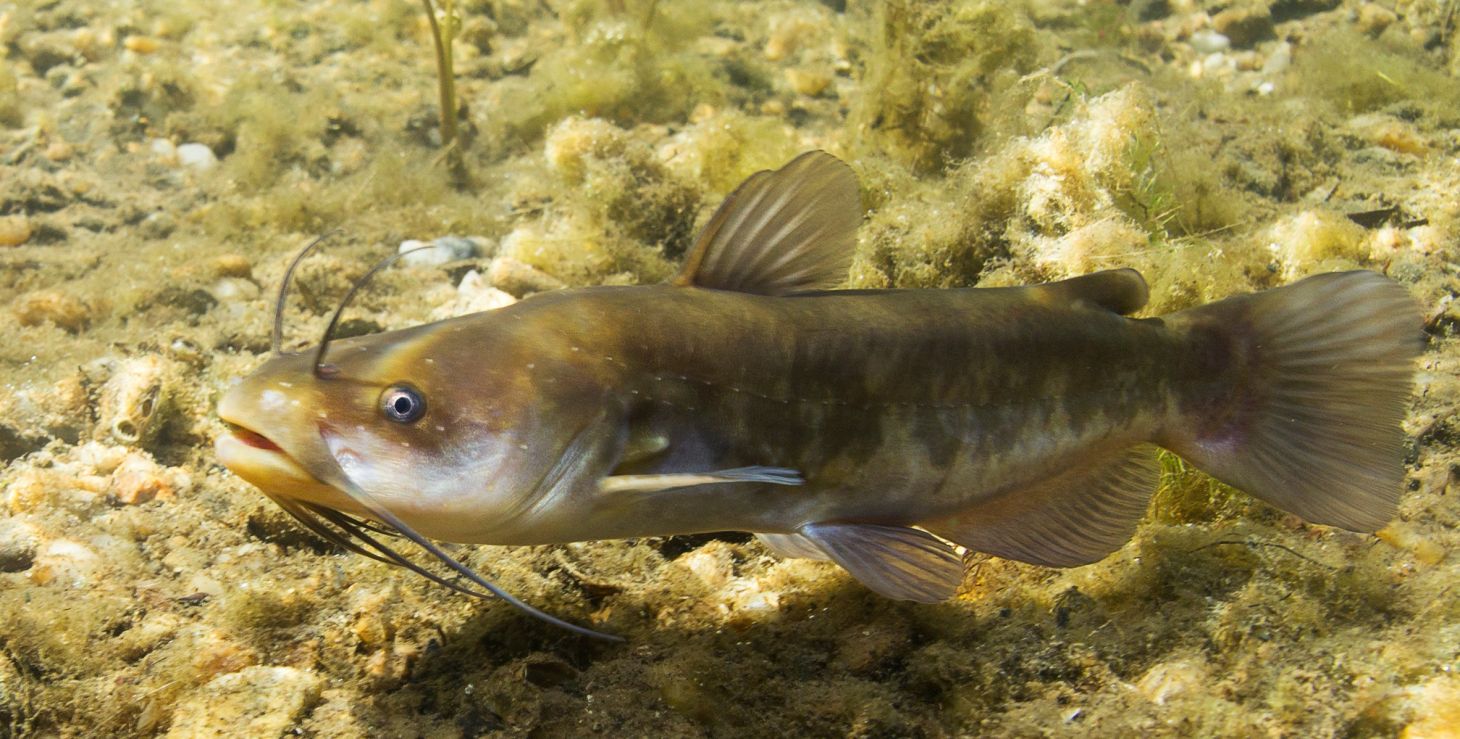
Brown bullhead.
Measuring on average 8 to 12 inches, the brown bullhead is an overall drab brown color, as its name implies, with some individuals displaying darker mottling on the rear half of the body. Like all cats, brown bullheads possess sharp pectoral serrations or “spines,” as well as similar armament on the leading edge of their dorsal fin. Bullheads can tolerate higher water temperatures and more turbidity than can many freshwater species, making them at home in shallow ponds and slow rivers. Most populations are found east of the Missouri River Basin from southern Canada to central Florida; however, Washington state features many bullhead-friendly waters.
Simple is best when it comes to catching bullheads. A bobber and worm, a bottom-fished nightcrawler, or a lightly weighted hook-and-line, again fished on or very near the bottom, and baited with a “˜crawler, dead minnow, chicken liver, or commercially prepared “˜stink bait’ will all work well.
Black Bullhead
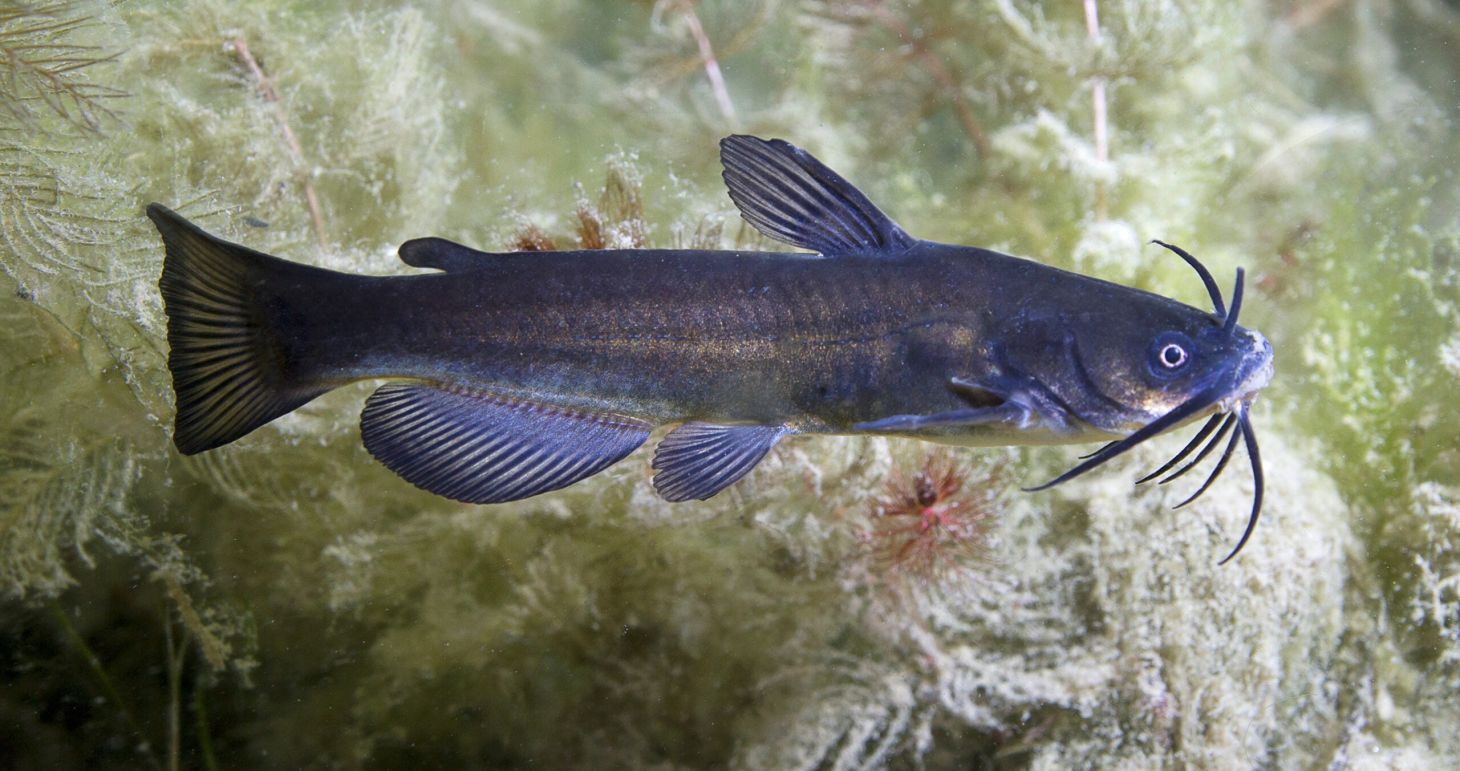
Black bullhead.
Black bullheads, despite their name, can actually range in color from a dark brown to a “dirty” black, with a yellow to an almost white or creamy-white underbelly. Like their cousin, above, black bullheads sport sharp pectoral and dorsal spines, the former carrying a small amount of venom that can cause a burning or stinging sensation lasting upwards of a week. The black bullhead’s sensory barbels, or whiskers, are fully pigmented, the head appears abnormally large, and the corners of the tail are rounded. The black variety commonly weighs from one to 1- to 1-1/2 pounds, and measures from 8 to 13 inches.
Home for the black bullhead is the central U.S., roughly from the Rockies east to the Mississippi River; however, small pockets of this fish can be found throughout the West and along the East Coast. All three of the bullheads are excellent on the table when cared for properly in the field.
Black bullheads can be easily taken on bottom-fished worms, dead minnows, grasshoppers, or chicken livers. The key is light tackle, including light-action rods, 6-pound monofilament, 1/8- to ¼-ounce bank sinkers, and either No. 4 or 6 bait-holder hooks. Keep it simple.
Yellow Bullhead
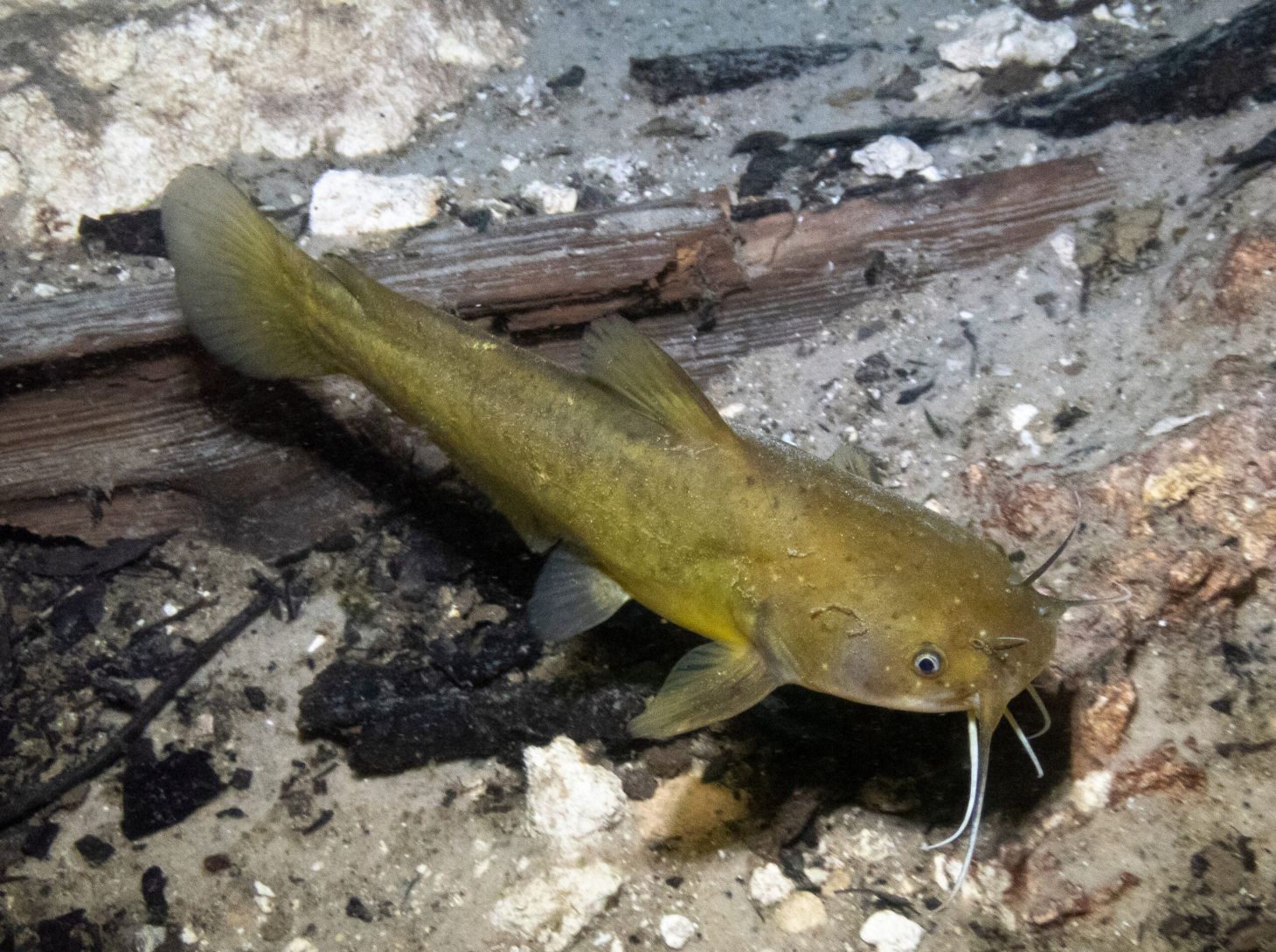
Yellow bullhead.
The yellow bullhead is typically the smallest of the three, often measuring 10 inches or less and weighing in on average at about a pound. Their color can indeed be a subdued yellow or olive-yellow, though those living in stained water can more resemble brown bullheads; all have a whitish or off-yellow belly. Yellow bullheads do share their brethren’s sharp spines, rounded tail, multiple barbels, and small fatty adipose fin. Good populations of yellow bullheads thrive in rivers, lakes, ponds, and streams throughout the eastern U.S. from southern Canada to Florida and west to the Texas Panhandle, with isolated pockets of yellows found in Montana, Idaho, Washington, and Oregon.
Yellow bullheads are readily caught with all the same baits and techniques described above for brown and black bullheads. Yellows provide excellent eating, too. All three bullheads are usually skinned whole—after clipping the pectoral/dorsal spines with sidecutters—cleaned, and then deep fried.
Trophy Catfish from Around the World
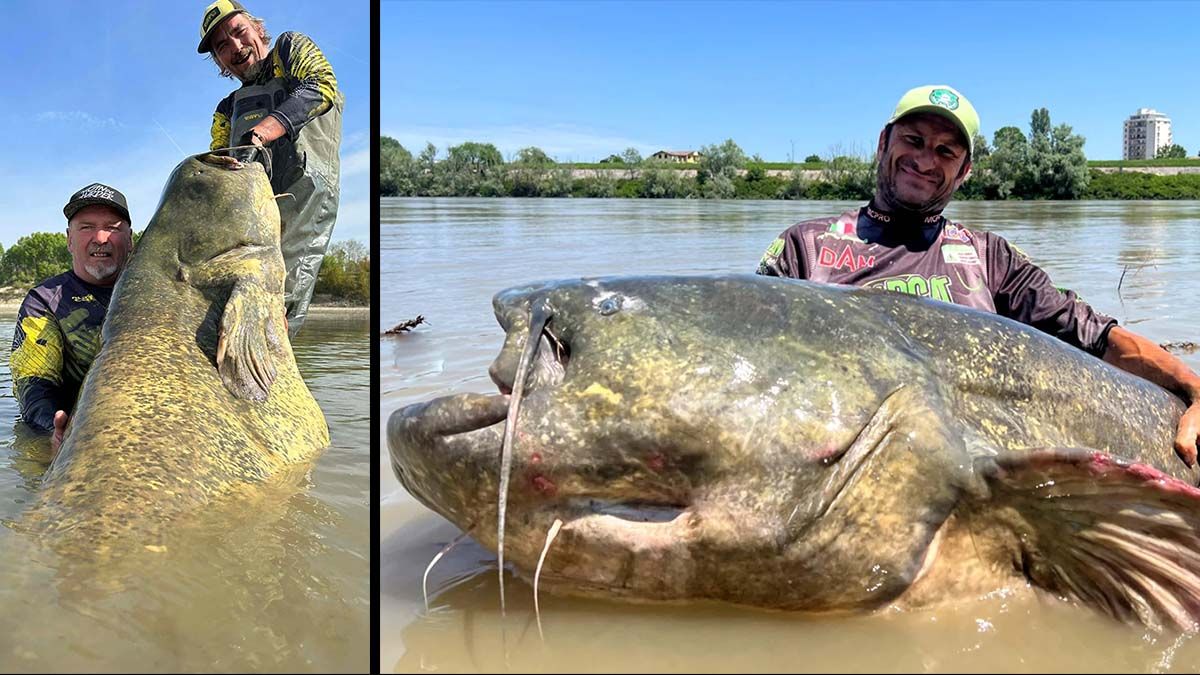
Both of these wels catfish easily topped 9 feet.
Both of these wels catfish easily topped 9 feet. Stefan Seuß & Mad Cats
The vast majority of catfish species and the largest trophy cats are both found outside of the U.S. The Amazon, for instance, harbors roughly 1,300 known species of catfish ranging from the inch-long Candiru, or “Vampire Fish,” known to follow the scent of urine upstream and into a swimmer’s urethra, where it extends an array of barbed spines to prevent it from being dislodged while feasting on the victim’s blood (ouch!) to the huge Piraiba, which can measure over 9 feet and weigh some 450 pounds.
Piraiba
Found in the Amazon River, the Piraiba is silvery-gray above with a white belly. The standing rod-and-reel record was caught in 2007 and weighed an impressive 295 pounds, although these fish have been known to grow lager than that.
Mekong Giant Catfish
Native to the Mekong River Basin in Thailand, Laos, and Vietnam, the Mekong Giant Catfish is a species of great concern due to overfishing and habitat degradation. Specimens can reach 400 pounds and measure more than 9 feet in length.
Wels Catfish
The is the largest freshwater fish in Europe and Western Asia, with specimens weighing between 200 and 300 pounds not uncommon, Wels catfish
are highly sought after by sport anglers. A population exists in the cooling ponds surrounding the former Chernobyl Nuclear Facility.
Redtail Catfish
Another Amazonian catfish, the Redtail is a handsome black-and-white fish sporting its namesake brilliant red tail and red-tinged dorsal and adipose fins. Redtails measuring over 60 inches and 100 pounds are considered trophies.
_Note: Thanks to the American Catfishing Association
for providing photos and illustrations to support this story._

All new! 1871 Club Field Trips








1 Comment
Cool