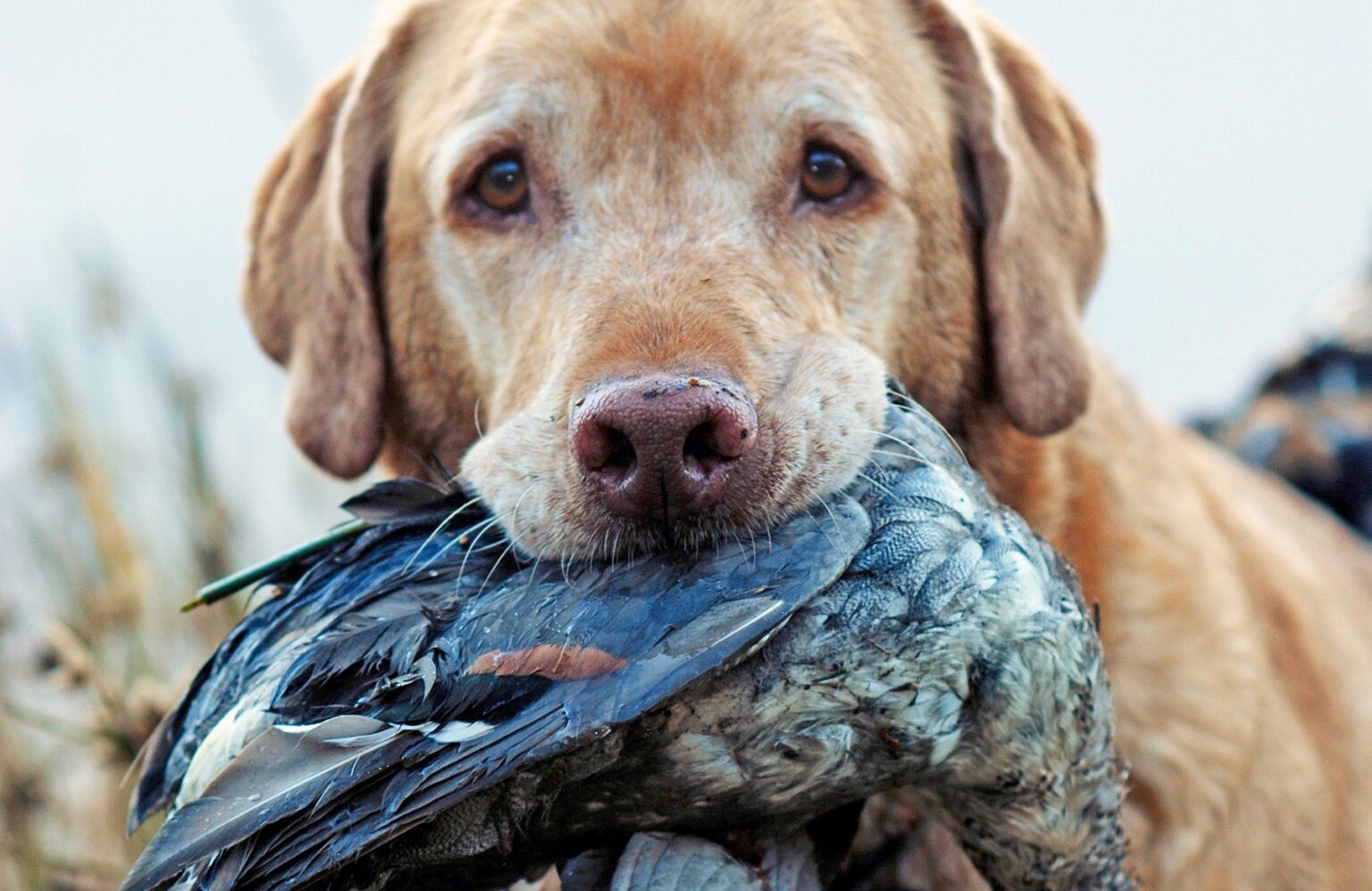
For most duck hunters, the Labrador retriever is the best all-around choice: trainable, versatile, and proven in cold water. For hunters who want a breed that handles brutal conditions and doubles as a close companion in tight quarters, lesser-known retrievers like the Chesapeake Bay retriever or Nova Scotia duck tolling retriever may be a better fit. The right breed depends on your hunting environment and how much training time you can commit.
- The Labrador Retriever is America's most popular duck dog: intelligent, biddable, and a capable upland dog as well.
- Labs are prone to hip dysplasia and joint problems. Buyers must research bloodlines carefully given the breed's popularity.
- Most retriever breeds covered here double as affectionate house dogs, adding value beyond the blind.
- A trained duck dog opens up hunting locations and shooting opportunities that would be impractical without a retriever on hand.
- True hunting poodles are included but remain rare. Availability will be a challenge for most buyers.
Once you have hunted with a good retriever, you will want one as your own hunting dog. A duck dog lets you hunt places you couldn’t otherwise hunt—and take shots you wouldn’t otherwise take, for fear of losing a bird. It saves you the time and effort of making your own retrieves, a real blessing when you’re hunting in boot-sucking mud. And, most retrievers can make the transition to upland dogs, too. Beyond the practical benefits of hunting with a waterfowl dog, there is the pride you feel in watching your own dog work, the inspiration you take from its drive, and the joy of your dog’s companionship in the blind and at home. Most retriever breeds make affectionate house dogs.
Your journey to owning your own retriever begins with researching breeds. Duck retrieving dogs have been bred in all shapes and sizes, while sharing in common the necessary traits of a water dog: hardiness, tracking ability, and the intelligence to learn complex tasks like blind retrieves. Some of the breeds here, like the Labrador retriever, are extremely popular, while others, like true hunting poodles, are rare. Any of them can make a find duck dog and hunting partner. To help you choose the best duck hunting dog for you, here, in no particular order, is a list of top retrievers.
1. Labrador Retriever

Pros
- Intelligent and biddable
- Great family dog
- Good upland dog
Cons
- Prone to hip dysplasia and joint problem
- Popularity means there are many breeders, so you must do your research to pick a healthy hunting bloodline
By far America’s most popular retriever, the Labrador had its origins in the chilly waters of Newfoundland. There, fishermen developed the greater and lesser St. John dogs, two sizes of a working breed that helped haul nets and retrieve floats. The greater St. John’s dog would become the Newfoundland, while the lesser caught the eye of visiting English hunters in the early 1800s. They brought St. John’s dogs home and bred them to retrieve birds.
Labs were recognized as a breed in England in 1903 and in the United States in 1920. And although they are not separate breeds, English and American Labs are different in appearance, with American Labs being taller and heavier than English Labs. In general, males weigh 65 to 80 pounds; females, 55 to 70—although there are some that get to be a 100 pounds. Labs have water-repellent coats, extra webbing between their toes, and thick tails to help them steer in the water. They come in black, yellow, and chocolate, with black the most popular color.
Intelligent, highly trainable and eager to please, Labs make great duck hunting dogs and excellent house pets. Their demeanor and biddability allows them to serve in many other roles as well, such as bomb- and drug-detecting dogs, and they make outstanding service dogs, too. Labs are also popular among many upland hunters, and there also pointing Labs available from some breeders. Labs have become one of America’s favorite dog breeds among hunters and non-hunters alike, which means you need to take care when choosing a breeder and find a reputable operation that specializes in hunting retrievers.
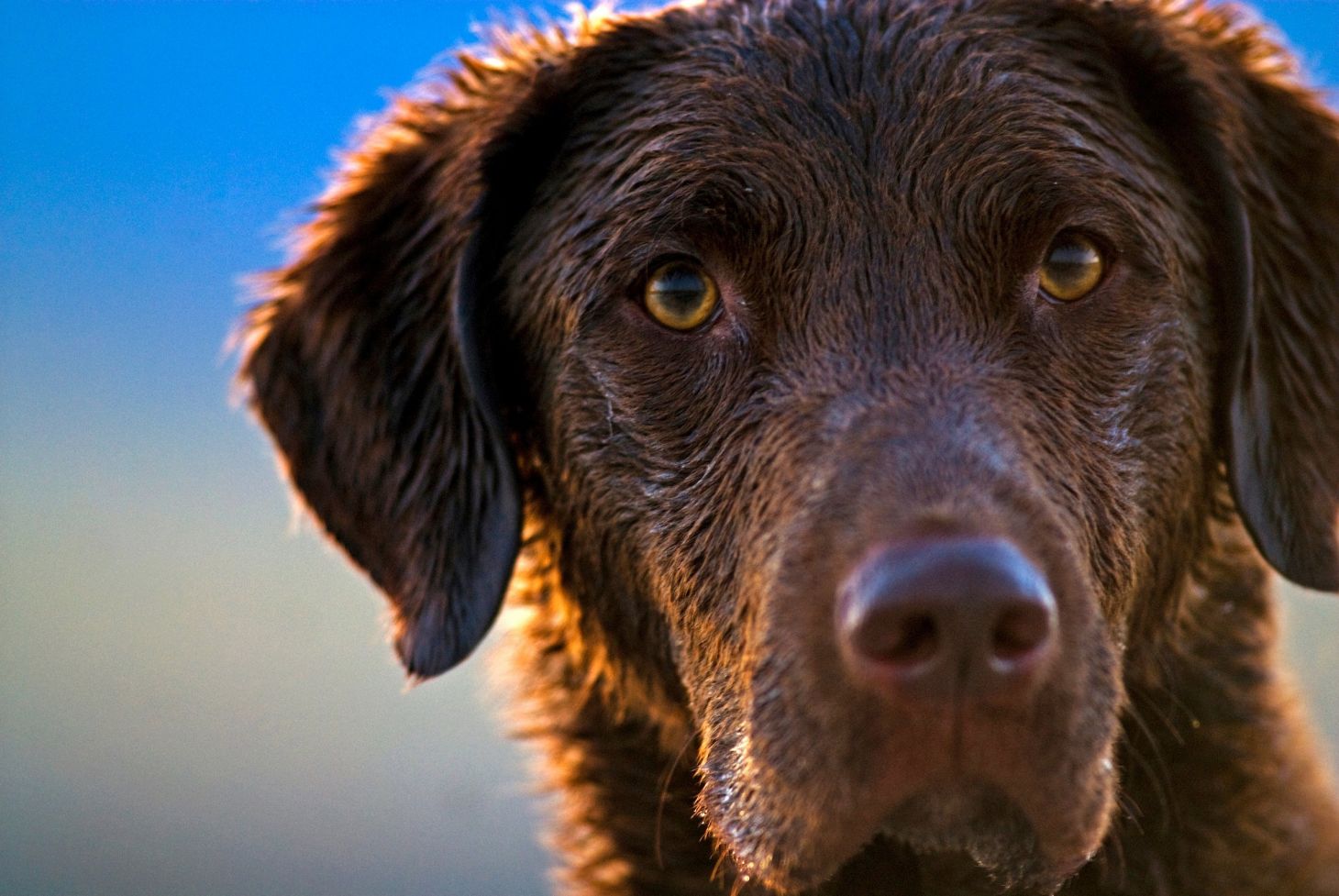
2. Chesapeake Bay Retriever
Pros
- Hardy enough to hunt big water and make many retrieves in a day
- Loyal, with some guard instinct
Cons
- Reputation for aggressiveness
- Harder to train than other breeds
The legend goes that in 1807, a ship bound from Newfoundland to England foundered off Norfolk, Virginia. Among the rescued passengers were two St. John’s dogs, the water dogs of Newfoundland fisherman. The nephew of the rescue ship’s owner bought the two dogs and took them to Baltimore, where they become the ancestors of all Chesapeake Bay retrievers. Whether the story is true or not, it is absolutely true that market hunters in that area bred St. John’s dogs into Chesapeake Bay retrievers. They needed a waterfowl dog with stamina and drive to retrieve dozens of ducks a day from the bay, as well as guard those valuable ducks on the way to sell them at market.
The Chesapeake Bay retriever was recognized a breed by the AKC in 1878. They weigh up to 80 pounds and have a wavy, oily coat to keep them warm. Chessies come in various shades of brown to help them blend in to the marsh. Because they have the drive and conformation to hunt the roughest, coldest conditions, Chessies need owners that hunt as hard as they do. They will bond with your family but retain some protective instinct. A Chesapeake Bay retriever isn’t a guard dogs per se, but while a Lab’s first instinct is to greet strangers, a Chessie will be ready to protect its family
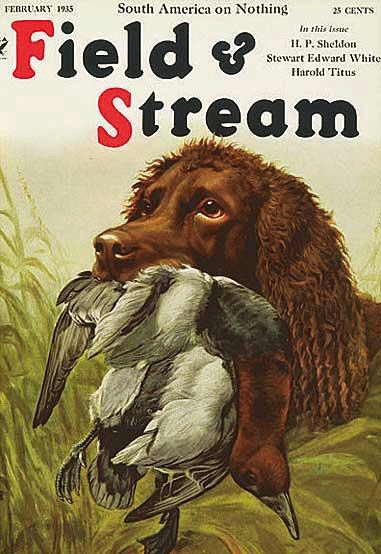
3. Boykin Spaniel
Pros
- Small to fit into small boats and small homes
- Tolerates hot weather
Cons
- Not bred for extreme cold
Boykin spaniels aren’t commonly seen in the field as duck hunting dogs, and the breed is a latecomer to American waterfowling, as it wasn’t developed until the early 1900s. Trainer L. Whitaker Boykin of South Carolina started with “Dumpy”a client’s brown spaniel, outcrossing it to springers, Chessies, and American water spaniels. The result was a small retriever weighing 40 pounds at most, with a curly dark-brown coat.
Boykins were bred to meet a specific need. Much of the hunting in South Carolina’s takes place in swamps and river bottoms and, at the time, the best way to reach them was in small “section boats”carried in pieces in wagons and assembled in the field. Boykins were the perfect, compact size to ride in the boat, and once onshore they could flush and retrieve a variety of game. Bred for the mild weather of South Carolina, they were also able to withstand hot weather, and made excellent retrievers in the dove field. They are sometimes seen as “pick-up”dogs at quail plantations, where they wait until after the hunters shoot over the pointers to make the retrieve. They can flush upland birds and some are even used as blood-trailing dogs by deer hunters.
Boykins are very popular in their home state. In fact, they are the official State Dog of the South Carolina, but they are less well-known across the rest of the country. For a hunter who wants a dog for hunting wood ducks and puddlers in small waters, as well as upland birds, and a dog that can live in a small place, the Boykin might be an excellent choice
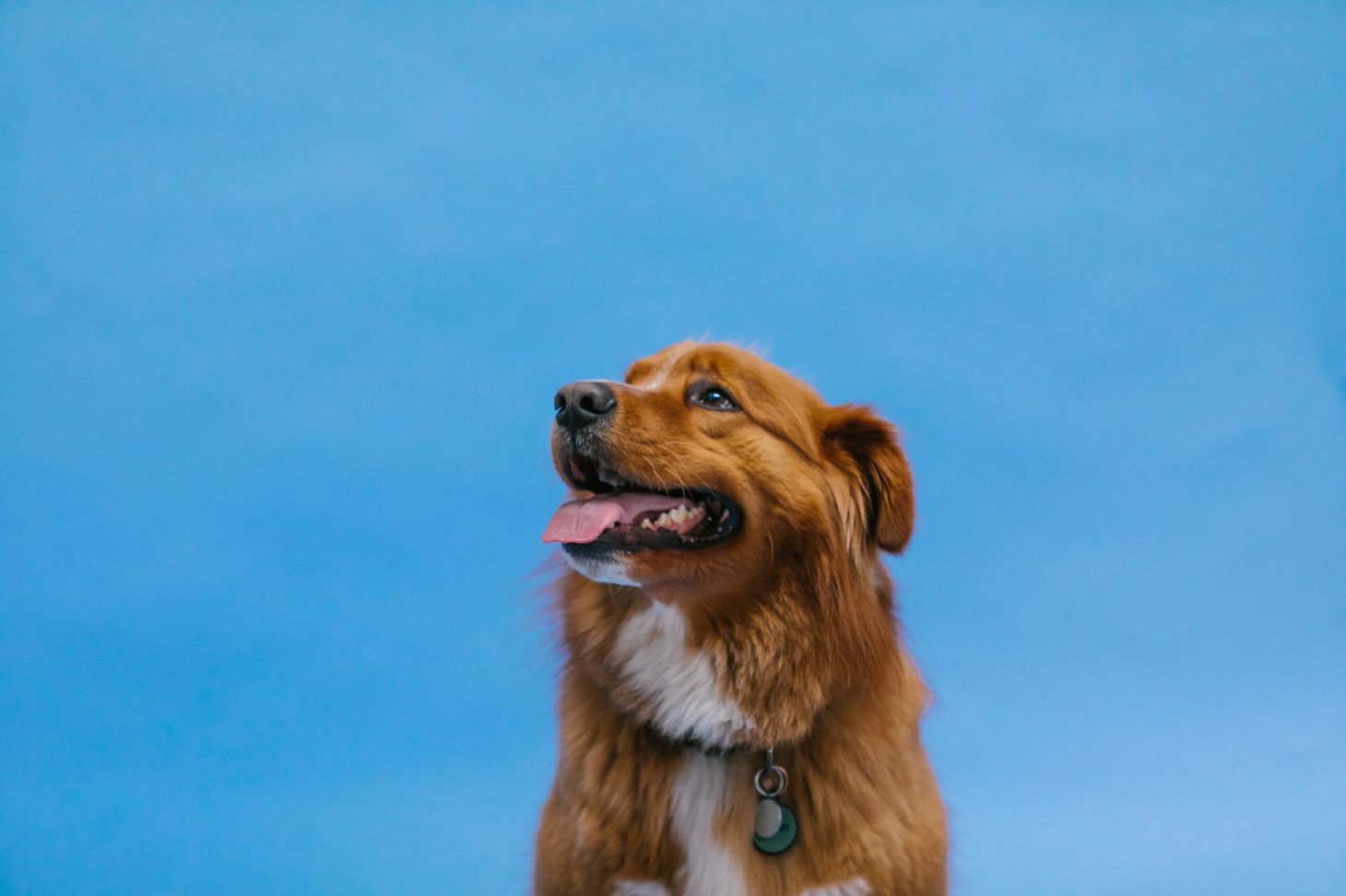
4. Nova Scotia Duck-Tolling Retriever
Pros
- Small
- Hardy
- Friendly
Cons
- Train with a light touch
- Few breeders available, not all breed hunting dogs
Unique among retrievers, tollers were used to lure ducks to shore. Tollers were likely developed from “cage dogs,”once used in Europe to lure ducks into nets where they could be trapped for market. Capering up and down along the shore as they played fetch, red-coated, often white-spotted, tollers were thought to resemble foxes, which are said to trick curious ducks close by prancing on the bank. While cage dogs had no need to retrieve netted ducks, tollers had to go into the water after the shot to bring back birds. Hunters in Nova Scotia likely started with cage dogs and crossed them with various retriever breeds until they had a dog would lure ducks close, then pick them up.
Tollers can be used as regular retrievers, too. They make a good choice for a hunter who wants a good-looking retriever on the smaller side. And a toller is something different. You don’t see many in the blind. Tollers have reddish coats, some with white markings on the tail, feet, and head. Their coats are of medium length, with feathered tails. They can be used in the uplands, and some find work as therapy dogs due to their gentle nature. Tollers are natural retrievers, given that playing fetch is part of their hunting strategy. You may have to look hard for a breeder, as there aren’t many, and not all breed hunting dogs.
5. Golden Retriever

Pros
- Reputation for having an excellent nose
- Good looking
- Adapts well to upland hunting
Cons
- They shed long golden hairs onto everything
- Buyers must choose breeders carefully
- Prone to hip dysplasia
The golden retriever is more than just a pretty face. Underrated by many who think the hunting instinct has been bred out of them, golden retrievers make excellent duck dogs. The golden retriever was the brainchild of one man, Sir Dudley Marjoribanks, later Lord Tweedmouth, who started with a yellow flat-coated retriever in the 1860s when developing a dog to take care of picking-up duties at his estate in Scotland. He crossed the dog with water spaniels, Labs, and red setters until he had a big dog with a long golden-red coat with the drive to pick up scores of birds from land or water during big shoots.
Goldens were first recognized as a distinct breed by the AKC in 1932, and the dogs became popular in the U.S. and Canada. Their good looks and affable nature made them popular as pets and show dogs. Like Labs, they make excellent service and therapy dogs and also drug-, bomb- and contraband-sniffing dogs, and they rank consistently as the third or fourth most popular breed in America every year. That means that while there are plenty of good goldens from hunting stock, there are even more that come from non-hunting kennels. It’s important to perform your due diligence when you search for a breeder. Be sure to get a golden from hunting stock. Goldens are often seen in the uplands as pheasant dogs, too, and make excellent house dogs.
6. Wirehaired Pointing Griffon
Pros
- Great noses and tracking instincts
- Will both retrieve ducks and point upland birds
Cons
- They adapt poorly to kennel life
- Beards make them sloppy drinkers and eaters in the house
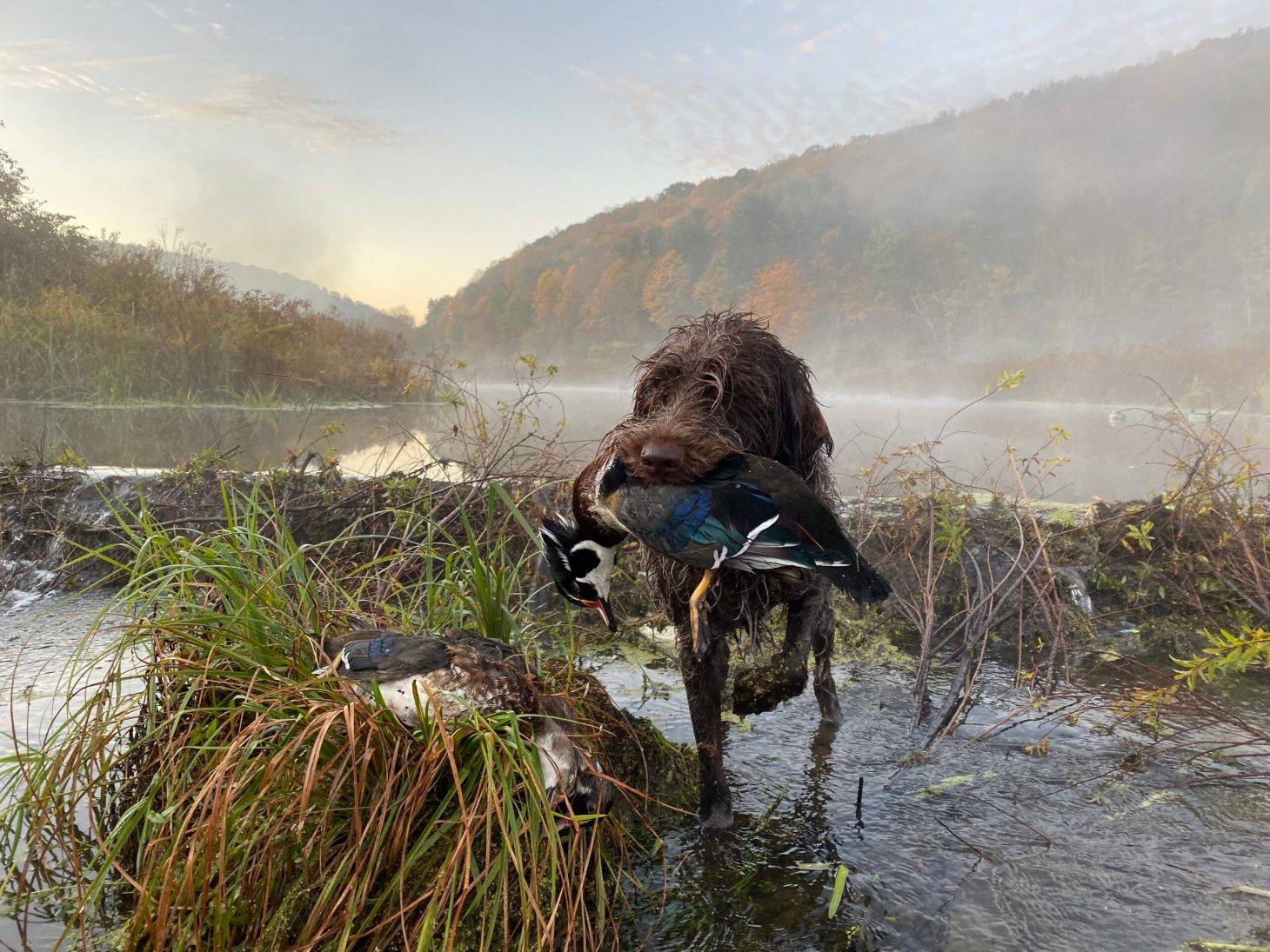
The people who brought you the drilling, a rifle-shotgun ready for any game, applied the same philosophy to hunting dogs. German dogs exemplify the ideal of versatility and are expected to point, retrieve, trail wounded game, hunt furred game, help with pest control, and sometimes hunt wild boar. One of those breeds, the wirehaired pointing griffon, makes an excellent hunting dog for hunters who want a hardy retriever that can also find, point, and retrieve upland game.
The wirehaired pointing griffon dates to the Middle Ages, although the breed didn’t reach its modern form until the latter part of the 19th century. A Dutch breeder named Eduard Korthals started breeding griffons in Germany, later moving to France. Kornthals was so closely associated with the breed that was known to some as Kornthal’s griffon. The dog he perfected weighted up to 65 pounds with a rough outercoat, bushy eyebrows, and a beard. The coat keeps the dogs warm in cold water and attracts surprisingly few burrs in the uplands. Although most griffon owners in the United States use them as close-working bird dogs, they are very capable waterdogs and can withstand fairly cold temperatures. For the hunter who wants an intelligent, trainable, all-around dog that can hunt birds, pick up ducks, tree raccoons, and blood-trail deer, a properly trained Griff can do it all.
7. Standard Poodle
Pros
- Intelligent and eager to please
- Their hypoallergenic coats make them a good choice for hunters with dog-hair allergies
Cons
- Not as hardy as most retriever breeds
- While poodles are common, hunting poodles are harder to find
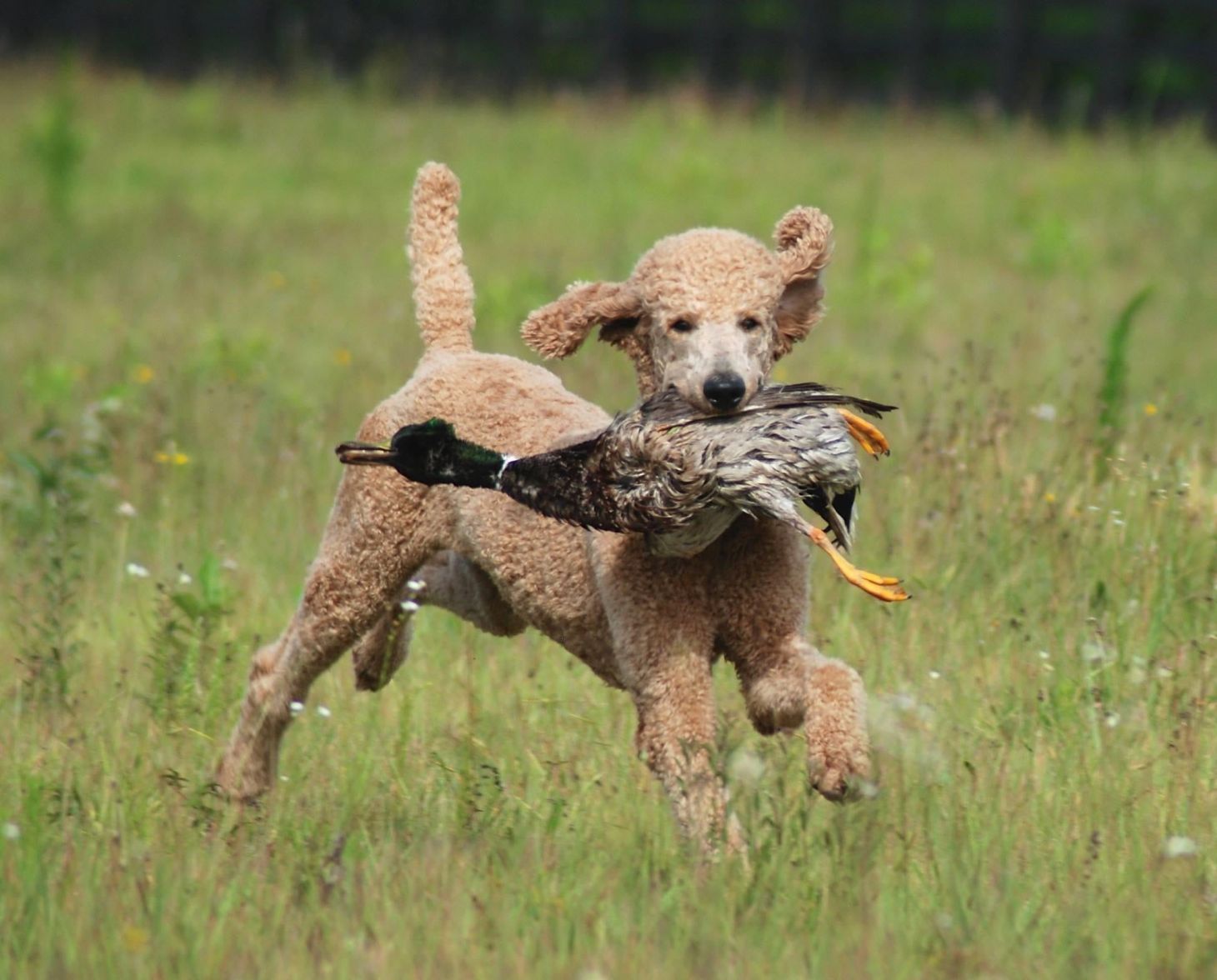
Poodle, or “pudelin”in the original German, means “splashing,”which should clue you in to the fact that poodles were originally water dogs. The distinctive poodle haircut was supposed to keep the dog warm while allowing it free use of its legs for swimming. Poodles date to the Middle Ages, when they were used by as “cage dogs”to herd wild ducks into nets. With the advent of gunpowder, poodles made the transition from cage dog to retriever. Poodles came to the U.S. in the late 1800s, eventually becoming the most popular breed in the country from the mid-1950s to the ’70s.
Because of the poodle’s mass popularity, it can be hard to find a breeder of hunting poodles, which are as rare as non-hunting poodles are common. When you do find a poodle you’ll have a willing hunting partner, if one that isn’t as hardy as some other retriever breeds. Poodles are trainable and have good dispositions that make them good service dogs. As a bonus, poodle’s coats are hypoallergenic so they are good choice for owners with pet allergies. Poodles weigh between 45 and 65 pounds and their curly coats come in gray, brown, black, and white.
8. Irish Water Spaniel
Pros
- Able to hunt in cold conditions
- Strong swimmers that can also hunt the uplands
- Highly trainable
Cons
- There are very few breeders in the U.S.
- Prone to medical problems so it’s important to find a healthy line
Bred in Ireland to withstand the rigors of hunting in the cold North Sea, Irish water spaniels first appeared in the 1830s. They became popular with Irish and English waterfowlers, and were among the waves of Irish immigrants coming to North America in the middle of the 19th century. By 1870, the Irish water spaniel was one of the top three most popular hunting dogs in the U.S. Since then, their popularity has declined here, although the breed still finds favor among hunters in Ireland.
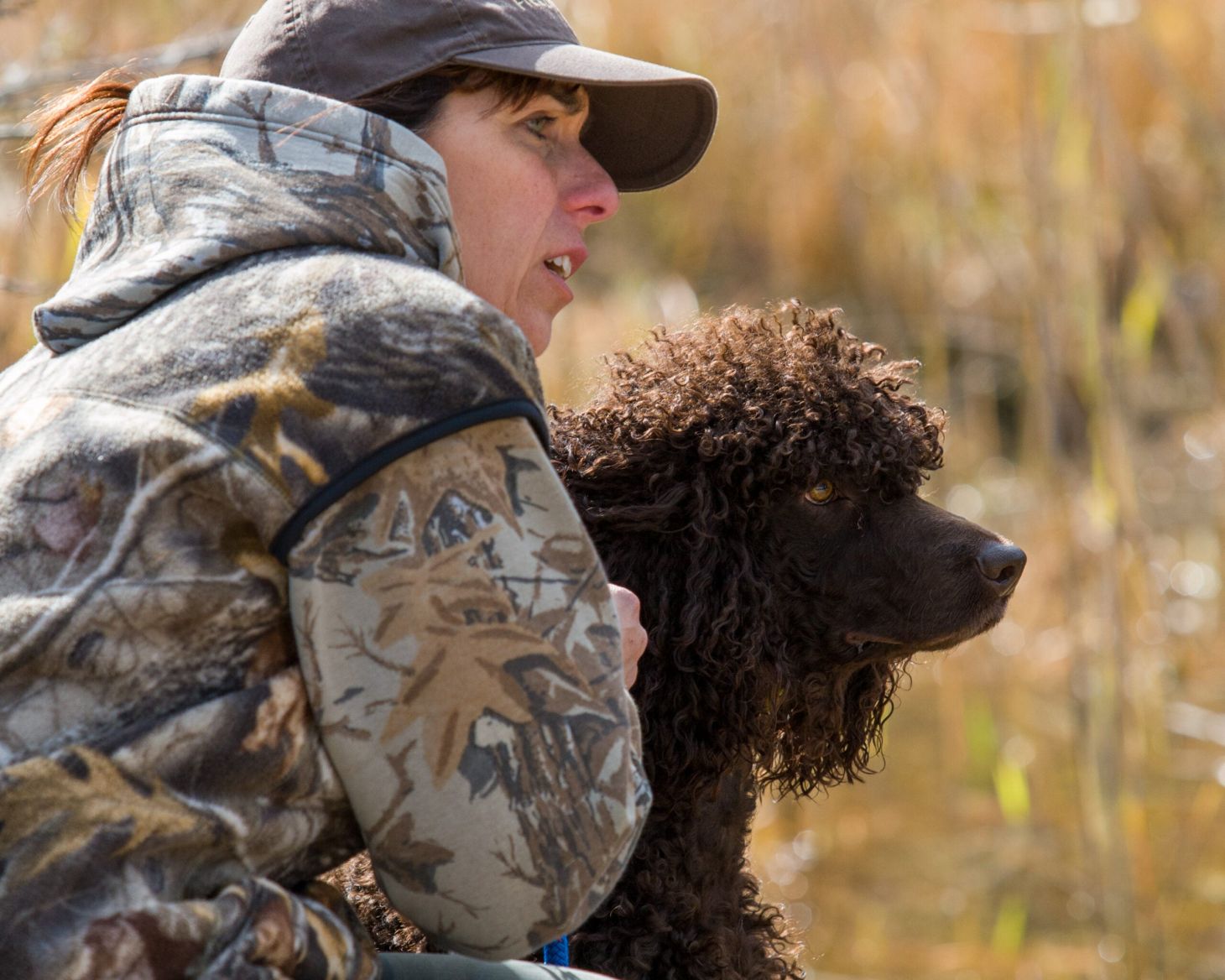
No dog looks like an Irish water spaniel. Weighing up to 65 pounds, it has a long, curly, liver-colored coat that covers everything from its feet to the distinctive topknot on its head. Only the tail, usually described unflatteringly, but accurately, as a “rat tail,”is curl-free. In the field they are hardy and have excellent eyesight to mark falls and good noses. They can adapt to upland hunting as well. They make good pets as well, and are easily trained.
9. Pudelpointer

Pros
- Equally at home hunting on land and in the water
- Short coat withstands wet and cold surprisingly well
- Pudelpointer breeding is controlled so all dogs have hunting instinct
Cons
- It can be hard to find a pudelpointer breeder
The pudelpointer, as its name suggests, is the result of a cross between poodles and pointers. The first breeding occurred in 1870 in Germany, with the goal of producing a dog that could hunt the uplands and retrieve ducks. Pudelpointers didn’t reach North America until 1956, and are still little known here. Those who are aware of the breed know it as an intelligent, affectionate dog at home and in the field. They can withstand cold conditions in the marsh, and they find, point, and retrieve upland birds. They can be trained to hunt small game as well. One reason pudelpointers aren’t better-known is by design: to be sure the breed stays true to its purpose as an all-around hunting dog, the Pudelpointer Club of North America closely monitors breeding. You may have to look hard to find a puppy if you’re set on owning a pudelpointer.
Pudelpointers weigh 45 to 65 pounds and have short, rough, insulating coats and come in liver, chestnut, or black. Their faces sport beards and eyebrows. Some pudelpointers are almost as shaggy as griffons; others have very short coats and sparse hair on their brows and muzzles. Either way, they are intriguing choice for the duck hunter who also hunts upland birds.
10. American Water Spaniel
Pros
- Hardy retriever in a compact package
- Typically has a lot of drive to hunt
Cons
- Can be difficult to train
- Can exhibit dominant personalities
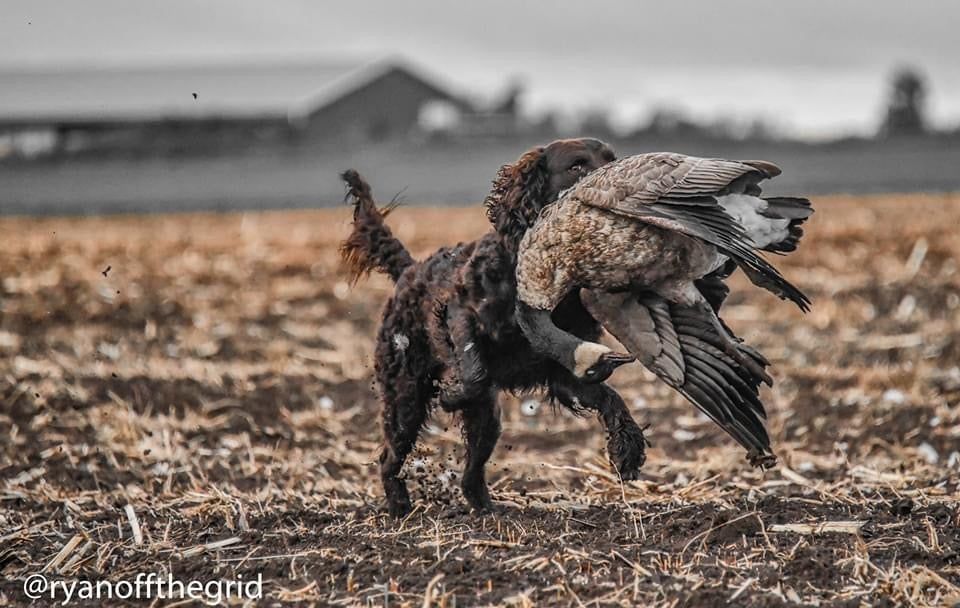
Hailing from the Upper Midwest, the American Water spaniel, like the Boykin spaniel, was bred to be a smaller dog that could hunt out of small boats, and the dogs may well have been first used by market hunters in eastern Wisconsin in the 1860s. And, like the Boykin, it has been named the official state dog of its home state—although there nowhere near as many American water spaniels as there are Boykins. One of the smaller retriever breeds, they are nonetheless well-equipped to handle cold water, and will stand watch over harvested game, sometimes aggressively. Weighing 45 pounds, at most, and covered with curly black or dark brown hair, the American water spaniel needs an owner who will hunt it often and has previous dog-training experience.
All new! 1871 Club Field Trips