
Think of your favorite opening day. Deer, trout, turkey, dove, elk”¦ A day you circle on the calendar. A day that conjures memories of past openers and optimism for the one to come. A day you enjoy sharing with family and friends. Have you got it? Good.
That’s what today feels like to me. I’ve had it circled on my calendar for weeks now. Today has me both reminiscing and looking forward. More than anything, though, today is a day I’ve been excited to share with you.
Today’s the day when Field & Stream gets back to doing what we do better than any other outdoor lifestyle brand: telling stories.
Stories online.
And stories in print.
That’s right—print. We’re bringing back the magazine. (Find out how to subscribe here.)

This contact sheet from our photo archives shows a few F&S staffers in the late 1970s, including Editor-in-Chief Jack Samson, working on an issue of the magazine—exactly the kind of work the current staff can’t wait to get back to doing. Field & Stream Archives
A Comeback Story
Let’s step back for a minute. It’s been more than three years since we published the last print issue of F&S. I’d be lying if I said that I hadn’t seen the writing on the wall at the time, but when the end finally did come, I at least took comfort in the fact that we swung for the fences with our final issue—in which we celebrated the brand’s 125th anniversary. Every page of that magazine hummed. I loved it. More importantly, readers loved it. Here’s a letter from one veteran subscriber that I’ve saved all these years:
Your 125th Anniversary Issue of Field & Stream was extraordinary and brought back wonderful memories of the magazine from my youth. The issue had nostalgia, the well-disciplined array of old and new articles, and the editorial forethought to provide an old man like me a great reminiscence. It reminded me of the time when I was 12 and took a fly rod and caught smallmouth bass in a creek west of my hometown. It brought back memories of the time I saw my oldest boy shoot his first pheasant.
I’m an old man now, and I don’t get to the duck blind with my sons anymore like I used to—nor do I fish as earnestly as I did in the past. But this issue certainly helped me be reminded of how much I enjoyed the outdoors and how much Field & Stream contributed to that. Now I get to see my grandson being taught by my son to hunt and fish successfully, and Field & Stream magazine is as much a part of their lives as it had been mine. Thank you for this issue, and for a job well done.
I’ve been working at F&S for more than 15 years now, and in that time we’ve won a slew of awards—including the highest honors in the magazine industry. But no accolade comes close to reader recognition like what is on display in that letter.
I assumed that the end of the print magazine would be the end of the magazine—full stop. I was wrong. Under our previous ownership, we continued publishing F&S, but in a digital format. Even though I’d already made my peace with the idea of the magazine being a thing of the past, a part of me was intrigued by the new format, not to mention enthused about getting to tell long-form hunting and fishing stories again. I thought: Maybe our readers would forget the printed format and might actually go for a digital magazine.
Again, I was wrong.
Here’s another reader letter I’ve saved—one sent to me shortly after we launched the digital magazine. (The notes in bold are his, not mine.)
Mr. Kearns. I am a longtime subscriber. I have zero interest in you replacing my printed magazine with a digital version. I spend all day on computers and smartphones. When the work day is finally over, I will grab one of my old issues and sit quietly and read a magazine I can physically hold. I love seeing the magazine in my mailbox when it arrives. I don’t want to sit at a computer to read a magazine.
I wish I could say this note was an isolated jeer. The truth is, I heard similar reactions from countless readers. Nevermind that we published some truly remarkable stories in those digital editions of the magazine (here, here, here, and here, if you don’t believe me), one thing was abundantly clear: You missed reading stories in print.
Which brings me back to the good news: Field & Stream has new owners—who, in addition to acquiring the F&S media brand, also purchased the product rights from Dick’s Sporting Goods. As a result, Field & Stream, the brand, has been united for the first time ever. A centerpiece to this new era of F&S is reviving the magazine—the print magazine—and bringing it back where it belongs: in your mailbox, in your hands, and in your home.
The Next Generation of F&S Magazine
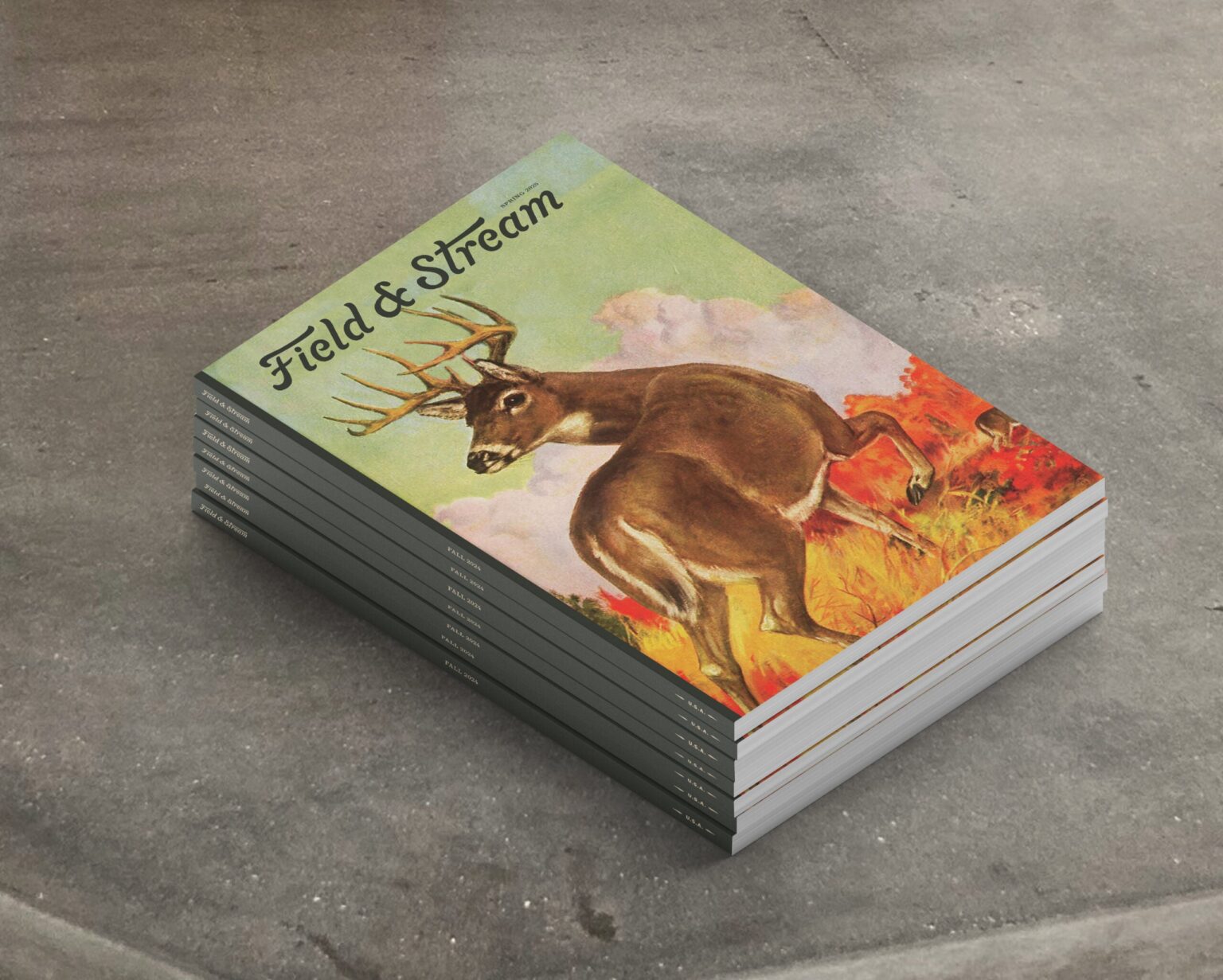
So, what’s this revived version of Field & Stream going to be like? If the other editors and I do our jobs, it’ll be better than ever. Bigger than ever, too. The roots of this magazine featured print editions in an oversized format. We’ll follow their lead: The new F&S magazine will measure a whopping 11×14 inches. Inside, each issue of the bi-annual magazine (delivered in the spring and fall) will have 120-plus pages packed with all the great storytelling—expert advice, hard-hitting commentary, adventure narratives, and more, all by your favorite writers—and the stunning photography that’ve made F&S a household name for more than a century.
As you can tell, I’m fired up about print. But I’m also excited about the plans for digital content that we have in the works. Every day on F&S.com, we’ll continue publishing trustworthy gear reviews, expert how-to articles, and outdoor news stories. You can also expect more timeless storytelling, the kind only Field & Stream can produce, right here on the website—pieces like this brand-new one from Bill Heavey about Pennsylvania’s flintlock season.
In the coming days and weeks, we’ll also launch a new serialized feature about hunting camp, plus classic stories from the archives, step-by-step recipe guides, and gear recommendations from noted outdoor experts.
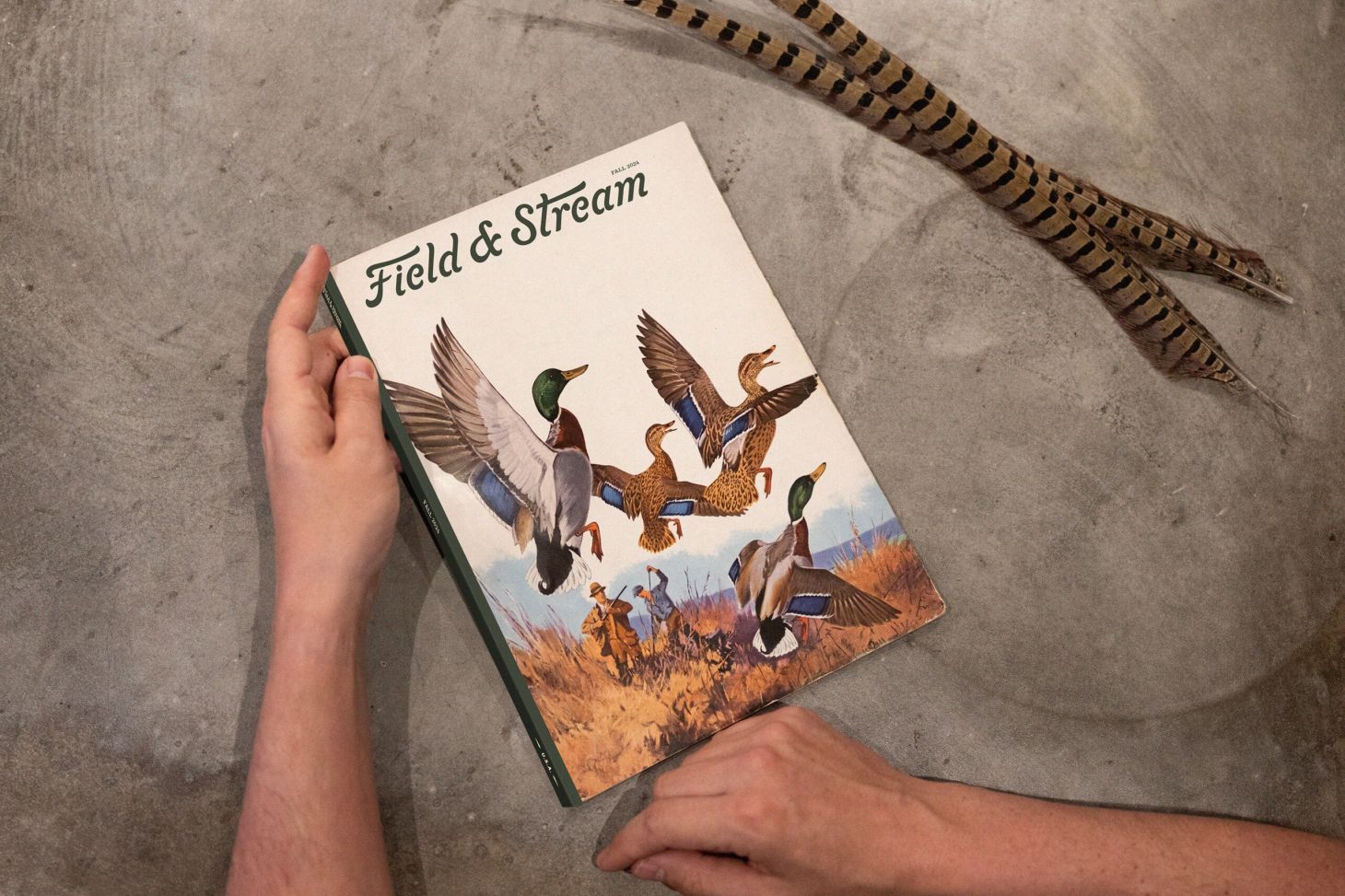
Here’s another sneak-peek at a concept behind the revived print edition of Field & Stream magazine. While the edition you’ll ultimately receive will look a bit different than this—the feeling of holding and enjoying a physical magazine will be the same. Field & Stream
Let Us Know Your (Honest) Thoughts
Before I go and let you enjoy and explore the new F&S, I’ll leave you with two things: One, stay in touch. Drop me a line (you can reach me at colin@fs1871.com) and let me know what you love, what you hate, and any suggestions you want to pass on. Two—if it’s not asking too much—just a bit more patience and grace on your part would be greatly appreciated. We want to re-earn your trust. We want to get this thing perfect. Hopefully, by the time the first issue of the print magazine arrives at your home this spring, we will have achieved both.
I can’t wait to share the revived Field & Stream with you.
How to Subscribe to the All-New Field & Stream
Unlike the previous versions of Field & Stream magazine, the new one will not be available for sale on newsstand. The only way to purchase it is through a membership in our 1871 Club. Learn more about the 1871 Club here.

All new! 1871 Club Field Trips









2 Comments
I used to subscribe to your great magazine, I used to live in Salt Lake City, Utah for 40 some odd years mt. biking, running, back country skiing on 3 pins, cooking, enjoying the fine arts & working in it too & I bowhunt deer, elk, pronghorn, two kinds of grouse
The Call of the Ocean: Why Saltwater Fishing Beats Freshwater Fishing For centuries, fishing has served as both a means of survival and a beloved recreational pastime. While freshwater fishing offers a quiet, predictable escape into local lakes and rivers, it cannot match the sheer scale and intensity of the ocean. Saltwater fishing represents the pinnacle of angling. It delivers superior physical challenges, unparalleled biodiversity, and an unmatched sense of adventure. The Thrill of the Fight The most compelling argument for saltwater fishing is the legendary fighting power of oceanic fish. Marine species live in a harsh, predatory, and boundless environment. As a result, they evolve to be faster, stronger, and more resilient than their landlocked counterparts. Raw Power: A freshwater largemouth bass or trout offers a fun, brief struggle. However, a saltwater tarpon, tuna, or sailfish will engage an angler in an exhausting, hours-long battle of endurance. Adrenaline Rush: The explosive speed of a kingfish screaming across the drag of a reel provides an adrenaline rush that a calm lake simply cannot replicate. Boundless Biodiversity Saltwater environments offer an astonishing variety of species and habitats. Freshwater anglers are largely limited to a handful of predictable species like bass, catfish, and perch within a confined body of water. Endless Variety: The ocean is home to hundreds of targeted game fish. An angler can catch everything from beautifully patterned mahi-mahi to massive grouper. Diverse Ecosystems: The fishing environments are incredibly diverse. You can sight-fish in shallow mangrove flats, cast from surf beaches, or troll over deep-sea reefs and trenches. Every single trip presents a completely new puzzle to solve. The Element of the Unknown Freshwater fishing often suffers from predictability. In a small lake, an angler can quickly learn exactly where the fish hide and what they will eat. Saltwater fishing, by contrast, is a true expedition into the unknown. Unpredictable Catches: When a line drops into the ocean, there is no guarantee of what will bite. A small tug on the line could turn out to be a keeper snapper, or it could be a massive shark. A True Adventure: The shifting tides, powerful currents, and vast distances turn every saltwater trip into a genuine nautical adventure. It connects the angler directly to the raw, untamed forces of nature.Conclusion Freshwater fishing certainly has its place for those seeking a calm, easily accessible afternoon on the water. However, for those who crave excitement, variety, and the ultimate test of angling skill, saltwater fishing is vastly superior. The ocean demands better gear, sharper instincts, and greater physical endurance. In return, it rewards the angler with unforgettable battles and a lifetime of thrilling stories.