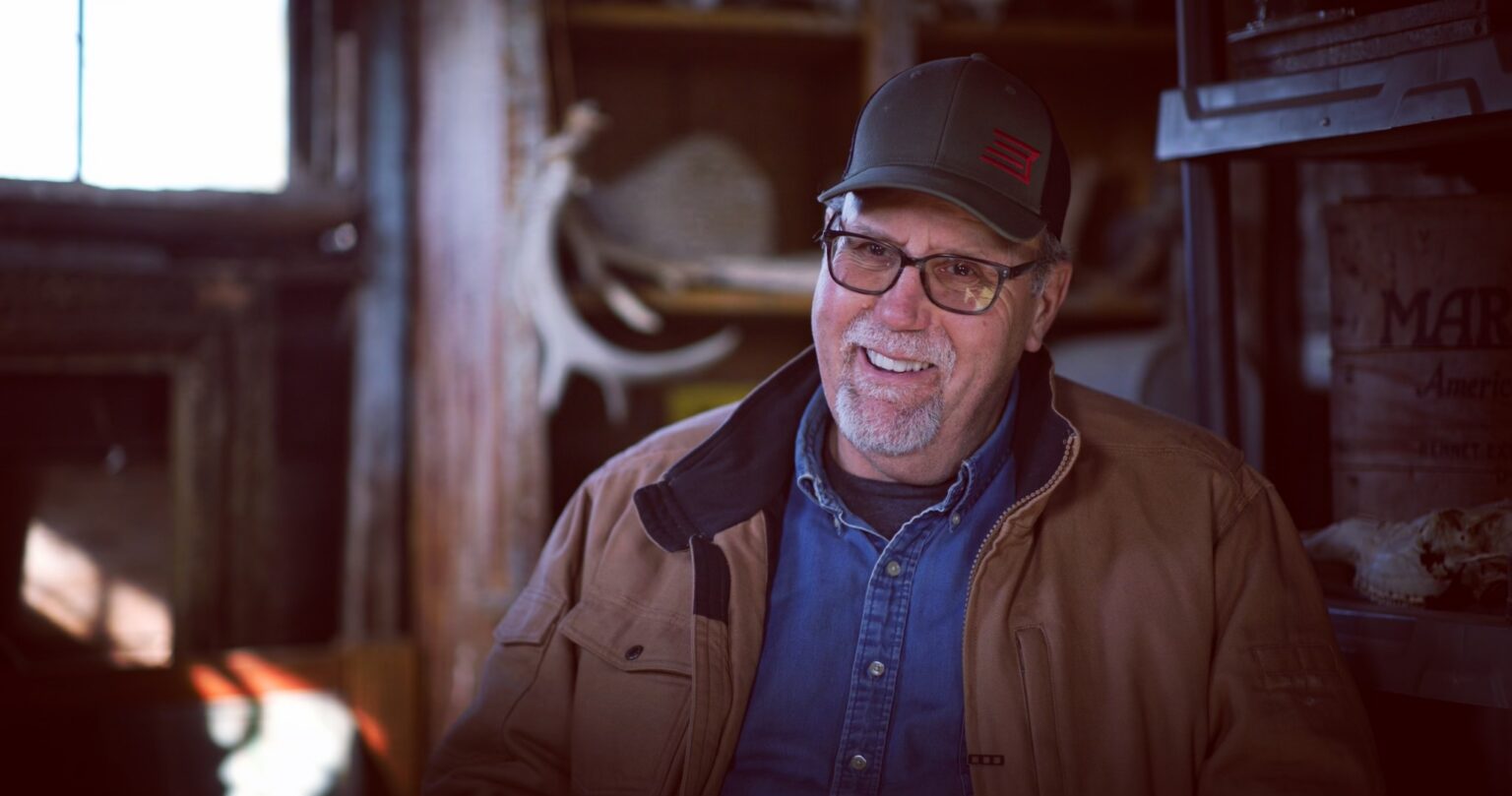
Doug Duren protects a four-generation, 400-acre Wisconsin farm by structuring land ownership through an LLC that removes financial incentive to sell. His nonprofit, Sharing the Land, connects conservation-minded hunters with access in exchange for labor and stewardship. His core principle: the land isn't yours to keep, it's your turn to care for it.
Note: With Field & Stream’s Heroes of Conservation series, we’re highlighting some of the most impactful conservation figures in the country every month. First up: Doug Duren of Casenovia, Wisconsin. We named Duren as our first 2026 Hero of Conservation and featured the following Q&A in the fall issue of the Field & Stream journal.
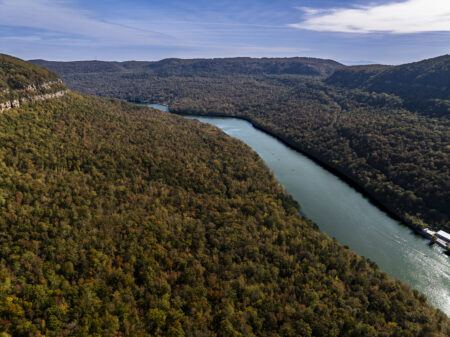
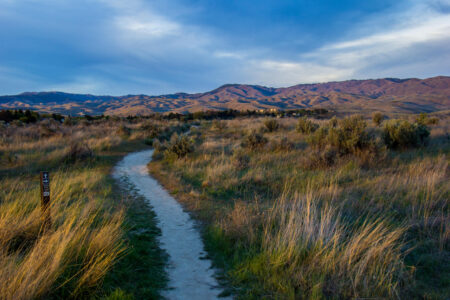
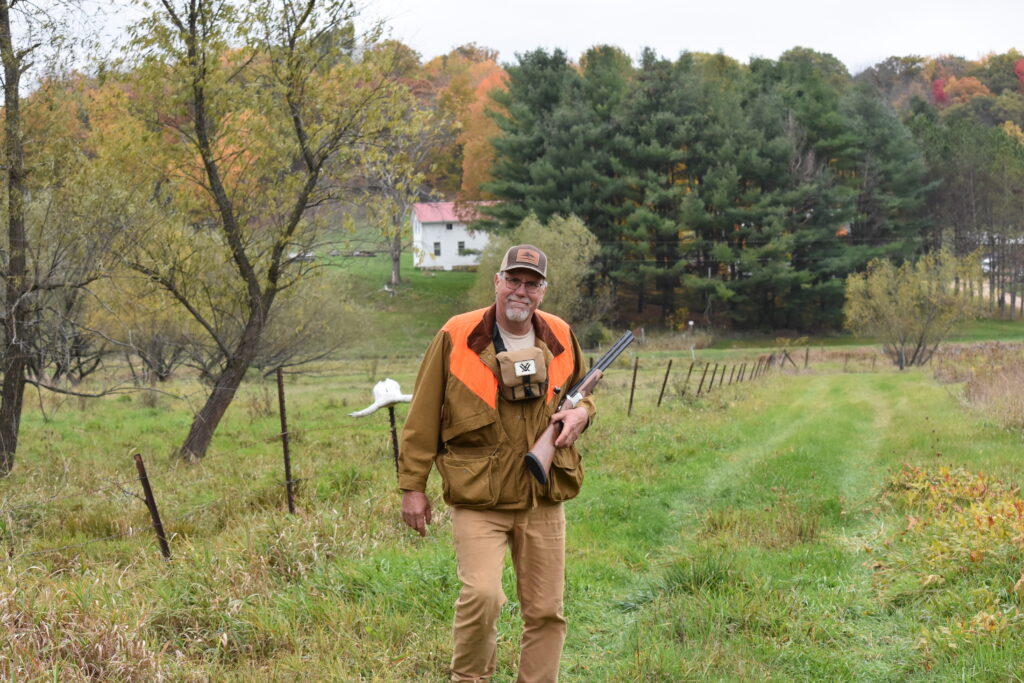
A familiar face in the outdoor world, Doug Duren owns and manages a 400-acre farm in the rolling hills of southwest Wisconsin’s Driftless Area. Duren has spent a lifetime stewarding the property and sharing the land with visiting hunters. In recognition of his commitment to conservation in the Driftless Area and beyond, we’ve named him as our 2026 Hero of Conservation.
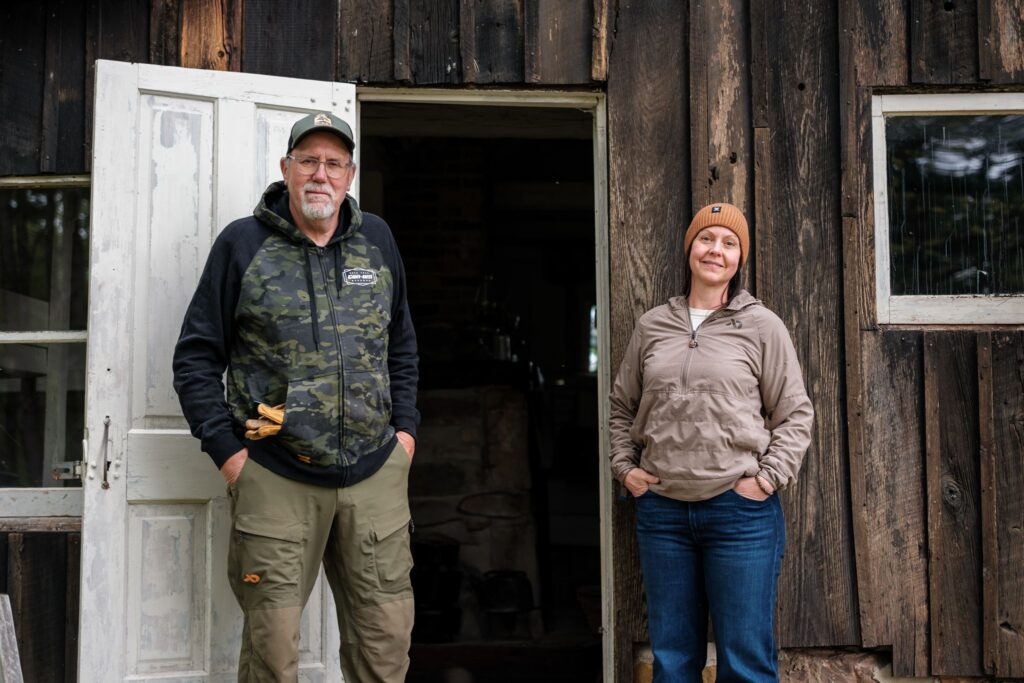
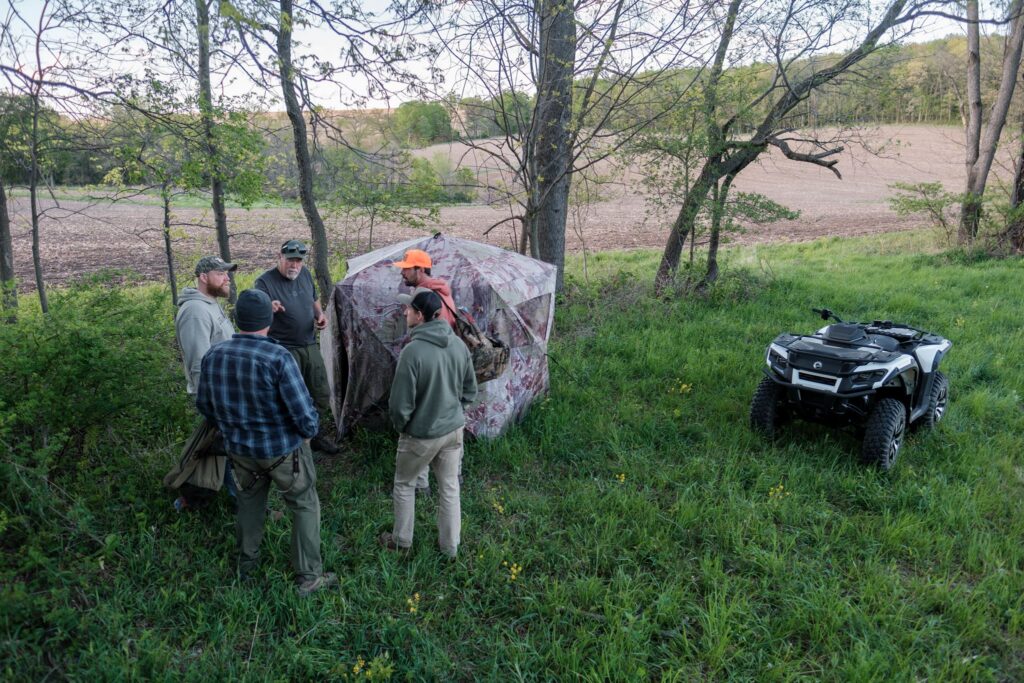
We caught up with Duren at his farm last spring to learn about his unique approach to land management and his nonprofit, Sharing the Land, which he formed with co-founder Lyndsey Braun.
F&S: Why have you dedicated so much of your life to conservation?
DD: My father, Vincent Duren, always wanted to do the best thing for the land, and he instilled that in my sibling and me. When I was sixteen, the school librarian handed me A Sand County Almanac, and that became my guiding star. Leopold said we abuse land because we see it as a commodity instead of a biotic community. That resonated with me. Today, my mantra is: It’s not ours, it’s just our turn. We aren’t just managing for ourselves but for future generations.
F&S: How long has your family owned the farm?
DD: The farm has been in our family for four generations, spanning 125 years. I wasn’t raised on the farm, but I grew up with it. Years later, when my brother Matt died tragically in a car accident while living in the farmhouse, the surviving siblings formed Matt’s Last Tree Stand LLC in his honor to protect the legacy.
F&S: Is it difficult co-managing the land with all your siblings?
DD: You can imagine, with five distinct individuals, we don’t always see eye-to-eye on everything. But we set up Matt’s Last Tree Stand to ensure that nobody can force a sale or walk away with their share. If someone wants out, they are bought out at twenty cents on the dollar by our capital improvement fund. That legal structure completely removes any financial incentive to break up the farm, keeping us all pointed in the same direction.
F&S: How did Sharing the Land come into existence?
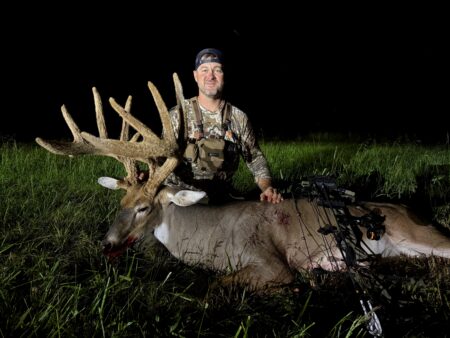
DD: The inspiration came from Leopold’s Riley Game Cooperative, where conservation-minded hunters donated labor and supplies in exchange for access. ‘Who better to rip off than Leopold?‘ I thought. Turkey populations were booming, Chronic wasting disease (CWD) was hitting the deer herd, and I found myself killing half-a-dozen deer in one day and processing them all alone. I’m becoming a deer exterminator, I thought. This is too much. Why not share this opportunity with the public? We got seed money from OnX and Vortex to build a website where hunters could fill out a ‘conservation resume’.
F&S: How has it expanded and grown since inception?
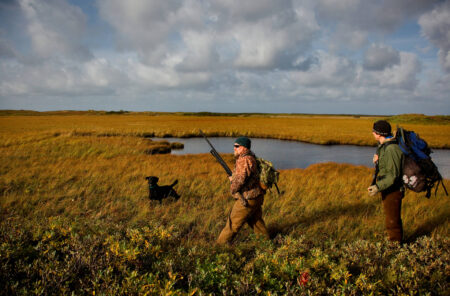
DD: We proved the concept locally on my farm for three years using simple intake forms and interviews with access seekers. But it evolved into something much bigger, and now Sharing the Land has officially earned 501(c)(3) nonprofit status. Lyndsey Braun and I co-founded it to create a framework for collaboration where landowners get real support and build genuine relationships with conservation-minded access seekers. Today, we’ve connected 50 landowners across 15 states with close to 2,000 access seekers, and we have dedicated corporate sponsors like Can-Am and OnX.
F&S: What’s your overarching philosophy when it comes to land management?
DD: My dad wasn’t interested in big buck management. He cared about the overall health of the land first and foremost, and we try to carry that ethos forward. Whitetail deer don’t really need our help, but they will benefit from a holistic approach—just like the rest of the biotic community. To just manage for deer is not looking at the whole. We’re doing native habitat renovation to help species like red-headed woodpeckers, migratory songbirds, and pollinators. Game species benefit from that holistic approach.
F&S: The Driftless Area is famous for fly fishing. How have the trout benefited from your approach to land management?
DD: When I was a kid, the creek on the property was wide, muddy, and heavily abused by a hundred head of cattle, and we never had trout. After we quit dairy farming in 1988, we changed our land management practices. When we implemented lighter pasturing and put the land into permanent perennial cover through the Conservation Reserve Program (CRP), the creek healed itself into a class-one trout stream where brown and brook trout now reproduce naturally.
F&S: How does it feel to be named F&S’s 2026 Hero of Conservation?
DD: There was always a copy of Field & Stream around our house when I was growing up. My dad was a mail carrier, and he always had a subscription. He looked forward to those magazines. If he were alive to see this, it would blow his mind. Thinking about that brings a little tear to my eye.
Doug Duren’s story is a reminder that keeping land in conservation is as much a legal and structural problem as it is a values problem. Most family farms fracture not from lack of love for the land but from competing financial pressures among heirs. Duren’s LLC model addresses that directly. His Sharing the Land nonprofit extends the same logic outward, treating hunter access as a community resource built on reciprocity rather than transaction. For anyone managing land across a family, or thinking about what happens to it next, Duren’s approach offers a practical framework rooted in Aldo Leopold’s original vision.
All new! 1871 Club Field Trips