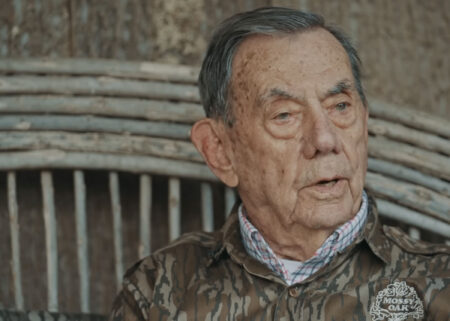
On August 26, 2025, Flip Pallot passed away. He was my old friend. In 1992, Flip hosted the debut of Walker’s Cay Chronicles. There was something magic about his show. Just the introduction alone was exhilarating. Watching Flip guide his skiff through the mangrove maze of the Everglades was coupled with this invitation, “Come with me on a trip into angling adventure. We’ll ride the ragged edge where the fish are big and wild… We’ll burn the stories into the memory of film.”
His stories were burned into the memories of fans around the globe and, for many, they became the catalyst for many a young angler to strike out on their own. That “something magic” about the show was Flip Pallot. With his broad smile and firm handshake, Flip could immediately ingratiate himself to total strangers.
In spite of his fame, he had a knack of shying away, in favor of being his own self. Over our many adventures, it seemed there were only two people that didn’t think of Flip as being famous: Flip and me. He would have had it no other way with his friends.
He had an uncanny way of twisting the English language to suit his fancy. It wasn’t theatrics. His rhythmic delivery on TV was the same in a turkey blind, a skiff, or around a campfire. For example, his trademark rendition for goodbye was, “Bye for now!” He explained, “I only say it to folks I plan on seeing again.”
Flip was also abundantly recognizable. Years ago, following a morning’s duck hunt, we were cleaning our limit of teal on the decks of our airboats. As two men approached, I concluded they had recognized Flip. One of them stuck his hand, and said, “I know you!”
Flip smiled and replied, “You know me?”
Vigorously shaking Flips hand he said, “Yep. You’re the fishing poet!”
No truer words were ever spoken.
“The Last Bite”
Flip took charge of tagging his many friends with nicknames. He called me Duck. I suggested something far bolder and rugged but I was to become Duck forever. He explained, “At first blush, you look like a duck casually swimming over tranquil waters. Yet, under the surface, your feet are paddling wildly.”
Related: Flip Pallot on Hunting, Fishing, and Keeping Traditions Alive
We first met in 1994. A hospital in Orlando, Florida, was hosting a children’s charity event on the shores of a local lake. My wife and I noticed a gathering of guests. In the center of the crowd stood Flip. I admit I was starstruck but managed to wait the appropriate time to introduce myself. I don’t recall how our initial conversation gravitated to turkey hunting. In the end, he invited me to join him on a trip to his Okeechobee hunting lease. So, in the spring of 1994, in the heart of the turkey woods, our friendship took root.
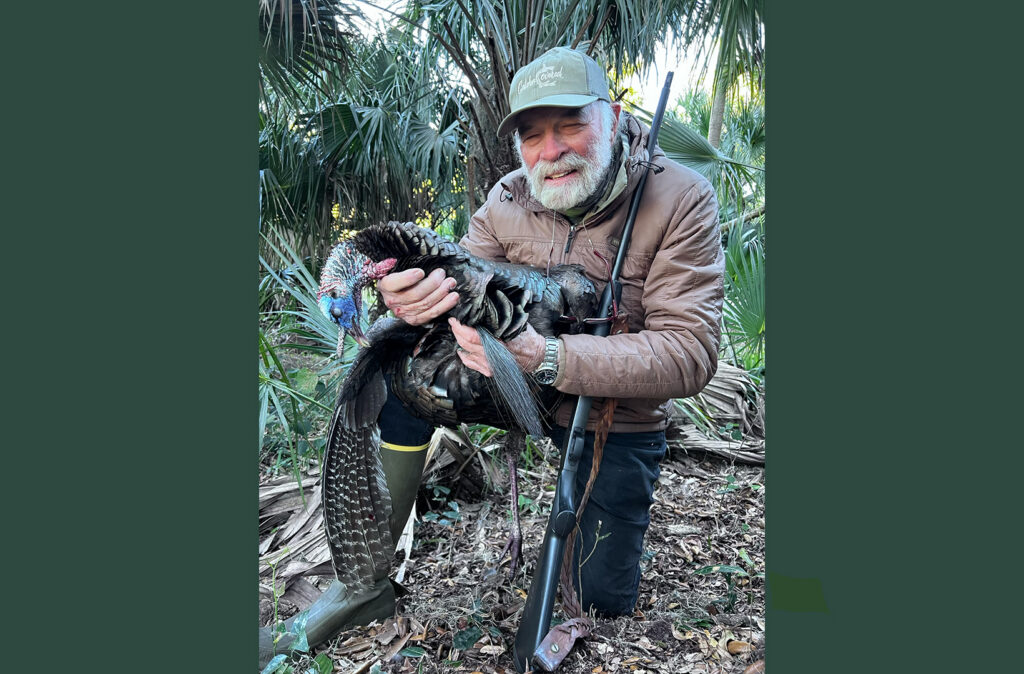
A defining moment came when we killed our first gobbler together. I called the bird into range and Flip dispatched it without fanfare. It was a crisp spring morning. With the gobbler fanned out between us, we sat in a sun-washed field admiring the lustrous rainbow of iridescent colors reflecting off the gobblers plumage. Flip even nicknamed the bird: Neon.
What Flip did next has stayed with me all these many wonderful years. He paused and began searching about the ground. He plucked a single blade of grass, opened the gobbler’s mouth, and carefully placed it inside. “It’s a tradition called the last bite,” he told me. “It’s a way of thanking the bird for the hunt and honoring his life.”
Overtime, I came know this thoughtful gesture was but a glimpse into Flip’s deep compassion and respect for all manner of living things. He lived by an iron-clad code that called for the upmost respect for wildlife. I think much of this came by way of his wife, Diane. She has a tender heart for even the smallest creatures who shared their Florida hammock homestead. I’ve not met anyone more at home in the woods than Flip. He never wore a stitch of camouflage, yet, at last count, he had taken 42 gobblers with his traditional longbow. Given the keen awareness of the wild turkey this is an amazing accomplishment.
With Flip’s passing, in my wake remains 30-plus years of memories. Now, more than ever, I find myself looking back. The idea of relying on memory alone seems inadequate, least something is lost in the shuffle. As a result, capturing this story feels right.
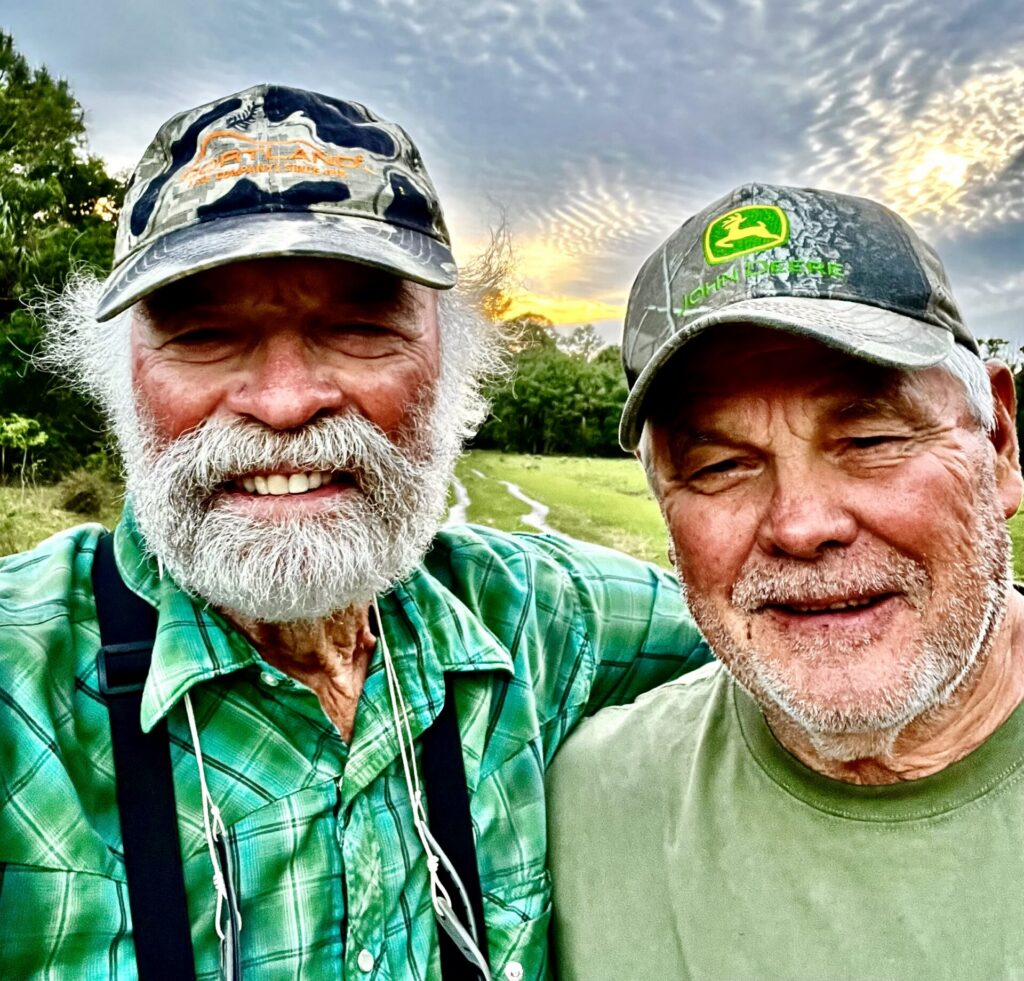
Plans for the Hunt
It was the week before Easter Sunday during the 2024 Florida spring gobbler season. Three decades and countless magnificent gobblers had passed by since we took that first bird in Okeechobee. To Flip and me, gobbler season was still like Christmas, Thanksgiving, and the Fourth of July all wrapped up in one package. In the failing afternoon light, alone in the woods (Flip was due to arrive in camp before nightfall), I watched from afar as a large Osceola gobbler and his dozen hens flew up to roost. Even from a considerable distance, I could make out the gobbler’s silhouette and impressive beard. I watched him settle down on the limb for the night and lit out for camp feeling confident we had that bird dead to rights.
We met up over a campfire at Flip’s cowboy trailer where I shared our good fortune. Suddenly, a strategic plan of attack ensued that would have made General George S. Patton proud.
Well before first light we planned to leave camp and approach the roost from the south. We wouldn’t chance the buggy’s headlights blazing across the open pasture. There was a familiar fallen log less than 60 yards from the roost. We would set up there. Along our way, we’d cut palmetto fans for a makeshift blind. We wouldn’t use a decoy but instead we’d totally rely on our calling. After all, calling is the true essence of turkey hunting.
Long before daybreak we bumped down the not-so-graded dirt road, avoiding the potholes and washouts looming in our headlights. Off our starboard side, far across the pasture, we could faintly make out the outline of the very cypress head where the gobbler was still fast asleep. A rude awakening on his final night wasn’t in our playbook, so we circled around.
We wrestled our way through an endless string of barbwire gap gates. Each one seemed stretched tight enough to pluck out a tune. Even so, we pressed ahead.
Alas, we left the buggy back 200 yards in the cover of the deep woods and set out on foot. In the pitch of night, we followed a pair of sugar-white sand ruts marking an old logging road leading to the open pasture. From there, under the canopy of the cypress tree line, we slowly slipped to our chosen spot.
Admittedly, over time our stride had slowed a bit, but our resolve was still very much in high gear. With time to spare, under a cast of a zillion stars, we rested our backs against the bark of the fallen oak. In the absence of light, one is left only to sit and listen. Perhaps you too have heard the orchestra tuning up before each morning’s curtain rise. It’s a symphony of sorts. Over our many seasons, Flip and I had long since earned our front row seats.
The first cord was struck from the far side of the pasture where a barred owl begged, “Who cooks for you?” The whippoorwills performed their grand finale for the night while fireflies still flickered with the stars. In perfect harmony, a lonesome coyote’s howl rose in pitch, as grazing cattle bellowed out of tune for no apparent reason. With a rush of wind from overhead, wood ducks strafed our blind as a single Bobwhite sounded reveille. A faint glow was gradually gaining ground across the horizon. As always, there came that moment when the first cardinal took center stage with his joyful melody. As always, he was quickly joined in song by a choir of others.
Now the orchestra rose to its crescendo. From atop his lofty throne the gobbler sounded. It seemed to echo on, bouncing about the hardwoods. Flip and I glanced at each other, nodding and grinning like two mules eating briars.
In the soft glow of mornings light, quickened wingbeats and cackles announced the flight of the dozen hens leaving the roost. With high expectations, the roosted Tom triple gobbled in response. Then we heard him catapult himself off his roost and watched him cup his wings, sailing overtop the thin broom sage. He set down in the open pasture, 70 some yards out from the tree line.
In all his glory, he broke into full strut. Seemingly not impressed, his hens never so much as offer a single ray of hope. They just milled about scratching and feeding. It’s hard to imagine the gobbler’s feelings of rejection following such exquisite posturing. On second thought, I reckon every man knows exactly how that gobbler felt.
Back and Forth
The proverbial moment of truth was at hand. We called in tandem offering up our finest yelps, cuts, and purrs. The only thing left out of the mix was the kitchen sink back in camp. We hoped, just this once, two willing hens in the hand would be worth more than a dozen frigid gals in the bush. Attempting to coax a gobbler away from his hens is paramount to calling a blue-ribbon bird dog off point. Even so, Flip and I lied to that ole Tom that morning using every trick in the book.
Then Flip whispered his familiar expression: “Shitskers. It worked like everything!”
The gobbler had turned from his hen’s and taken on a hostile vector toward us. With each step, his long beard swung to and fro. Still beyond shotgun range I whispered, “Get ready, Flip. You’re shooting.”
He replied, “No, you’re shooting.”
“Gonna be tough for me,” I replied. “I left my shotgun in the buggy.”
“You forgot your gun?” he said.
Then I admitted, “No I didn’t forget it. I just don’t want to shoot the turkey.”
“Why not?” he asked
“I suppose I ain’t mad at him,” I said.
Flip peered over the palmetto’s carefully sizing up the bird. He finally replied, “You know what, I’m not mad at him my own self.”
“You’re kidding,” I said.
“Nope,” he said. “In fact, I’m sure of it. I’m defiantly not mad at him.”
“OK,” I said. “What now?”
As if the hunt were over, Flip smiled and replied, “Pancakes!”
“What do you mean ‘pancakes,’” I asked?
No longer speaking in hushed tones, Flip announced, “Come on, Duck, let’s go back to camp and make some pancakes.”
We stood up, the turkey hauled ass, and we laughed our way back to camp.
Over flapjacks, Flip said, “You might want to go back and kill that bird in the morning.”
“Hell,” I said, laughing. “I figure right about now he’s in Kansas. Besides, I may want to shoot him or I may not. I don’t think it matters anymore.”
Flip nodded, “I agree.”
“I remember a time we both would have shot that bird deader than Grover Cleveland,” I said. “You reckon that’s where we’ve come too?”
“Well, that’s where we came to this morning,” he said. “And another thing: Ain’t it wonderful?”
I nodded, “It’s perfect. Pass the syrup.”
Sign of the Cross
That afternoon we took our normal slow buggy ride about the property. Flip stopped and pointed out a lone pine tree standing in the middle of a palmetto flat. In my world all pine trees look alike—but not in Flip’s world. It was one of those hidden treasures Flip had uncovered that was worth more than a cursory glance. “That’s a Loblolly pine,” he said. “They’re scattered all about. Look carefully and tell me what you see that makes that tree so remarkable.”
Following a brief study I replied, “Oh my God. Crosses. I see lots of crosses.”
Flip nodded and smiled. “Yes, they only appear the week before every Easter, and soon after they’re all gone.”
Read Next: Hunting and Fishing Tips from 10 Outdoor Legends (Including Flip Pallot)
All new! 1871 Club Field Trips