Hunt sheet water by scouting first and letting ducks tell you where to set up. Target six to ten inches of depth for easiest wading and decoy work. Dabbling ducks concentrate in temporarily flooded fields because it puts food within easy reach. Set up where birds are already working, not where you think they should be.
- Scout before you set up. Let ducks show you exactly where they want to be on sheet water.
- Six to ten inches is the optimal depth for decoys, wading, and bird recovery.
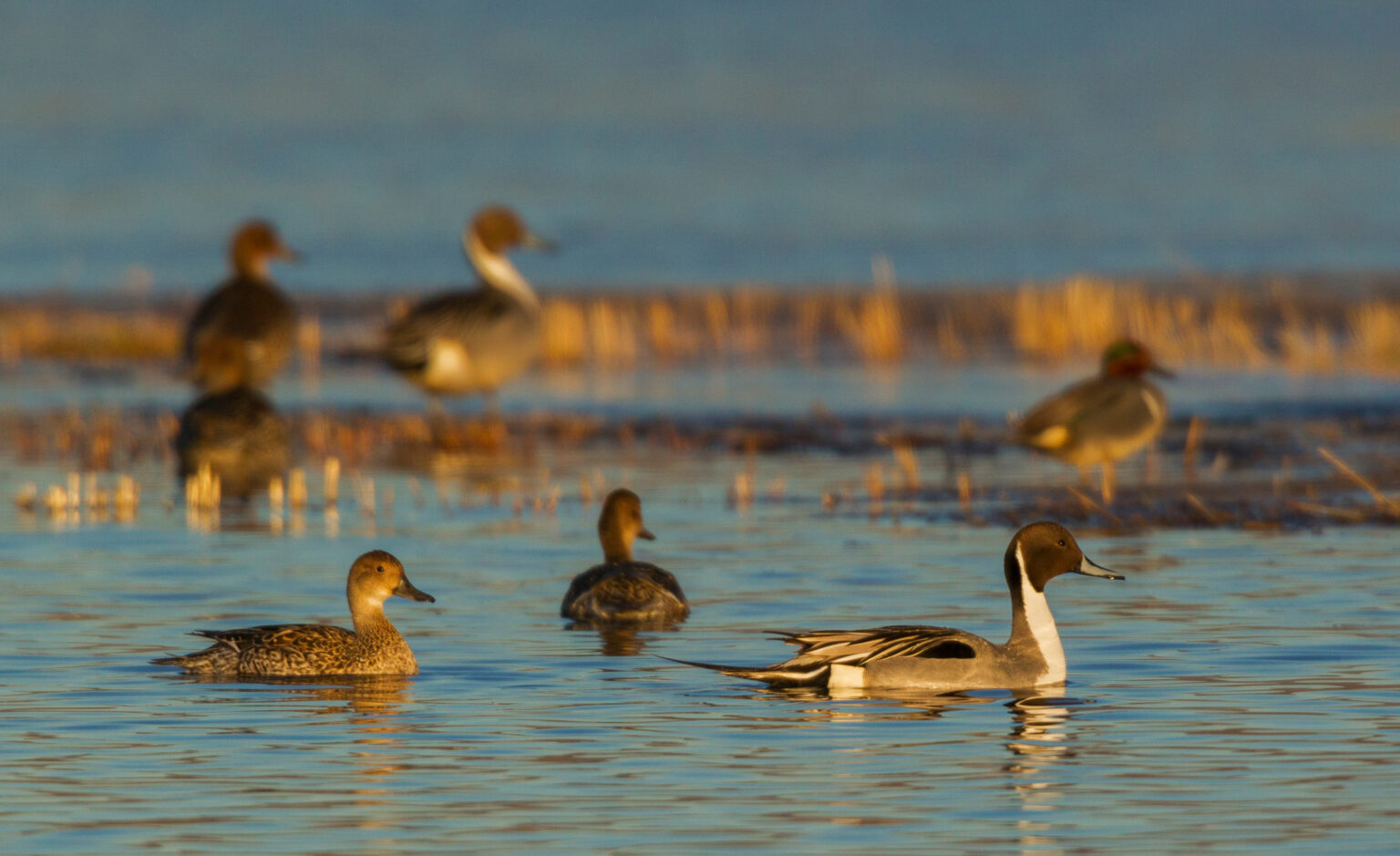
- Pintails and wigeon prefer open water. Mallards tuck into flooded bunch grass and tussocks.
- Sheet water appears in lowlands near creeks, rivers, tidal areas, and beaver impoundments after heavy rain.
- Birds on sheet water are there for a reason. Food source or security. Find the reason, find the birds.
Here today, gone tomorrow. That’s the name of the game when hunting ducks over sheet water. These temporarily flooded areas may last a day, a week, or a little longer, but then it’s gone until the next weather event. Here in the Pacific Northwest, such so-called weather typically comes in the form of heavy seasonal rains. However, extremely high tides along the coast can also raise water levels well above normal. Regardless of the cause—heavy rain, tides, or an unexpected quick thaw—high water inundates the ground, creating a shallow water haven usually filled with food for ducks and geese.
But how shallow is too shallow? Over the past 50 years, I’ve hunted in sheet water from six inches deep up to four feet. Given my druthers, I’ll always choose the former—six to 10 inches being optimal—as those measurements make setting decoys, retrieving birds, and wading much easier. More importantly, such shallow areas are exceptionally attractive to dabbling ducks as the temporary water puts otherwise inaccessible food such as grains, seeds, spiders, and other invertebrates within easy reach.
Depending on rising water levels, this temporary flooding can appear anywhere. However, you’ll usually find it in lower elevations or lowlands, often adjacent to creeks or rivers, particularly those that are tidally influenced. Areas surrounding beaver dams are also good places to look after heavy rains. But the best way to find sheet water is the same way as finding ducks—by scouting. Once you pick a spot, follow this game plan for more success in shallow water.
Sheet Water Setups
Let’s create a scenario: There’s a 40-acre pasture field, with two tidally influenced six-foot-wide but apparently bottomless drainage ditches. A levee runs along the west side; a mixed line of Douglas firs and blackberry thickets runs along the east. Clumps of tussock grass throughout the field range from roughly 12 to 24 inches high. King tides and heavy rains have filled the eastern half of the pasture with an average of 12 inches of water.
What to Look For
One thing I’ve learned from hunting sheet water here in southwest Washington is that pintails and wigeon seem to prefer the larger, more open holes, while the mallards don’t hesitate to tuck in among the clumps of flooded bunch grass. This, combined with boots-on-the-ground scouting, helps determine where to set up on this 20-acre puddle. Typically, I don’t run traffic on sheet water. Rather, I let the birds tell me where I need to be.
Like ducks on a river, birds on sheet water are in a specific spot for a specific reason. This is often due to a food source, like spilled/flooded grain or naturally occurring seeds. It can also be because that part of the field offers security and visibility. Either way, figure out exactly where the birds want to be on the sheet water and plan to go there.
The Hide
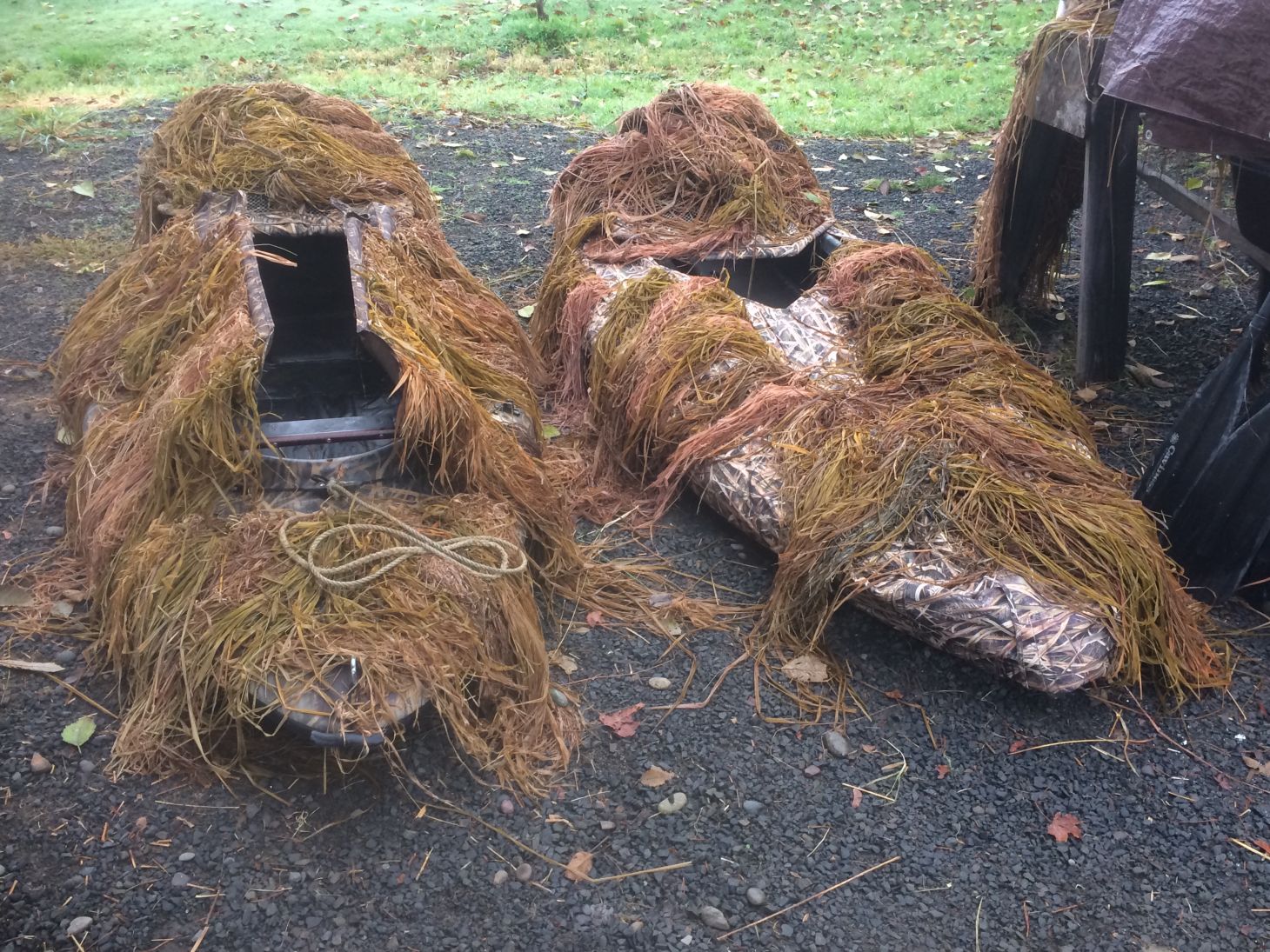
If I have access to hummocks of higher ground scattered throughout the pasture, I’ll use a Banded Ground Force layout blind, stubbled with a mix of grass and Rig “˜Em Right’s Ghillie String. Often, with higher-than-usual water, I’ll hunt the edge with my back either to the dark Douglas firs or blackberry tangles. Here, I’ll set a panel blind, which I’ve modified by removing two panels, thus creating a smaller one-man blind with a sleeker vertical footprint.
Nine times out of 10, I’ll hunt from the bottom of a 10-foot AquaPod skiff onto which I’ve fitted an older Avery Power Hunter cockpit (lid) and stubbled Cordura nylon cover. This turns the boat into a floating layout blind, letting me hunt comfortably anywhere in the area, regardless of water depth or where the birds want to be.
Decoys
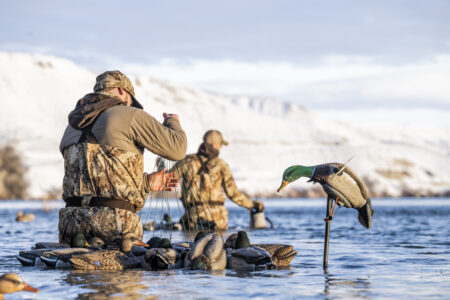
Your decoys will depend upon your situation. As a one-man show and a fan of smaller spreads, I usually set 18 to 20 mixed mallards, pintails, and wigeon, all hung with Rig “˜Em Right’s Original 30″/4-ounce Texas Rigs. From time to time, and if I’m feeling froggy, I’ll throw out a half dozen of RMR’s Blackouts on the same anchors. Deployment and pickup of this spread is lightning fast. The arrangement follows what I call The Random Placement Theory: I stand in one spot and toss decoys until they’re gone.
A couple of points regarding decoys and sheet water:
- Set the decoys where the birds can see them. Do not “hide” the decoys amongst the bunch grass or other flooded cover
- I set my spread loose and relaxed, except for the Blackouts, which I’ll bunch. To me, this creates a larger footprint that increases visibility. These all-black decoys can double as coots, which are a draw for many puddlers, especially wigeon and greenwings
- Two to four Canada goose decoys should always go into the mix. Sometimes it’s floaters, sometimes it’s full-bodies, but either way, they’re always there. Ducks feel safe around Canadas, thus lending an air of confidence to your spread
Key to Success
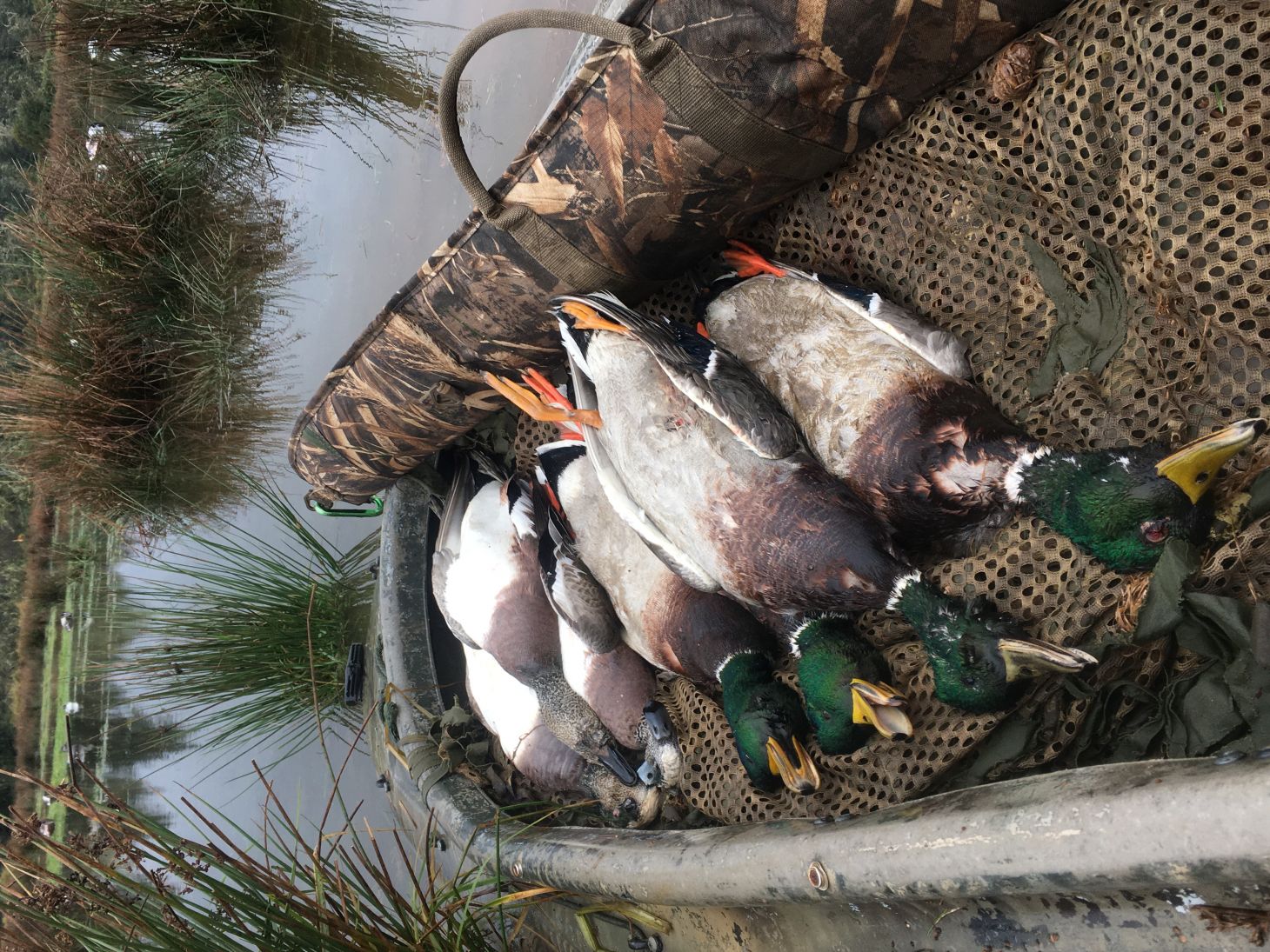
If you’re a fan of spinning wing decoys, by all means, stick one close to the water and see how that works. If birds aren’t finishing the way you want them to, then yank it for the morning. Here in Washington, electronic decoys aren’t allowed, so I rely on the waterfowler’s ultimate weapon—the jerk cord. Mine is a simple jerk cord sporting two water keel greenwings. The rig is lightweight, fits in the included drawstring bag, and moves plenty of water. I’ll position the one-pound grapple anchor and pair of greenwings, then run the 100 feet of paracord back to the blind. Then, I’ll set the spread around the jerk cord so that the closest decoys can take advantage of the resulting ripples. Add a little calling, a bit of skill behind the gun, and a touch of luck for success in the skinny water.

All new! 1871 Club Field Trips