Comprehending the mechanics of a compass is a helpful skill. Whether you are a hunter, outdoor enthusiast, survivalist, or simply an individual seeking a better understanding of orienteering skills, knowing how to read a compass is a must. Why? For starters, it can help you find that sweet backcountry fishing spot or your tree stand in the dark. More important, knowing how to read a compass can save your life if you get lost in the woods.
A compass is a navigational instrument that identifies the cardinal points—North, East, South, and West, including intermediate directions. The most reliable and best compasses work by using the natural magnetic properties of our planet, providing us with a consistent understanding of directionality, regardless of location or visibility conditions. To do this well, you must understand the parts of a compass and how to read them. It is not hard to do. Reading a compass seems complicated because of awkward terminology and instructors who know the skill but can’t teach it well. After teaching land navigation to hundreds of students at my school, we have simplified some of that terminology to make it easier to understand. Here’s everything you need to know in order to read a compass.
Table of Contents
Parts of a Compass
Basics of How to Read a Compass
How to Use a Compass
Understanding Declination
FAQs
Final Thoughts
Parts of a Compass
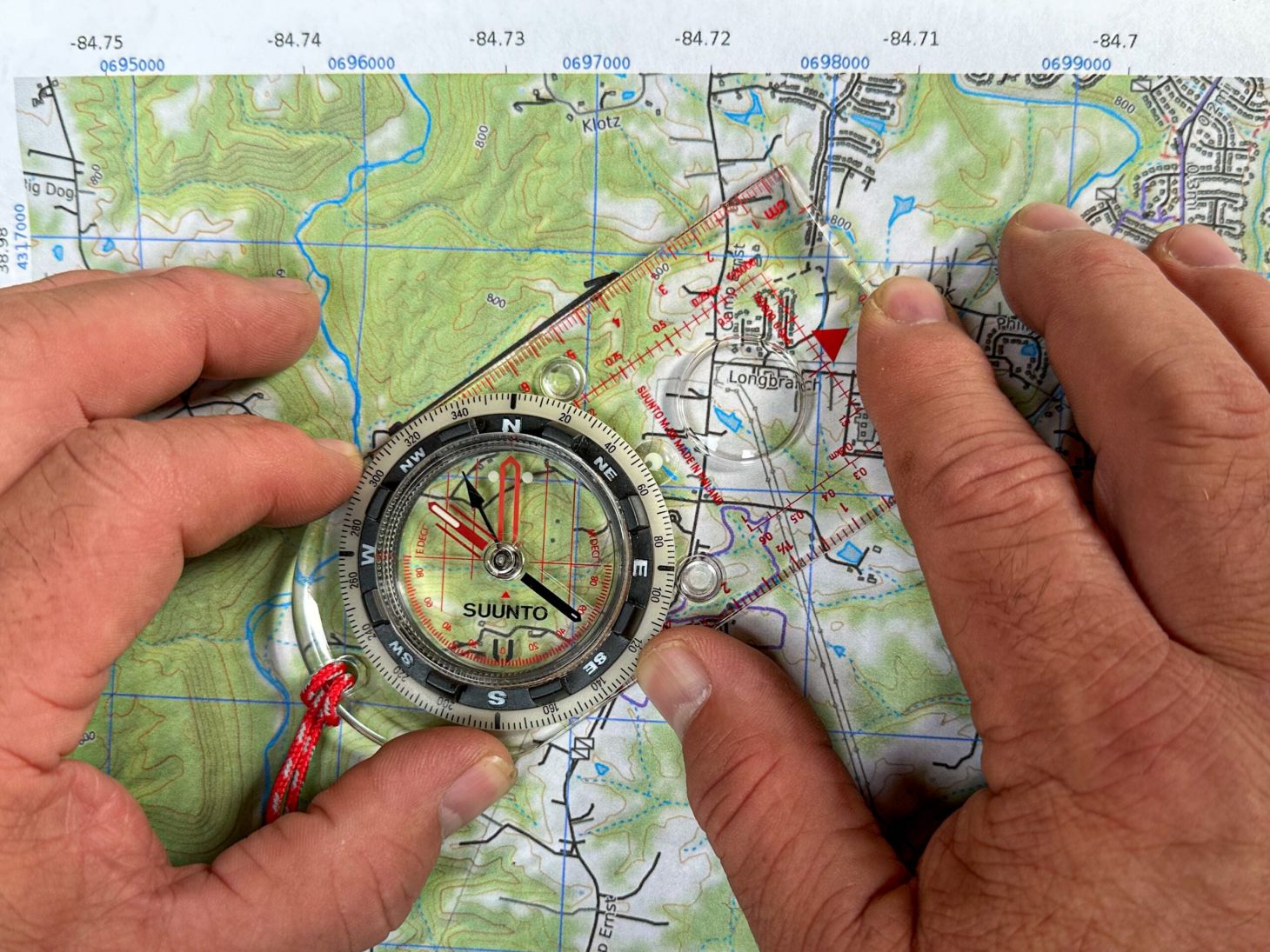
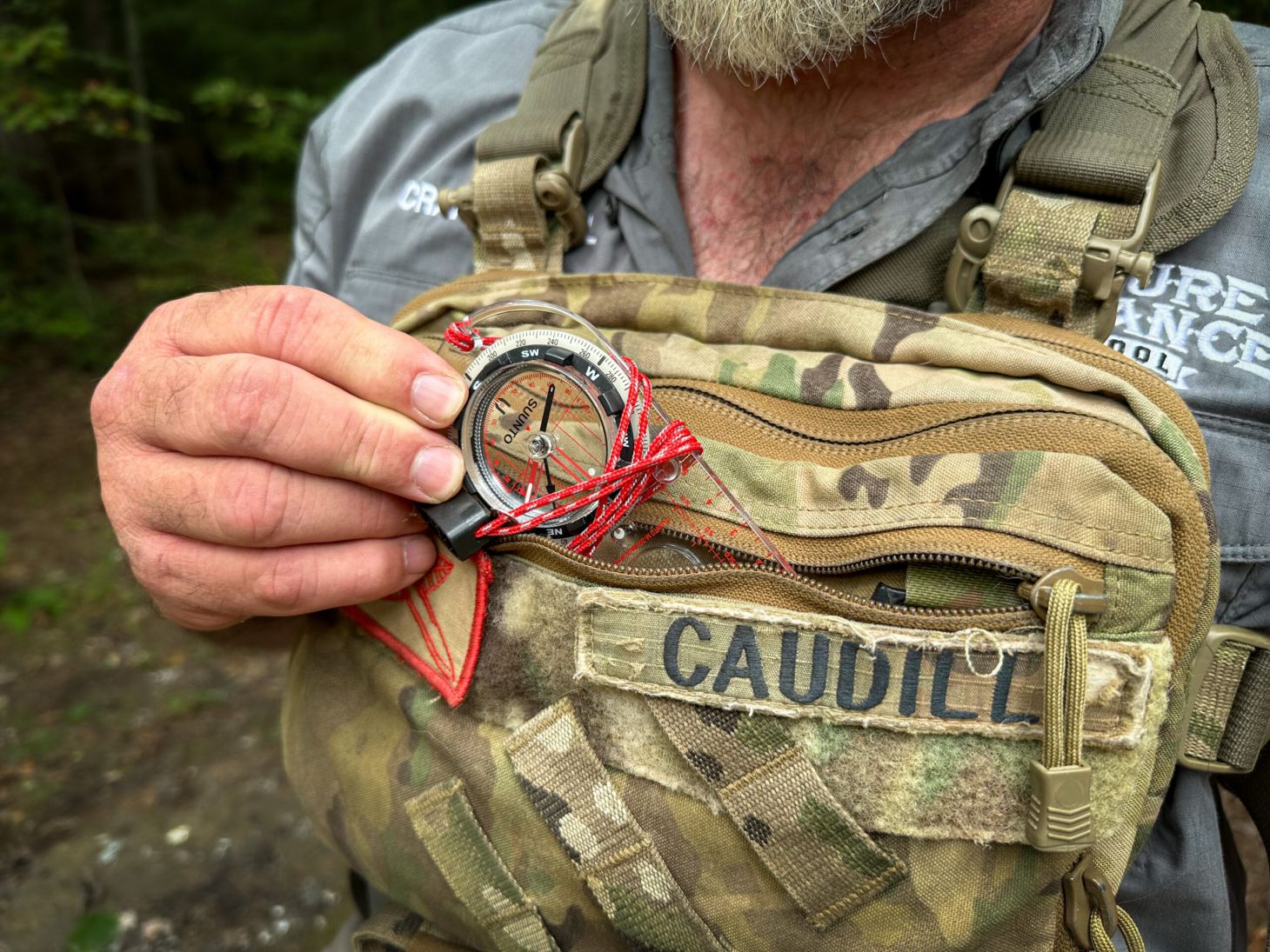
For our discussion on how to read a compass, I will use a baseplate compass rather than the lensatic (military-style) compass. Well-built baseplate compasses are half the price of a comparable lensatic and just as accurate. Let’s take a look at the functional pieces and parts of a compass.
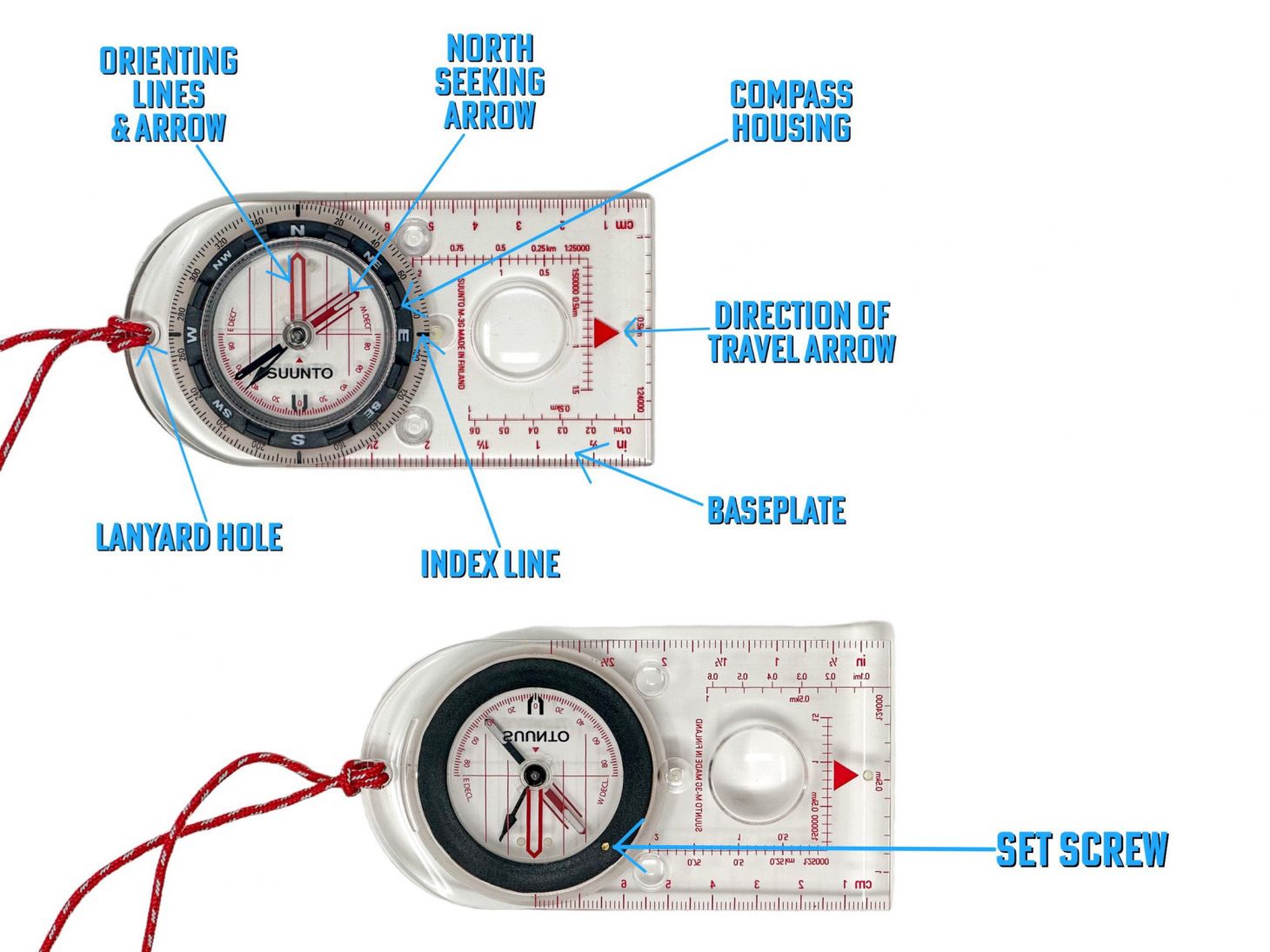
North-seeking Needle: This floating needle in the housing always points to magnetic north. The north-seeking needle will be red for most compasses. However, there are many different manufacturers of compasses. You will see variants of this color occasionally.
Compass Housing Dial: Also known as the compass dial, this rotating circle has degrees from 0 to 360 around its edge for detailed navigation. Most baseplate compasses have lines at 2-degree increments. Another variant is that some compasses will have a mechanism that makes it click on these increments. That proves to be very useful in low-light conditions.
Orienting Lines and Arrow: These lines inside the compass housing help align the compass with the north on a map. The arrow in the center is the orienting arrow and will stand out in length from the other lines near it.
Direction-of-Travel Arrow: This arrow is on the compass’s baseplate and points where you want to go. This arrow is an integrated part of the compass and does not move.
Baseplate: The baseplate is clear, so you can use it on a map and still see what is beneath it. It will often have measurement scales that correspond to the various scales of a map or are simply imperial or metric measuring standards.
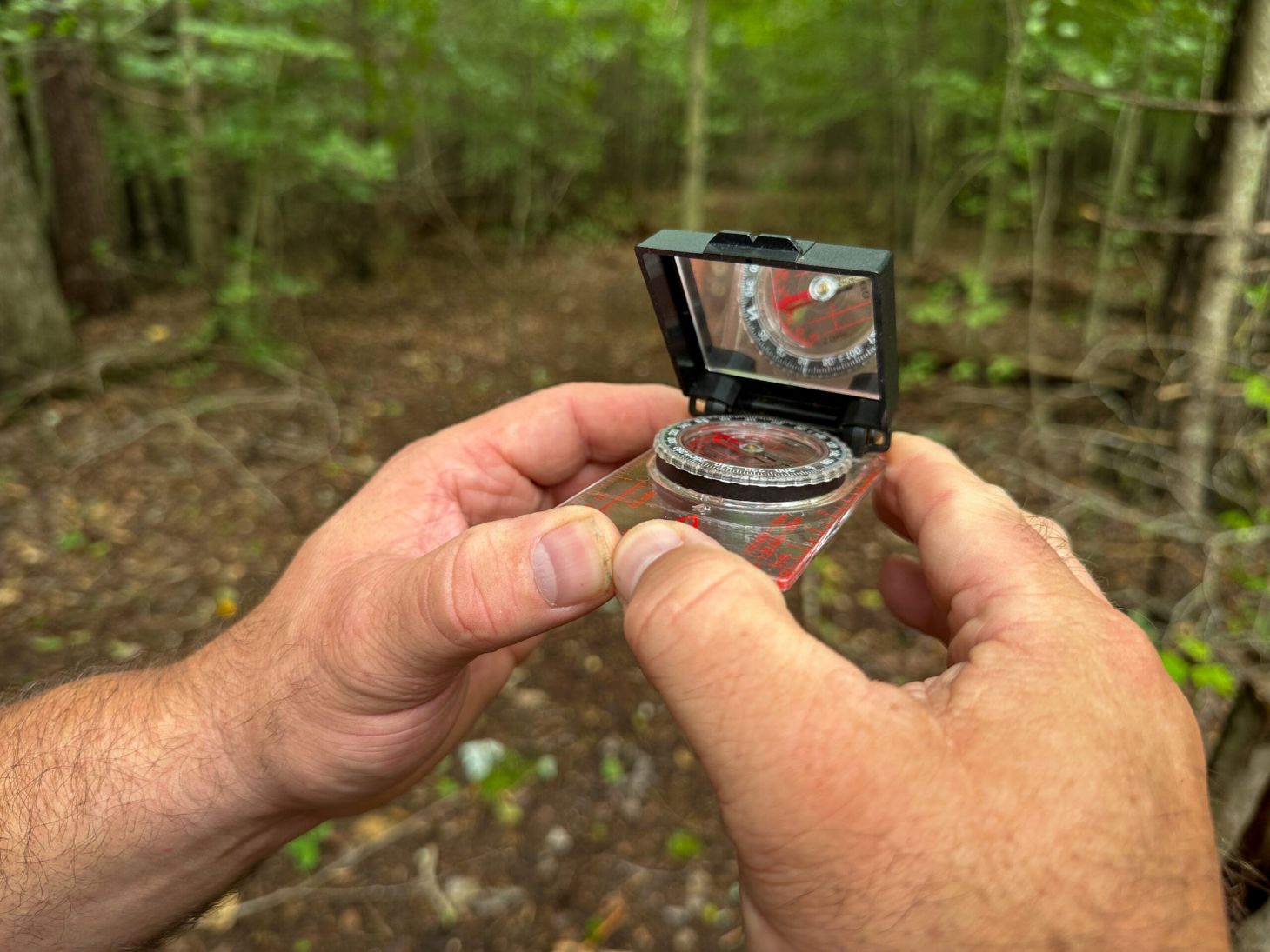
Cover: The cover serves two purposes: To protect the compass dial from drops and falls. The second is to get a more accurate bearing. The mirror can be used for other purposes besides obtaining and using directions. Use the mirror to signal ground or air searchers in a lost person situation. You can use a compass mirror to see hard-to-see spots on your body while searching for ticks. As a tracker, I use it to reflect sunlight onto tracks more easily to see details within them.
Set Screw: This is a debatable part of the compass because there are two schools of thought on whether this should be used. I prefer not to use it and teach our students the same. It aids in adjusting declination, which we will cover later.
Index Line: This immovable line lies directly beneath the compass dial. Typically, it is white, but like other items mentioned here, it may be a different color due to the manufacturer’s preferences.
Lanyard Hole: Don’t discredit the importance of this piece of the compass. It makes wearing a compass on your pack or around your neck accessible. One of the basics of compass use is always using it with a map to know where you are. So, having it close at hand is essential, and the lanyard hole helps you do that.
Basics of How to Read a Compass: Step by Step

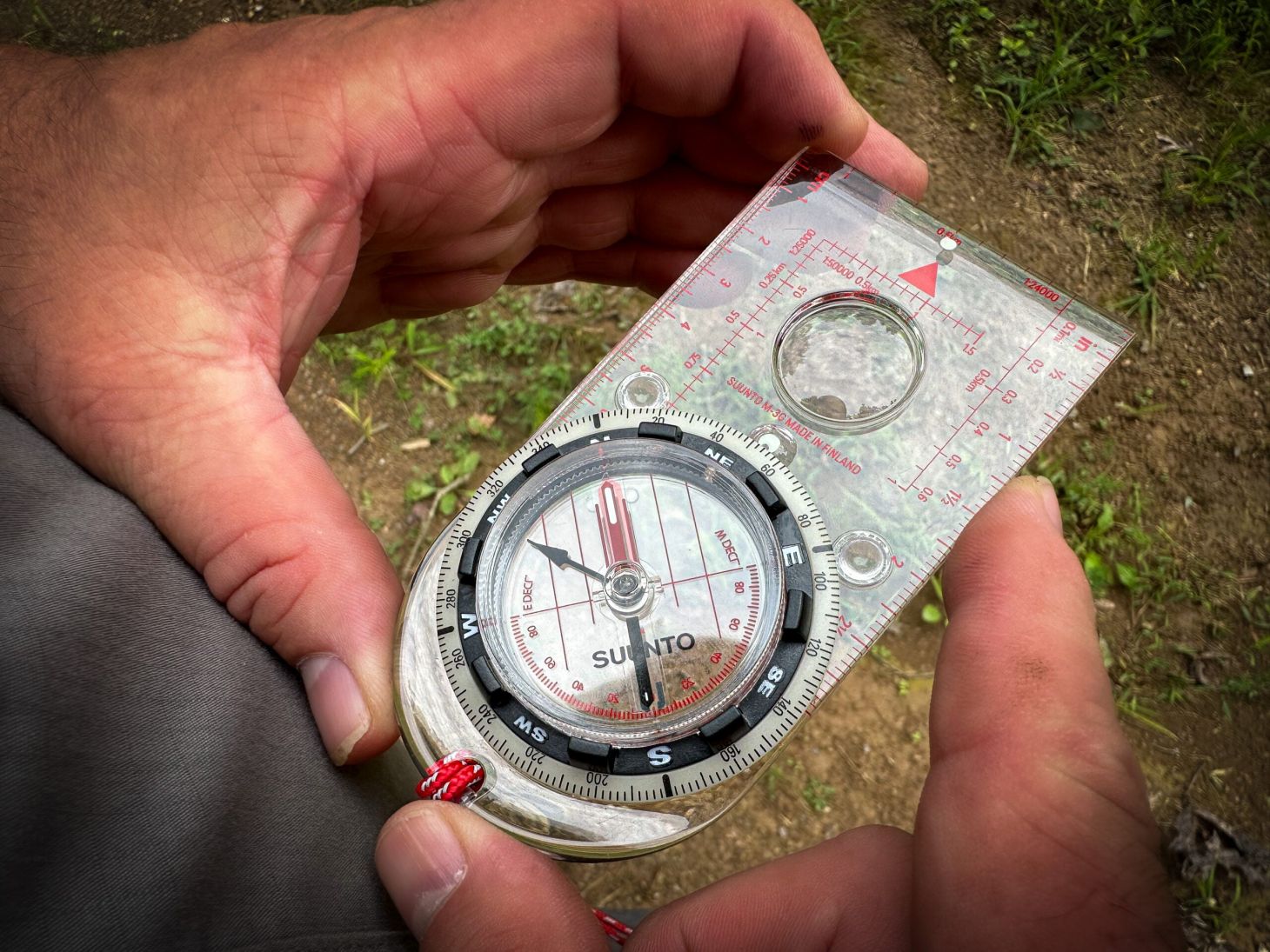
Hold Your Compass Steadily: Hold the compass so the baseplate is level, and the direction-of-travel arrow points away from your center of mass. You can check that it is working correctly by rotating your body. The north-seeking arrow should stay pointing to magnetic north as the compass moves. If it is not level, the arrow will not move freely. I prefer to hold it with my fingers to help troubleshoot common problems. Anything magnetized will “pull off” the magnetic needle. This can include your ring, watch, cell phone, zippers, or magnets in gloves or clothing. By holding it with only your fingers, you can troubleshoot these issues before they occur.
Set Your Destination on the Terrain: Look at the terrain and decide where to go. Once decided, point your direction-of-travel arrow in that direction. Using a baseplate compass with a cover, you can do this more accurately with the housing portion on the cover that looks like a rear gun site. Look over the cover, through the “gun site” to your destination. The strength of your eyesight will determine the distance you hold the compass away from your face. If you use a baseplate without a sighting cover, hold it near your sternum (remember to keep it away from items that will pull it off) and look down at the compass.
Rotate the Compass Dial: Turn the compass dial until the orienting arrow aligns with the north-seeking needle. Many call this putting “red Fred in the shed.” This means the red north-seeking arrow sits equally surrounded by the central orienting arrow below it in the housing dial. Your azimuth is the degree mark that lines up with the direction-of-travel arrow and the index line. (Azimuth is the most correct term to describe this reading, although heading and bearing are often used.)
Read Next: How to Make a Compass
How to Use the Compass
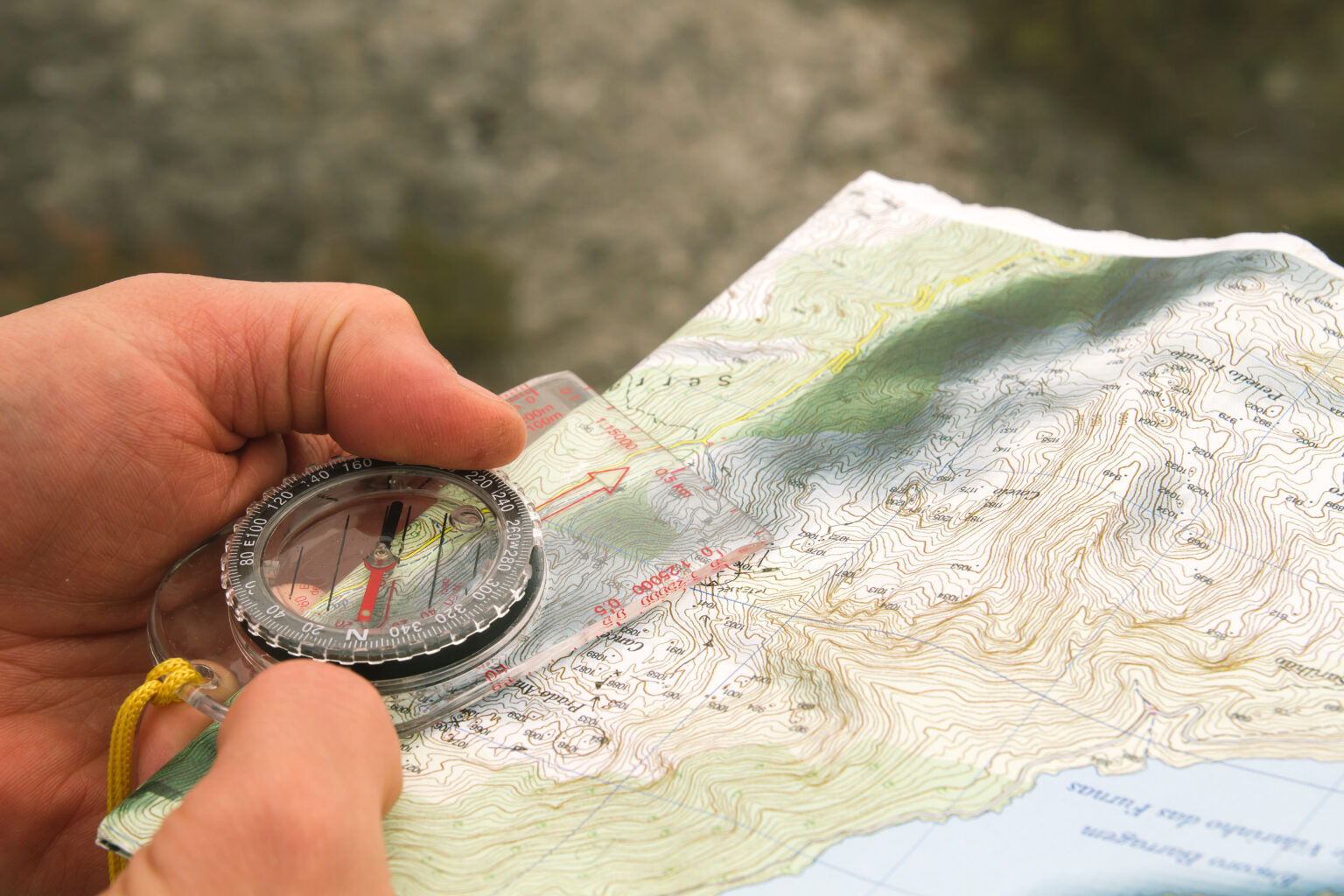
A compass is more effective with the aid of a map. Together, they can pinpoint your exact location and the direction you need to head. The beauty of having a map and compass is that you can use it both ways. This means you can observe things on the terrain and use your compass to get the azimuth for those terrain features. Or you can use the map to recognize terrain features and then navigate to them utilizing your map and compass. Here are steps on how to use a compass with a map.
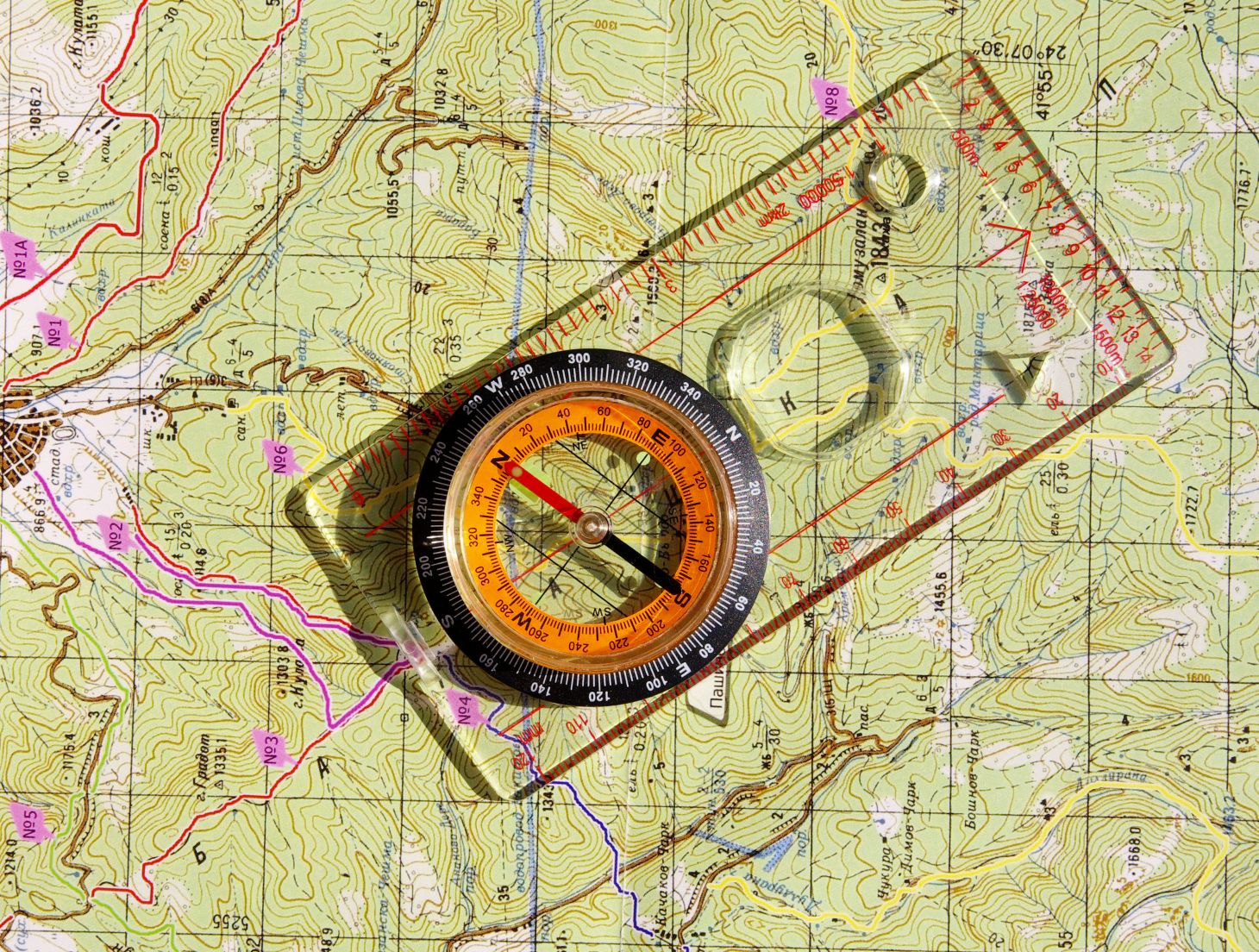
Align the Compass: Lay your compass on the map with the edge of the compass along your desired route. The direction-of-travel arrow should point in the direction you want to go. It does not matter which side of the compass you choose to use. Both will give you the same direction.
Rotate the Compass Housing: Now, rotate the compass dial until the orienting lines parallel the map’s grid lines. Ensure the orienting arrow points toward the map’s top (North).
Determine the Azimuth: The azimuth can be read where the direction-of-travel arrow intersects the degree dial. Remember, most compasses delineate in 2-degree increments. No, the magnetic arrow plays no role at this point, which comes next.
Use the Azimuth: Lift the compass off the map and hold it properly. Turn your body until the north-seeking compass needle aligns with the orienting arrow. I like to think of my body as a tank and the compass as a turret. The compass should stay in front of your body. The direction-of-travel arrow now roughly points towards your destination. I say roughly because, to be more accurate, you will need to account for declination (see Deciphering Declination below).
Terrain to Map: Do the same steps in reverse when transferring terrain information and apply it to a map. Meaning aligns the direction of travel arrows toward a terrain feature you want to travel to. Put “red Fred in the shed” to get your azimuth, and place your compass on the map as before after adjusting for declination (see below).
Understanding Declination: True North vs Magnetic North
The difference between True North (toward the North Pole, and usually the top of a map) and Magnetic North (where the compass needle points) is known as declination. It varies depending on your location around the world. Some compasses allow for declination adjustment. I don’t recommend taking that route. It is too easy to forget that it is set and take it to another location where the declination differs. That is built-in inaccuracy. I recommend manually compensating for declination.
To correctly navigate, you should know the declination in your area and adjust your compass or calculations accordingly. The agonic line is an imaginary line roughly near the Mississippi River. At this line, True North and Magnetic North are the exact measurements (zero), and no adjustment is needed. Any area found on the east side of the line has a west declination, and what is west of that line has an east declination. You can think of the agonic line as an item that pulls the north-seeking compass needle towards it.
In the eastern U.S., magnetism pulls the needle toward the west. In the west, this same magnetism pulls the needle to the east. Declination increases the further you get away from the agonic line. Therefore, you should know the declination of the area you are navigating. That is found quickly enough by doing an Internet search for “declination of my area.” The declination amount also appears at the bottom of most maps.
Let’s make this very practical: Let’s say you lay out a direction of travel on your map, and you get that map measurement at 150 degrees. For our exercise, let’s assume you are east of the agonic line and know your declination is 6 degrees. Since your compass is magnetized and 6 degrees off, you must add 6 to your 150. So, when you set your compass and use it on the terrain, set it to 156 degrees.
FAQs
Q: Do you read a compass clockwise?
Yes, the numbers increase moving clockwise, starting at 0 degrees (Magnetic North) and finalizing at the exact location, also known as 360 degrees.
Q: What do the numbers on a compass mean?
Each of the numbers represents a degree measurement away from magnetic north.
Q: Why is the north red on a compass?
The tradition of marking the north as red has been established for quite some time. Mariners and explorers have long used red to denote the northern end of the compass needle because of its visibility to the human eye. Over time, this convention stuck and became widely adopted.
Final Thoughts
Knowing how to read a compass is an invaluable skill. It’s a reliable method for ensuring your navigation is accurate and your journey safe, whether exploring a new trail or finding your way back to civilization. GPS is a great tool as well, but having solid map and compass skills helps you to use a GPS more efficiently.

All new! 1871 Club Field Trips