Insects suck. They also bite and sting. Some inject venom that can kill outright or produce a deadly allergic reaction. Others, like mosquitoes, spread parasites that are responsible for the deaths of hundreds of thousands of people annually.
The list below, just to be clear, is taxonomically laid-back. Spiders and scorpions, for example, are not technically insects but we’ve included them. Basically, if it’s creepy and crawly and can kill, it’s on the list.
So tuck your pants into your socks and read on.
1. Mosquito
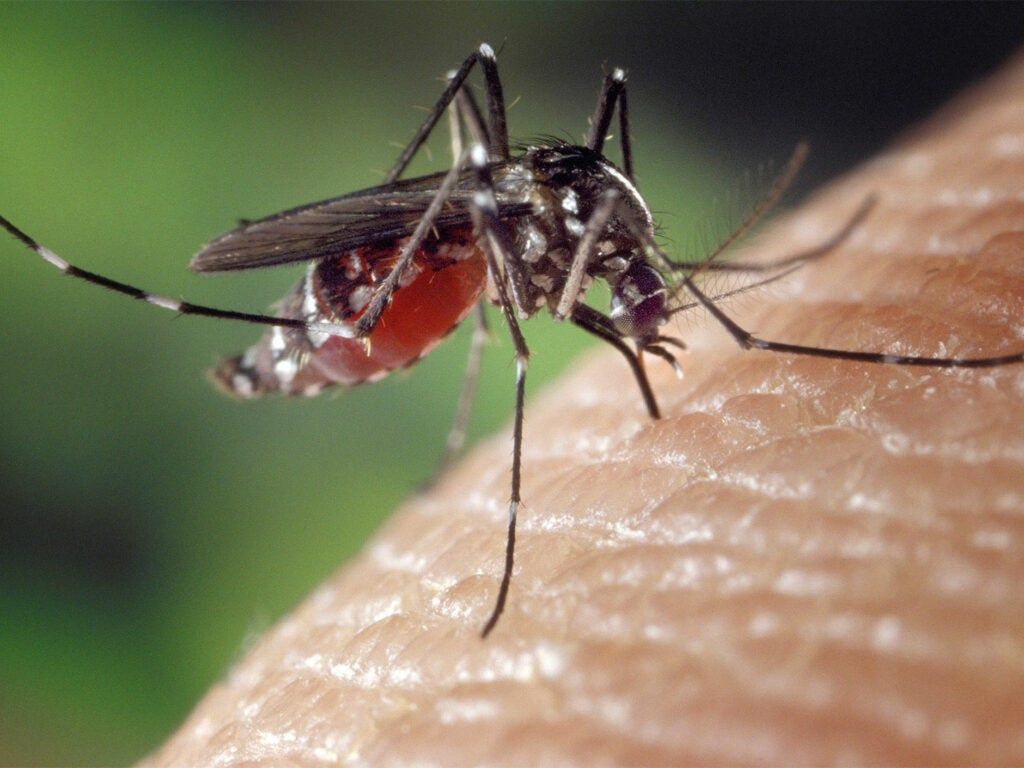
| Mosquitoes kill almost three-quarters of a million people every year. FotoshopTofs/Pixabay |
The deadliest insect is, in fact, the deadliest critter in the entire animal kingdom. It is the humble mosquito, which kills more than 700,000 people every year. Skeeters are vectors for a host of nasty diseases, including malaria, dengue, West Nile, yellow fever, Zika, chikungunya, and lymphatic filariasis. Malaria is the big one: In 2017, roughly 435,000 people died of the disease worldwide. That’s one person every 30 seconds. Mosquitoes have a special organ, the maxillary palp, which detects CO2 released from our breath and guides them to us, where they consume three times their own weight in blood. Mosquitoes are known to prefer beer drinkers, probably because drinking a beer increases the ethanol content in your sweat. Ethanol turns mosquitoes on. Plus, all booze increases your body temperature, which makes you easier for a mosquito to find. People of greater body mass attract more bugs for the same reason. Mosquitoes also prefer people with O type blood. Nobody knows exactly why, but the assumption is that O-blood-type people smell better, to mosquitoes at least, than everybody else.
2. Kissing Bug
The 130-odd members of the subfamily Triatominae are also known as kissing bugs or vampire bugs for their tendency to bite humans around the soft tissue of the mouth. The insects are found in 28 states in the U.S. However, the ones here rarely carry Chagas disease, and the cases in the U.S. are thought to have originated in Central America, where it is endemic. Chagas kills about 12,000 people annually worldwide. Victims are typically asymptomatic for four to eight weeks. Even in the chronic phases, most people show few symptoms, but 45 percent develop heart disease 10 to 30 years after the initial infection, and this can lead to heart failure.
3. Tsetse Fly
Native to tropical Africa, these big, biting flies spread the parasitic infection that causes African sleeping sickness, a disease that is 100 percent fatal without treatment, and the treatment itself is notoriously difficult. There are drugs, but they must be administered with great care, and parasite resistance to them is always a risk. If bitten by an infected tsetse fly, you develop confusion, poor coordination, numbness, and difficulty sleeping. Then you die, most likely. Because the disease is so fatal, recent mitigation efforts have focused on controlling the bugs themselves, which has reduced the number of cases exponentially. In years past, African sleeping sickness was responsible for killing as many as half a million people every year by some estimates. In 2015, fatal cases were estimated at 3,500.
4. Bees
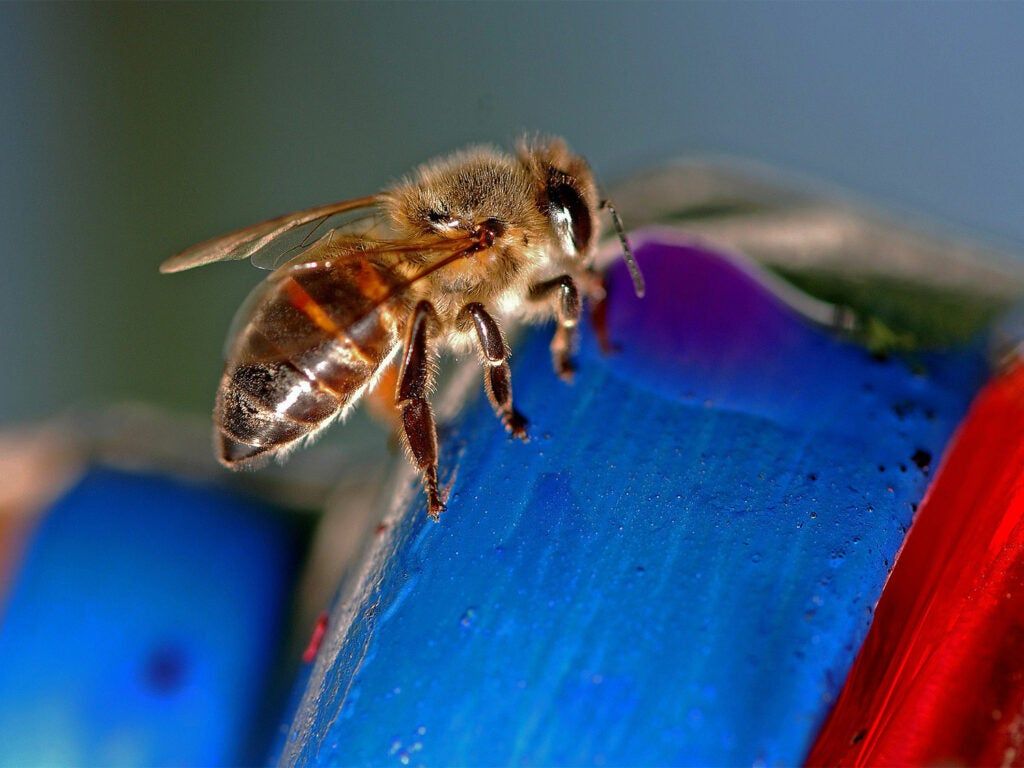
| African honey bees are extremely aggressive. Didds1969/Pixabay |
Bees were responsible for the deaths of 89 Americans in 2017, according to the CDC. Anaphylactic shock is the killer, and about 80 percent of those who die are male. While the sting of any type of bee, hornet, or wasp can induce an allergic reaction, the critter you hear about most these days is the “murder hornet,” aka the Asian or Japanese giant hornet—the world’s largest, measuring 1 â… inches long, with a wingspan up to 3 inches. The stinger alone is ¼ inch. In some parts of Japan, the fried larvae are considered a delicacy. In others, adults are fried on skewers, tails and all, until crunchy and eaten. Yum! The Japanese giant hornet was spotted in the Pacific Northwest in 2019, which means we could eat them too if we wanted.
The other big-name bee in this category is the so-called “killer bee,” a term coined by the media to hype the African or Africanized honey bee, which is responsible for one or two deaths a year worldwide. The sting of this bee is no worse than that of most other honey bees. What’s different is that Africanized honey bees are much more defensive and sting in proportionally higher numbers—like 10 times more—than other bees. They will chase a person a quarter mile and have killed horses. In the U.S., they are now present in Florida, Texas, Nevada, New Mexico, and southern California.
5. Indian Red Scorpion
There are about 1,500 species of scorpions, of which only a few dozen are venomous. The Indian red is the most lethal of all; in some parts of the world, up to 40 percent of stung victims succumb. This scorpion is a major problem in India, Sri Lanka, and Nepal, for example, because it is frequently found around human habitations where barefooted children play. Scorpions are shy, nocturnal arachnids but will sting when threatened. Although less than 3 inches long, the India red packs a potent venom, which results in severe pain, vomiting, sweating, breathlessness, and alternating high and low blood pressure and heart rate. The venom targets the lungs and heart and can cause death from pulmonary edema. Antivenom has little effect on the bite, although the blood pressure medication Parazosin has been shown to reduce the mortality rate to less than 4 percent. Despite this, the Indian reds are often kept as pets in India. Maybe because, like most scorpions, they glow under a black light.
6. Deathstalker Scorpion
The deathstalker is another highly venomous scorpion and is found in scrubland habitats from North Africa through the Middle East and Central Asia. A single bite rarely kills a healthy adult, but it can be fatal for children, who require massive amounts of antivenom. (Doctors who are unaccustomed to scorpion and snake bites frequently make the mistake of believing a child requires less antivenom because their body weight is less. In reality, they require much more, because the ratio of venom to body weight is so much higher than in adults.)
The deathstalker’s venom is a mix of four potent neurotoxins that can cause heart failure. In 2010, Air Force Staff Sergeant Monique Munro-Harris was stung by one of these scorpions in Kirkuk, Iraq, and medivaced to the airbase at Balad, then to Germany. Her blood pressure dropped to near zero multiple times on the flight before she was given antivenom. Her call sign is now Scorpion Queen. The deathstalker’s venom also has the distinction of being the most expensive liquid in the world, at $39 million per gallon. That’s because it’s difficult to collect and you get only a tiny drop per scorpion. In fact, it takes about 2.64 million milkings to get a gallon of venom. The other reason it’s so expensive is that it has shown promise in treating brain cancer, arthritis, and bone disease.
7. Black Widow Spider
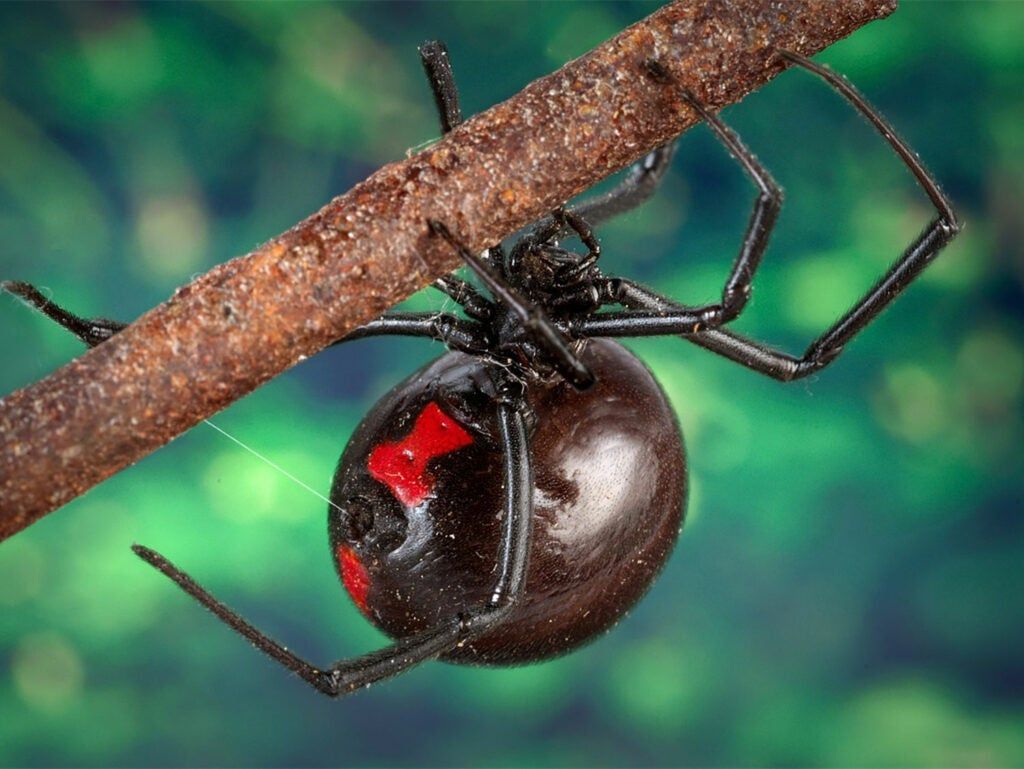
| Only female black widow spiders are dangerous to humans. skeeze/Pixabay |
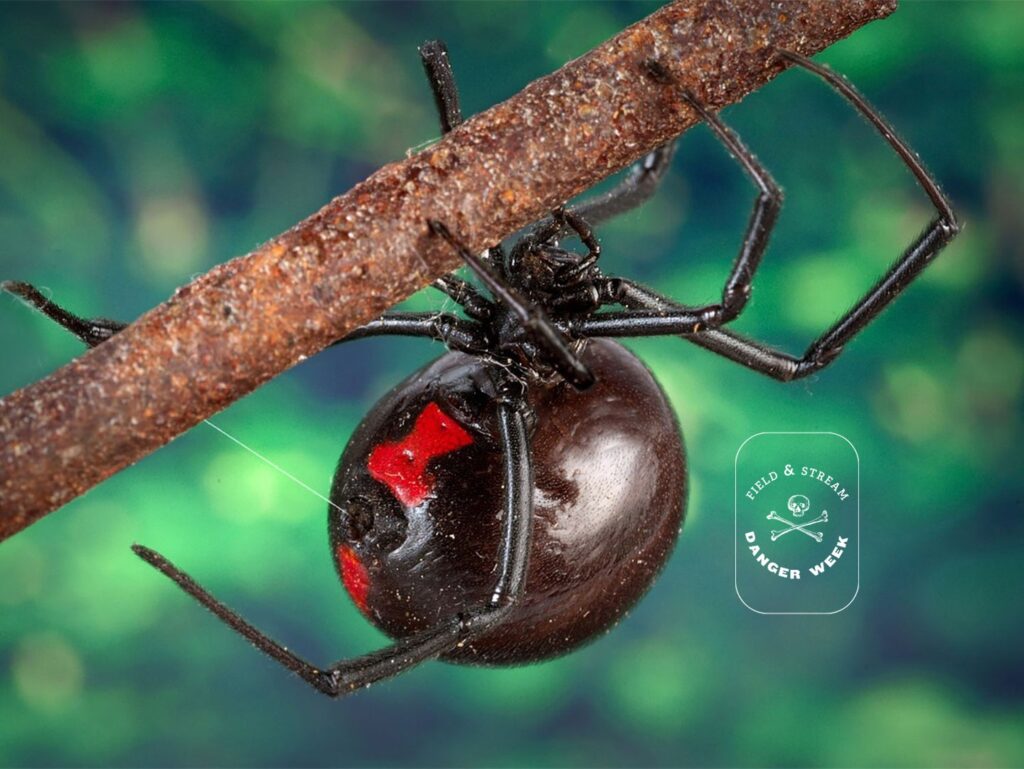
What this spider has going for it is a really scary name. Otherwise, you probably wouldn’t hear much about it. It rarely kills people and many who are bitten never even know it. There are 32 types of widow spiders, including the western, southern, and northern widows, as well as the red, gray, and brown widows. They’re found on every continent except Antarctica. The females are usually dark-colored, frequently with red, white, or brown markings on the dorsal of the abdomen. Some have the classic hourglass-shaped markings and some do not. Black widows are usually small but carry an unusually potent venom that contains larotoxin, a neurotoxin that can cause pain, muscle rigidity, vomiting, and sweating. Symptoms typically last three to seven days. Only the female bite is considered dangerous to humans. Each year, about 2,200 people report being bitten by black widows. None has died since 1983. On the other hand, some house cats have died of convulsions or paralysis.
8. Brazilian Wandering Spider
If a Brazilian wandering spider happens to wander your way, you’ll probably notice, as it has a leg-span of up to 7 inches. Found in South America and parts of Central America, it’s also known as the banana spider, since it occasionally turns up in shipments of bananas to other countries. These spiders also frequent houses, cars, shoes, boxes, and other places we like. Brazilian Wanderers are nocturnal hunters that hide during the day rather than building a web. They belong to the genus Phoneutria, which means “murderess” in Greek. The Guinness Book of World Records routinely names the Brazilian wandering spider as the world’s most venomous, and although they rarely kill humans, their bite is especially toxic and can cause severe burning, sweating, and goose bumps followed by high or low blood pressure, nausea, hypothermia, blurred vision, vertigo, and convulsions.
9. Brown Recluse Spider
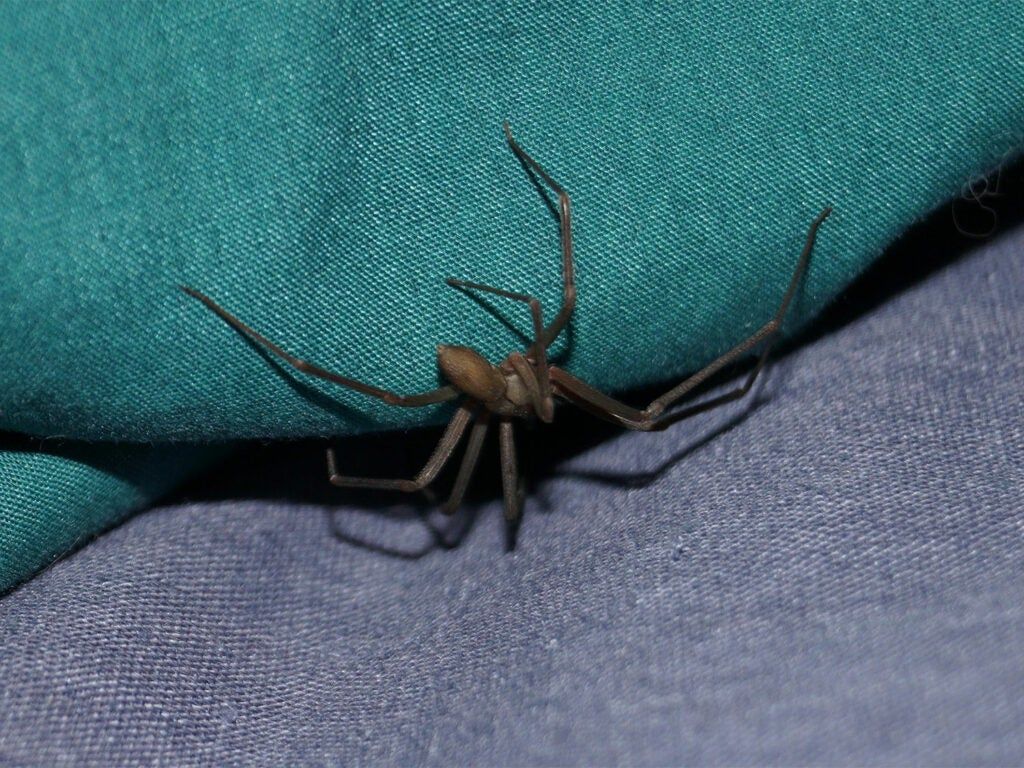
| Brown recluse spiders often hide in close proximity to people. Robby Lockeby/Pixabay |
The brown recluse is a small, shy creature that is often found in attics and basements, where it does its best to stay out of the way. Its reputation as a killer is, like the black widow’s, overblown. Although theoretically lethal, there are, in fact, no documented deaths from the brown recluse. On the other hand, a bite from this spider can really ruin your day. That’s because it has necrotic venom, meaning it kills tissue. As a result, an untreated bite can create a gaping bloody hole in your flesh and can lead to amputation. In severe cases, the venom can cause red blood cells to burst. Which is not good. Treatment typically involves immobilizing the limb, applying ice, and a tetanus shot. Interesting facts: Brown recluse spiders can live for 10 months without food or water, but it probably doesn’t improve their mood. They can be identified by the fact that they have three sets of eyes instead of four, unlike most other spiders. But if you’re close enough to make that distinction, you’re probably too close.
10. Ants
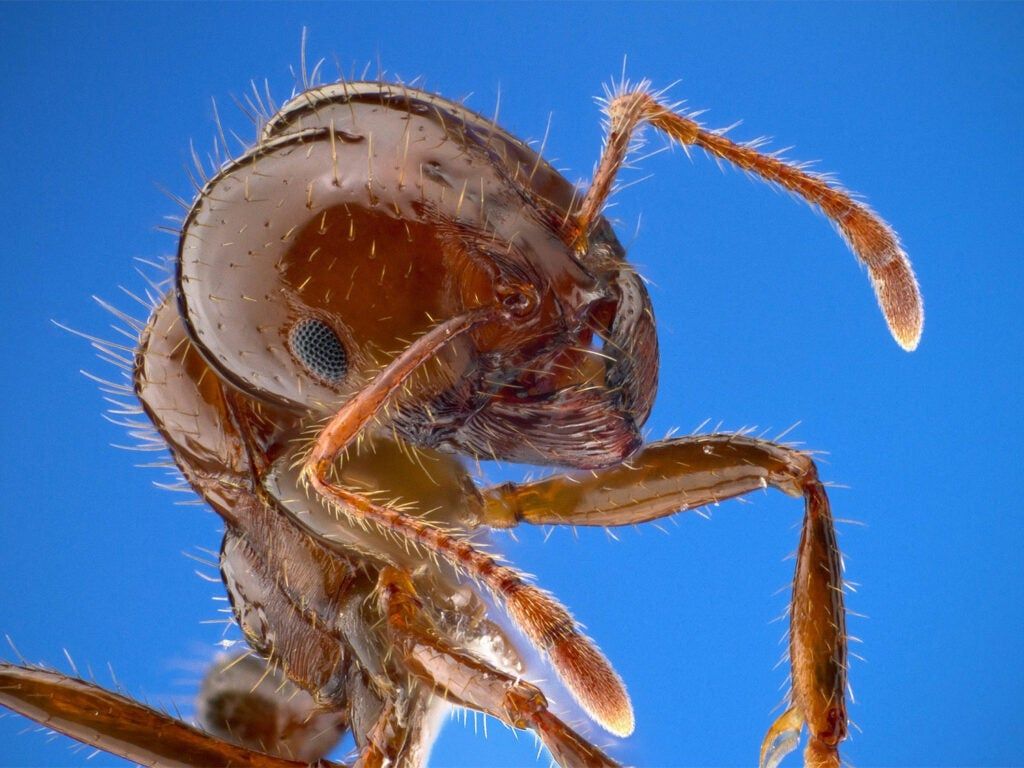
| The fire ant injects a venom that can cause anaphylactic shock. skeeze/Pixabay |
Yes, ants can kill you, although it’s highly unlikely. They can also inflict extremely painful bites. The three species on everyone’s “nastiest ants” list are fire ants, driver ants, and bullet ants. Let’s take them one at a time.
Fire ants live in colonies and produce large mounds in open areas, feeding mostly on young plants and seeds. They do, however, attack and kill small animals. Fire ants only bite to get a grip, then they sting and inject a toxic venom composed of oil alkaloids mixed with small amounts of toxic proteins. The sting, which feels like being burned by fire, typically swells into a bump quickly, which can cause further pain and irritation. Some people either are or become allergic to the venom, sometimes to the point of anaphylactic shock, which can be fatal.
Driver ants belong to a large genus of army ants found mostly in central and east Africa. They form colonies that may be as large as 20 million ants. Potential trouble comes when their food supplies run short and they form large columns that attack anything in their way. This can be bad if you are immobilized or they march through your home. Larger soldier ants have strong jaws and produce a severely painful bite that leaves two puncture wounds. Removal is challenging because you can pull a soldier ant into two parts with the jaws still remaining in your flesh.
Bullet ants, which live in rainforests from Nicaragua to Paraguay, are so named because their sting is said to feel like being shot by a bullet. It has also been likened to “walking over flaming charcoal with a three-inch rusty nail embedded in your heel.” You get waves of burning, throbbing, all-consuming pain that lasts up to 24 hours. The Satere-Mawe people of Brazil use bullet ants in their warrior initiation rites. Eighty of them are woven into gloves made of leaves. A boy then slips on the gloves. The goal is to keep them on for 5 minutes. Afterward, the boy’s hands are temporarily paralyzed due to the ant venom and he may shake uncontrollably for days. Over a period of months or years, the boy must go through this ordeal 20 times to become a warrior.
11. Fleas
Fleas are just like people whose opinions differ from yours. In other words, they’re small, wingless, bloodsucking insects. They can also infect you with the plague. In 14th century Europe, the Black Plague killed about 25 million people. The World Health Organization estimates that although 1,000 to 2,000 cases of plague are still reported annually, the actual number is probably much higher. There are a couple of cases annually of plague in the U.S. The illness can now be effectively treated with antibiotics.
Of the 3,000 types of fleas worldwide, only about a dozen are considered harmful to humans, causing plague and/or a flea-borne variety of typhus. The most important species are the rat flea, the human flea, and the cat flea. But these names are confusing. Cats, dogs, and humans all routinely host cat fleas, for example, and cat fleas are more common on dogs than dog fleas. Human fleas prefer the blood of humans and pigs. Fleas breed close to the resting and sleeping places of the host, especially in dust, dirt, carpets, and cracks in floors and walls. Adult fleas can survive for months without food. In my house, they never have to go that long.
12. Ticks
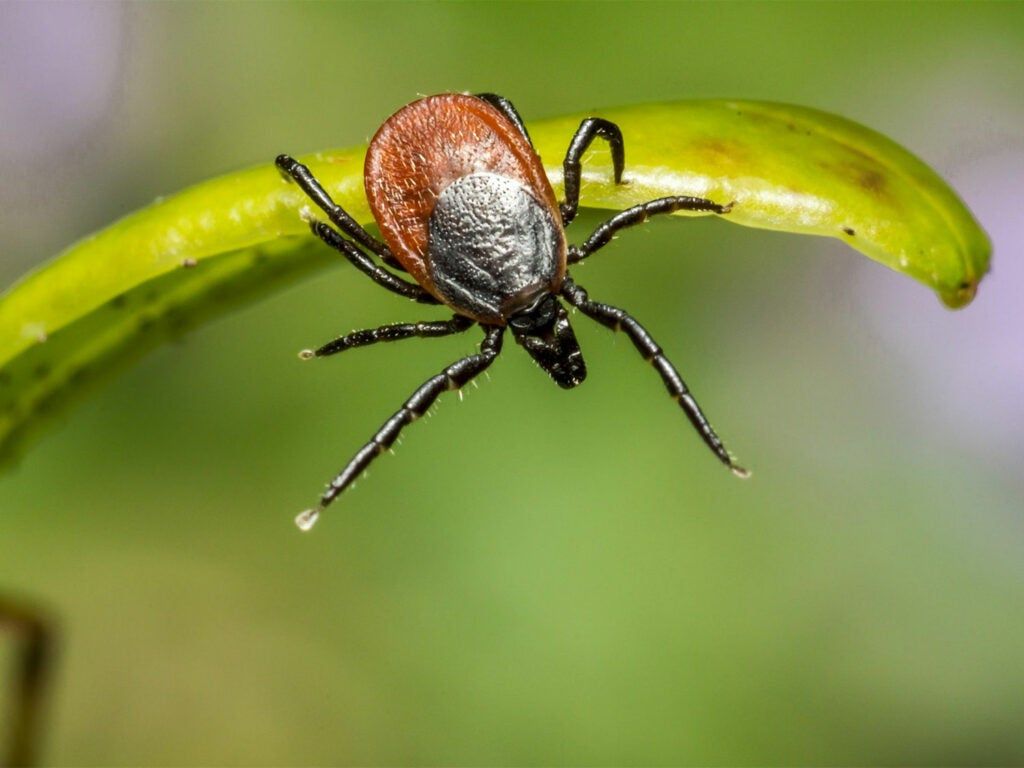
| Ticks carry a host of diseases, with Rocky Mountain Spotted Fever being the deadliest. Erik Karits/Pixabay |
Everything in nature has a place in the great tapestry of life—except ticks, which should be killed whenever and wherever they’re found. This is because ticks can infect us with a variety of pathogens: bacteria, viruses, and protozoa. And an individual tick can carry a bunch of different pathogens, making diagnosis and treatment more than a bit problematic. Our understanding of tick-borne diseases is still in its infancy. There are 16 such diseases, four of which have been discovered in the last seven years. Lyme gets the most attention, for good reason, but the deadliest is Rocky Mountain Spotted Fever, which has a case-fatality rate of 30 percent in certain untreated patients. Even with treatment, case-fatality rates of 4 percent have been reported. Survivors can be left with lifelong complications. Incidentally, don’t be distracted by the name. Rocky Mountain Spotted Fever is most prevalent in North Carolina, Tennessee, Oklahoma, Arkansas, and Missouri. Its symptoms may look like other tick diseases—fever, headache, nausea and vomiting, muscle pain, etc. There is no vaccine, but it can be treated with antibiotics.

All new! 1871 Club Field Trips