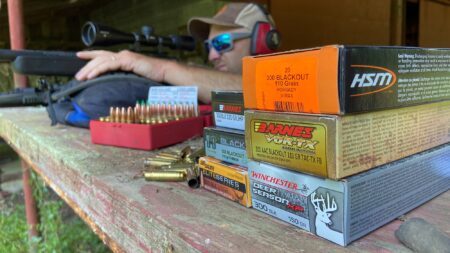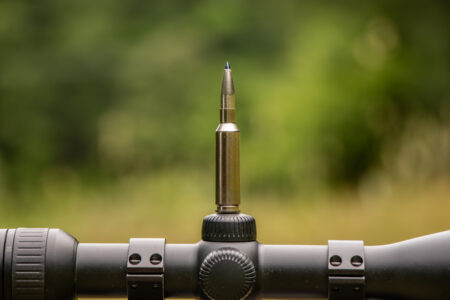
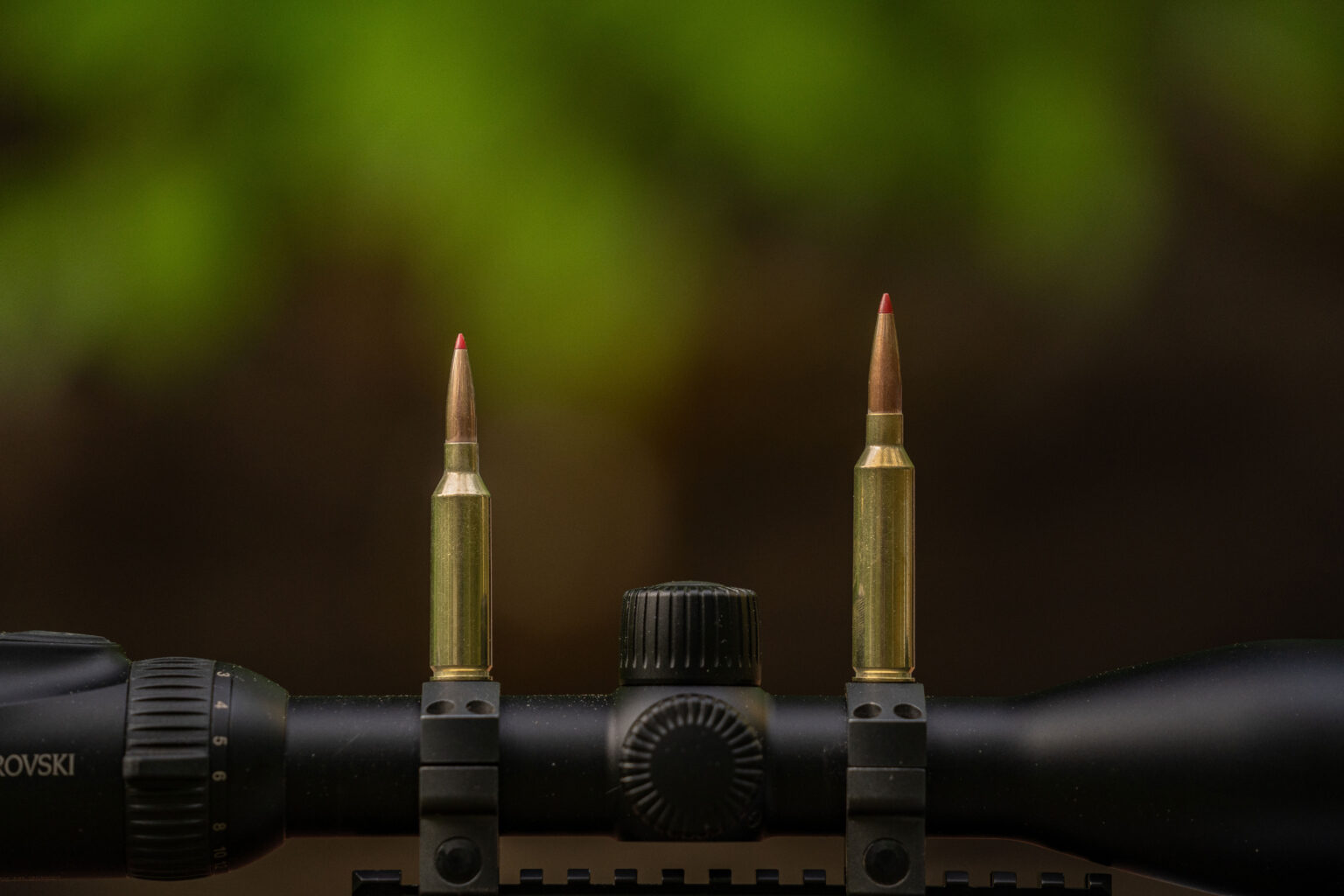
The modern big-game hunter is a bit different than the big-game hunters who shared the field with your father and grandfather. Hunters have always wanted to extend their range, but modern big-game hunters are taking long range to the extreme. Cartridges created in this new century are the best way to get a bullet out beyond 500 yards with enough velocity for bullet upset, and with enough energy to penetrate deep enough to anchor animals. Two of the best are two of the PRC cartridges from Hornady. Purpose built to launch bullets with high-ballistic coefficients, the 6.5 and 7mm PRC are a couple of the hottest-selling rifle cartridges of the new millennium. Here’s how they stack up, head to head.
6.5 PRC vs 7mm PRC: Table of Contents
- The 6.5 PRC
- The 7mm PRC
- 6.5 PRC vs 7mm PRC: Velocity Comparison
- 6.5 PRC vs 7mm PRC: Energy Comparison
- 6.5 PRC vs 7mm PRC: Trajectory Comparison
- 6.5 PRC vs 7mm PRC: Recoil Comparison
- 6.5 PRC vs 7mm PRC: Ammo/Rifle Availability
- Which Cartridge is Best?
The 6.5 PRC
Old timers will remember the 264 Winchester Magnum and the splash it made in the early 60s. Early advertisements for it proclaimed, “It makes a helluva noise and packs a helluva wallop,” and it did. The western prairies have not been the same since; the 264 was Creedmoor-cool long before the Creedmoor. With its ability to push a 140-grain bullet to around 3,000 fps, it was a flat-shooting big game slayer. Ultimately, the 264 lost out to Remington’s seven magnum a few years later, because the 7mm Remington Magnum could shoot heavier bullets even faster.
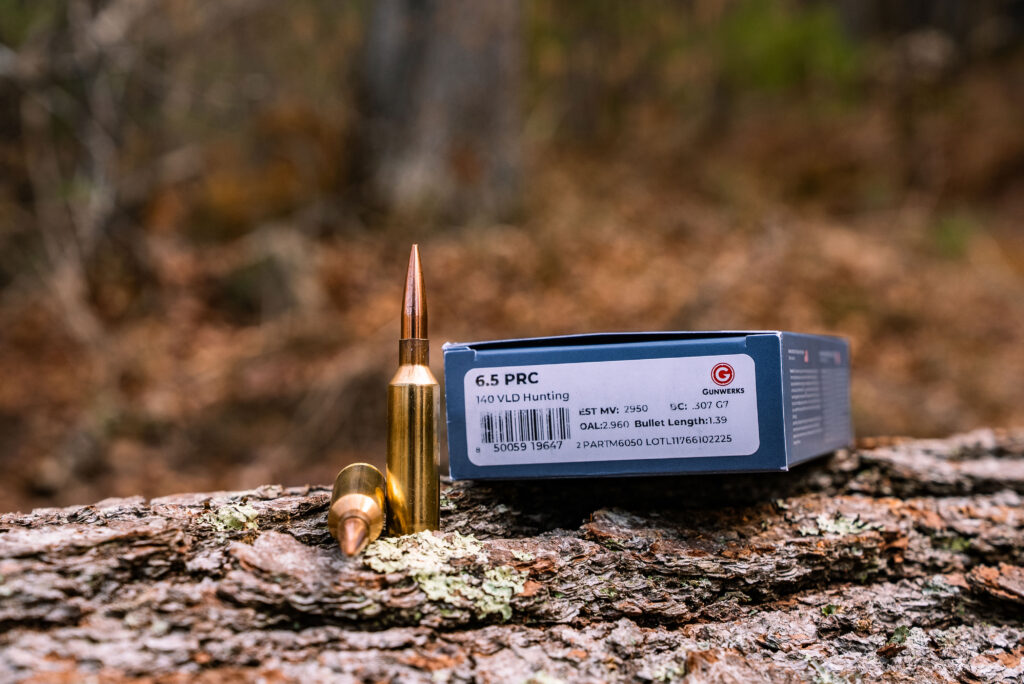
The 6.5 PRC was introduced in 2018 and essentially duplicates the performance of Winchester’s original racehorse, but with its faster rifling twist rate of 1-in-8, it can shoot even flatter. Its parent case is the Ruger 300 Compact Magnum, but with an overall length of 2.995 inches, it will not fit in a short-action rifle with a magazine box length of 2.8 inches. You could call the 6.5 PRC the 6.5 Creedmoor Magnum. Or, since some like to call the 6.5 Creedmoor the “manbun” cartridge, you could also call the 6.5 PRC the “Manbun Magnum.” Either way, it’s an excellent, low-recoiling, long-range hunting cartridge.
The 7mm PRC
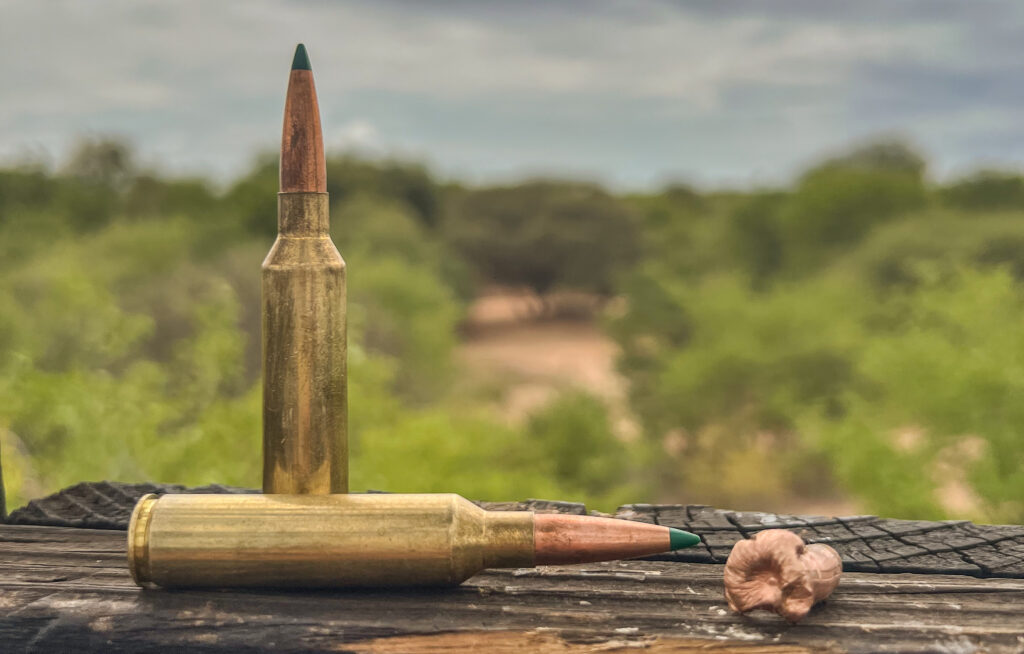
Four years after the introduction of the 6.5 PRC, Hornady gave us the 7mm PRC. The 7mm PRC uses the same diameter cartridge case as the 6.5 PRC, but it’s stretched out a bit longer to hold more gunpowder. The parent cartridge case for the 7mm PRC is the 375 Ruger. Hornady just shortened the case and necked it down to accept 0.284-caliber bullets. With an overall length of 3.34 inches, the 7mm PRC needs a long action just like the 7mm Remington Magnum. But the PRC does not have a belt at its base, and its rim—just like its case—is the same diameter as the 6.5 PRC.
The 7mm PRC became an instant sensation because, like the 6.5 PRC, it utilizes a fast 1-in-8 rifling twist rate. This allows the 7mm PRC to outperform most other 7mm magnum rifle cartridges at extreme distance. Another advantage the 7mm PRC has over the 6.5 PRC is that it can handle much heavier bullets. It’s sort of like history is repeating itself; much like the 7mm Remington Magnum became more popular than the 264 Winchester Magnum, the 7mm PRC is beginning to lure hunters away from the 6.5 PRC. Maybe Hornady had that play all along, because they knew that few would buy a 6.5 PRC if they introduced the 7mm PRC first. Regardless, we now have both, and while both cartridges have the same name and are great for big-game hunting, they are quite different.
6.5 PRC vs 7mm PRC: Velocity Comparison
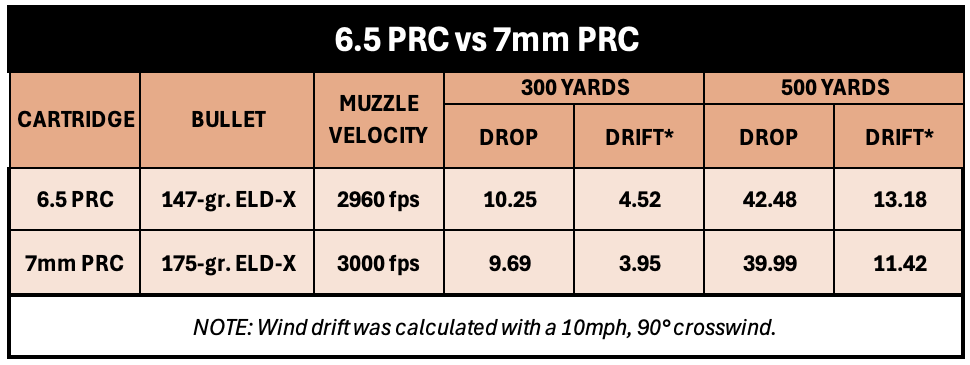
If you compare 6.5 and 7mm PRC loads in the Hornady Precision Hunter line of ammo, you’ll find that the 6.5 PRC will push a 147-grain ELD-X bullet to about 2960 fps. The 7mm PRC Hornady Precision Hunter load utilizes a 175-grain bullet and has a muzzle velocity of 3000 fps. These advertised velocities are very similar and will most likely be even closer out of actual rifles, but velocity alone does not give you the full story. When it comes to hitting at distance, trajectory and wind drift matter, and this is where the ballistic coefficient (BC) of the bullet comes into play.
Velocity Advantage: Tie
6.5 PRC vs 7mm PRC: Trajectory Comparison
The BC of the 175-grain ELD-X bullet fired by the 7mm PRC is 0.689, and the 147-grain ELD-X bullet fired by the 6.5 PRC has a BC of 0.625. This means that with similar velocities, the heavier-and-higher BC bullet from the 7mm PRC will drop less and drift less in the wind than the lighter bullet of the 6.5 PRC. The chart below details the difference, and as you can see, out to 300 yards the performance of both cartridges is similar. However, at 500 yards the 7mm PRC is beginning to leave the 6.5 PRC behind and, as the distance increases beyond 500 yards, so too will the 7mm PRC’s slight advantage.
Trajectory Advantage: 7mm PRC
6.5 PRC vs 7mm PRC: Energy Comparison
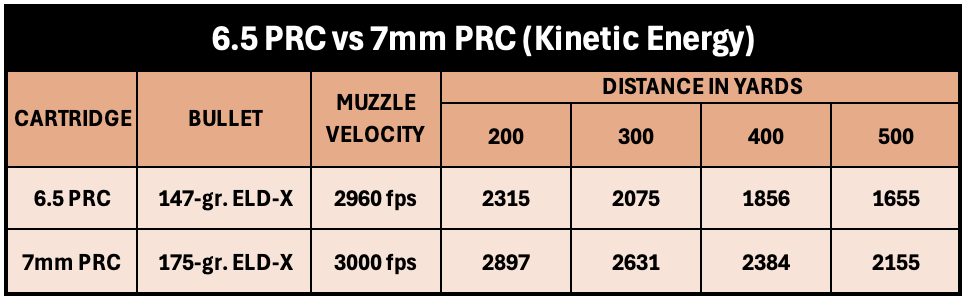
But even out to 500 yards, the differences in the drop and wind drift between these two cartridges are not extreme. If you’re capable of making a good hit with a 7mm PRC, you should be able to do the same with a 6.5 PRC. The real difference in these two cartridges is in kinetic energy. At 300 yards, the 6.5 PRC will have about 2,000 foot-pounds of kinetic energy and the 7mm PRC will have about 2,600. That’s a 30 percent advantage. Though the larger and heavier bullet of the 7mm PRC will use more of its energy to fully upset, you can expect it to penetrate a bit deeper and damage more tissue. Is this energy advantage enough to matter? Possibly, depending on your shot placement you could need more power when the bullet arrives at the target.
Energy Advantage: 7mm PRC
6.5 PRC vs 7mm PRC: Recoil Comparison
Of course, cartridges that push bullets to hit targets harder also generate more recoil, and more recoil makes rifles harder to shoot. Out of an eight-pound rifle, the 7mm PRC, with its 175-grain bullet, will recoil about 43 percent harder than the 6.5 PRC with its 147-grain bullet. The 6.5 PRC will recoil with about 23 foot-pounds of force and feel very similar to the recoil of the 30-06. The 7mm PRC, on the other hand, will recoil with around 33 foot-pounds of force. So, you pay for slight advantage in drop and drift and the 30 percent increase in kinetic energy with a substantial increase in recoil. If your flinch from that expected wallop causes your bullet to strike a couple inches off mark, all the ballistic advantages of the 7mm PRC might not be of any benefit at all.
Recoil Advantage: 6.5 PRC
6.5 PRC vs 7mm PRC: Ammo/Rifle Availability
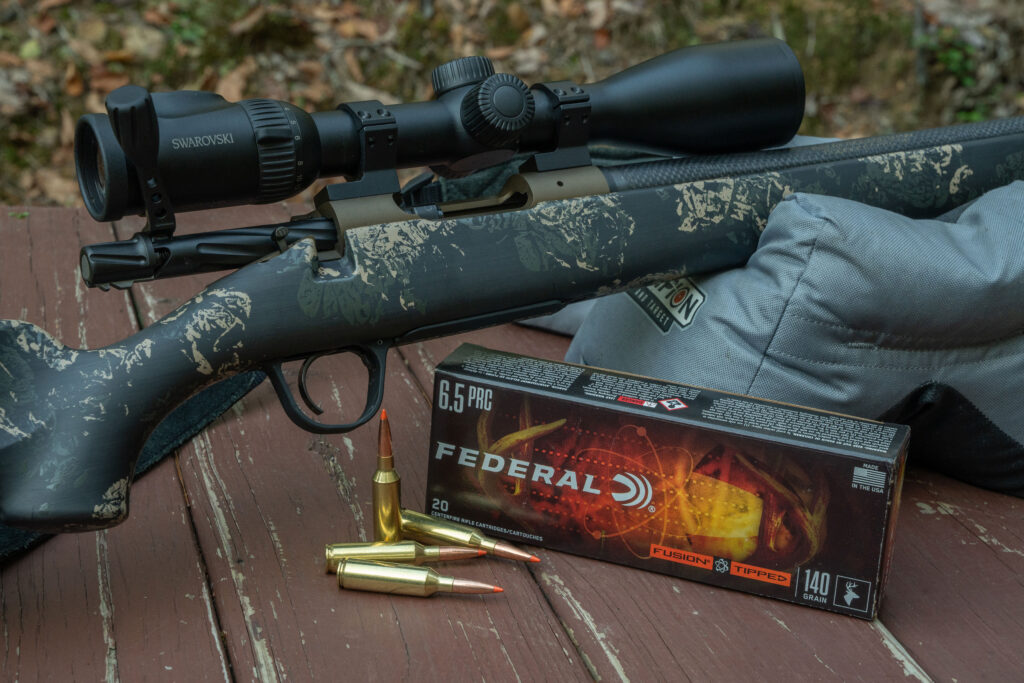
According to a major online retailer, there are about 45 factory loads for the 6.5 PRC and about 30 for the 7mm PRC. You’ll have a few more options with the 6.5 PRC, with bullets ranging in weight from 100-to 156-grains. With the 7mm PRC, the bullet-weight range runs from 150-to 195-grains. This makes the 6.5 PRC a bit better suited for predators like coyotes and smaller big game like deer, but with a good bullet it will surely do the work on elk and African plains game as well. Though there’s really no such thing as extra or too dead, the 7mm PRC with its lightest-weight bullets seems a bit much for coyote. But those lighter-bullet loads should provide exceptional service on deer-sized game, and with the heavier bullet, the 7mm PRC is suitable for any non-dangerous game anywhere in the world.
Advantage: Tie
Which PRC Cartridge is the Best?
I’ve done a good bit of hunting with both cartridges in Africa, and inside 300 yards I could not tell any difference in their terminal performance on game as small as jackals and as large as kudu. What I can tell you without hesitation is that the 6.5 PRC is a much more fun cartridge to shoot, either from the bench or in the field. Solely from a ballistics standpoint, there’s no question the 7mm PRC is the better-performing rifle cartridge—it will shoot flatter and hit harder at any distance. But from a practical standpoint, the 6.5 PRC—just like Winchester’s old 264—will do what most any hunter needs done, and 6.5 PRC ammo costs about 5 percent less.
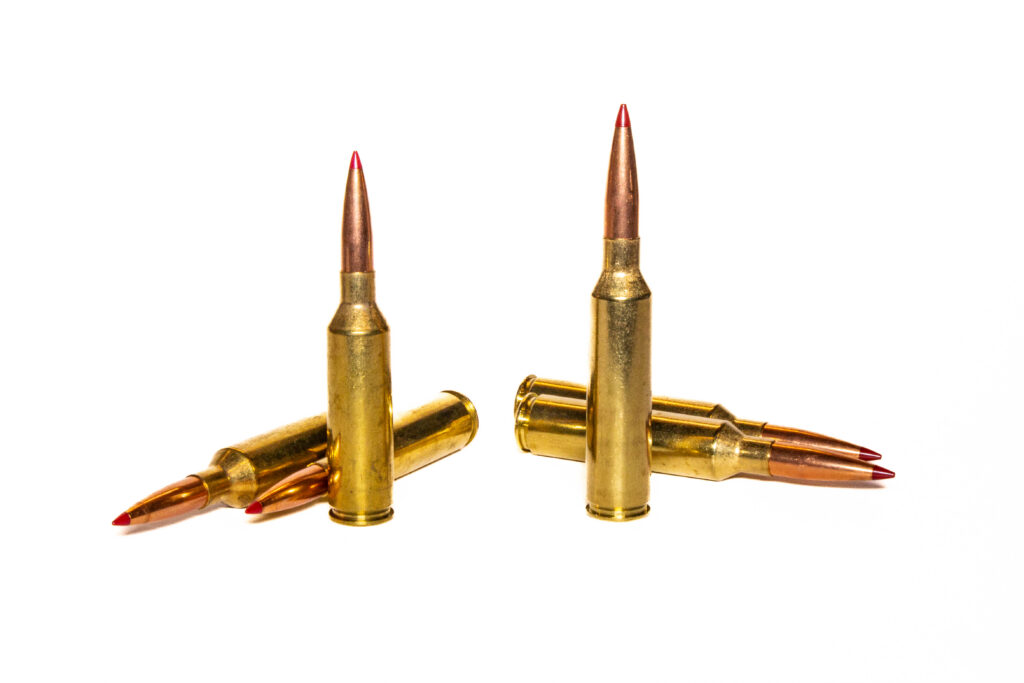
I’d not be surprised if history repeats itself and the 7mm PRC steals a lot of thunder from the 6.5 PRC, just like the 7mm Remington Magnum did to the 264 Winchester Magnum about a half-century ago. Even though the 6.5 Creedmoor has been unimaginably successful, magnum-class cartridges that shoot 6.5mm bullets, like the 264 Winchester Magnum, the 6.5-300 Weatherby Magnum, and the 6.5 Weatherby RPM, have yet to set the world on fire. It seems like most hunters who want magnum performance for big game also prefer bullets that are larger in diameter than 6.5 millimeters. If the 6.5 PRC ultimately has the same fate as Winchester’s 264, that would be sad because the 6.5 PRC is a very capable big-game cartridge.

EXCITING NEWS
Membership Now Includes