Bottom vents control how much oxygen feeds the fire. Top vents exhaust heat and smoke, pulling fresh air through the bottom. Leave top vents fully open and use the bottom vents to manage temperature. For smoking on a kettle grill, open only the vents under the coals and above the meat to route smoke directly over the food.
- Bottom vents are intake ports. More air means more heat. No air kills the fire.
- Top vents exhaust smoke and heat, which drives fresh air through the bottom vents.
- Leave top vents fully open. Use bottom vents as your primary temperature control.
- For kettle smoking, open only the vents under the coals and above the meat. Close the rest.
- A two-zone fire with wood chips and a water pan under the meat replicates smoker results.
We may earn revenue from the products available on this page and participate in affiliate programs. Learn more ›
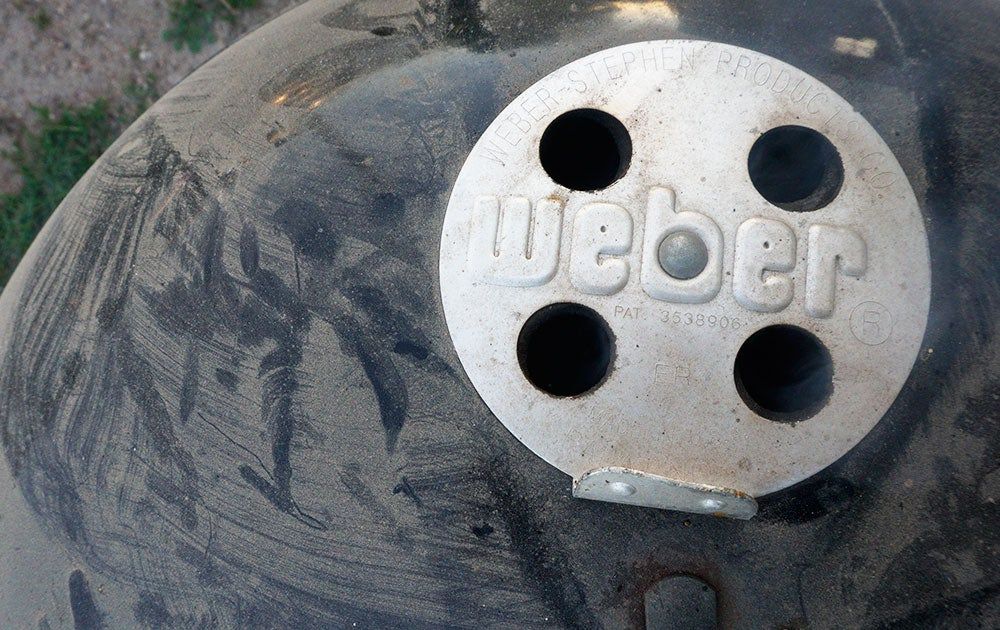
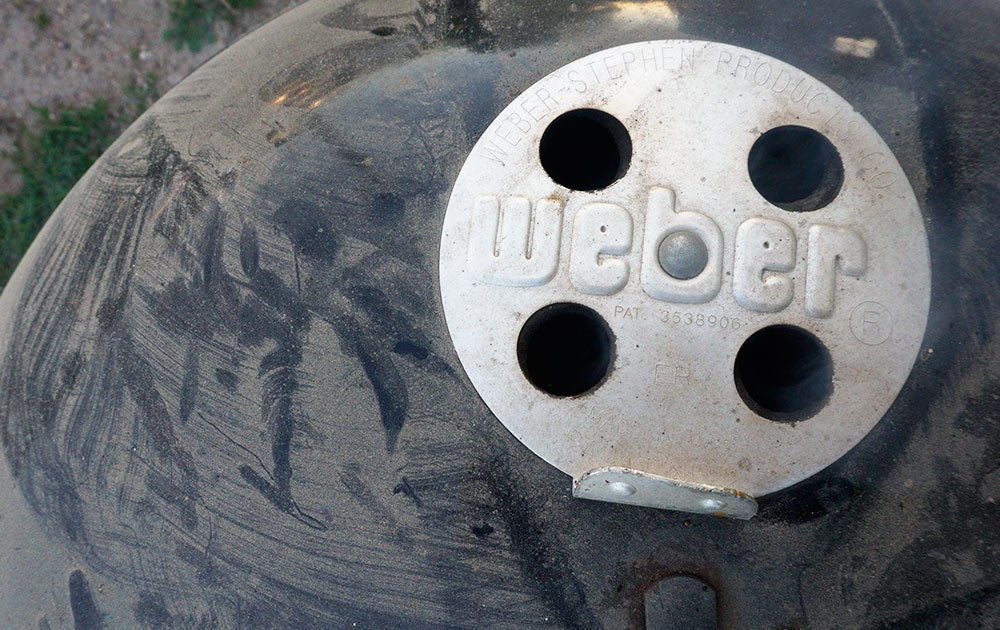
When grilling over fire, covered openings are critical to managing temperature. David Draper
Whenever I bring up how to use a charcoal grill, someone inevitably has a question about grill vents. Although the idea seems simple, there’s confusion about how grill vents (or dampers) work and what they are for. Every charcoal grill or wood smoker has a set. And, basic as they are, the covered openings are critical to managing grill temperature.
How Grill Vents Work
Bottom Vents
The dampers on the bottom of most charcoal grills or along the lower half of smokers have exactly one function: to fuel the fire with oxygen. Think of them as intake ports, sucking in fresh air to replace the oxygen burned by combustion. The more air, the hotter the fire. The less air, the cooler the internal temperature of the grill. No air and the fire goes out. On my Weber kettle, I always start with all three bottom vents open. Then I close each partially to get the charcoals burning at the rate for the type of fire I want.
Top Vents
Think of the dampers on the lid like you would a chimney. They vent hot air and smoke out of the top of the grill, which then pulls fresh air through the bottom grill vents. Because this exhaust is critical to how much air comes into the grill, the top vents are more important than you might think. Close them and, with a well-sealed grill, you’ll kill your fire. In most cases, it’s better to leave them open all the way and use the bottom vents to manage grill temperature.
Managing Vents for Smoking on a Charcoal Grill
When smoking smaller cuts of meat, like steaks or chicken quarters for supper, I often use my Weber kettle or PK Grill instead of breaking out my Camp Chef pellet grill or propane smoker. This requires a two-zone fire, with hot coals and wood chips on one side and a cooler half with a water-filled pan underneath the meat. In this situation, I open the dampers directly under the coals and those directly over the meat. All other vents remain closed unless I need to up the fire’s heat. This set-up pulls the smoke from the burning chips over to the side of the grill where the meat sits, fully enveloping it in a flavorful smoke.
All new! 1871 Club Field Trips