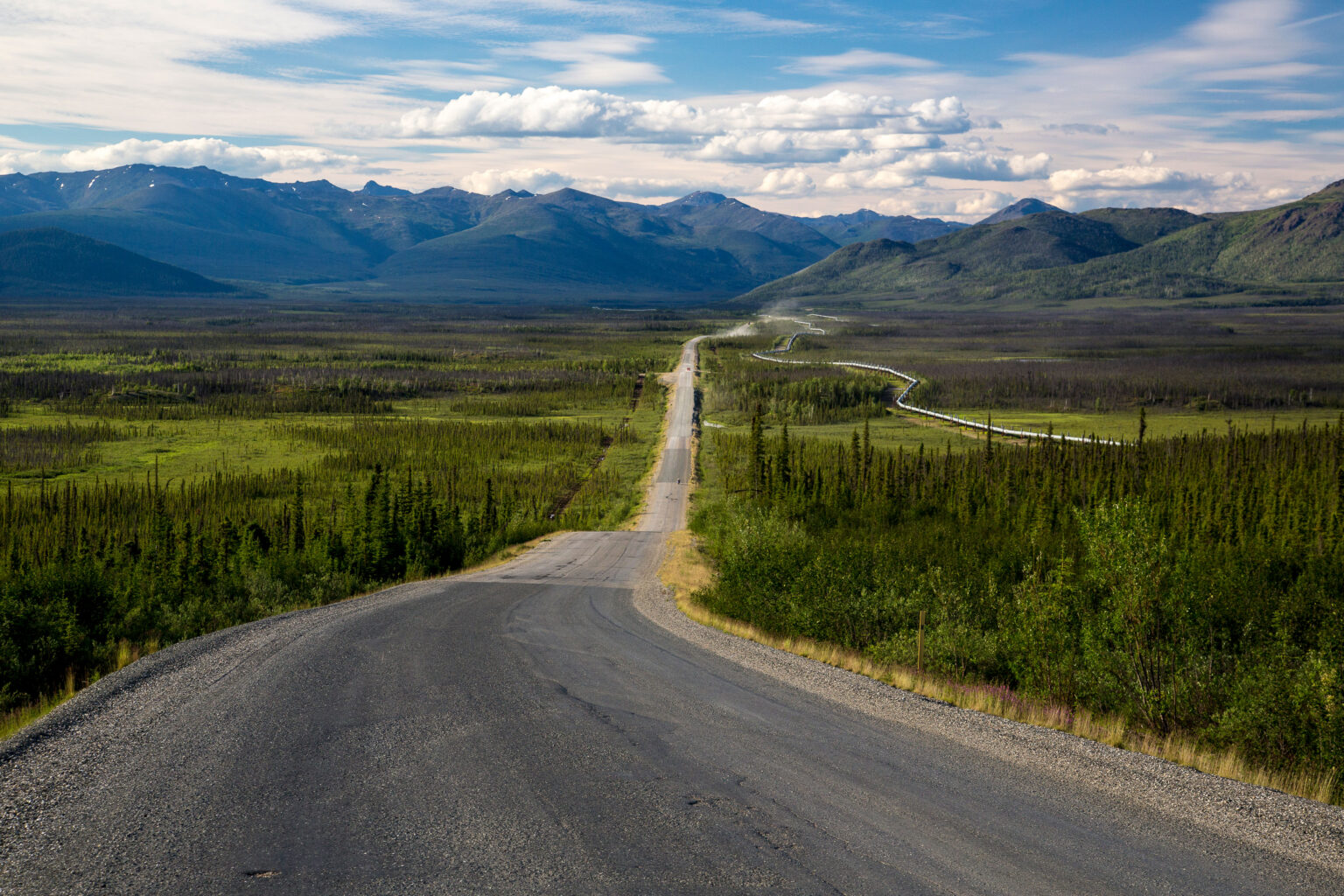
Last February, Interior Secretary Doug Burgum signed an order that enabled a massive transfer of public lands to the state of Alaska. The land—1.4 million acres previously administered by the Bureau of Land Management (BLM)—was officially conveyed to the state in May. Now, both Alaskans and non-residents are wondering how the fast-moving ownership change will impact access along the famed Dalton Highway, known for caribou and moose hunting as well as world-class fishing for Arctic grayling and Dolly Varden.
Congress laid the groundwork for the state transfer in March 2025 when it used the Congressional Review Act (CRA) to overturn the area’s Resource Management Plan—the Central Yukon RMP. Before then, Congress had never used the CRA overturn a federal land management plan, which requires years of public comment, stakeholder input, and community engagement. The shift was further enabled by the Alaska Statehood Act, which entitled Alaska to a large amount of federal land when it entered the Union in 1959.
Protections Revoked
Prior to this year, two Nixon-era Public Land Orders exempted the BLM lands along the Dalton from state transfer under the Alaska Statehood Act. But Congress’ removal of the Central Yukon Resource Management Plan and Sec. Burgum’s subsequent revocation of PLOs 5150 and 5180 opened the door for the transfer.
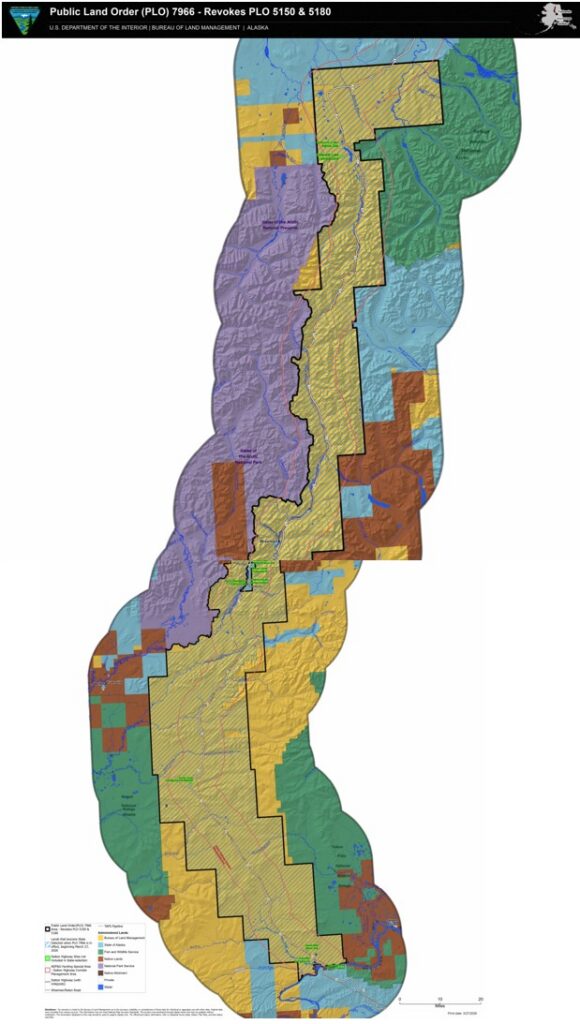
“For more than fifty years, the Dalton Utility Corridor represented a unique federal land designation established to preserve a transportation and utility corridor and prevent these lands from being selected [for transfer to] the State of Alaska or Alaska Native corporations,” Alaska BHA wrote in a recent blog post about the transfer. “The unprecedented decision to revoke those protections and transfer the lands to the State has sparked significant legal questions.”
Potential Management Changes Loom
Under the BLM’s management, the 5-mile corridor immediately beyond the road was an archery-only zone with no motorized access. Hunters who chose to travel beyond the archery zone—either on foot, by floating rivers, or via dog sled team—could access prime rifle hunting for moose and caribou. Advocates for motorized limitations inside the Dalton corridor—which were established by the Public Land Orders that Burgum revoked—say that ATV and other types of motorized use will scar the fragile tundra ecosystem and disrupt game and fish migration patterns and habitat.
“The Dalton Highway corridor provides access to some of Alaska’s most iconic hunting, fishing, and backcountry recreation opportunities,” BHA’s Alaska Program Manager Mary Glaves tells Field & Stream. “For generations, it has served as a gateway to vast expanses of public land where Alaskans and visitors alike can experience the kind of self-guided, do-it-yourself adventures that have long defined the North. These lands belong to the public, and the decisions being made today will help shape how future generations access and enjoy them. If there was ever a time for hunters, anglers, and public land owners to engage, it’s now.”
The Alaska Department of Natural Resources is holding a public comment period on how the state should manage public access along the Dalton now that the state has taken control of the land. That comment period ends on June 26.
Paving the Way for the Ambler Road
By striking down the Central Yukon RMP, removing PLOs 5150 and 5180, and transferring the land along the Dalton Highway to Alaska, Burgum and Congress cleared key hurdles for the controversial Ambler Road, which would branch west off the Dalton and extend 211 miles to the Ambler Road Mining District. That’s because the 1.4-million acre transfer of lands along the Dalton included what could become the first 20-mile stretch of the proposed Ambler Road.
In its press release announcing the removal of the PLOs that protected the Dalton, the Interior Department touted the Ambler Road as “key infrastructure” and a vital part of the Trump Administration’s efforts to “unleash American energy.” The Administration’s continued support for the project comes despite heavy opposition from a broad coalition of hunting and angling groups.
According to Hunters and Anglers for the Brooks Range, which includes more than 102 hunting and fishing brands and conservation groups, the Ambler Road would harm fish and wildlife habitat in the foothills of the Brooks Range. Damages would include major disruptions to the Western Arctic Caribou Herd and up to 3,000 stream culverts across pristine waterways famous for world-class fishing.
New Hunting Restrictions
Opponents also point out that, while the Ambler Road would give foreign-owned mining companies key access to copper deposits in the Brooks Range, it would lock out hunters and anglers that currently use the area. In fact, the Alaska Game Board has already proposed regulation changes that would end current hunting and trapping opportunities along the proposed Ambler Road corridor.
“The proposed [Ambler] road is for commercial purposes only, is private, and access to it will be controlled by a locked gate that is staffed 24 hours a day, 7 days a week, 365 days a year,” an Alaska Department of Fish and Game document spelling out the regulation changes states. “While the area within 1 mile on either side of the road will be closed, hunters and trappers will not be prevented from crossing the corridor or the road.”
Read Next: Mining and Data Center Threats Close In on Montana’s Blackfoot River
Alaskans who’d like to weigh in the state’s plan to close hunting and trapping along the Ambler Road route can do so via this link. F&S will continue to cover the implications of the Ambler Road project for hunters and anglers as more details emerge.
*WARNING - DANGER AHEAD*
THE FALL JOURNAL COMING SOON