For overall casting performance and consistency across saltwater and freshwater applications, Sufix 832 Advanced Superline is the top pick. For anglers on a budget, Spiderwire Stealth Braid delivers strong value. Berkley FireLine is the call for fused-line applications, and Sufix NanoBraid is built specifically for trout fishing. Match the line to your technique before buying.
- Sufix 832 leads the category for casting distance, diameter consistency, and smooth handling across saltwater and surf applications.
- Sufix 832 has lower abrasion resistance than competing braids — wrong choice for fishing heavy vegetation or structure.
- Spiderwire Stealth Braid is the budget pick, giving cost-conscious anglers a functional entry point into braided line.
- Berkley FireLine is the standout fused-line option for anglers who specifically want fused rather than woven construction.
- Sufix NanoBraid is purpose-built for trout. Lighter applications that standard high-strand braids are not optimized for.
We may earn revenue from the products available on this page and participate in affiliate programs. Learn more
Choosing the best braided fishing line comes down to one simple question: What are you going to do with it? That is, not all braided lines are created equally. Some cast farther, some are more abrasion resistant, some are rough, and some are smooth. And they all vary in price from as low as $10 to as high as $30 (for 150-yards). And with so many different types of fishing line on the market, it can be difficult to make your selection.
Therefore, you will be best served to think about what you want most out of your braid before you start shopping. Then, you can match the qualities of the line to your specific demands. Not sure where to begin? I’ll get you started with this article, detailing the strengths and weaknesses of braid and the differences between the types, and I’ll suggest some of my favorites, too. Here’s everything you need to know to choose the best braided fishing line.
Best Overall: Sufix 832 Advanced Superline Braid
Best Cheap: Spiderwire Stealth Braid
Best Fused: Berkley FireLine Braid
Best for Trout: Sufix NanoBraid
Best Overall: Sufix 832 Advanced Superline Braid
Specs
Materials and Construction: 8-strand Dyneema and GORE braid
Pound Test: 6-80 lb.
Colors: Low-vis green, hi-vis yellow, neon lime, ghost, coastal camo
Pros
Excellent quality and consistency of build
Best casting braided line, with really smooth handling
Durable, small diameter braid, that will last for years under normal use
Available in a wide-range of breaking strains (6-80)
Cons
Not as tough as some other braids
There are a lot of great braids out there, but Sufix 832 is consistently cited as the best by anglers of all disciplines, all around the world. It is one of smoothest handling, farthest casting, most consistent, and durable high-strand braids available. I use it on almost all of my reels. I’m a big fan of braid, for a whole host of species and techniques, but believe 832 is particularly good for saltwater fishing and one of the best braided lines for surf fishing. First and foremost, it is very consistent off the spool. I’ve loaded up thousands of yards of it on my reels and have yet to experience any weak points or variance in diameter. I also find that it is a durable line that doesn’t suffer from “fuzziness” or falling apart over time, a common complaint with eight-strand braids. It also casts extremely far, and the very thin diameter cuts through the water. The sensitivity is excellent, but this is typical for most braided lines and not exceptional. Sufix 832 is also limper than many other braided lines, which makes tangles less likely. For this reason, it is also one of the best braided lines for baitcasters, too.
This line does have some downsides. First, it has no cutting power and lower abrasion resistance compared to a variety of other braids. It is simply very smooth, but this means you won’t be sawing through vegetation with it. Sufix 832 is also not the cheapest braid option out there, coming in mid-pack.
Best Cheap: Spiderwire Stealth Braid
Specs
Materials and Construction: 8-strand Dyneema braid
Pound Test: 8-250 lb.
Colors: Blue camo, moss green, and hi-vis yellow
Pros
Super tough, very high abrasion resistance (for a braid)
Low cost, great for those who want to try out braid
Extremely reliable build quality
Has great vegetation cutting power
Cons
Not the thinnest or farthest casting braid
Tough on the hands—rough texture can cut your fingers
Spiderwire Stealth is extremely strong and abrasion-resistant, and a great choice for those fishing around demanding structure. It is also very affordable, and it’s the lowest-cost option on this list. While it substantially outcasts traditional monofilament, it does not cast quite as far as higher-strand braids because it is thick and has a rougher texture. Still, this texture is part of what makes it tough and gives it plant-cutting power.
I know many shore and boat anglers who still prefer Stealth over all other premium braids because it is so remarkably tough and reliable. It’s the only low-strand braid I have; I use it when I need more abrasion resistance or I’m not worried about having to cast ultra-far. If you’re a bass angler looking to give braid a try, Spiderwire Stealth is one of the best braided fishing lines for bass. The original PowerPro braid is a good alternative to Stealth. It has a huge user base of both recreational and professional anglers.
Best Fused: Berkley FireLine Braid
Specs
Materials and Construction: Single strand, thermally fused polyethylene
Pound Test: 4-30 lb.
Colors: Flame green, smoke
Pros
Extreme abrasion resistance compared to traditional braids
A long history of catching giant fish under intense conditions
Durable and consistent; great build quality
No stretch
Cons
Not a true braid—thicker in diameter than even budget offerings
More expensive than even most of the newest, most cutting-edge braids
FireLine is not a true braid, so in some ways, it’s a bit unfair to compare it to Sufix 832 or Spiderwire Stealth. It is made up of thermally fused polyethylene materials, and is not composed of twisted and braided fibers. Yet, this Berkley line still has no stretch and relatively good sensitivity, with a much thinner diameter than monofilament. It is just not as thin as even the most basic, budget braids.
FireLine is extremely tough—this cannot be overstated. It is abrasion resistant on a level no true braid can touch; but this has a lot to do with the fact it’s simply much thicker. At 30-pound test, is roughly the thickness of 65-pound Sufix 832. If you’re fishing extremely “sticky” structure—like reefs, wrecks, boulder fields, or ledges—FireLine is a very good option. Some surf fishermen I know say it is the best braided line ever made specifically for this reason; I also know bass anglers jigging around rocks feel the same way. It isn’t cheap and will set you back more than a good quality low-strand braid (like Stealth or PowerPro). However, it holds up extremely well, and will last longer than some other braids, helping off-set the cost. There really aren’t many alternatives to FireLine anymore, as other companies like Sufix have stopped making fused lines.
Best for Trout: Sufix NanoBraid
Specs
Materials and Construction: 8-strand Dyneema
Pound Test: 2-14 lb.
Colors: Low-vis green, aqua camo
Pros
Very small diameter line
Comes in the smallest breaking-strain sizes needed for ultralight tackle
Casts well with relatively low tangling risk
Tight weave retains shape and strength over time
Cons
Extremely thin diameter braid is at a high risk of tangling, even if you’re being careful
If you’re a trout fisherman or use any kind of ultra-light tackle, Sufix Nanobraid is the best braided fishing line for your applications. It is smooth and sensitive, casts outstanding, and holds its structure and shape very well over time. The line is insanely thin. It’s perfect for casting small jigs, spinners, or crankbaits—anything around a quarter- or eighth-ounce flies through the air so much more easily with thin braid. It also makes feeling hits from small, fussy fish much easier. Of course, with such a thin and low-strength braid, you’re not getting a whole lot of abrasion resistance. I would keep this away from any kind of hard structure—even rubbing it against a bush or boat carpeting can damage it. Also, if you’re looking to use a braid over 8 pounds, I think you’d be just as happy with Sufix 832, while saving a little bit of money. Check out the rest of our recommendations for the best fishing line for trout.
How We Picked the Best Braided Fishing Line
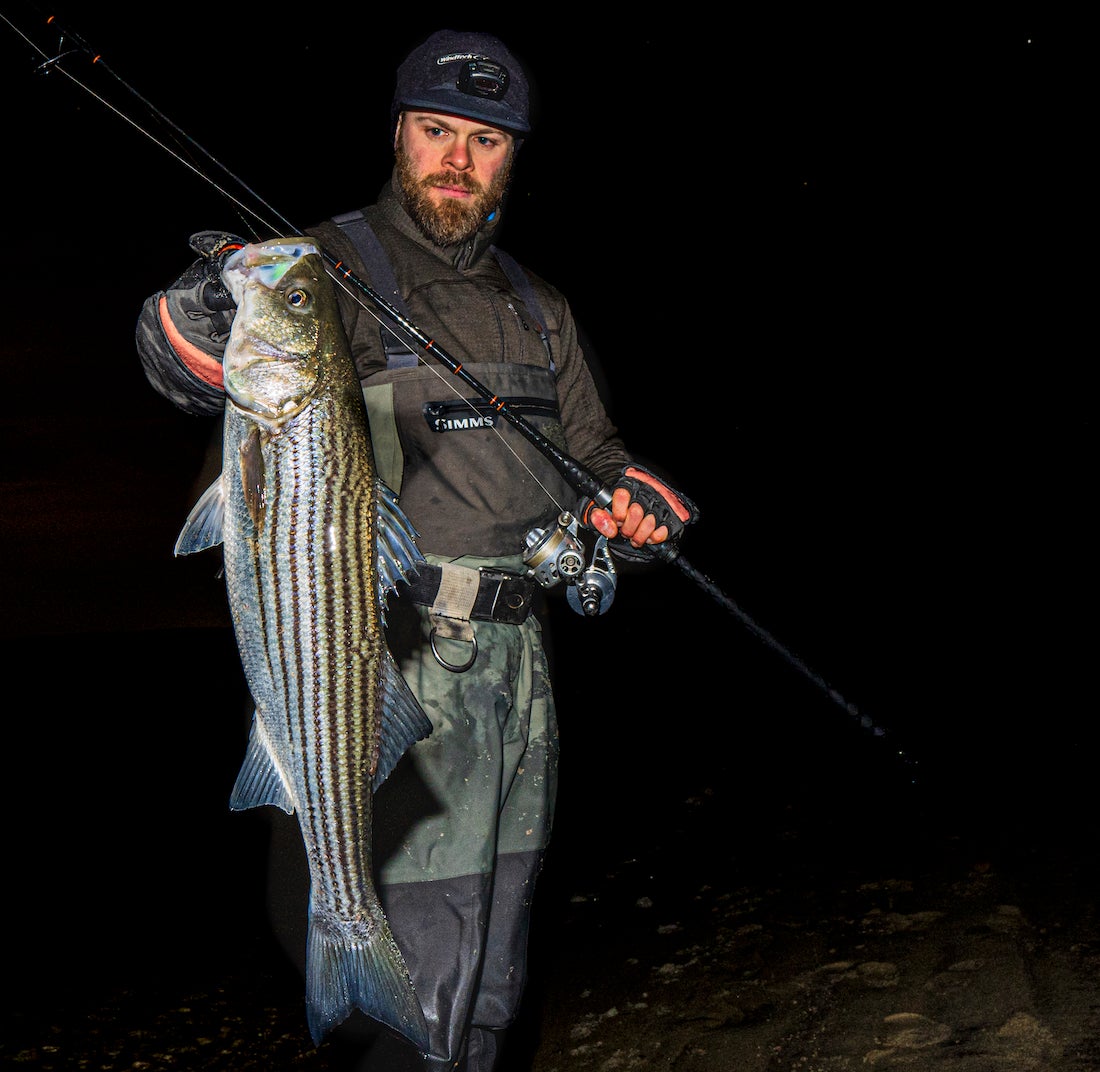
My choice of the best braided fishing lines is based on nearly 30-years of angling experience, which includes both freshwater and saltwater angling. I am meticulous and very calculated when it comes to choosing my fishing gear, no matter what angling style I’m engaged in. I believe my primary angling pursuit, surfcasting for striped bass, gives me unique insights into braided fishing line characteristics. I am faced with having to cast very far distances, fight large fish in strong currents, and deal with sharp and hard structure—all while fishing at night. I consider fishing line as the single most important piece of my fishing tackle and take it extremely seriously. In writing this article, I also tapped into my contacts of industry professionals, top-tier tackle suppliers and retailers, and some of the very best anglers alive today. I evaluated each line here based on the following criteria:
Diameter and casting distance: While lines are all printed with an advertised diameter rating, this doesn’t always flesh out in real life. Since many anglers buy braid for its casting distance, it’s one of the most important characteristics I evaluated. Further, while many lines perform similarly out of the box, some bulk up or get fuzzy with use, while others do not. Casting distance and diameter on day one may be equal, but by day 300, things can really change.
Abrasion resistance and durability: How does the line hold up to being rubbed against rocks and woody structure, or how will it handle highly vegetated areas? How long does it last after being subjected to water, sand and dirt, UV rays, and hours of being casted? This is even more important than pure breaking strength.
Quality and craftsmanship: Is the line consistent and reliable from spool to spool?
Price: Does the line offer good value? Will it last more than a season or two?
Pros and Cons of Braid
Braided line is very different than monofilament, both in construction and function. Braided line (braid) is composed of braided fibers (where it gets its name), twisted together under tension. This is different than monofilament, which is made up of a single, extruded piece of plastic (nylon). It is a general misconception that braid is always better than monofilament, copoly, fluoro, or other types of lines. This is simply not true. Most fishing lines have a few applications they are best at, and braid is certainly not best suited for all techniques. Here are the advantages and disadvantages of braid, and why you should, or should not, consider it as your next fishing line.
Advantages
Ultra-thin: At the same pound-test rating, braid is always going to be much thinner than nylon- and fluoro-based lines (like monofilament and fluorocarbon). For example, most 20-pound-rated braids will be approximately the same diameter (thickness) as 6- or 8-pound monofilament.
Zero stretch: Braid does not stretch at all. Therefore, you get much stronger hook sets and increased sensitivity in a thinner line.
Limp, with no memory: Braided line doesn’t suffer from memory like other types of line. It also doesn’t coil or kink like nylon lines.
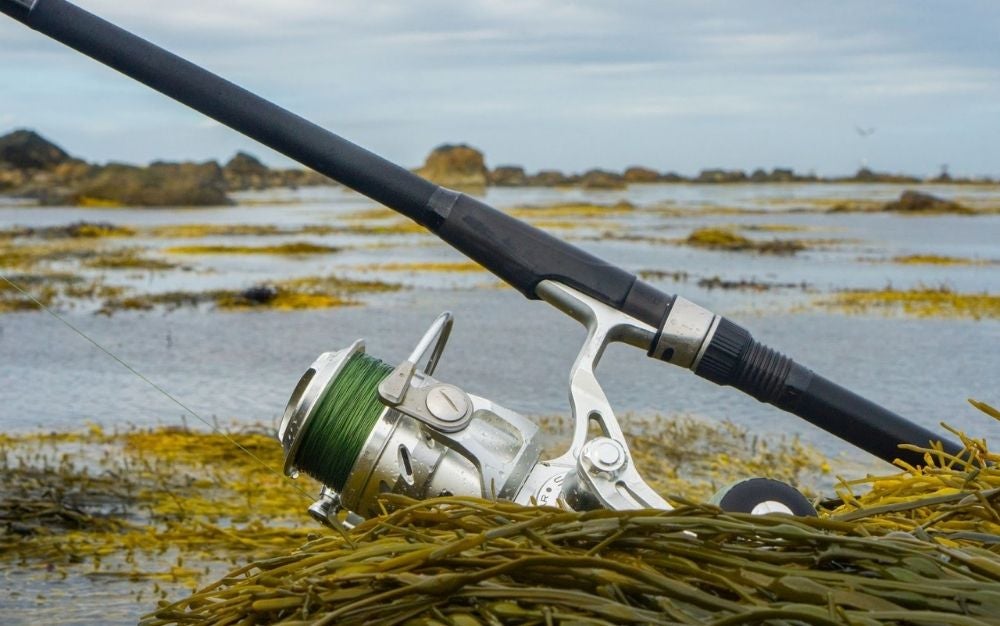
Long-casting: Because braid is so thin, and has no memory, it casts extremely far. I can achieve at least twice the distance compared with monofilament of the same pound-test. The composition of braid also has marginally less friction through eyes and rollers, which makes a small amount of difference as well.
Durability: Braid lasts a long time, provided you don’t subject it to being nicked by objects below or above the water’s surface. Braid is not damaged as quickly by ultra-violet (UV) rays and is impervious to extreme temperature. Some anglers will get 10-years of use out of the braided line.
Floats: Braided line is a floating line, which helps keep lures and bait up high in the water column.
Cutting power: Some braids are excellent at sawing through vegetation, making hang-ups less frequent in some situations.
Disadvantages
Expensive: Braid costs three- to eight-times more than monofilament. However, this is at least partially off-set by its durability.
Abrasion resistance: While braid is durable, it has very poor abrasion resistance. If you get it stuck on a rock, log, piling, or other hard surface, it’ll break relatively easily compared to monofilament or fluorocarbon. This is one of its biggest weaknesses.
Zero stretch: The lack of stretch inherent to all braided lines makes them very poor lines in situations where you need some shock absorbing characteristics.
Tangles easily and poor handling: Braid tangles more easily than other lines, and knots are virtually impossible to get out once they tighten down. If you get a birds-nest, or wind knot, likely you’ll just be cutting the line and starting over. Also, braid can cut your fingers and hands if you’re not careful—especially in high-test ratings that are both strong and still very thin.
Floats: Another strength that is also a weakness. If you want to get deep on a slow retrieve, braid is not as good as fluorocarbon in keeping the lure or bait down. However, due to the ultra-thin nature of the line, trolling braid can actually get your lure deeper (less water resistance pulling it up).
Requires special knots: If you’re used to using monofilament, you’re going to have to learn and get used to a whole host of other knots. Braid simply won’t hold a clip, swivel, snap, or line tie with the same popular knots we use with mono- like the simple clinch knot.
What To Look for in Braided Fishing Line
If you are new to braid and on a budget, getting a good-quality, low strand braid is a fine place to start. They tend to knot less frequently and give you a chance to test out braid at a lower cost. If you want more casting distance and a line that is easier on your hands and gear, then a high-strand braid is probably your choice. Saltwater anglers, in particular, seem to prefer higher-strand braids for their long-casting, low-water-resistance characteristics. If you fish around a lot of obstructions and are breaking fish off regularly, you might want to steer clear of higher-strand braids or consider a fused line. Finally, ultra-light tackle anglers will also particularly like high-strand, premium braids because they have extremely small diameters, cast phenomenally, all while retaining strength that simply cannot be matched by other types of line.
Low vs. High Carrier Braids and Hybrid/Fusion Lines
While braided lines all share the same general characteristics—from the list above—there are actually two different classifications. These are split up based on the number of fibers they have and their composition. The first type of braid is made with four- or five-threaded fibers. You may see this listed as either the number of “carriers” or “strands”, but the terms are interchangeable. The second is braided lines made with a higher-thread count; most commonly 8-strand, but there are braids now with 9- to 13-strands. There are strengths and weaknesses to each, and identifying them will help you dial in your choice.
Lower-strand braids tend to be thicker and have some roughness, or texture. This is because the gaps between the fibers create small spaces, and the individual fibers are larger. They have a lot of the same characteristics as high-strand braids—no stretch, they float, virtually no memory, and limp handling. However, there are some major differences, too. First, low-strand braids tend to be less expensive than higher-strand braids, as they have been around a long time and require a simpler manufacturing process. But while they cast much better than monofilament, low-strand braids will not reach the distances you can get with high-quality, high-strand braids. This is due to both their thickness and texture. Low-strand braids are typically harder on your hands, too; they can cut your fingers if you’re not careful.
While high-strand braids may be further casting and easier on the hands, they have some down-sides. First, they are generally not as abrasion resistant. Since braid is already not very abrasion resistant (compared to mono), it can make a substantial difference going from an eight-strand braid to a four-strand. Low-strand braids also have a lot more cutting power, due to their rougher texture. Finally, higher-strand braids tend to be a lot more expensive. Still, many anglers choose high-strand braids because they are just so easy to cast and fish with. I personally love high-strand braids.
FAQs
Q: How much does a braided fishing line cost?
Like all other fishing lines, braid varies widely in cost. For example, you can find budget off-brand offerings for as low as $10 in 30-pound test and 150-yard spools. However, some of the most expensive lines—like Sufix 131 or Daiwa Samurai—cost over $40 for the same test and quantity! I would steer clear of the lowest priced braids, as you truly get what you pay for. Buy from a trusted, well-known brand. There are lots of good options in the $15 to $30 range for anglers that will meet your specific demands.
Q: What is the strongest braided line?
Line strength is a tricky thing to define. Of course, generally the number on the box or spool will tell you how strong the line is. However, it’s not the whole story. Many times the number on the box or spool will under-rate the line, as manufactures never want their line to be weaker than they market it. Also, real-world line strength is a function of its durability and abrasion resistance, and this has a lot to do with diameter.Generally, the thicker a line is, the larger the diameter- the tougher and stronger it will be. However, these lines will also not cast as far, will not spool up as well, and will drag through the water more than a thinner line. Therefore, there is no such thing as the “strongest braided line;” it’s all about trade-offs and what makes the most sense for your fishing style.
Q: What is the best color for braided fishing line?
I am a firm believer that the color of braid makes almost no difference once it’s under the water. Only in very special cases with extremely picky fish could it make that much difference. In that case, you really should be using fluorocarbon anyways. Therefore, I suggest using what you like. Some like bright colors because it makes it easier to see where their casts land and where the line is in the water. Others like the hypothetical extra stealth that a more neutral color offers. If you’re worried about the visibility of braid, you will be best off fishing a monofilament or fluorocarbon leader—or simply not using braid at all.
Final Thoughts
Braided fishing line is a fantastic tool that has changed the way many of us fish; it has dramatically altered my productivity in the saltwater and with ultralight tackle in particular. However, braid isn’t right for everyone, and not all braided lines are created equal. Take the time to consider what factors are most important to you when choosing the best braided fishing line, and you’ll catch more fish season, and have more fun.
Why Trust Us
For more than 125 years, Field & Stream has been providing readers with honest and authentic coverage of outdoor gear. Our writers and editors eat, sleep, and breathe the outdoors, and that passion comes through in our product reviews. You can count on F&S to keep you up to date on the best new gear. And when we write about a product—whether it’s a bass lure or a backpack—we cover the good and the bad, so you know exactly what to expect before you decide to make a purchase.
All new! 1871 Club Field Trips