We may earn revenue from the products available on this page and participate in affiliate programs. Learn more
Choosing the fluorocarbon line for your style of fishing is not as complicated as you might think. There is a lot of hype and stigma around fluorocarbon, but really it’s a pretty uncomplicated fishing line. Just like with any other kind of fishing line, deciding whether fluorocarbon will work for you or not—and which model is best—comes down to asking just a few important, specific questions. Not sure what those questions are? I’ll get you started with the most important factors when choosing the best fluorocarbon fishing line, and also give you some suggestions that will help you not only with your purchase, but also your effectiveness in using your new fishing line, too.
- Best Overall: Seaguar Tatsu
- Best Budget: Berkley Trilene 100% Fluorocarbon
- Best for Bass: Seaguar AbrazX
- Best for Saltwater: Seaguar InvizX
- Best for Clear Water: Berkley Vanish
- Best Freshwater Leader: Sunline FC Leader
Best Overall: Seaguar Tatsu
best overall
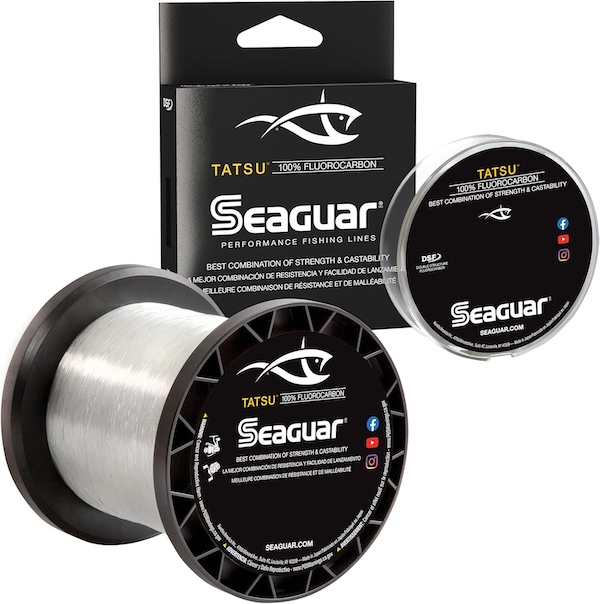
Seaguar Tatsu
Pros
The only double-structure main-line fluorocarbon available
Casts and handles as well, or better, than the very best monofilaments
Low stretch and invisible even after weeks or months of use
Long lasting, durable line that will work for a variety of species
Cons
Extremely expensive
Specs
- Materials: Dual compound, 100% fluorocarbon
- Pound Test Available: 4-25
- 10-pound Diameter: 0.260mm
What does “best overall,” really mean? In this case, it means the best casting, easiest handling, limpest, and longest-lasting fluorocarbon you can get, at any price, by any brand. Using that definition, there is one clear winner for fluoro line: Seaguar Tatsu. If fishing is your passion, and you want the very best fluorocarbon possible, there is little to compare to Tatsu. Seagur is at the leading edge of fluorocarbon, and has been for years, and they have gone above and beyond with this incredible line. Most anglers who are used to the easy casting and limp nature of monofilament dislike fluorocarbon because it can be hard, stiff, and difficult to tie knots with. Tatsu addresses these weaknesses and provides a product unlike any other—it’s truly incredible! It’s the only line on this list made of a dual-compound, and this is part of why it performs so well. The soft, easy casting nature of Tatsu makes it the very best fluorocarbon for spinning reels and baitcasters alike. It’s available in a variety of pound-tests that are suitable for everything from ultralight applications (4-pound) up to musky and pike, catfish, and inshore saltwater use (25-pound).
However, you might be shocked to see that Tatsu cost $39.99 for 200-yards. This puts it far beyond the price of any other fluoro. It is also eight-times the cost of the popular monofilament Trilene XL, and three-times the cost of some budget oriented fluorocarbon lines. However, if you want the ultimate, very best fluoro line, at any cost, then Tatsu is going to be impossible to beat. That said, there are much less expensive fluorocarbon options, that will give you excellent performance.
Best Budget: Berkley Trilene 100% Fluorocarbon
best budget
Berkley Trilene 100% Fluorocarbon
Pros
Excellent quality and consistency of build
One of the best casting fluorocarbon lines, at any price
Good abrasion resistance without feeling overly stiff
Budget price makes it less expensive than some premium monofilaments
Cons
None at this price
Specs
- Construction: Single Compound, 100% fluorocarbon
- Pound Test Available: 4-25
- 10-pound Diameter: 0.300 mm
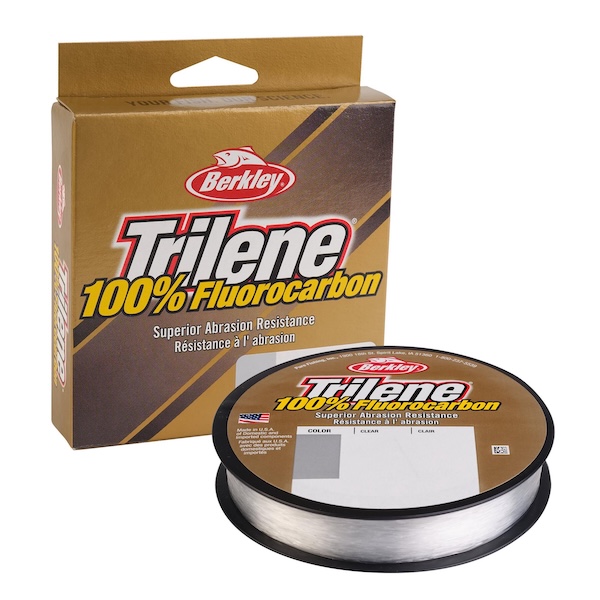
On my own personal reels that have fluorocarbon as the running line, I have switched exclusively to Trilene Professional Grade. Let’s get this out of the way right from the start: In truth, it’s not quite as good overall as Seaguar Tatsu. However, it’s a lot less expensive at only $11.99-12.99 for 110 yard spools. And one of the best things is it seems to last just as long or longer than even the most expensive fluoro and mono lines out there. It’s a fantastic casting line, and I often forget I’m using fluoro because it handles like high-quality monofilament. I find it has little or no memory, and I’ve also noticed it doesn’t suffer from “random” break-offs. That is, some lines are susceptible to getting small nicks and abrasions that you won’t even notice until it’s too late. I have never had that happen with this line. It’s a line you can trust, at a really great price.
There really isn’t anything bad to say about this line, especially at this price, but if you’re looking for an alternative, I am also a big Sufix fan. Sufix has a great, basic fluorocarbon line called Invisiline that is a little less user-friendly than the Trilene Professional Grade, but still far ahead of other budget fluoro lines. However, they also have a new premium fluorocarbon called Advance which is incredibly thin—30% thinner than Trilene Professional grade, and over 20% thinner than the incredible Seaguar Tatsu. At the time of writing this, I haven’t had enough time to fully test it out. However, at $24.99 for 200 yards, it seems like a real winner! Yo-Zuri also offers a fantastic budget-friendly line called T7 Premium that is very well regarded, and very reasonably priced at $18.99 for a 200-yard spool of 10-pound test (even cheaper than Trilene Professional).
Best for Bass: Seaguar AbrazX
best for bass
Seaguar AbrazX
Pros
Long-lasting, reliable main line
The most extreme abrasion resistance for the most demanding conditions
Very low stretch means serious hook-setting power
Amazingly consistent line, built with Seaguar’s renowned quality
Cons
Stiff, hard, and not as far casting as many other braids
Expensive, even for fluorocarbon
Specs
- Materials: Single compound, 100% Fluorocarbon
- Pound Test Available: 4-25
- 10-pound Diameter: 0.260 mm
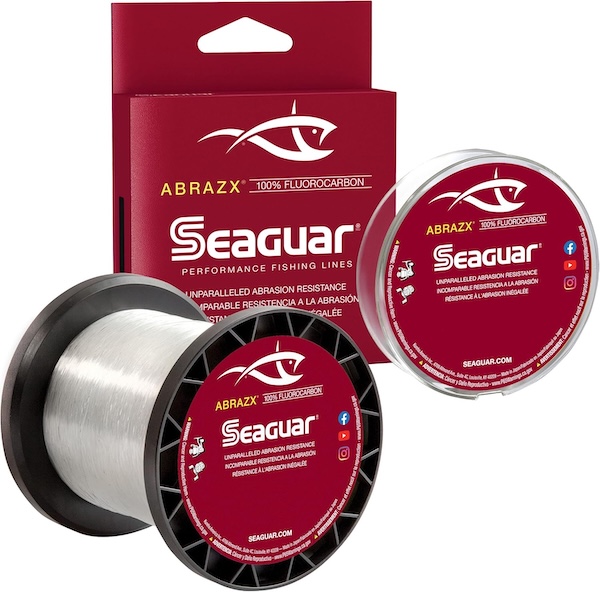
To be frank, any bass angler interested in fluoro will likely be very happy with Trilene Professional Grade Fluorocarbon, my “best budget,” pick. It is a versatile line that does everything pretty well. It’s just a great “all arounder.” However, if you’re a fisherman looking for line that can stand up to heavy cover, giant fish, and lots of hours of hard use, Seaguar AbrazX is a great option.
While this line is not the best handling line out there, it is outrageously, ridiculously tough. Do you like pitching lures under docks, tossing them up against pilings, or directly into piles of submerged wood? Do you love dragging your lures through boulders, or along ledges, or bombing them directly into the thickest weedy cover? If so, you will love AbrazX. It’s just absolutely fantastic for the roughest, toughest conditions, but it’s still thin and castable. Also, for the price, it might be the longest lasting fluorocarbon, as it takes a serious beating and just keeps on performing day after day. There’s a reason this is a top pick for musky and pike anglers, and it has a solid following in saltwater, too. As they say on Seaguar’s website: “Fish won’t see it, stuff can’t break it.”
The downsides of this line are simple: it’s stiff, so it doesn’t cast nearly as far as other premium fluoro’s or monofilaments, and it can be harder to tie knots with. Overall, it just doesn’t handle as well as other lines on this list. Just because it’s as thin as Tatsu, or thinner than Trilene Professional Grade, don’t make the mistake of thinking it’ll cast as well. It’s not in the same league with either of those lines. However, if you’re fishing in the gnarliest of structures, day-in and day-out, this might be the best line for you.
Best for Saltwater: Seaguar InvizX
best for saltwater
Seaguar InvizX
Pros
A small diameter fluoro, which means relatively longer casts
Excellent durability in harsh saltwater conditions
Soft enough to tie strong knots
Consistent, high-quality build
Affordable for a fluorocarbon line
Cons
While it has a good mix of characteristics, it’s not the best at anything
You will get better casting performance with braid or premium monofilament
Specs
- Materials: Single compound, 100% Fluorocarbon
- Pound Test Available: 4-25
- 10-pound Diameter: 0.260 mm
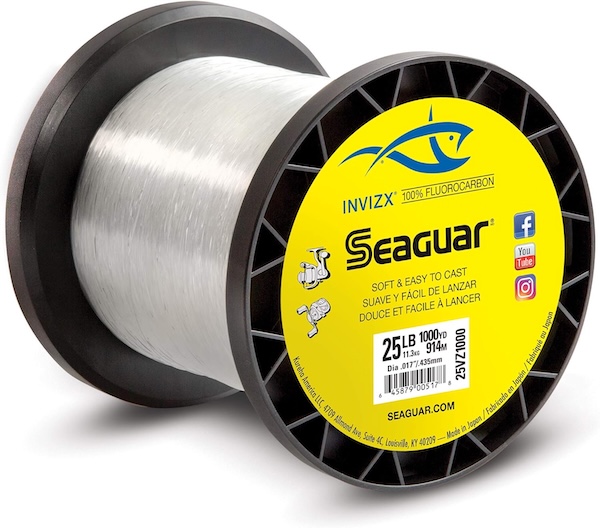
Not many saltwater anglers use fluorocarbon for their main lines; instead, most prefer braided lines and a fluorocarbon leader. However, there are some forms of saltwater angling where a full spool of fluorocarbon is the best option, including some inshore and flats fishing. Those saltwater anglers require the best mix of castability, durability, and easy handling in their main line. For the best mix of all these attributes, Seaguar comes through once again with their InvizX line, which is one of the best saltwater fishing lines.
While Seaguar states that InvizX is designed specifically for freshwater, we have found that it performs excellent in the saltwater, too. It isn’t a line that does anything perfectly, but rather a line that does everything very well. In particular, we appreciate the compromise between abrasion resistance and castability; it strikes the right balance, and works excellent on saltwater spinning reels in particular. We prefer it over Trilene Professional in the saltwater because we’ve found that it holds up a little bit better over time, though not dramatically, and it’s marginally more abrasion resistant. It isn’t as easy to work with as the Trilene, but it’s more than supple enough to tie strong knots and make decently long casts.
The other great thing about InvizX is that it’s relatively inexpensive- so when you have to cut back or swap out lines, it doesn’t hurt the wallet so much. At $23.99 for 200-yards of 10-pound test, it’s one of the most affordable lines on this list—virtually identical in price to Trilene Professional, my “best budget” pick. Since saltwater anglers are often pushing their lines to the limit, it’s nice to know it’s going to cost less to replace damaged line. Again, I also want to give a nod to the very solid Yo-Zuri T7 Premium as well, as it is available all the way up to 25-pound test and is the most affordable line on this list. If you’re a saltwater angler who fishes heavy structure, and will have to replace your line a lot, the low price of Yo-Zuri T7 Premium is an excellent alternative.
Best for Clear Water: Berkley Vanish
best for clear water
Berkley Vanish
Pros
Incredibly clear line
- Affordable
Excellent as a leader
Cons
Sometimes has memory issues
Specs
- Construction: 100% fluorocarbon
- Pound Test Available: 6-60 lbs.
- 10-pound Diameter: 0.27 mm
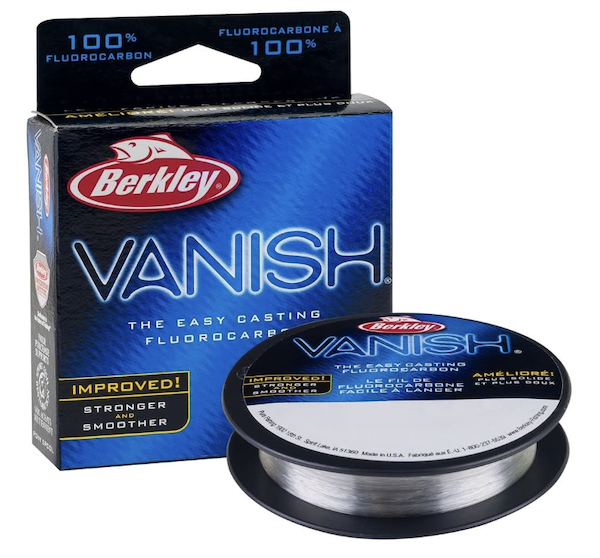
Clear water scenarios are notoriously tricky to fish because it is hard to hide the line. Fish are naturally more wary in these situations, especially when fishing pressure is high. Due to their low visibility, fluorocarbon lines are a perfect solution for these situations, and Berkley’s Vanish fits the bill perfectly. This line has a clear color that effectively takes on the coloration of the water around it. It’s a versatile option, too. Use it on a reel alone or simply as a leader. Either way, Vanish is a super sneaky line that can help produce bites when everything else fails. It also has decent abrasion resistance and is more affordable than many other fluorocarbon options.
Depending on the type of reel used, this line can be stiff and suffer from some memory issues. A more subjective issue is that some may find it difficult to tie knots with this stealthy line. Sometimes, seeing the fine details is hard, even out of the water. Another nice thing about Vanish is how readily available it is everywhere. Berkley produces an extensive range of test weights in their Vanish lineup. It’s often easier to find exactly what one needs in Vanish than in some of the more expensive options today.
Best Freshwater Leader: Sunline FC Leader
best freshwater leader
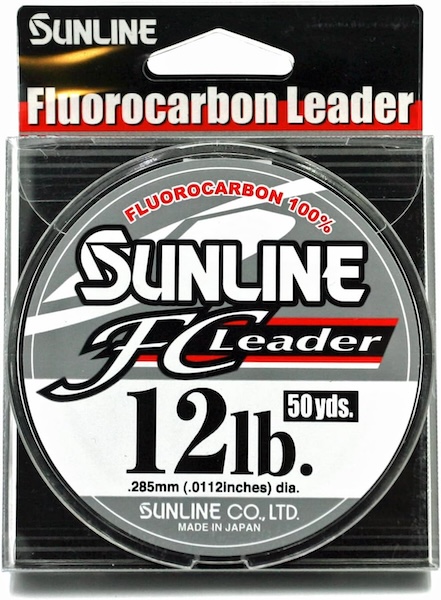
Sunline FC Leader
Pros
Excellent abrasion resistance
Low visibility
Strong knots
Cons
Don’t expect much stretch
Specs
- Construction: 100% fluorocarbon
- Pound Test Available: 5-20 lbs.
- 12-pound Diameter: .285 mm
While plenty of anglers use straight fluorocarbon on their reels, it’s arguable that the line is even more popular for leaders. Line companies noticed this and started offering specialized fluorocarbon options specifically for leaders. Sunline’s FC leader was an obvious choice for freshwater here. It’s a low-visibility option for bass that also doesn’t skimp on abrasion resistance. Go ahead and pull it over rocks and timber. Punch it through heavy grass mats. This is a leader material that was designed to take some abuse. At the same time, Sunline wasn’t afraid to offer some lighter options in the 6- to 8-pound range that are perfect for finesse setups like Ned rigs or drop shots.
This line also shines in terms of knot strength. It is stiff, so don’t expect much stretch compared to other fluorocarbon options. However, we think that’s a worthy trade-off considering how good FC leader is in different areas. This line is an excellent option for anglers seeking a dedicated leader to pair with braid. The price is very fair on Sunline. If used exclusively for leaders, even a 150-yard spool will go a long way.
Best Saltwater Leader: Yo-Zuri HD Carbon
best saltwater leader
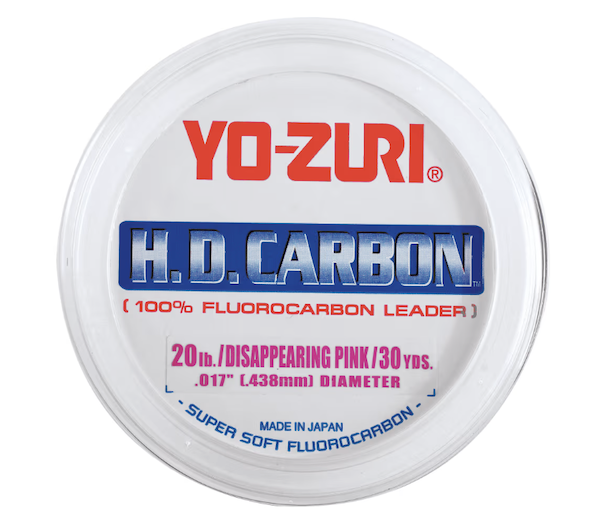
Yo-Zuri HD Carbon
Pros
Very strong
Low memory
Three color options
Cons
Expensive
Specs
- Construction: 100% fluorocarbon
- Pound Test Available: 2-200 lbs.
- 10-pound Diameter: .275 mm
Fishing in saltwater requires a good leader, and Yo-Zuri’s HD Carbon has been a standout for years. It has excellent abrasion resistance and strength for the largest saltwater fish. This line is super popular for tuna angling because of its toughness. The “disappearing pink” version was famously used to land a 427-pound yellowfin that was previously the all-tackle world record. Speaking of that pink version, the color is a helpful indicator that the fish is close to the boat during a fight. The color is highly visible above the surface but disappears below it. Yo-Zuri offers two other colors for anglers who want something more traditional. This line also has an incredibly low memory. It won’t coil up or twist, leading to fewer tangles and easier tying of complex rigs.
The big downside to Yo-Zuri is that this line is expensive, especially if it is only being used as a leader. Only 100 yards cost $30-60, depending on the retailer and pound test. However, the investment is worth it for strength and versatility. This line is at home both during shallow inshore trips and deep sea offshore adventures. Anything that can take the abuse of multiple tunas and keep kicking is a winner.
How We Tested Fluorocarbon Fishing Line
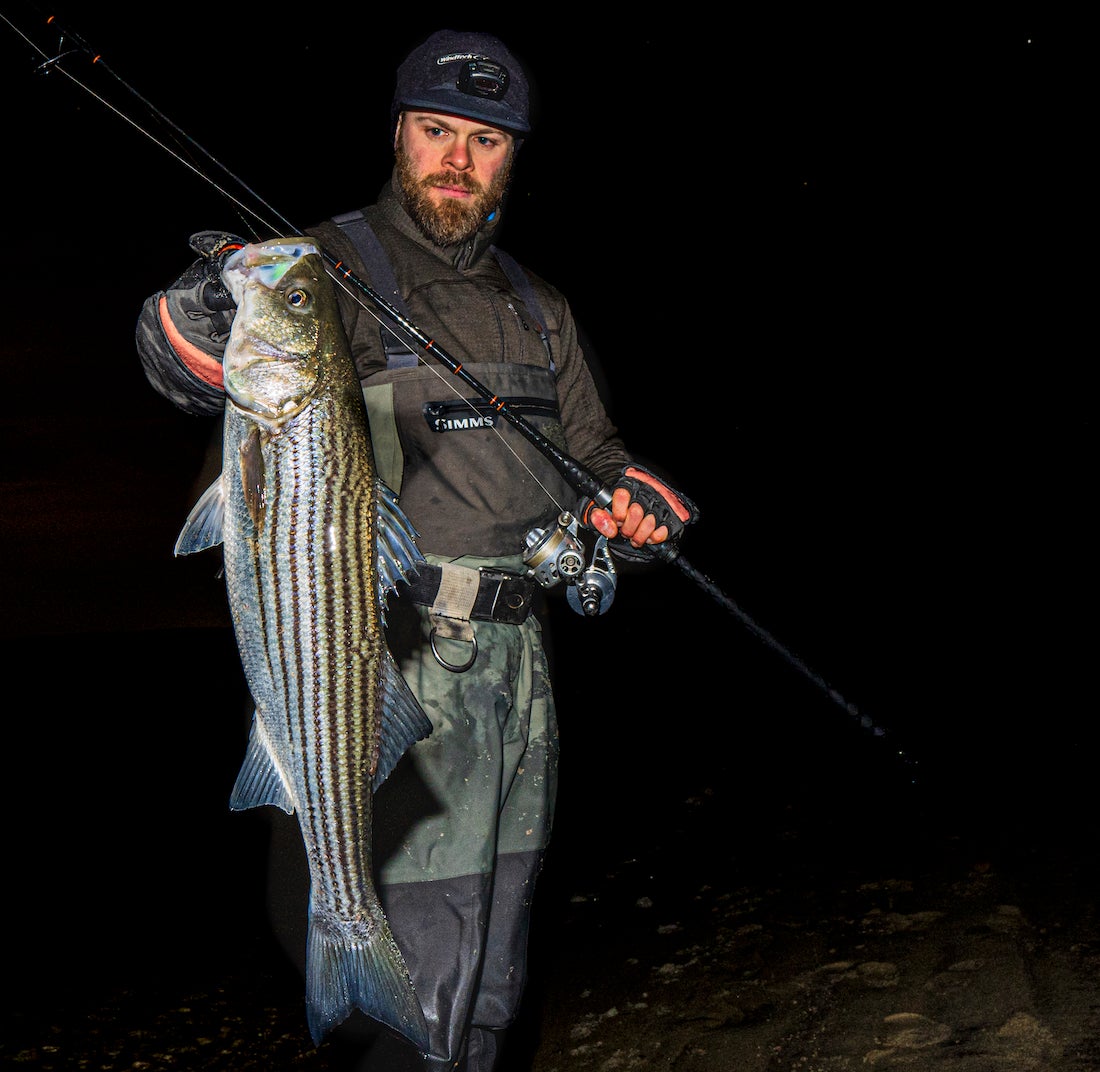
My choices in fluorocarbon fishing lines are based on 30 years of angling experience, which includes both freshwater and saltwater angling. I am meticulous when choosing my fishing gear, no matter what angling style I’m engaged in. That being said, I believe my primary angling pursuits, surfcasting and fly fishing for striped bass, give me unique insights into fishing line characteristics. I am faced with having to cast very far distances, fighting large fish in strong currents, and dealing with a lot of tough, sharp, and hard structure—all while fishing at night! I consider fishing line as the single most important piece of my fishing tackle and take it extremely seriously. Additionally, I have tapped my contacts who are industry professionals, top-tier tackle suppliers, and retailers. These resources and our experiences have informed all the choices here.
We evaluated each line here based on the following criteria:
Visibility: If you’re interested in fluorocarbon, then you almost certainly want it to be as invisible as possible. After all, that is one of the primary strengths of fluorocarbon. Every line on this list is a 100% pure fluorocarbon—no blends or coated lines on this list. Also, the top-picks retain their invisibility throughout the life of the line, and in both saltwater and freshwater settings.
Abrasion resistance and durability: I evaluated each line on this list for both abrasion resistance and durability over weeks and months of use. I looked at how it would hold up to being rubbed against rocks and woody structure, or how it would handle highly vegetated areas. I also evaluated how long it lasts after being subjected to hot and cold water, sand and dirt, UV rays, and lots of hours being casted. These factors can be even more important than pure breaking strength alone.
Handling, casting, and knot-tying performance: Fluorocarbon gets a bad reputation (partially deserved) for being hard, stiff, and difficult to work with. However, all that is changing as line technology improves, and current high-quality fluorocarbon performs nearly as well or even better than monofilament. All the lines on this list offer good casting distance, easy knot tying, and low-memory for their respective price and targeted segment of the market. Frankly, Seaguar leads the way in all these departments, and it’s why they show up on this list so frequently.
Quality and craftsmanship: Since fluorocarbon is relatively expensive, I expect the build quality and reliability of the lines I use to be top-notch. All the lines on this list are the best-of-the-best in that regard.
Price: Despite these lines being some of the most expensive available today, I evaluated if they offered good value over time.
What to Look for When Choosing Fluorocarbon Fishing Line
Fluorocarbon fishing line is more like monofilament than you might think. Standing in the tackle shop, you would be hard pressed to detect any difference between the two. They are both relatively see-through; both have some stretch; both can take nicking and rashing without breaking; and at the same breaking strain (pound-test) both lines are similar in diameter. Yet, fluorocarbon is significantly more expensive than monofilament across the board. This leads anglers to the number-one question I hear about fluorocarbon line: Is it really worth the extra money? Here are the factors to consider when deciding the answer to that question.
Line Visibility
If you’ve read anything about fluorocarbon, or “fluoro”, you’ve likely seen the phrase “fluorocarbon fishing line is invisible to fish.” True? Not exactly. But, fluorocarbon is much harder for fish to detect below the surface. This comes down to the materials used in the construction of the fluoro. While both fluoro and mono are made of single extruded materials, mono is constructed out of nylon, while fluoro is constructed from a chemical called polyvinylidene difluoride (PVDF). PVDF has a similar refraction index to water, while nylon’s refraction index is much different than water. This is a bit technical, so to put it simply, this means light passes right through fluoro underwater, making it look like nothing is there at all, while mono bends light in a way that makes it far-more visible.
Fluoro’s “invisibility,” or refraction index, has been shown to dramatically increase the hook-up ratio for fish with excellent eyesight—like tarpon, bonefish, false albacore, carp, and trout. However, even if you target less-discerning species—say panfish or largemouth bass—fluoro can be an excellent tool in highly-pressured water.Over the course of a season, fish can get spooky and fussy as they get used to seeing fishing line, and identify it as a danger. This is also why trophy fishermen are willing to pay the extra price of fluoro; large fish have likely seen a lot of lures and line over their lifetimes. This makes them extra wary. And while fish are not smart, they can start to get conditioned and become better able to discern when a lure or bait is attached to a rod and reel. Fluoro’s invisibility helps overcome this. The same is true for those fishing ultra-light tackle, very shallow water, or very calm conditions—all places where you want to make the line disappear as much as possible, so the fish can’t detect it. Frankly, if it’s in your budget, the invisibility of fluoro alone, independent of any other factors, is a good reason to give it a try if you are faced with any of these scenarios.
While fish are not smart, they can start to get conditioned and become better able to discern when a lure or bait is attached to a rod and reel. Fluoro’s invisibility helps overcome this. The same is true for those fishing ultra-light tackle, very shallow water, or very calm conditions—all places where you want to make the line disappear as much as possible, so the fish can’t detect it. Frankly, if it’s in your budget, the invisibility of fluoro alone, independent of any other factors, is a good reason to give it a try if you are faced with any of these scenarios.
Sink Rate
While most anglers buy fluoro for its low-visibility, another attribute that sets it apart from other lines is that it sinks. Mono tends to be the most buoyant fishing line, but braided line and the vast majority of copolymers also float or are neutrally buoyant. Fluoro sinks slowly, and virtually all fluoro lines I’ve tested sink at a similar, very-slow rate. There’s far more difference in diameter, quality, and price between lines than there is in sink rate, but some do sink a little faster than others.
For many anglers who are casting lures or bait from shore or a boat, whether your line floats or sinks at such a slow rate won’t make a huge difference. However, just like with visibility, for some anglers the fact that it sinks at all can be critical. For example, those that troll lures for species like walleye or lake trout may find that fluoro makes a substantial difference in getting the lure down where the large fish lurk in the cold depths.
If you’re casting in current or wind sweep, fluorocarbon can help your lure or bait get below the surface more quickly, and help it not get swept away. In combination with its low visibility, this makes it a popular type of line for trout fishing. However, this could be an asset to anglers drifting lures or bait in any kind of current, from trout and salmon, to bass and catfish, or even redfish and flounder.
That said, the sinking attributes of fluoro may actually be a negative attribute for some anglers. For example, you might think the decreased visibility of fluoro would make it an excellent top-water or frogging line. But fluoro’s sinking can lead to poor presentation—pulling your popper or frog down—while also tangling you in heavy weeds or woody-structure. Just one example, but it shows why it is important to consider all attributes of any line you might choose for your fishing.
Stretch
While fluoro has changed and improved a lot since it was first introduced, most fluorocarbon fishing lines remain stiffer and far less stretchy than mono. Whether this is good or bad again depends on what you’re targeting, and how you’re targeting it. On the positive side of things, a line with less stretch can mean better sensitivity, as you are more closely connected to the lure or bait. This can be excellent for fishing light tackle, where it’s necessary to feel every little tap. On the negative side of things, no stretch can also mean more pulled hooks, as there’s no give to absorb changes in force or direction. If the fish you pursue are extremely fast or acrobatic this could be a detriment. The stiffness can also decrease casting distance, which makes fluoro typically not the best choice for many shore-bound, big-water anglers who need to make extra-far casts.
That being said, just like many other aspects of fishing tackle, there is a large spectrum in stiffness and stretch between different brands and models of fluoro. Some fluoro is designed to be extra-hard and resistant to abrasion. Other models of fluoro are better for long-casts and delicate presentations, but are often stretchier and not as tough as a result. Choosing which factors are more important to you will help you get the most out of your line.
Abrasion Resistance
Whether fluoro is more or less abrasion resistant compared to mono is a hotly debated topic among both freshwater and saltwater anglers. There are a lot of articles, videos, and personal testimonies that show it is more abrasion resistant, but there’s just as many that show it is not. This causes a lot of frustration and confusion, especially if you’re new to fishing, or fishing with fluoro. So what’s the deal? Is fluoro a tougher line than mono, or not?
Ultimately, based on my experience, research, and interviews, overall and independent of all other factors, I do not think fluorocarbon fishing line is any more abrasion resistant than monofilament. Instead, it comes down far more to the individual line brand and model. What does this mean? Line diameter seems to make the biggest difference in abrasion resistance. Thicker lines are harder to cut. I’ve used lines that claimed to be extra-tough, only to find this was because they were simply thicker. I’ve also used lines that had superior casting distance and excellent handling attributes, only to find they had horrible abrasion resistance simply because they were much thinner than other lines at the same pound-test. When it comes to abrasion resistance, diameter matters most, but it’s definitely not everything.
Quality matters. A high-quality, extra-tough monofilament can outperform a budget fluorocarbon and vice versa. Specific lines and brands will be better than others. That said, I will admit that the very best fluoro running lines and leaders are incredibly resistant to abrasion and typically outperform most monofilament options.
In the end, I think abrasion resistance is more dependent on line diameter and build quality than if it’s fluoro or mono. For this reason, if you’re considering using fluoro or mono I encourage you to first decide on how important visibility, sink rate, and stretch are to you. Then, the next step is deciding if you need a high-abrasion, well-rounded, extra-soft, or extremely-long casting line- all-four of those options are available in both mono and fluoro from multiple different brands.
FAQs
Not only do fluorocarbon lines work, they beat other lines out because they’re nearly invisible underwater. Fluoro, like any line, has weaknesses too, and it’s certainly not essential. Many anglers will do just fine with monofilament, and braid also has a lot of very serious strengths. However, if you are an angler targeting very fussy, cunning, pressured, or shallow-water fish, then fluoro is probably worth the small added expense. After all, when you take into account all the time and effort you put into pursuing your favorite species of fish, is a few extra dollars for a high-quality line really that big of a deal?
Yes! While I am focusing on fluorocarbon as a running- or main-line in this article, one of the most popular uses for fluoro is as a leader material. Putting just a small piece of fluoro at the “business” end of your running line gains two main benefits of fluoro.You get its low visibility, and low-stretch while also saving money by only using a little bit at a time. This is very popular with anglers who use braided main line in particular, especially in saltwater. Those who use braid are faced with a line that is very easy to see underwater, but most fish can be fooled by putting some nearly-invisible fluoro closest to the lure. Since fluoro is also much more abrasion resistant compared to braid, it’s a win-win.
If you suspect your line has been damaged for any reason, it’s worth changing. This doesn’t matter if you’ve been fishing with it for a year, a month, or even a day. Nothing is worse than losing a big fish when you knew your line was compromised but decided not to change it. Also, monofilament and fluorocarbon break down over time. Exposure to the ultra-violet rays of the sun, high-temperatures, sand and dirt, saltwater, and other factors can lead to the line becoming brittle, increase its memory, or even reduce the low-visibility of fluoro. Most average anglers will need to change their line at the beginning of each season at the absolute minimum. If you are someone who fishes a lot—more than a couple days a week—then you may need to swap out your line far more than once a year. Personally, I typically change my line three to four times a year, even if it appears to be totally undamaged.
Why Trust Us
For more than 125 years, Field & Stream has been providing readers with honest and authentic coverage of outdoor gear. Our writers and editors eat, sleep, and breathe the outdoors, and that passion comes through in our product reviews. You can count on F&S to keep you up to date on the best new gear. And when we write about a product—whether it’s a bass lure or a backpack—we cover the good and the bad, so you know exactly what to expect before you decide to make a purchase.
All new! 1871 Club Field Trips