This article was produced in partnership with Christensen Arms
We’ve looked at the Christensen Arms Ridgeline FFT rifle in the past. In fact, it was selected as our editor’s choice during our annual 2025 rifle test. The rifle is offered in a plethora of cartridges, and while cartridge choice is not the most important aspect in a rifle a hunter might plan to use all over the world, it does matter. Several rifle cartridges qualify as world-wide big game cartridges, and while magnum performance is not mandatory, many prefer that extra power for assurance at distance, especially for larger game. With that as a guiding principle I decided to revisit the Christensen Arms Ridgeline FFT chambered in 300 PRC to see how it might fill this anywhere and everything category.

Christensen Arms Ridgeline FFT Rifle
Pros
- Handy and light
- Great trigger
- Precision guarantee
Cons
- Safety doesn’t lock bolt
- Limited capacity
The Rifle
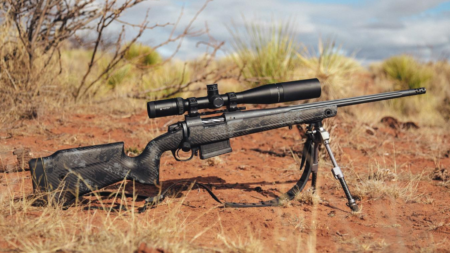
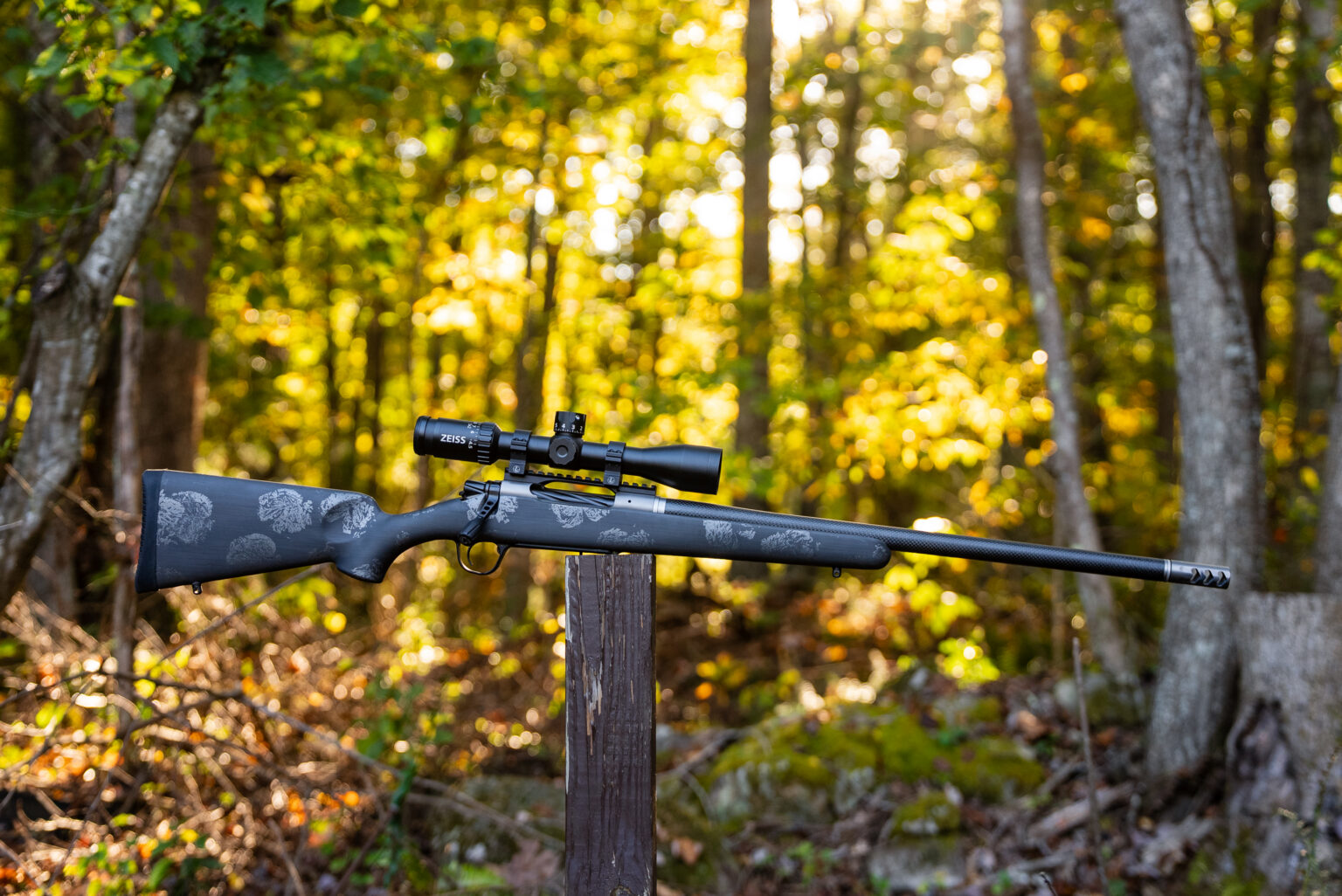
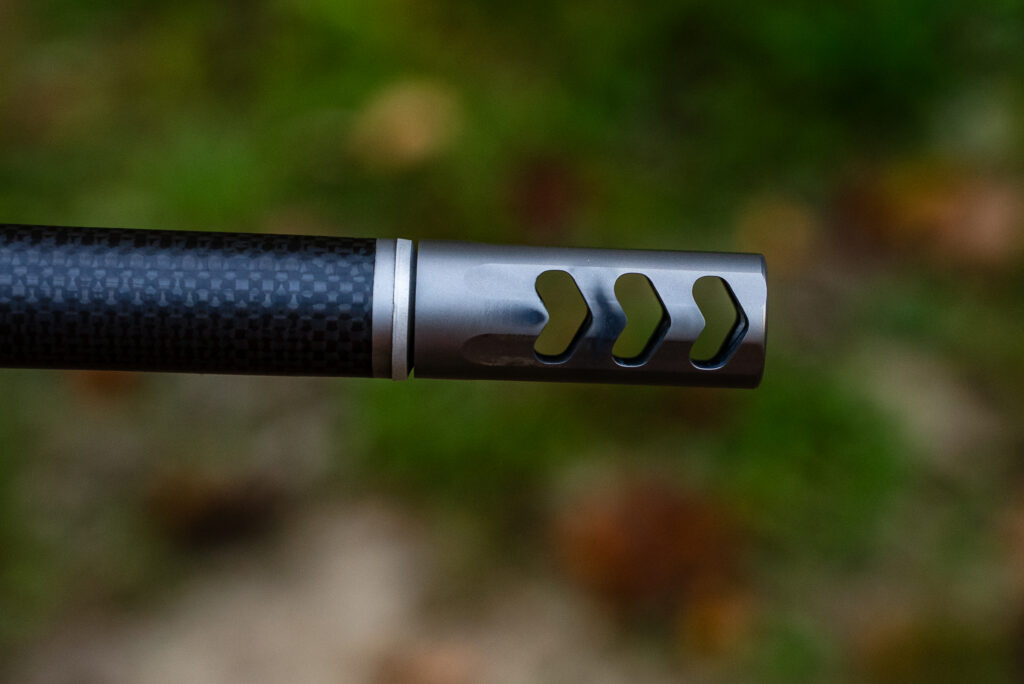
The two most distinguishing characteristics of the Ridgeline FFT are its carbon fiber wrapped barrel and its carbon fiber stock. What many hunters and shooters do not realize is that Christensen Arms pioneered the carbon fiber wrapped barrel. The Ridgeline’s barrel is made of 416 stainless-steel, and it is button-rifled and hand-honed at the factory. Christensen Arms also contours the barrel with a proprietary stepped process that reduces in diameter from the ends to the center, then they wrapped the barrel various layers of carbon fiber. In 300 PRC the barrel is 22 inches long, has a 1 in 8 rifling twist, and is threaded at 5/8×24. A thread protector is provided but the rifle ships with a stainless steel side baffle muzzle brake.
The carbon stock—offered in a variety of cool looking camo patterns—on the Ridgeline FFT is just as proprietary as the barrel and Christensen Arms builds them at their factory in Gunnison, Utah. FFT stands for “Flash Forged Technology,” and this stock is of a monocoque design, which means there is no internal support structure. It’s outfitted with carbon fiber pillars that the action screws pass through, it’s glass bedded in the recoil lug area, and is relieved to provide a free-floating barrel. With the buttpad installed the stock weighs only about 20 ounces, which is light even by modern synthetic stock standards. It also has a hinged aluminum floor plate but is compatible with aftermarket AICS detachable magazine conversion kits.
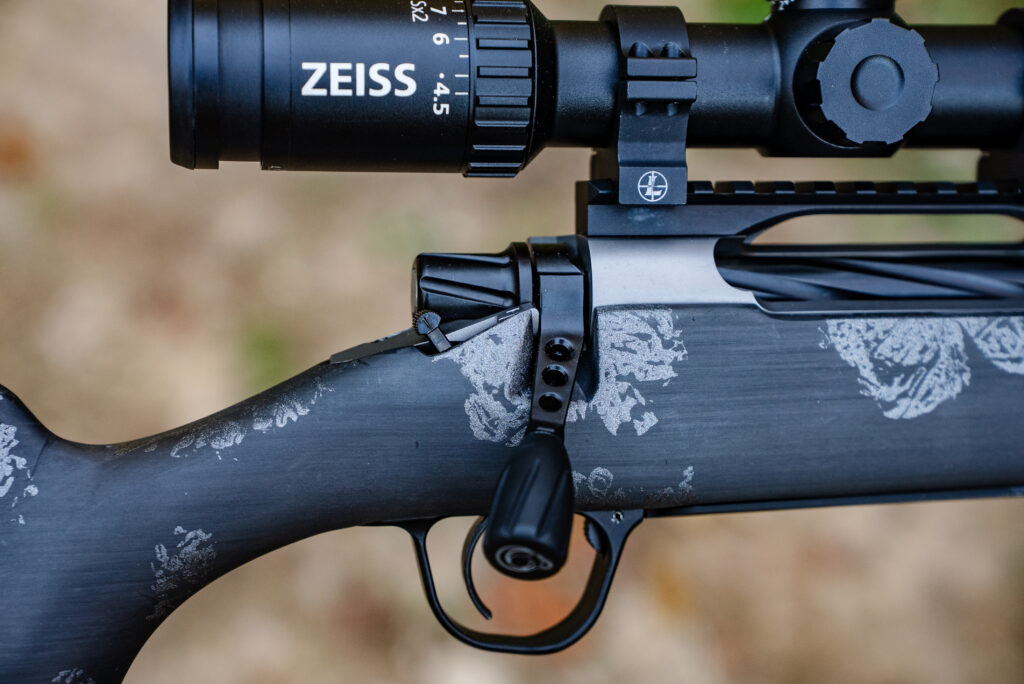
The Ridgeline FFT utilizes Christensen Arms Model 14 action, which is a variation on the Remington 700 action, and it will accept Remington 700 scope bases and mounts. This is a two-lug action with a 90° throw, but that’s where the similarities end. The bolt release on the Model 14 action is located on the left side of the action, the bolt is spiral fluted, and its outfitted with a much more robust and reliable M16-style extractor. Inside the bolt face there are redundant—two—spring loaded plunger ejectors. The handle on the bolt is oversized and grooved, and the bolt handle is skeletonized for looks and to reduce weight. And finally, out of the box this rifle comes with a very good TriggerTech trigger that’s user adjustable. Every Ridgeline FFT rifle also comes with Christensen Arms sub-MOA accuracy guarantee.
Christensen Arms Ridgeline FFT 300 PRC Specifications
- Length: 42.5 inches w/ muzzle brake
- Weight: 5.38 pounds
- Barrel: 22 inches w/o brake
- Action: Christensen Arms Model 14
- Trigger: TriggerTech adjustable, 2.25 pounds (as tested)
- Capacity: 3+1
- Finish: Cerakote
- Stock: Christensen Carbon Fiber FFT
- Price: $2149.99
The Cartridge
From a muzzle velocity standpoint, the 300 Precision Rifle Cartridge (PRC) falls about in the middle of Magnum 0.30-caliber rifle cartridges. Introduced in 2018 by Hornady, the 300 PRC is not the fastest 0.30 caliber. It has about a 50 to 100 fps advantage over the 300 Winchester Magnum but it’s about 100 to 150 fps behind the 300 Weatherby Magnum and the 300 Remington Ultra Magnum, respectively. However, the 300 PRC performs very well at distance because of its 1 turn in 8.5-inch rifling twist rate which allows it to shoot very aero dynamic high ballistic coefficient bullets that retain velocity better and drift less in the wind.
For example, zeroed at 200 yards Hornady’s 212-grian ELD-X load for the 300 PRC will only drop about 38 inches at 500 yards, where it will still impact at 2200 fps and with 2304 foot pounds of kinetic energy. A 200-grain bullet from the 300 Winchester Magnum cannot match this, and you must step up to the 27% harder recoiling 220-grain bullet in a 300 Remington Ultra Magnum to match this performance. This all makes the 300 PRC a great choice for hunters who want to deliver maximum power at distance. There’s also about 20 factory loads offered for the 300 PRC.
Shooting Results
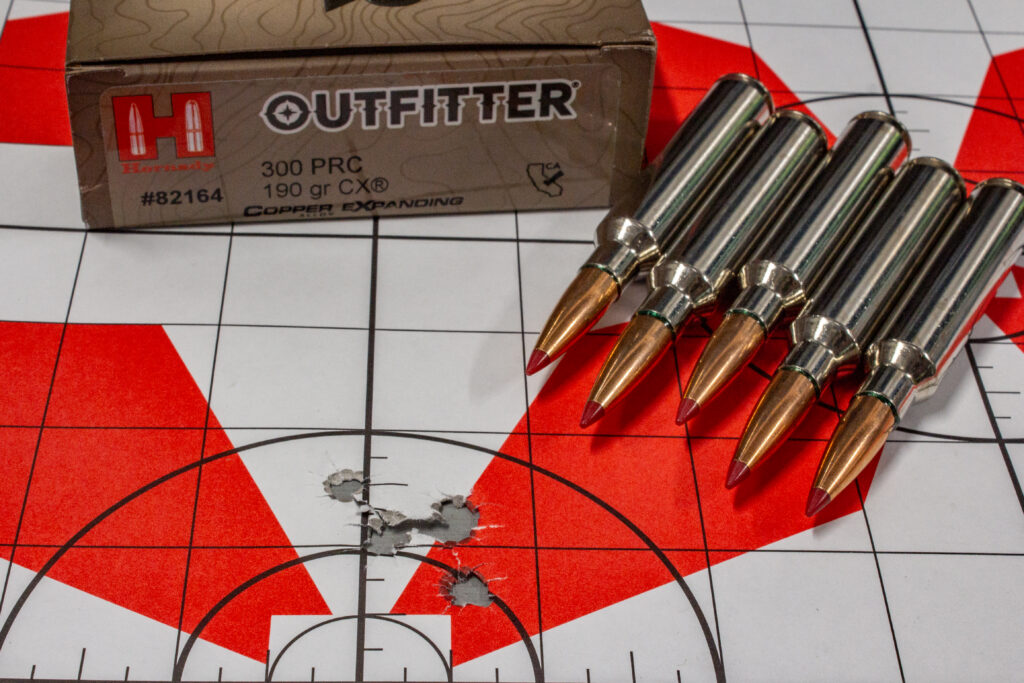
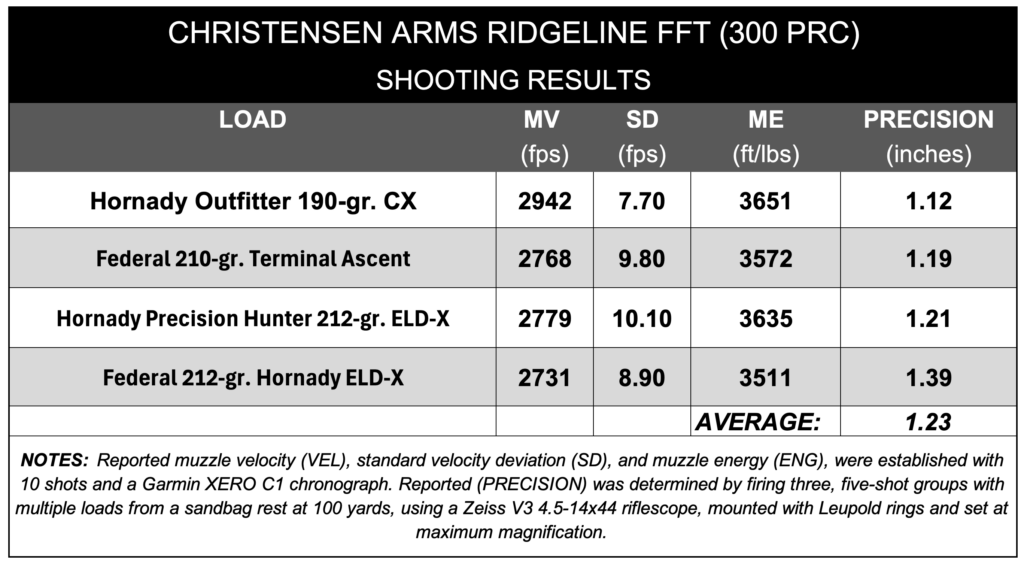
I mounted one of the new Zeiss V3 riflescopes to the supplied 20 MOA rail that comes with the rifle using Leupold Backcountry rings. Even then, the rifle weighed less than seven pounds. Four loads were tested by firing three, five-shot groups from a sandbag rest at 100 yards with each load. In total, 12, five-shot groups were fired and the average for all those groups was 1.23 inches. All this shooting was conducted with the side baffle muzzle brake installed.
Christensen offers a sub-MOA precision guarantee with the Ridgeline FFT rifle, and this translates to an assurance the rifle can put three shots into a group measuring less than roughly an inch at 100 yards. Of course, as with any precision guarantee this assumes a capable shooter is behind the rifle and that quality ammunition is being used. Our standard precision testing always relies on five-shot groups, so no three-shot groups were measured. However, in most every case the first three shots with the 190-grain Outfitter and 210-grain Terminal Ascent loads would most likely have fallen within that sub-MOA measurement.
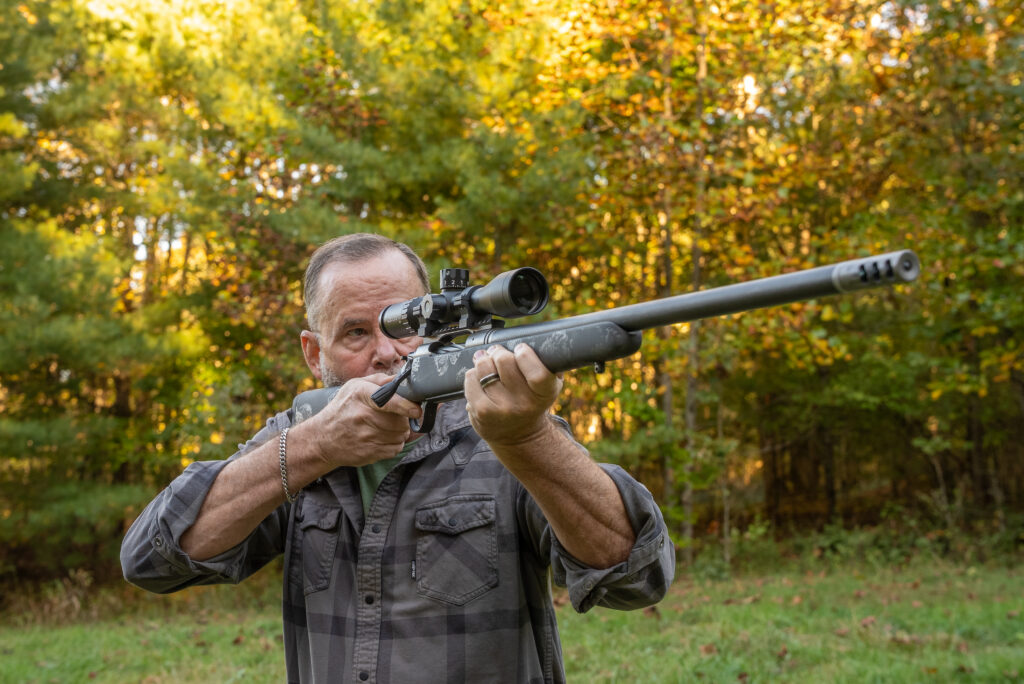
I’m not a fan of muzzle brakes because to me, they’re obnoxiously loud and disconcerting, and the one provided by Christensen was all of that. But at the expense of excessive muzzle blast, it was very effective at reducing recoil to what I would consider 30-06 Springfield and maybe even 308 Winchester levels. That’s notable considering the 300 PRC generates more than twice the recoil force of both cartridges. I also did some shooting with two different suppressors which also reduced recoil, but neither offered as much relief as the muzzle brake.
The Ridgeline FFT is balanced well for field shooting, either off hand or from shooting sticks. The action was smooth and it fed, fired and ejected every load tried with perfect reliability. I had two complaints with the rifle. The first is that in 300 PRC it has a limited magazine capacity of two, which allows for a fully loaded capacity of three. The second complaint is that the two position safety does not lock the bolt handle down when it’s in the “safe” position.
Final Shots
During a visit to the factory a few years back I got to assist with building a Ridgeline FFT chambered for the 6.5 PRC. That rifle and I have spent a lot of time together on the range and in the field. In fact, I took it to Africa in 2025 and it’s the rifle my wife used. I used another Ridgeline FFT chambered in 7mm Backcountry. So, I’ve got some experience hunting with the platform. Aside from the non-bolt locking safety I think the Ridgeline FFT is one of the best modern lightweight bolt action rifles currently offered. It delivers a great balance of performance and weight, especially at its price point. There’s no question that one in 300 PRC could effectively serve a big game hunter all over the world, and if the 300 PRC is not your cup of tea there are near two dozen other chamberings to choose from.

ALL NEW! 1871 CLUB FIELD TRIPS