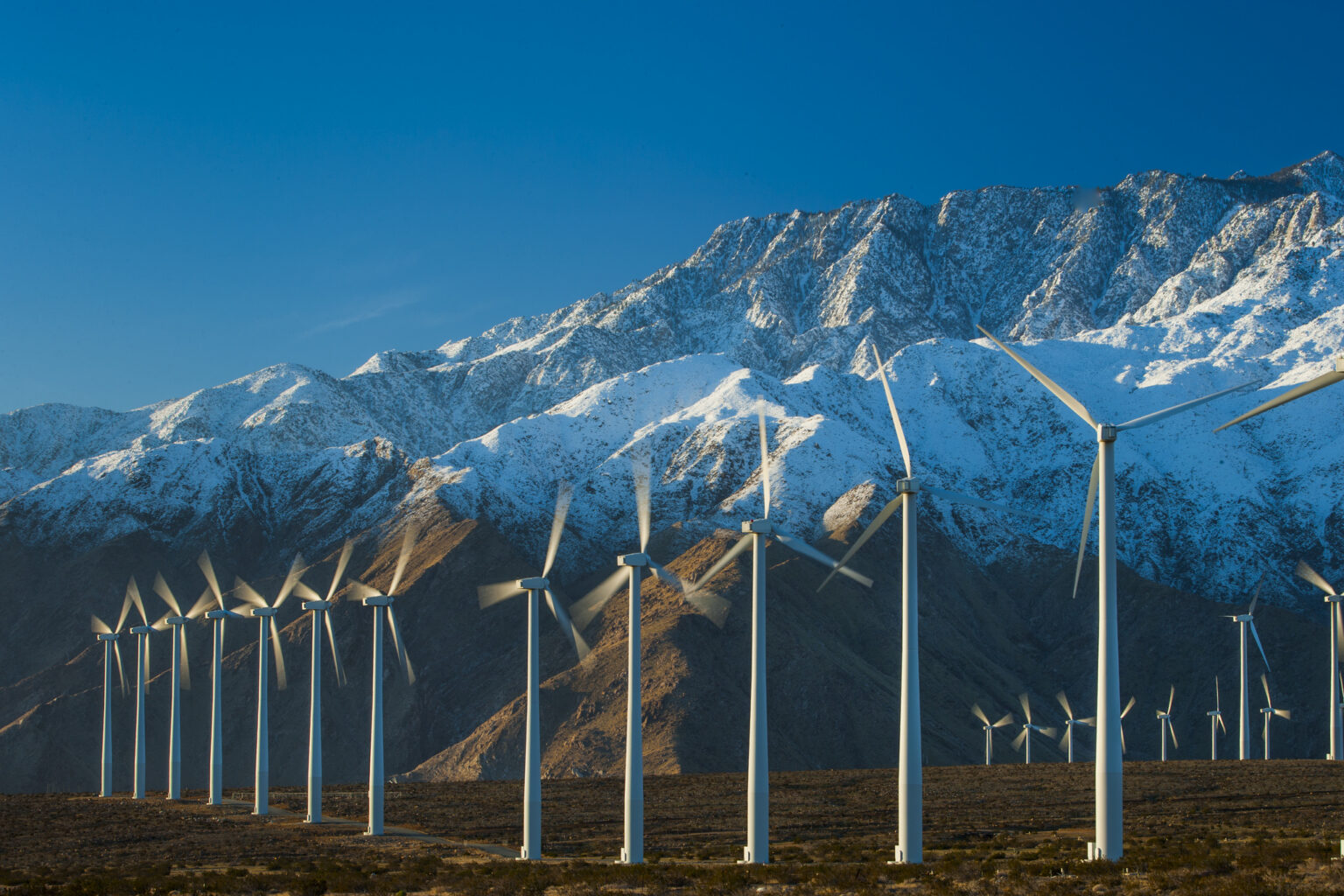
On November 19, the United State Senate passed a sweeping 400-page bill with big implications for America’s federally managed public lands. Called the Bipartisan American Affordability and Jobs Act—or BAAJA for short—the bill would ease permitting restrictions for all sorts of public-land development projects, from mining and drilling to large-scale solar farms and geothermal power projects. Supporters say it would open the door for more clean-energy projects on public lands while reducing utility costs for American consumers.
Co-sponsored by Sen. Martin Heinrich (D-NM) and Sen. Mike Lee (R-UT), BAAJA has drawn widespread criticism from conservationists, environmentalists, and public land advocates, with groups from the Wilderness Society to the National Wildlife Federation speaking out in opposition. According to the National Council of American Indians, it has also caused serious concerns in tribal nations across the country.
A large portion of the bill aims to reform or streamline the permitting process that developers must adhere to when applying for projects on federal public lands. It would do so by shrinking the scope, timelines, and legal challenges currently available under both the National Environmental Policy Act (NEPA) and the Clean Water Act (CWA).
In an October blog post, the Theodore Roosevelt Conservation Partnership (TRCP) said “permitting reform rules decide how a pipeline, transmission line, mine or dam gets approved, whether hunters and anglers have any say in where it goes—and what happens to elk winter range, trout streams or migration corridors in their path.”
While TRCP has stopped short of publicly opposing the bill, they did highlight several concerns in the post. For starters, they flagged a provision in the bill—Section 1401—that “would make it much more challenging to fix problems once a project is permitted.”
Titled “Project Certainty,” this section of the BAAJA bill would restrict federal agencies—like the Bureau of Land Management or the US Forest Service—from revoking previously issued permits during future presidential administrations. Critics say this section of the bill could lock in controversial projects—like a proposed copper-sulfide mine on the edge of the Boundary Waters Canoe Area Wilderness or the 211-mile Ambler mining road that the Department of the Interior (DOI) is pushing for Alaska’s Brooks Range.
In a separate blog post, Backcountry Hunters & Anglers (BHA) highlighted similar concerns with the “Project Certainty” provision in the BAAJA bill. “For BHA, this raises questions about whether federal land managers would retain sufficient flexibility to respond to changing conditions and protect public resources over the long term,” the BHA post states. “For example, if a mining project near Minnesota’s Boundary Waters Canoe Area Wilderness received federal approval, these provisions could limit a future administration’s ability to revisit that approval in response to newly identified impacts on water quality or fisheries, depending on the circumstances and applicable legal exceptions.”
Flying Under the Radar
Aaron Kindle is the Director of Sporting Advocacy at the National Wildlife Federation (NWF). He tells Field & Stream that NWF opposes the BAAJA bill in its current form because it raises too many questions, is moving too fast without adequate public awareness, and it undermines key public-land safeguards.
“This is a hugely consequential bill happening during a lame-duck session with very little public understanding,” Kindle says. “[NWF] is pro-permitting reform. But when we do the analysis on this, and we talk to other conservation friends and partners, it’s just too fraught.”
Kindle says NWF shares both BHA’s and TRCP’s concerns around the bill’s project certainty guarantees for developers. “It shortens review timelines, it narrows what triggers a review, and it kind of locks it in once it’s done,” he says. “We’ve always wanted to be able to do adaptive management on anything that’s done. Anytime you narrow environmental review parameters like this, or make permits too concrete, that’s concerning for a broad swath of our most cherished public lands and waters.”
Kindle says NWF is also worried that the bill could expedite data center construction on public lands. Up until now, no data center has been permitted on any federal public lands, though the DOI did attempt to approve one on BLM lands in Nevada back in August, before a federal appeals court revoked the permit.
“What we’ve understood so far is that [BAJAA] shields [data center developers] from future regulations and makes it hard, or maybe even impossible, to revoke the permits once they’ve been awarded,” he adds. “What if we learn at some future point that these things are incredibly harmful to water, air, wildlife, the grid, who knows—and then they’re just locked in place, and there’s nothing we can do about it?”
The Wilderness Society has been one of the most vocal opponents of the BAJAA bill since it first started making headlines in early November. Wilderness Society President, Tracy Stone-Manning, who ran the BLM during the Biden Administration, calls the bill alarming.
“Some of the places that hang in the balance are the Boundary Waters in northern Minnesota and the Brooks Range of Alaska, because of the proposed Ambler Road and Arctic Mine, the entire Alaskan Arctic really, and all of that caribou habitat,” Stone-Manning tells F&S. “You’ve also got places in the Lower 48, like the Roan Plateau in Colorado with its amazing mule deer and elk herds, which sportsmen and women fought so hard to protect, and the headwaters of Montana’s Bitterroot River, where they want to build a rare-earth mine up on Sheep Creek. Whatever the Trump Administration decides to do in these places in the next two years, that gets locked in if this bill passes. We won’t be able to undo it.”
The Wilderness Society supports expanded permitting for renewable energy projects on public lands, which have declined steeply during the first two years of the Trump Administration. But for Stone-Manning, the risks of the BAJAA bill far outweigh the rewards.
“The bottom line is, this bill takes away environmental safeguards for habitat and gives developers certainty,” she says. “Those two things coupled together spell disaster for our country’s conservation heritage and for our public-land hunting and fishing traditions.”
A Key Supporter Responds
Many conservationists who opposes BAJAA are confused by Sen. Martin Heinrich’s staunch support for the bill. Heinrich has been one of the Senate’s most stalwart defenders of public lands for years. He has helped secure Wilderness Area and National Monument status for thousands of acres of public lands in his home state of New Mexico, for example. More recently, he was a vocal and outspoken opponent of an attempt to sell off more than 3.4 million acres of Western public lands in the “One Big Beautiful Bill.”
Today, he’s defending BAJAA in the halls of Congress and in the op-ed pages of major news outlets like the New York Times and the Economist. In a recent interview with Field & Stream, Heinrich cited an urgent need to slow climate change as his primary motivator for helping craft and co-sponsoring the legislation.
“This will allow us to put green energy on the grid at a scale where we might be able to mitigate the worst future outcomes of climate change,” Heinrich says. “I’ve realized that I’m watching the world change at such a pace, that if we don’t get to work on this, I don’t know what kind of world my grandkids are going to inherit. The places that I fish in New Mexico, for example, are changing. We don’t have a lot of water. If these places go away, and we don’t have snowpack, we’re done. It’s game over.”
Heinrich says the bill address climate change by putting public land renewable projects—like wind, solar, and geothermal—on equal footing with oil, gas, and mining. “We want to bring renewables into the same regulatory permitting regime that the fossil fuel projects already have,” he says. “Right now, oil and gas in particular, and natural gas pipelines, have a sort of privileged position.”
Heinrich disputes claims from his critics that the bill weakens key public-land safeguards like NEPA and the Clean Water Act. And he says it won’t expedite or lock-in mining permits in the Boundary Waters.
“We don’t change or lower standards in this bill; we streamline the process,” he says. “If you’re a mine developer, you still have to get your Clean Water Act permit, and it doesn’t change the standard for that. When you look at the Boundary Waters, what I don’t see is that project being able to clear is a state Clean Water Act permit, because I just don’t think it will be possible to do mining open-air tailings at that site—having seen it with my own eyes—without the acid generated making it into the water next door.”
Heinrich also disagrees with BAJAA opponents who say the bill will open the door for data center development on public lands. “I don’t think that data centers belong on public lands, and I think any effort to build them on public lands is probably a legal stretch of existing authorizations and presidential authorities,” he adds. “This bill just makes data centers pay their fair freight for attaching to the grid, instead of passing that cost on to everyday consumers in the form higher electricity rates.”
The Trump Administration’s current policy around data centers is murky at best. But recent reporting from the Washington Sun revealed that the BLM was reviewing at least 12 data center proposals spread across 17,600 acres of public land in six western states. In its recent strategic plan, the Department of the Interior, which manages close to 500 million acres of public land, listed data center development as a top priority, alongside the potential transfer or sale of federal public lands to states and local governments.
Sen. Ron Wyden (D-OR) tried to attach an amendment to the bill that would have banned the construction of data centers on public lands altogether when the Senate was debating BAJAA earlier this month. That effort ultimately failed and Wyden voted against the bill, though it still passed the full Senate on 63-33 vote.
President Trump endorsed the BAJAA bill in a recent Truth Social post and said he’ll sign it if it comes across his desk, calling it a big win for energy independence and dominance. Now its awaiting a vote in the US House of Representatives. House members could vote as early as next week, when they return from Thanksgiving recess.