

To make Hawaiian fish jerky, marinate 1/4-inch strips of firm fish in soy sauce, pineapple juice, ginger, and garlic for at least six hours. Dry the strips on an oiled rack at 145 degrees until pieces crack but don't break when bent. Refrigerate in a sealed container until ready to eat.
- Both saltwater species like tuna and snapper and firm freshwater fish like bass and crappie work well.
- Marinate strips at least six hours in the refrigerator. Overnight produces better flavor penetration.
- Pat fish strips dry before drying. Excess marinade extends drying time and muddies the final texture.
- Start at 145 degrees for two hours, then reduce to 130. Done jerky cracks when bent but does not break.
- A dehydrator or smoker is preferred. An oiled oven rack with a drip sheet on the lower rack works as a substitute.
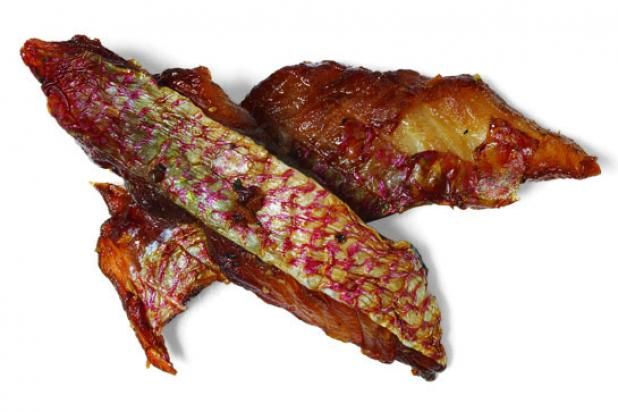
I first encountered fish jerky during a marlin tournament in Kona, Hawaii. It was steeped in the island flavors of ginger, soy, and pineapple. Here is my best approximation of that Hawaiian treat.
Hawaiian Fish Jerky
Ingredients““ 2 lb. fish fillets (saltwater species like tuna and snapper work great, as do firm-fleshed, low-fat freshwater fish like bass, trout, and crappie)”“ 1/2 cup soy sauce”“ 1/4 pineapple juice”“ 1 tbsp brown sugar”“ 1/4 tsp. cayenne pepper”“ 1 crushed garlic clove”“ 1 tbsp. fresh ginger, minced”“ 1 tsp. salt”“ 1 tsp. pepper
Directions:1. Cut the fish into 1/4-inch-thick strips, 1 inch wide and 3 to 6 inches long. Combine the remaining ingredients in a zip-seal bag and marinate the fish in the refrigerator, for at least six hours, or preferably overnight. Discard the marinade and dry the fish strips well, dabbing them with paper towels to sponge off any excess marinade.
2. If you own a dehydrator or smoker, use it. Otherwise, you can use a lightly oiled cake rack or oven rack in a low-heated oven. Either way, use the oven’s top rack, and be sure to oil the grates. Put a cookie sheet on the bottom rack to collect any drippings. Place the fish on the rack and set the oven to 145 degrees. (Some ovens won’t go this low. In that case, set the oven to its minimum temperature and crack the oven door.)
3. After two hours, reduce the heat to 130 degrees or open the door wider. The drying time will vary considerably. When done, the fish jerky will be dry but not brittle, so that the pieces crack but don’t break when bent, with a dark brown glaze. Allow the jerky to cool and keep it refrigerated, in a sealed container, until you’re ready to eat it.

All new! 1871 Club Field Trips