_We may earn revenue from the products available on this page and participate in affiliate programs. Learn more ›
_
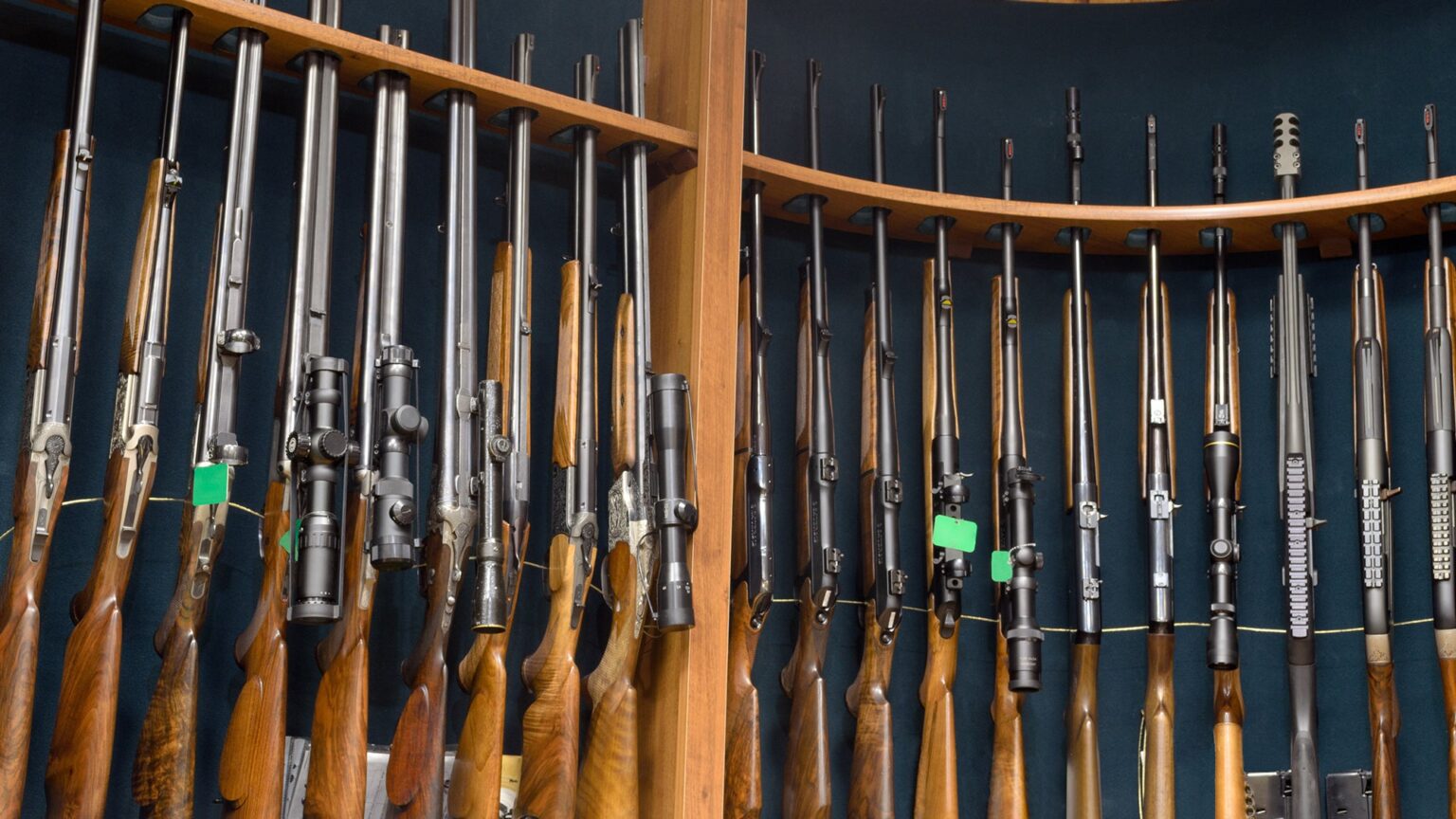
Rifle shooters are persnickety and opinionated—and they should be. The task of sending a small piece of metal faster than the speed of sound to a precise point of impact demands a certain kind of attention. So, when it comes to the types of rifles we use execute such shots, we tend to be particular. And because one type of shooting or hunting can be very different from another, we like different rifles for different jobs. Much like a golf bag holds a set of clubs for different kinds of shots, a gun safe holds different types of rifles for different kinds of shooting.
Through the years, firearm designers have tweaked the basic design of a rifle to give it an edge at certain shooting tasks. Some designs have caught on and remain relevant today, while others lay forgotten in history’s dustbin. Below is a basic rundown of the types of rifles you’re most likely to find in the gun safes of today’s shooters—as well as on gun shop shelves if you’re looking to start or expand your hunting and shooting toolbox.
Table of Contents
How a Rifle Works
What Are Some of the Major Different Types of Rifles
Types of Rifles by Action
Types of Rifles by Ammunition
Frequently Asked Questions
How a Rifle Works
Before getting into the different types of rifles out there, it’s important to know how a rifle works. For those of you who already know this basic information (which, we assume, includes a lot of F&S readers), just skip down a bit. For those of you who don’t, here’s the least you need to know: A rifle is basically a tube (the barrel), open at one end, with grooves cut into a spiral pattern on the inside of it. These grooves are called rifling, and they spin a bullet to stabilize it in flight. The open end of the tube is called the muzzle. That’s where the bullet comes out. The other end is called the breach, and it’s attached to something called the action. The action contains all the parts necessary to load, reload, and shoot the rifle.
On most modern firearms, the breach can be opened or closed via a rifle’s bolt, which is housed in the action. This allows shooters to load new cartridges into a rifle. Depending on the type of rifle, cartridges can either be loaded one at a time, semi-automatically every time you pull the trigger, or manually with the help of a lever, bolt handle, or pump.
Repeating rifles (generally all rifles that aren’t loaded by hand one cartridge at a time) will also hold spare ammunition in either a box magazine or a tubular magazine. With the exception of muzzleloaders, which do not use modern metallic cartridges (more on that later), this is how all the rifles we are covering here function.
What Are Some of the Major Different Types of Rifles
Rifles are usually classified by action type. Here are the most common rifle actions you’ll encounter in the wild.
Bolt-Action Rifles
Lever-Action Rifles
Falling Block Rifles
Pump-Action Rifles
Breech-Loading Rifles
Semiautomatic Rifles
Muzzle-Loading Rifles
Types of Rifle Actions
Bolt-Action Rifles
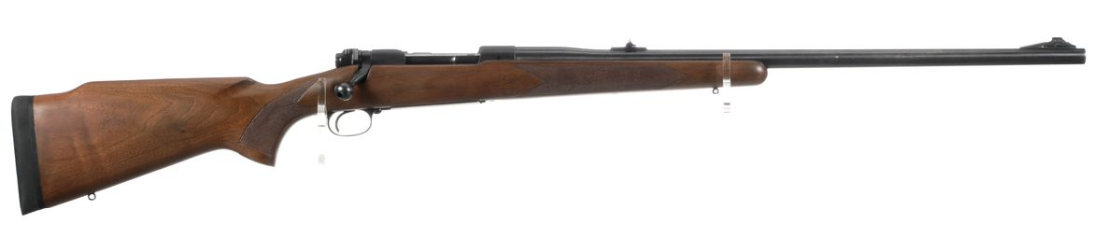
A Winchester Model 70 bolt-action rifle. Rock Island Auction Company
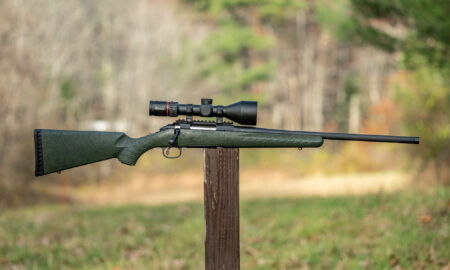
Most hunters are familiar with bolt-action rifles. Over the late 20th century, they became a favorite for their ability to fire high-pressure cartridges repeatedly. Many of the most accurate rifles today are bolt-action rifles. Bolt-actions can be configured as single-shots or repeaters, and they typically hold around five rounds.
For each shot, the shooter must cycle the bolt manually by lifting the bolt handle, pulling backward to eject a spent case, and loading a new cartridge into the rifle’s chamber. Bolt actions make for some of the best long-range rifles for competition because they can be fired fairly quickly and very accurately. They are also widely used as general-purpose hunting rifles because they are straightforward, safe, and easy to operate.
Lever-Action Rifles
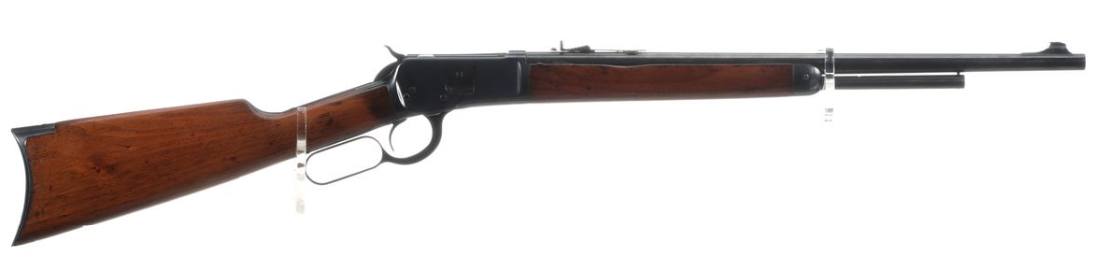
Winchester Model 93 bolt-action rifle. Rock Island Auction Company
In the mid-19th century, the lever-action rifle represented a huge leap forward in rifle technology. They were used for combat, law enforcement, personal defense, and hunting. Before American hunters were exposed to bolt-action rifles, they favored lever-actions to take everything from small to big game. Today, many hunters who shoot deer in dense cover like a lever action rifles because they are lightweight, easy to maneuver, and quick to get on target.
Lever-action rifles are repeaters that can hold anywhere from five to 15 or more spare cartridges. Most use a tubular magazine that is located underneath the barrel. More modern lever-actions use a removable box magazine. After pulling the trigger, the shooter can manually cycle the bolt via a lever located underneath the action. The shooter pushes the lever forward to eject a spent casing and pulls it back to load a new cartridge into the chamber. Older lever-action rifle designs cannot contain the pressures of some modern cartridges. Though there are exceptions, most lever-action shooters take animals at distances under 150 yards.
Falling Block Rifles

A Browning Model 1885 falling-block rifle. Rock Island Auction Company
Instead of using a bolt to close the breach end of a rifle barrel, falling block rifles use a squared-off thick piece of metal called a breach block. The breach block is designed to go up and down within the action and is operated via a lever underneath the trigger. When that lever is in the down position, the breach is open, and a shooter can manually load a cartridge into the chamber. When in the up position, the rifle is ready to fire. Most falling block rifles will eject spent casings every time the block is pushed to the down position.
Falling blocks are single-shot rifles, meaning the shooter must load each cartridge before firing. Though some think they are antiquated when compared to bolt-actions and lever-actions, falling-block actions can be extremely strong. They are also much smaller than other types of actions, so a shooter can have a full-length barrel in a relatively compact package. Falling blocks are chambered for everything from .22 rimfire cartridges for small game all the way up to 500 Nitro Express
for elephants.
Pump-Action Rifles

A Remington Model 7600 pump-action rifle. Rock Island Auction Company
Though not very common, pump-action rifles are a favorite of deer hunters in the Northeast. There is also a world of collectors who hunt down older rimfire pump-actions from the early 20th century. In the early days, pump-action rifles were also called slide-action rifles. The rifles operate a lot like a pump-action shotgun, but most use a box magazine instead of a tubular magazine—though some older designs use the latter.
The forend of a pump-action rifle slides back and forth to open and close the bolt and reload fresh cartridges from the magazine. Pumping the forend rearward will open the bolt and eject a spent casing. Pushing it forward will load a new cartridge, making the rifle ready to fire again. Pump-action rifles can be shot very quickly and are strong enough to be chambered in a variety of cartridges. They are lightweight, but typically not as accurate as bolt-action or falling-block rifles. They’re best suited for hunting in the woods, where shots rarely exceed 200 yards.
Breech-Loading Rifles

A Westley Richards double rifle. Rock Island Auction Company
For the most part, beech-loading rifles come in two flavors: single-shot and double rifles. Single-shots are just that. They hold one cartridge at a time and need to be reloaded after each shot. Double rifles use two barrels, configured either side-by-side or with one barrel on top of the other. They hold two cartridges—one in each barrel. The rare exception to this is combination guns. They are most popular in Europe and contain three or more barrels chambered for different rifle cartridges and shotgun shells for shooting different types of game. All breech-loaders operate the same way a break-action shotgun does. A lever on the top or bottom of the rifle can be turned to open the action, tipping the barrels forward, and exposing the breech. Then, a shooter can load one or two cartridges, close the barrels, and fire.
Double rifles were popularized during the golden age of dangerous-game hunting, in the late 19th and early 20th centuries. Hunters liked them because they handled quickly, could fire big cartridges, and offered a quick follow-up shot. Today, there are still many dangerous game hunters who use double rifles, but the double rifle has largely been replaced with the cheaper—and easier-to-manufacture—bolt-action. Because double rifles and combination guns fire from multiple barrels, gunsmiths must take great care to ensure both barrels will hit in the same place. This kind of skilled labor costs a lot of money.
Single-shot breech-loading rifles can range from extremely cheap to extremely expensive. The upside to a single shot is that you can own multiple barrels chambered for different cartridges to hunt different kinds of game. Single shots can also be broken down to pack easily in a backpack or canoe. They are also very easy to maintain, and because of the small-sized action they use, they can have a full-length barrel and remain compact.
Semiautomatic Rifles
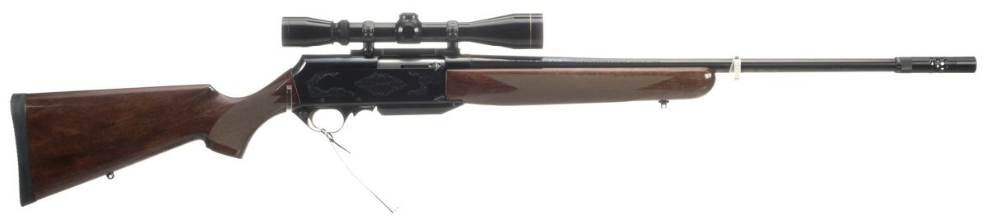
A Browning BAR semiautomatic hunting rifle. Rock Island Auction Company
The most modern type of rifle action available outside of the military is the semi-automatic. Semi-automatics are also called self-loading rifles, and they do just that. Most use a box magazine to hold anywhere from five to 100 rounds of ammunition. To operate one, the shooter simply pulls the trigger, and the action does the rest, ejecting a spent casing and loading a fresh cartridge into the chamber. Semi-auto rifles should not be confused with fully-automatic rifles. With semi-autos, the trigger needs to be pulled for each shot. With fully-automatic rifles, as long as the trigger is held down, the rifle will keep firing.
Most semi-automatic rifles work a lot like an internal combustion engine. Some of the exploding gasses from a fired cartridge are briefly diverted from the rifle barrel and used to power a piston that cycles the bolt. The bolt returns to battery with a fresh cartridge with the help of a large spring. The entire operation happens in a split second.
Semi-autos come in all shapes and sizes, but in general, they are heavier than other types of rifles chambered for the same cartridges. Most are used for hunting, law enforcement, competition shooting, and personal protection. But while semi-autos might seem to give a shooter a drastic advantage compared to other rifle actions, they have their own drawbacks. Like all mechanical things, they can jam and break. The extra weight is often an issue, too, especially for hunters. And though some semi-autos can be extremely accurate, most semi-auto hunting rifles aren’t when compared to a bolt-action. Semi-automatics do tend to have less recoil than other types of rifles, though, because some of the recoil impulse is absorbed by the action itself.
Muzzleloading Rifles
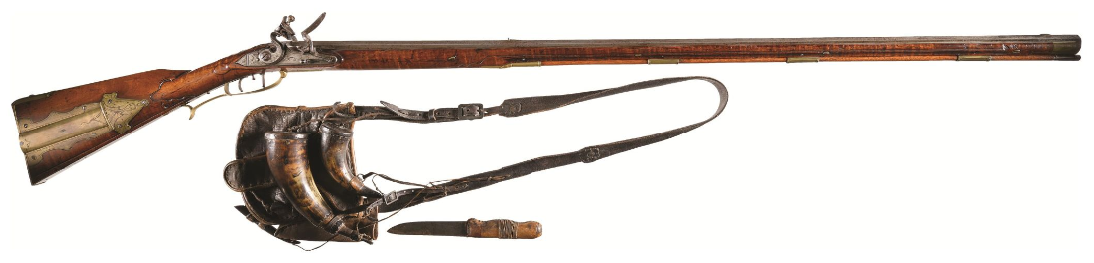
A flintlock muzzleloading Kentucky rifle. Rock Island Auction Company
Out of all the types of rifles described above, muzzleloading rifles are the most antiquated. Muzzle-loaders do not fire cartridge ammunition. They are loaded via the muzzle end of the firearm with loose powder and a bullet or round ball. The powder and bullet get pushed down the barrel with a ramrod to be fired by either a flint striking a metal plate or a percussion cap. To take another shot, the shooter must repeat the process all over again.
Muzzleloaders are still around today for two reasons. One, some people really enjoy shooting them. These people are usually history buffs and have a great time using the tools our ancestors used. The other reason is due to hunting regulations. Most states offer separate seasons for big game that are only open to muzzleloading rifles. To answer this, many companies make modern in-line muzzleloaders that are easier to load and operate than antique firearms. Manufacturers like Taylor’s and Co. and Pedersoli also make modern reproductions of antique muzzleloaders. There is a learning curve when dealing with a muzzleloader, and it’s important to either read up on them or learn from someone who already knows what they’re doing before purchasing one.
Types of Rifles By Ammunition
Along with the types of actions above, rifles can also be classified by the type of ammunition they use. In a gunshop, you’ll often hear about rimfires vs centerfires, etc. With the exception of muzzleloaders, rifles that fire the types of ammunition listed below can be found in all of the action types above. For example, you can have a semi-automatic rimfire or a falling block centerfire.
Rimfire Rifles
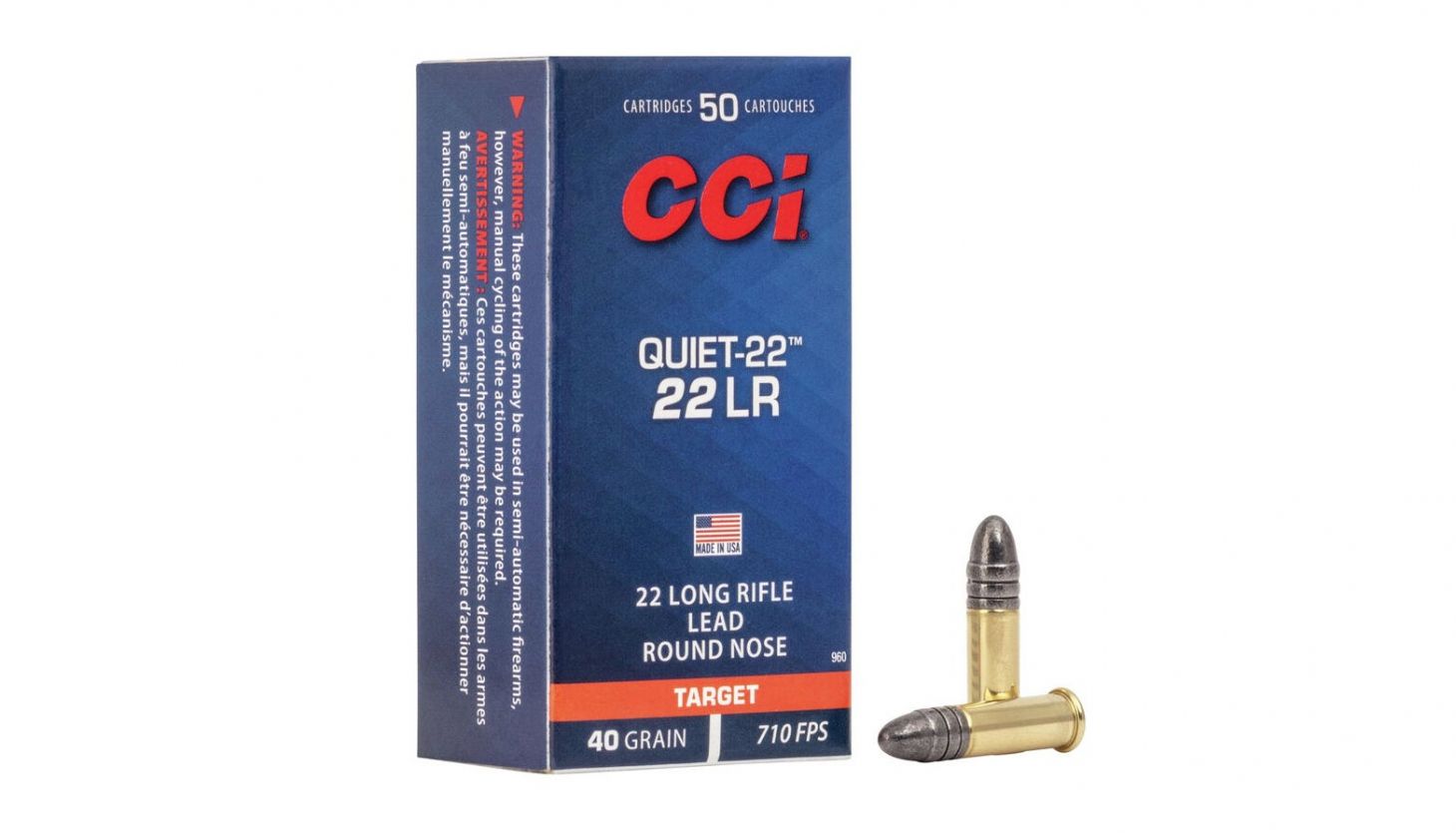
Rimfire ammunition and rimfire rifles are used most for small-game hunting and target practice. CCI
Rimfire rifles fire rimfire ammunition. Some examples are 22LR, 22 Short, 22 Long, and 17 HMR. They are called rimfires because the rim of the case is primed with a compound that ignites the powder charge and fires the bullet when struck. Pulling the trigger on a rimfire will send the firing pin into the rim of the cartridge and fire the bullet.
Rimfires are typically used for small game and varmints. They fire small bullets at relatively low pressure and produce very little recoil. Rimfires are great for young shooters and first-timers. They are also good for training. Rimfire ammunition is cheap, and so are the rifles when compared to centerfires.
Centerfire Rifles
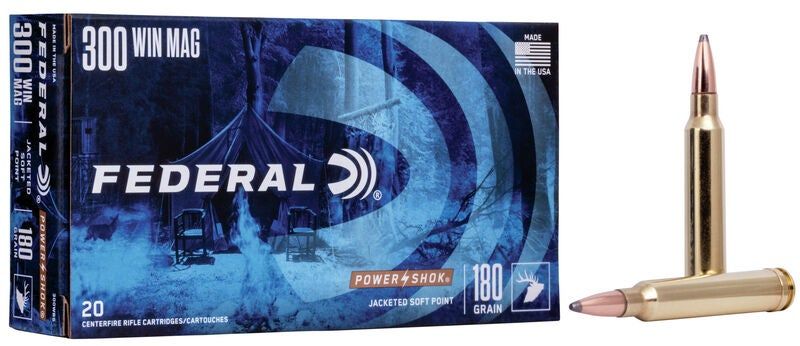
This centerfire 300 Win Mag ammo is used for hunting big game. Federal Ammunition
Centerfires cover the majority of rifles sold in the world today. If you pick up a centerfire rifle cartridge and look at the back of it, you’ll see a round piece of metal that looks like a button. That is the primer, and as the name suggests, it is located in the center of the case head. Centerfires use a firing pin to hit the primer and ignite the powder charge of a cartridge. Centerfire cartridges and rifles are very strong and can withstand extremely high pressures. This is why centerfire rifles are used more for hunting big game and shooting at longer ranges than rimfires.
Types of Rifles: Other Considerations
Rifles can also be classified by their intended purpose or size. For example, shorter rifles are often called carbines
. You’ll also come across types of rifles like varmint rifle
, stalking rifles, or precision rifles. Don’t let these names confuse you. With the exception of dangerous game rifles, a lot of it is just marketing. After looking at the action and the type of ammunition the rifle fires, you want to simple judge how its attributes fit your needs.
If you cover a lot of ground with your rifle, you’ll want something lightweight and easy to handle. If you hunt a lot of open country, you might want a rifle that feels steady enough to take a long shot. Hunters who carry rifles in tight cover or hunt out of a box blind generally like shorter rifles than those who don’t. Whatever you plan to do, talk to a good gun dealer, and they’ll probably have what you’re looking for.
Types of Rifles: Frequently Asked Questions
What is the most common rifle in the world?
Many say that it’s the AK-47 and its many variants. Soviet Bloc countries churned them out in the millions. But that title could also go to the Mauser 98. Both were made in numbers that hover around 100 million. The Mauser and the AK pattern rifles were made for battle; however, many Mauser-action rifles were also made or converted for hunting. Today, Mauser still makes the K98 hunting rifle, and other manufacturers make some version of it.
What’s the difference between a shotgun and a rifle?
Shotguns have smooth bores and typically fire pellets called shot or solid lead slugs. Rifle-barrel bores have grooves cut in a spiral pattern called rifling, and they fire bullets or round balls. There are some shotguns made with rifled barrels, but technically, they are rifles.
Are rifles better than shotguns?
It depends on what you’re doing with your rifle or shotgun. Shotguns are better at shooting small targets that are moving fast. They are best suited for bird hunting and small-game hunting. Rifles are better at firing precise shots at long distances. They are better for big game hunting and some small game hunting. In a pinch, shotguns can also be used to hunt big game, so they are more versatile than rifles.

All new! 1871 Club Field Trips