Close Menu
  • Stories
    • Hunting
      • Big Game Hunting
        • Elk Hunting
        • Bear Hunting
      • Deer Hunting
        • Whitetail Hunting
        • Mule Deer Hunting
      • Predator Hunting
        • Bobcat Hunting
      • Small Game Hunting
      • Bird Hunting
      • Dogs
        • Hunting Dogs
        • Canine Gear & Accessories
      • Turkey Hunting
      • Waterfowl Hunting
        • Duck Hunting
    • Fishing
      • Freshwater Fishing
        • Bass Fishing
        • Catfishing
        • Trout Fishing
        • Pike & Muskie Fishing
      • Saltwater Fishing
        • Striped Bass Fishing
      • Ice Fishing
      • Fly Fishing
    • Guns
      • Ammo
        • Handguns Ammo
        • Shotguns Ammo
        • Rifles Ammo
      • Rifles
      • Handguns
      • Shotguns
    • Survival
      • Survival Food
      • Wilderness Survival
      • All Survival
    • Conservation
      • Hunting Conservation
      • Fishing Conservation
      • Public Lands & Waters
      • Wildlife Conservation
    • Cooking
      • Recipes
  • Outdoor Gear
    • Hunting
      • Big Game Hunting
      • Bird Hunting
      • Bow Hunting
        • Crossbows
        • Compound Bows
      • Boots
      • Hunting Calls & Decoys
      • Knives
      • Hunting Apparel & Accessories
      • Optics
        • Binoculars
        • Scopes and Sights
        • Rangefinders
      • Trail Cameras
      • Waterfowl Hunting
      • Turkey Hunting
    • Fishing
      • Baits, Lures, and Flies
      • Fishing Reels
      • Fishing Rods
      • Fly Fishing
    • Guns
      • Ammo
        • Shotgun Ammo
        • Rifle Ammo
        • Handgun Ammo
      • Handguns
      • Shotguns
      • Rifles
    • Camping & Outdoor Rec
      • Auto & Truck
      • Camping Gear
      • Hiking & Backpacking
    • Gift Guides
    • Cooking
      • Cooking Gear
  • Shop
    • Shop Field & Stream
      • F&S Shop
      • Hunting
      • Fishing
      • Camping & Hiking
      • Clothing
      • Footwear
      • Gear
      • Outdoor Living
      • Member Merch
      • Journals
      • Gift Cards
      • Membership Gift Card
      • Merchandise Gift Card
    • Shop Field & Stream at:
      • Tractor Supply Co.
      • Amazon
      • Moultrie
      • Yuengling
      • Old Wood Signs
      • Best Home Furnishings
      • Sugarlands Distilling Co.
      • Gokey
      • WearSPF
  • F&S TV
  • Membership
    • Subscription Plans
    • Free Membership
    • Member Login / Create an Account
    • Gift a Subscription
      • Premium Membership
      • Print Membership
Search
Facebook X (Twitter) Instagram
Join the 1871 Club to access two limited-edition Father's Day gifts · LEARN MORE
Field & Stream
  • Stories
    • Hunting
      • Big Game Hunting
        • Elk Hunting
        • Bear Hunting
      • Deer Hunting
        • Whitetail Hunting
        • Mule Deer Hunting
      • Predator Hunting
        • Bobcat Hunting
      • Small Game Hunting
      • Bird Hunting
      • Dogs
        • Hunting Dogs
        • Canine Gear & Accessories
      • Turkey Hunting
      • Waterfowl Hunting
        • Duck Hunting
    • Fishing
      • Freshwater Fishing
        • Bass Fishing
        • Catfishing
        • Trout Fishing
        • Pike & Muskie Fishing
      • Saltwater Fishing
        • Striped Bass Fishing
      • Ice Fishing
      • Fly Fishing
    • Guns
      • Ammo
        • Handguns Ammo
        • Shotguns Ammo
        • Rifles Ammo
      • Rifles
      • Handguns
      • Shotguns
    • Survival
      • Survival Food
      • Wilderness Survival
      • All Survival
    • Conservation
      • Hunting Conservation
      • Fishing Conservation
      • Public Lands & Waters
      • Wildlife Conservation
    • Cooking
      • Recipes
  • Outdoor Gear
    • Hunting
      • Big Game Hunting
      • Bird Hunting
      • Bow Hunting
        • Crossbows
        • Compound Bows
      • Boots
      • Hunting Calls & Decoys
      • Knives
      • Hunting Apparel & Accessories
      • Optics
        • Binoculars
        • Scopes and Sights
        • Rangefinders
      • Trail Cameras
      • Waterfowl Hunting
      • Turkey Hunting
    • Fishing
      • Baits, Lures, and Flies
      • Fishing Reels
      • Fishing Rods
      • Fly Fishing
    • Guns
      • Ammo
        • Shotgun Ammo
        • Rifle Ammo
        • Handgun Ammo
      • Handguns
      • Shotguns
      • Rifles
    • Camping & Outdoor Rec
      • Auto & Truck
      • Camping Gear
      • Hiking & Backpacking
    • Gift Guides
    • Cooking
      • Cooking Gear
  • Shop
    • Shop Field & Stream
      • F&S Shop
      • Hunting
      • Fishing
      • Camping & Hiking
      • Clothing
      • Footwear
      • Gear
      • Outdoor Living
      • Member Merch
      • Journals
      • Gift Cards
      • Membership Gift Card
      • Merchandise Gift Card
    • Shop Field & Stream at:
      • Tractor Supply Co.
      • Amazon
      • Moultrie
      • Yuengling
      • Old Wood Signs
      • Best Home Furnishings
      • Sugarlands Distilling Co.
      • Gokey
      • WearSPF
  • F&S TV
  • Membership
    • Subscription Plans
    • Free Membership
    • Member Login / Create an Account
    • Gift a Subscription
      • Premium Membership
      • Print Membership
JOIN THE 1871 CLUB
Join the 1871 Club Today - Spring Journal Ships in April
Field & Stream
Home / Stories / Hunting / Waterfowl Hunting / How to Call Ducks: A Beginner’s Guide
Waterfowl Hunting

How to Call Ducks: A Beginner’s Guide

Will BrantleyBy Will BrantleyJanuary 23, 2026

FIELD & STREAM NEWSLETTERS

ALL F&S NEWSLETTERS

We may earn revenue from the products available on this page and participate in affiliate programs. Learn more ›

If you’re reading this, you probably suck at calling ducks. Don’t feel insulted, though, because most people suck at calling ducks. Nash Buckingham once wrote, “A duck call in the hands of a novice is one of the greatest conservation tools known to man.” Maybe that’s not entirely true, but what is true is that you could shoot a lifetime’s worth of ducks without ever learning how to call ducks, or even owning a duck call.

So why learn how to call ducks at all? Well, good calling absolutely does work under certain circumstances, and because of that, it will result in more ducks in the bag for you. It’s also an enjoyable part of the waterfowling experience. So, here’s everything you need to know to learn how to call ducks—and ultimately become a better duck hunter.

How to Call Ducks: First, Sound Like a Hen Mallard
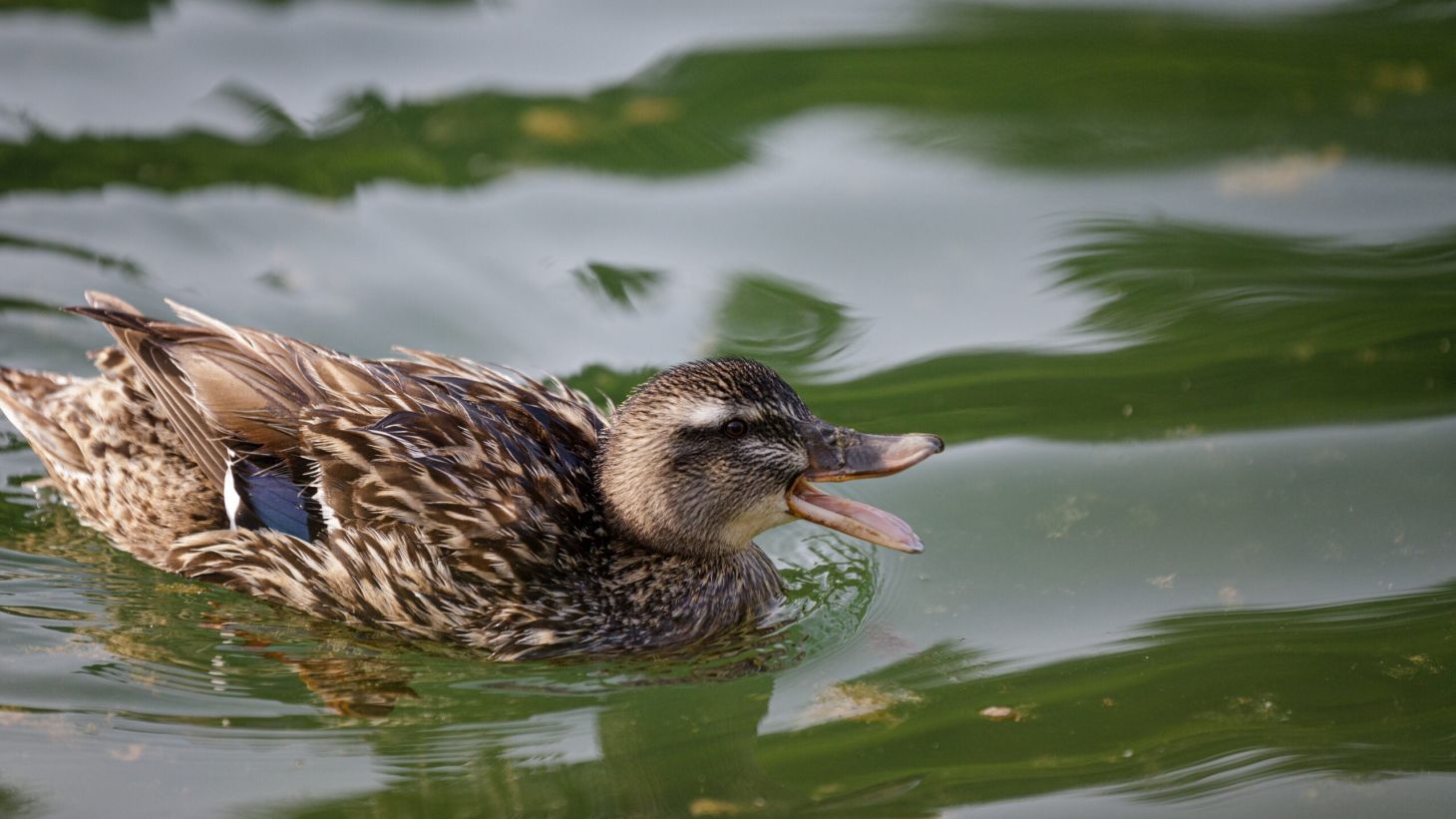
A hen mallard duck quacks as she swims along the surface of the water.
More often than not, when calling to ducks, you want to imitate the sounds of a hen mallard. (Photo/Getty Images)

There are some 30 huntable duck species in North America, but most duck hunters rely exclusively on the sounds of the hen mallard when they’re duck calling. There are several reasons for that. Mallards are far and away the most common and most hunted duck species, and they’re one of the most responsive to calling. Mallard hens are also loud and vocal, and since they frequently mix with other dabbling duck species, their calls sound natural to all of them. Also, it’s just tradition. Though live ducks actually do far more whistling and peeping than quacking, folks still look at you weird if you do too much whistling in the blind, as if you’re a grown man, eating Skittles or something. So, the standard-issue duck call is designed to imitate the sounds of a Suzie, which is the universal nickname for a hen mallard. So, henceforth, when I generically say “duck call,” I’m referring to a hen mallard call.

Basic Duck Calls
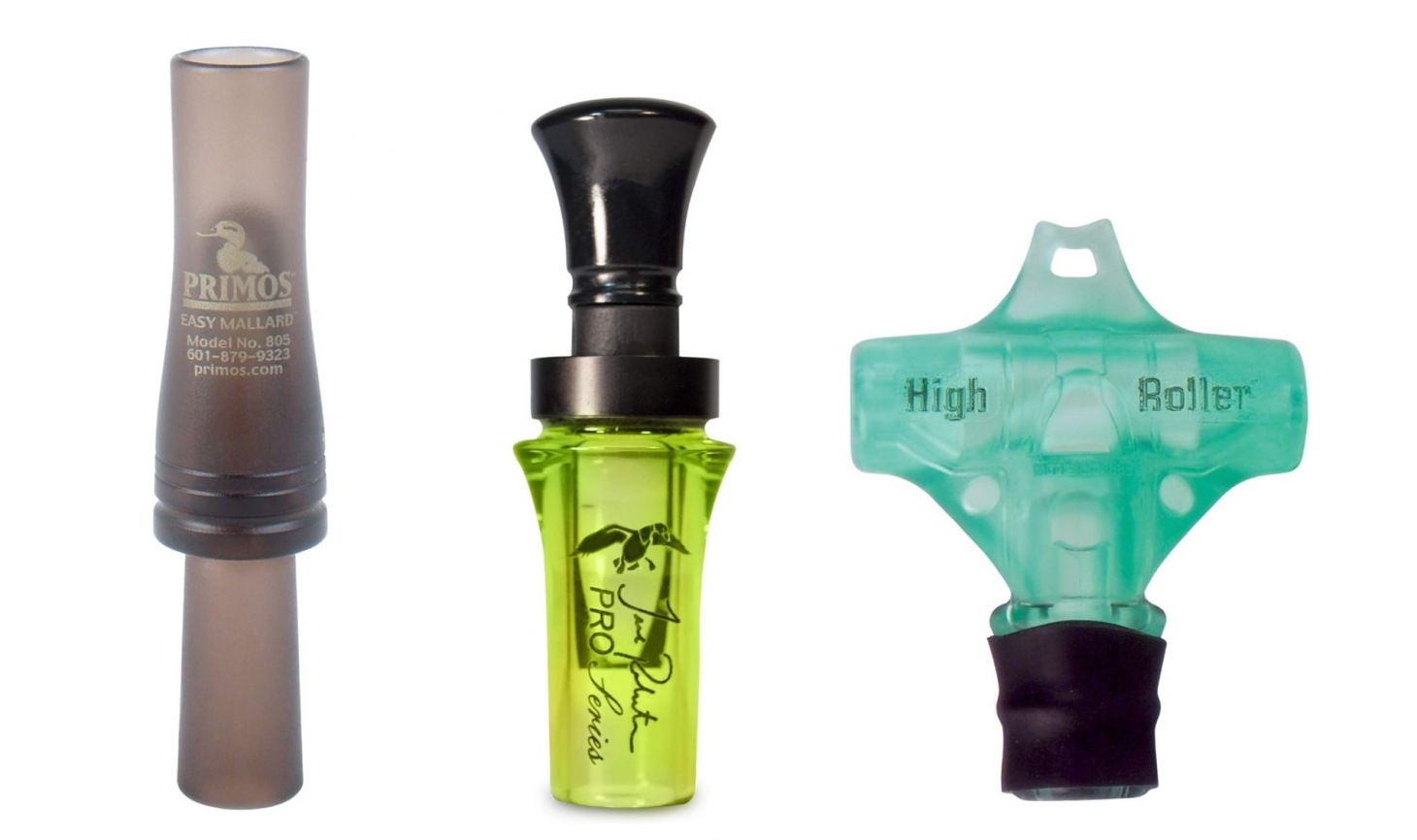
Three types of ducks calls—a single reed, double reed, and whistle—on a white background
Three types of duck calls from left to right: a polycarbonate single-reed, an acrylic double-reed, and a duck whistle.

Duck calls vary slightly in design, materials, and price, but they all share the same basic components, including a barrel, end piece, and reeds. J-frame calls are easier to disassemble, clean, and reassemble without affecting the sound. Louisiana-style calls provide wider tuning versatility.

Most calls have either one reed or two; single reeds tend to be higher-pitched and capable of more volume, and so they’re generally favored by open-water and field hunters. Double-reed calls are often softer in pitch and easier to blow with less air, making them a favorite for close quarters.

Duck calls are generally made of acrylic, polycarbonate, or wood. Acrylic calls are the most expensive, but they sound great and are easy to maintain. They provide loud, crisp sounds in the hands of a good caller. Polycarbonate calls are essentially plastic and can provide volume comparable to acrylic calls. Some say they’re not quite as realistic; I say you and the ducks won’t hear the difference. An acrylic call is better looking, but for most hunters, it won’t provide any better service than a polycarbonate one. Wooden calls are better looking than both, and they tend to provide a softer sound that’s ideal for close-in calling. But because moisture can cause the wood to swell, and because there’s a lot of moisture in duck hunting, wooden calls do require more maintenance.

A good caller can make any duck call sound good, but the best, most expensive call will not help a terrible caller. Learn the basics on something inexpensive, and then, if you want to invest in a high-quality call, try several of them out to see which best suits you.

How to Call Ducks: The Four Key Sounds to Learn

Mallards have a wide vocabulary, but there are only a handful of calls a hunter needs to master, including the basic quack, the greeting call, the comeback call, and the chuckle (variations of this last sound can replicate both excited ducks flying in the air as well as ducks feeding on the water). It is a pure waste of words for me to attempt to describe what each of these calls sounds like when there are good YouTube videos. So here are some YouTube videos.

How to Quack

See How to Make the Quackon YouTube

How to Make the Greeting and Comeback Call

See The Greeting and Comeback Call on YouTube

How to Make a Chuckle

See The Feeding Chuckle on YouTube

New callers usually struggle with two things that make their sounds sub-par: improper air pressure and the wrong cadence. Veteran callers will advise newbies to “blow from their chest.” What you need to get the reeds of a duck call to “break” into the proper rasp is some deep air pressure huffed from the diaphragm. It’s almost like retching or hiccupping, but not as unpleasant. Finding that air pressure isn’t difficult, but it does require practice. Different calls require varying amounts of air pressure, too, to get just the right ducky sound. You’ll know it when you hear it.

The right cadence is even more important. Hens make various calls with varying degrees of excitement, but the notes will be crisp and consistent. Slurred-together quacking is the No. 1 dead giveaway of a terrible duck caller. You don’t want everyone else in the marsh to hear that. 

How to Call Ducks: Don’t Forget Whistles and Grunts

Remember those 29 or so other species of ducks I mentioned? They all make sounds, and you should make some of them, too, despite how your buddies might look at you in the blind. Blue-winged teal are especially vocal ducks, but gadwalls, pintails, wigeon, and wood ducks can all be duped with the right sounds. Drake mallards make a distinct call that’s a blend of a nasally quack and whistle, and it is absolutely unmistakable. Even divers, like canvasbacks and bluebills, make a soft growling sound that can be replicated with a regular call and does seem to get their attention at times.

The hens of many dabbling species make shrill quacks, while drakes make softer peeps and whistles. You can replicate sounds like blue-winged teal hen quacks and drake gadwall gnack-gnacks on your regular duck call, and use a duck whistle to make sounds like drake green-winged teal peeps, pintail and wigeon whistles, and mallard drake gweebs. Companies like Haydel’s Game Calls also make a variety of “other species” calls, including diver calls and wood duck whistles. 

These subtle sounds are more than just support for quacking. Big flocks of real ducks make a lot of noise, and having a spread of decoys out and not making any whistles actually sounds fairly unnatural. Besides that, whistles can be heard from a surprisingly long way, and they’re frequently more effective at turning flocks of “other” ducks than are hen mallard calls. 

How to Read Ducks While Calling
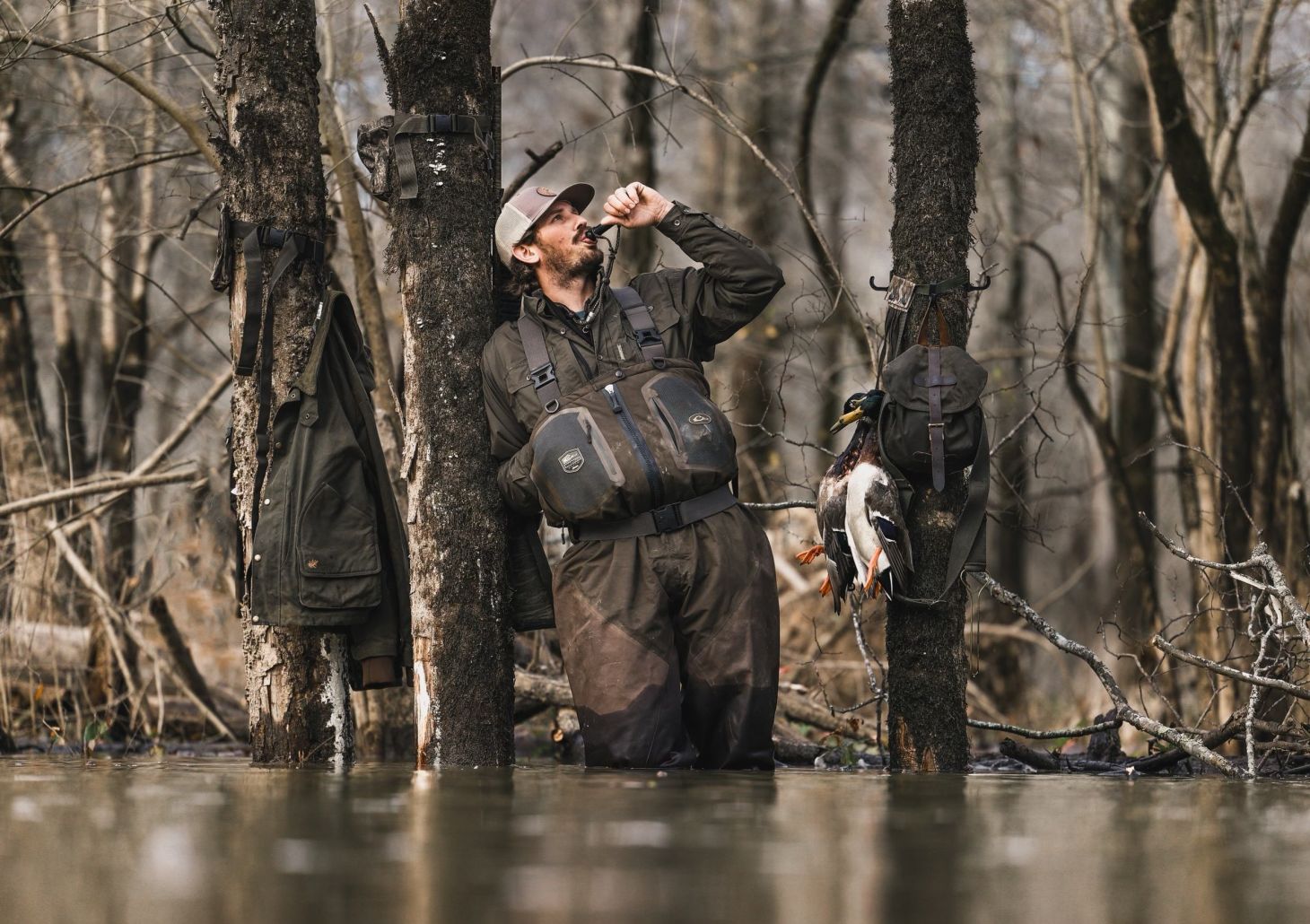
A duck hunter standing in flooded timber calls to a flock on incoming mallards.
One of the biggest keys to successful calling is simply knowing when to and not to call. (Photo/Matt Harrison, courtesy of Ducks Unlimited)

The most important part of duck calling is not contest-stage calling perfection. Once you can make basic mallard sounds, supplemented by a few whistles and grunts, the key is watching how ducks react to your sounds and adjusting accordingly. Veteran waterfowlers call it “reading ducks,” and the hunter who makes a passable sound at the perfect time will call in more birds than the one who hits a perfect note at the wrong time.

But unlike turkeys, which give unmistakable cues to your calling like gobbling and strutting, ducks respond with cues that are both more subtle and difficult to see since, you know, they’re flying in the sky. The most basic advice is to only call at wing-tips and tails; that is, don’t call at ducks that are flying toward you. Shut up and let them come, and save the calling for when they’re circling or flying away.

Yet, there are times when ducks that are looking right at you seem to prefer aggressive calling. I remember one morning in North Dakota years ago when we were turning distant flocks with urgent pintail whistles, and they wanted to hear those whistles until they were fully committed to the decoys and within gun range. On that same trip, but on a different day, we shot greenheads at tennis-racket distance over a pothole. Those ducks didn’t want to hear a call at all.

Duck moods change by the day, and the best callers “read the room” and adapt quickly. Let the first flock or two work your spread on their own, and if you get to shoot them without calling, take a hint. But if a few flocks pass over without so much as a look, hit them with a greeting call. If they circle but don’t commit, add in some quacks and feeding chatter. If a hen mallard gets excited and answers you in the air, pour it on thick and get her talking.

Focus on talking to the ducks, not on showing your buddies how well you can call, and you will have mastered the most difficult part of how to call ducks.

Get Better By Listening to Live Birds

A live hen mallard answering your calls is all the affirmation you need that your calls sound good. But that doesn’t happen on every hunt. New callers, and even experienced callers who are out of practice in the off-season, can always benefit by listening to live ducks. Wildlife refuges all over the country have observation areas where hunting is off limits but where you can listen to relaxed ducks doing their thing. Even the semi-tame mallards at the city park can teach you a lot (plus you can confuse the city folk doing yoga by whipping out your duck call and practicing). 

  • See a video of live ducks making quacks and greeting calls.

YouTube is also an outstanding resource, not only for bookmarking videos on how to reassemble an original Ruger Mark II or outboard motor starters, but also for listening to recordings of live critters, including ducks. So, if you really want to learn how to call ducks and get really good at it. Sit and listen to those videos, then practice some calling. Record yourself, play it back, and adjust your air pressure and cadence accordingly. So long as nobody’s watching, you can snack on Skittles, too.

content_waterfowl-hunting,content_hunting,content_stories
Field & Stream 1871 Club

THE 1871 CLUB

The best outdoor stories the way they were meant to be read: in print. 160+ pages. Coffee table-quality. 2 issues per year.

Club Magazines and Hat
JOIN THE CLUB

Recommended Products

Will Brantley

    Will Brantley sold his first story (about catfish noodling) to Field & Stream in 2006, and has been the brand’s hunting editor since 2015. He was even an F&S gainful employee for a few years, but realized team meetings in November and HR departments weren’t for him. Highlights Education Brantley graduated high school from Dawson Springs Independent, and college from Murray State University. He has a Bachelor of Science degree in print journalism, with a minor in creative writing. Experience Brantley has been an outdoor writer his entire adult life, starting with an internship at Outdoor Life and columns in The Murray State News and The Dawson Springs Progress when he was 19 years old. Prior to that, he was a greenskeeper on a golf course (though he hates golf). Brantley grew up in western Kentucky, and has a lifelong interest in the hunting and fishing in that area. He especially loves spring turkey hunting and bowhunting for whitetails, but he’s also an serious squirrel hunter, waterfowler, fur trapper, and angler. He’s traveled extensively, hunting and fishing across the United States and Canada, as well as in Argentina, New Zealand, and Mexico. In the off-season, he’s into habitat management, including food plots, prescribed fires, and forest improvement. He and his wife, Michelle, live in Kentucky with their son, Anse (yes, named after Devil Anse Hatfield), where they run a guide service on the side specializing in archery whitetail and squirrel hunts. Brantley is an NDA-certified Level II Deer Steward, and was recognized as the 2015 QDMA Signpost Communicator of the Year. He’s made appearances on multiple outdoor television shows including Mojo TV, Yamaha Whitetail Diaries, and Kentucky Afield, and been published in numerous outdoor magazines including Petersen’s Hunting, Wildfowl, American Hunter, Ducks Unlimited, Outdoor Life, and Fur-Fish-Game. F&S Lightning Round Favorite Place to Fish: Kentucky Lake,Favorite Critter to Hunt: Eastern wild turkey,Bucket List Adventure: September archery elk in Arizona or New Mexico,Most Prized Piece of Gear: T3 Bolt Bag (a turkey-hunting satchel),All-Time Favorite F&S Story: Oh, ****! by David E. Petzal Notable Work

    Related Posts

    10.09.2025 Field & Steam Hunt - Bighorn-4

    Waterfowl Hunting Montana’s Legendary Bighorn Valley

    March 11, 2026

    6 Tips for Hunting September Geese

    March 11, 2026

    Bonus Geese: How to Hunt February Honkers

    January 23, 2026

    Band Stories: Hunter Kills Consecutive Bands

    January 23, 2026
    Leave A Reply Cancel Reply

    1871 CLUB
    Field & Stream 1871 Club

    JOIN THE CLUB

    Spoil your dad with a gift of a Field & Stream Membership, then go the extra mile with our exclusive Father's Day add ons.

    Father's Day Gifts
    JOIN THE CLUB TODAY

    NEWSLETTERS

    NEWSLETTERS

    Weekly recaps of the latest outdoor news, hunting and fishing tips - plus exclusive offers, giveaways and more!

    Field & Stream Newsletter Whitetail 365 The Strike Zone The Strike Zone
    SIGN UP
    F&S PICKS
    Dan Wesson Kodiak handgun on a fencepost in the woods. Handguns

    Dan Wesson Kodiak Handgun Review—Expert Tested

    Whitetail Hunting

    When Do Deer Shed Their Antlers? A Shed Hunter’s Guide

    Outdoor Gear

    The Story Behind the Turtlebox Speaker Everyone’s Talking About

    Weekly recaps of the latest outdoor news, hunting and fishing tips - plus exclusive offers, giveaways and more!

    SIGN UP
    Instagram Facebook-f X-twitter Tiktok Youtube
    Shopping
    • Military & First Responders Discount
    • Shipping
    • Returns
    Company
    • About Us
    • FAQs
    • Contact Us
    Legal
    • Affiliate Disclosure
    • Privacy Policy
    • Terms of Service
    • F&S Music Fest Refund Info
    • Privacy and cookie settings
    Partners
    • Nashville Race Weekend Sweepstakes
    • Amazon
    • Best Home Furnishings
    • F&S x Gokey Collection
    • Moultrie
    • Old Wood Signs
    • Sugarlands Distilling Co.
    • Tractor Supply Co.
    • Yuengling
    • WearSPF
    • Whiskey JYPSI
    • Field & Stream Lodge Co.
    Disclaimers

    Articles may contain affiliate links that enable us to share in the revenue of any purchases made.
    Registration on or use of this site constitutes acceptance of our Terms of Service.

    © 2026 Field & Stream All rights reserved.

    • Sitemap

    Type above and press Enter to search. Press Esc to cancel.