
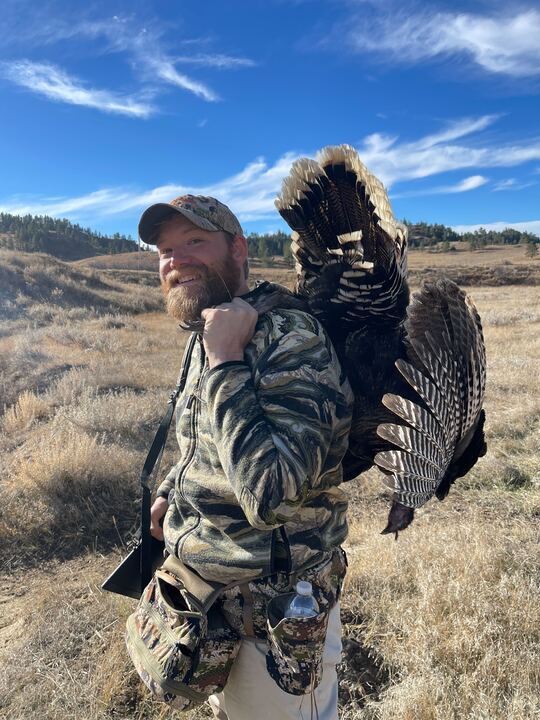
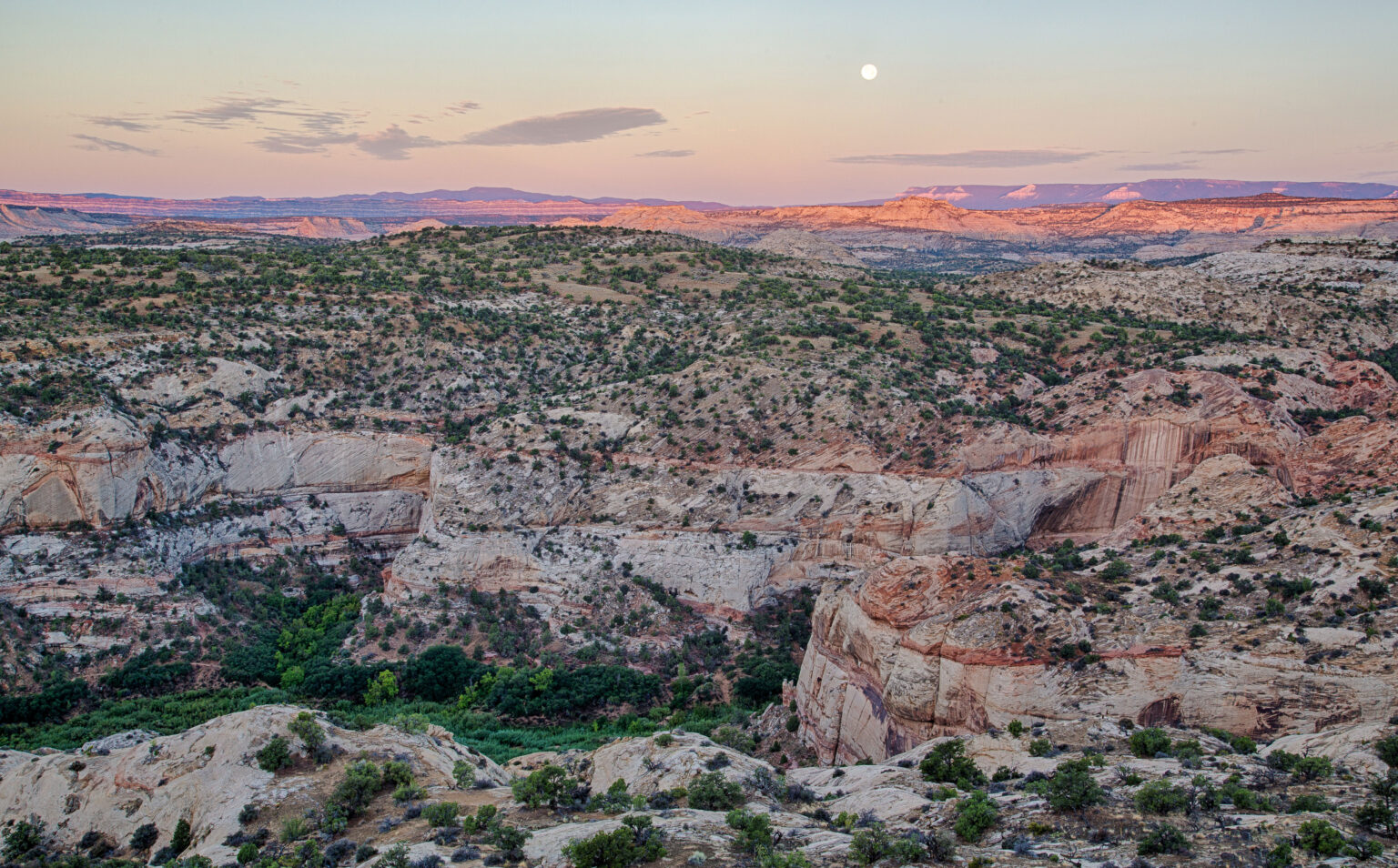
During an Oval Office ceremony on July 13, President Trump signed an Executive Order that could nearly eliminate two National Monuments in southern Utah. The monuments, Grand Staircase Escalante and Bears Ears, protect roughly 3.2 million acres of federally managed public land in the Beehive State from mining, drilling, and commercial-scale timber harvest. Both monuments allow hunting and fishing and are sought-after destinations for public-land hunters and anglers.
Today’s EO comes after repeated, long-running attempts to undo monument protections for Bears Ears and Grand Staircase. Most recently, Utah Senator Mike Lee and Utah House Rep. Celeste Malloy failed to scrap monument protections for Grand Staircase using the controversial Congressional Review Act. Lee and Malloy were also behind highly unpopular attempts to sell off public lands during federal budget negotiations last summer. They were both present at the July 13 signing alongside Utah Governor Spencer Cox and Deputy Interior Secretary Kate MacGregor.
The EO mirrors a similar effort during President Trump’s first term (spearheaded by then Interior Secretary Ryan Zinke) that would have shrunk the boundaries of Bears Ears and Grand Staircase by 85 and 46 percent respectively. That move stalled in federal courts during Trump’s first term before the Biden Administration completely reversed in 2021.
“We’re actually giving more than we did the first time back to the people of Utah,” Trump said during the closed-door Oval Office signing. He then went on to falsely claim that hunting and fishing activities are restricted in the monuments, though the Utah Department of Wildlife Resources states otherwise. According the Salt Lake Tribune, “the two orders collectively cut nearly three million acres out of monument protection.”
What Are National Monuments?
President Theodore Roosevelt created the National Monument system when he signed the Antiquities Act into law in 1906. During his tenure, he designated 18 National Monuments that protected some 1.5 million acres of federal land from industrial development—including 800,000 acres near the Grand Canyon. According to Trout Unlimited (TU), the Federal Land Policy Management Act of 1976 (FLMPA) prohibits presidential administrations from revoking or altering National Monuments. Instead, the act reserves that authority for Congress.
Today, there are 138 National Monuments throughout the U.S. Other National Monuments popular with hunters and anglers for the high-quality fish-and-game habitat they provide include the Missouri River Breaks National Monument in Montana, Browns Canyon National Monument in Colorado, and the Rio Grande-Del Norte and Organ Mountains-Desert Peaks National Monuments—both in New Mexico. While some National Monuments are managed by the National Park Service, and don’t allow hunting, those managed by multi-use agencies like the BLM or the US Forest Service (like Bears Ears and Grand Staircase) are open to hunters and anglers.
In a statement shared with Field & Stream after the signing, TU said the executive order puts other National Monuments at risk of losing protections and threatens key hunting and fishing opportunities. “National monuments are an important part of America’s public land heritage,” the statement reads. “They contain some of our country’s most unique and undeveloped habitats–consequently, they also provide some of the best hunting and fishing opportunities. For this reason, anglers and hunters have strongly supported monument designation for places such as Colorado’s Browns Canyon, New Mexico’s Rio Grande del Norte, Arizona’s Baaj Nwaavjo I’tah Kukveni – Ancestral Footprints of the Grand Canyon, and California’s Sattitla Highlands national monuments.”
Local Impacts
Nate Waggoner is the owner of Escalante Outfitters in the remote town of Escalante, Utah, on the edge of the Grand Staircase Escalante National Monument. In addition to his food and lodging business, Waggoner takes clients into Grand Staircase in pursuit of brown and cutthroat trout. “It’s an incredible fishery,” Wagonner tells F&S. “We fish slot-canyon type spring creeks with slick-rock bottoms for far-southern strains of Colorado cutthroat.”
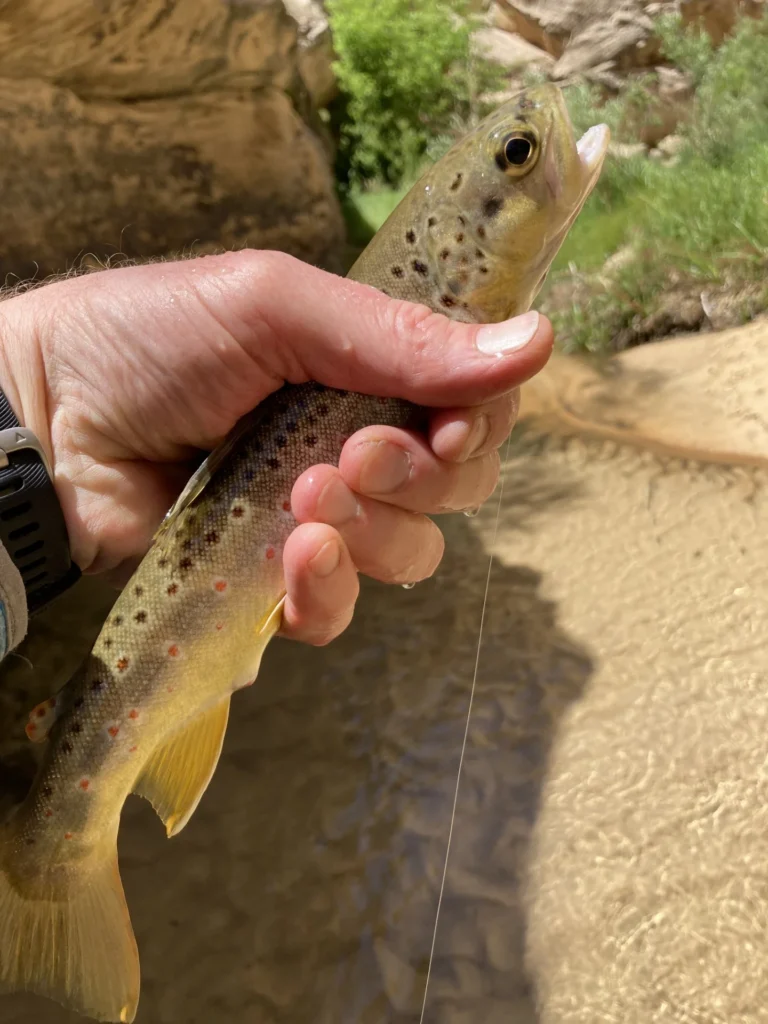
Waggoner is deeply concerned about attempts to scrap the area’s hard-won National Monument designation. The entire monument is open to hunting and fishing, he says, and 90 percent of it is open to public grazing. The monument designation does set boundaries around cattle grazing near stream banks, and it strictly prohibits all forms of commercial mineral and energy extraction.
When it comes to hunting, Waggoner says Grand Staircase’s management plan provides crucial habitat protections for elk, mule deer, big horn sheep, and pronghorn antelope. “There is a critical migration corridor for mule deer running through the monument,” he adds. “It’s used by the Paunsaugent herd which is one of the best mule deer herds in the West.”

Bears Ears is also known for good hunting for big game, as well as over-the-counter opportunities for wild turkeys. Most notably, it protects coveted units for trophy elk and mule deer inside the Manti-La Salle National Forest. “One of my best elk hunting seasons was in Bears Ears National Monument,” said Steve Kandell, Protection Campaign Center Director for Trout Unlimited. “Hunters and anglers should keep our eyes open. What will be next? Will we lose protections for native and wild rainbow trout and unique backcountry fishing opportunities in California’s San Gabriel Mountains and Sattitla Highlands national monuments? Will the protections for Arizona’s Baaj Nwaavjo l’tah Kukveni – Ancestral Footprints of the Grand Canyon National Monument also be removed? Is the Katahdin Woods and Waters National Monument of Maine and its exceptional brook trout fishing next on the list?”
According to the Salt Lake Tribune, the EO scraps protections on both monuments by a full 90 percent—1.69 million acres of land from Grand Staircase and 1.24 million acres for Bears Ears. It’s not immediately clear how that will play out in federal courts, but multiple groups, including the Southern Utah Wilderness Alliance, are promising lawsuits.

All new! 1871 Club Field Trips




1 Comment
how much of these National Park properties are controlled by Outfitters that are concerned about their businesses impacted by opening the land out to Private Sales