For most walleye presentations, Sufix 832 Advanced Superline is the top braid choice for its sensitivity and castability. For low-visibility situations, Berkley Trilene 100% Fluorocarbon is the go-to leader and main line option. Spiderwire Stealth earns the call for dedicated trolling setups, while Sufix Elite handles monofilament duties where stretch and forgiveness matter.
- Sufix 832 casts farther and lasts longer than most braids, down to 6-pound test for light walleye tackle.
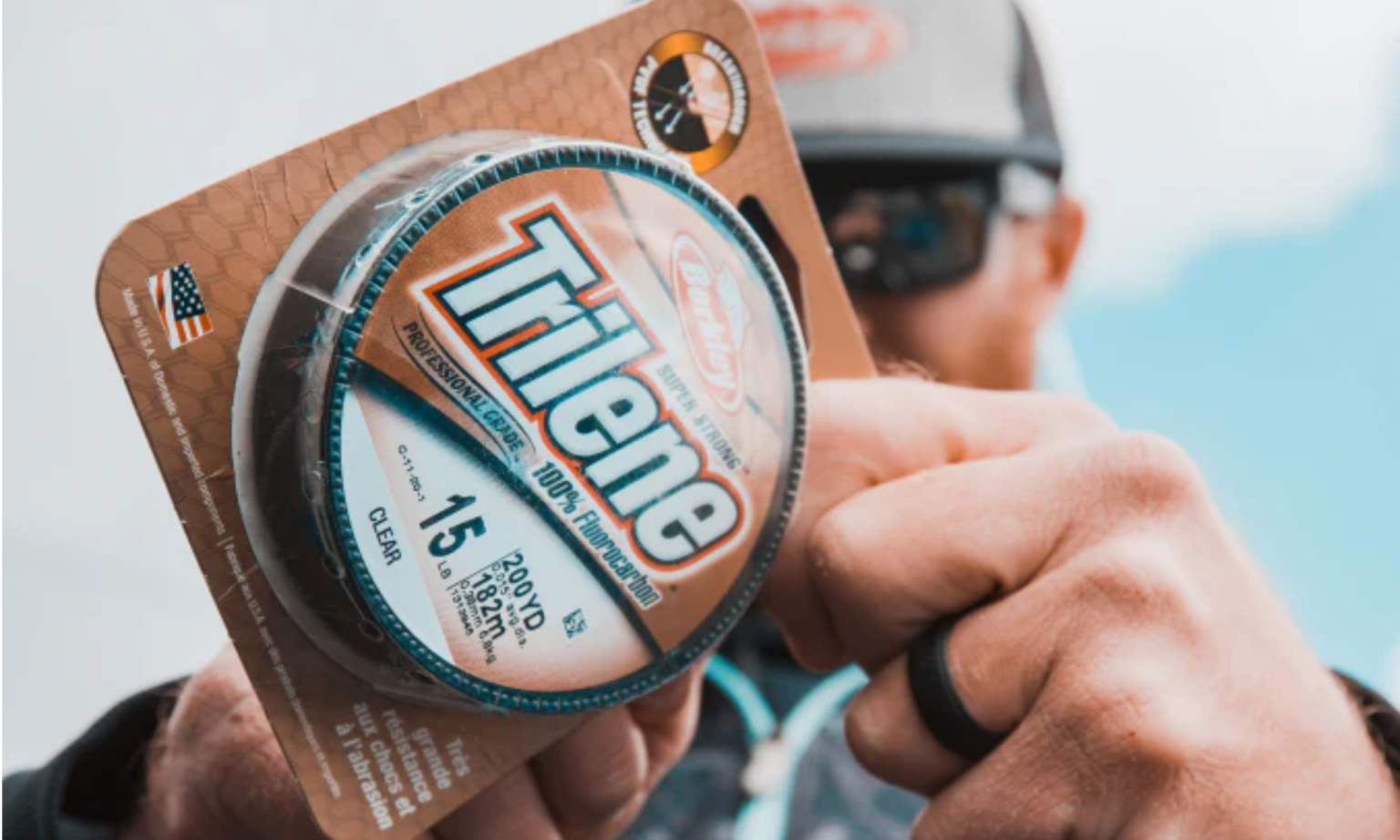
- Berkley Trilene 100% Fluorocarbon offers near-invisibility underwater, making it the strongest choice for clear-water walleye.
- Spiderwire Stealth is purpose-built for trolling setups where line diameter and noise reduction matter most.
- Sufix 832 braid has low abrasion resistance — a real liability when fishing rocky structure or heavy vegetation.
- Sufix Elite monofilament fills the gap for anglers who need line stretch and shock absorption on hook sets.
We may earn revenue from the products available on this page and participate in affiliate programs. Learn more
There’s no denying the right fishing line is a critical component of your fishing equipment. But all too often, it can also be the most neglected. Walleye anglers will spend hours trying to decide which lures are best, or which rods and reels are their favorite, yet will give almost no thought to what is the best fishing line for their specific style. This is compounded by a large number of options across at least three types of line, which can make choosing just one type and pound-test overwhelming. Below, we break down the most common options to help you pick the best fishing line for walleye in each category.
- Best Braid: Sufix 832 Advanced Superline
- Best Monofilament: Sufix Elite
- Best Fluorocarbon: Berkley Trilene 100% Fluorocarbon
- Best For Trolling: Spiderwire Stealth
Best Braid: Sufix 832 Advanced Superline
best braid
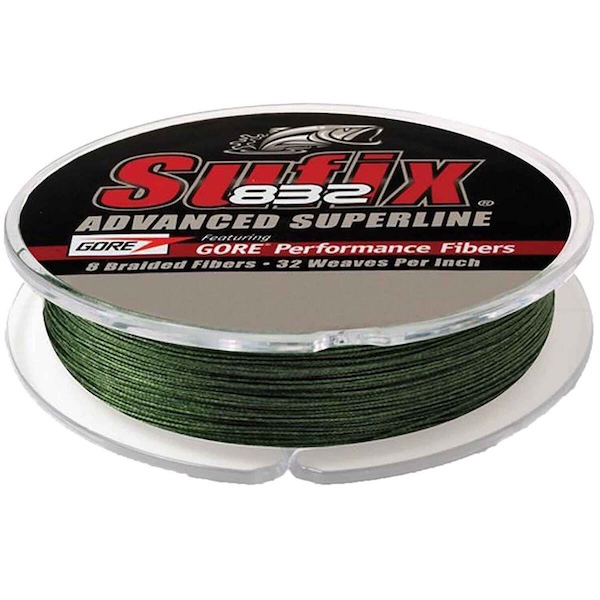
Sufix 832 Advanced Superline
Pros
- Excellent quality and consistency of build
- Long-casting and smooth handling
- Durable, small diameter braid, that can last for years under normal use
- Available in a wide range of breaking strains (6-130)
Cons
- Not as tough as some other braids
Specs
- Construction: 8-strand Dyneema and GORE braid
- Pound Test: 6-130
- Colors: Low-vis green, hi-vis yellow, neon lime, ghost, coastal camo
I’m a big fan of braid, for a whole host of species and techniques. I’ve used a lot of different braided fishing lines, but Sufix 832 has become my hands-down favorite. First and foremost, 832 is very consistent off the spool. I’ve loaded up thousands of yards of it on my reels and have yet to experience any weak points or variability in diameter. I also find that 832 is a durable line that doesn’t suffer from “fuzziness” or falling apart over time. For most fishermen, it’ll last year’s even with regular weekly use. It casts extremely far—great for shore-bound fishermen—and the very thin diameter cuts through the water well. This water-cutting ability makes it just as good of an option for trolling and jigging as casting, especially if you’re looking for maximum depth. The sensitivity is outstanding, but this is typical for most braided lines. The price of 832 is comparable to most other high-level braids; if anything it’s actually on the more affordable side. Further, I like that 832 is available all the way down to 6-pound test, which makes it a great option for light tackle walleye applications. You can cast the tiniest lures or bait on Sufix 832 6-pound braid.
Sufix 832 does have some downsides. First, it has low abrasion resistance, as most braids do. But even compared to other braids, it is very smooth and thin, and this means you won’t be sawing through vegetation or dragging it over rocks without suffering the consequences. If you’re looking for a line that can deal with heavy structure, check out Spiderwire Stealth or Daiwa J-Braid x4. Also, if you are new to braid and want to use it on a baitcaster and are casting a lot, I might suggest a thicker, lower strand braid (like Stealth or J-Braid x4) while learning. They’re less likely to snarl or bird’s nest.
Best Monofilament: Sufix Elite
best monofilament
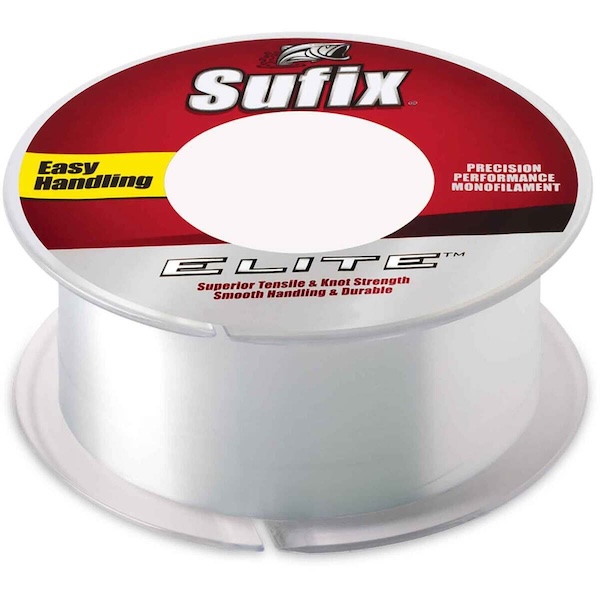
Sufix Elite
Pros
- Extremely consistent build—built with precision
- Limp characteristics with excellent knot strength
- Low memory and superior casting characteristics
- Long life makes it a great value
Cons
- More expensive than many other monofilament lines
Specs
- Construction: Extruded nylon, single material
- Pound Test: 4-30
- Colors: Camo, Clear, Neon Tangerine, Smoke Green
There are lots of really good monofilament lines out there today. However, Sufix continues to be my choice because it is a perfect blend of limpness, stretch, castability, and price. Certainly there are more affordable lines, but that doesn’t tell the whole story. Other monofilaments don’t last nearly as long and simply aren’t as good. What I really appreciate about Elite is how little memory it has. Under my normal use, it continues to come off the spool very limp, without coiling or kinking, for long stretches of use. I generally only cut back and replace it when I get into heavy cover and rub it on structure. It casts great for monofilament, and as a premium line, it’s much thinner than budget spools.
The only thing less impressive about Sufix Elite is its average abrasion resistance. It’s not bad; I’d even go so far to say it’s good. It’s just not the best. And on a whole, this was a tough category to just pick just one line. When it comes to high-quality, premium monofilaments, preference and confidence become important. Frankly, I believe in and trust Sufix Elite, and my confidence in the line is absolute.
However, there are some other great alternatives that anglers I know absolutely love. One of them is Ande Premium, which is world renowned as a phenomenal line with lots of great attributes: abrasion-resistant, low memory, lower stretch, and available in huge bulk spools. While not overly popular in the freshwater fishing world, those I know who fish Ande Premium mono swear by it.
Best Fluorocarbon: Berkley Trilene 100% Fluorocarbon
best fluorocarbon
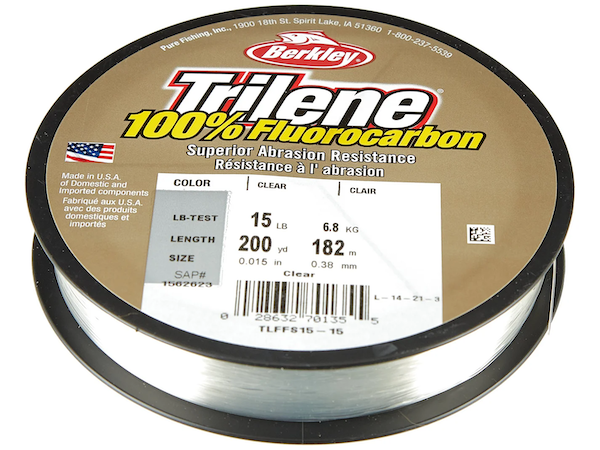
Berkley Trilene 100% Fluorocarbon
Pros
- Excellent quality and consistency of build, while still being budget-priced
- One of the best casting fluorocarbon lines, at any price
- Moderate sink rate works well with trolling or jigging
- Good abrasion resistance
Cons
- Fluorocarbon is more expensive than monofilament, and much thicker and “stretchier” than braid
Specs
- Construction: 100% PVDF (fluorocarbon), single material
- Pound Test: 4-25
- Colors: Clear (all fluorocarbons are clear)
While it’s not as popular as braid or monofilament in walleye fishing, fluorocarbon has the major benefit of sinking while the others float. This can be an asset for trolling or jigging, if you know where and how to apply it. Fluorocarbon gets a bad reputation for being stiff and difficult to work with, but Trilene Professional Grade breaks down these stereotypes. It’s a fantastic casting line when compared to other fluorocarbon lines, and I often forget I’m using fluoro at all. I find it has little memory, and knots are tied easily—not as easily as Sufix Elite mono, but very close. The best part is, it also only costs $11.99-12.99 for 110-yards, putting it in the same price category with a lot of high-end monofilament and budget braided lines. At that price, it gives the walleye angler a chance to try out fluorocarbon without breaking the bank.
There really isn’t anything bad to say about this line in particular, especially at this price. However, if you’re looking for an alternative fluorocarbon suggestion, I am a big Sufix fan. Sufix has a great, relatively basic fluorocarbon line called Invisiline that is a little less user-friendly and more expensive than Trilene Professional Grade, but still far ahead of other budget fluoro lines. If you find that fluorocarbon really works for your walleye fishing style, then you might want to upgrade to Seaguar Tatsu. Tatsu is the most incredible fluorocarbon to ever exist to date, and it is far superior to any other fluoro line out there in every regard. But this will cost you. At $39.99 for 200 yards, it’s one of the most expensive lines in any category currently available.
Best For Trolling: Spiderwire Stealth
best for trolling
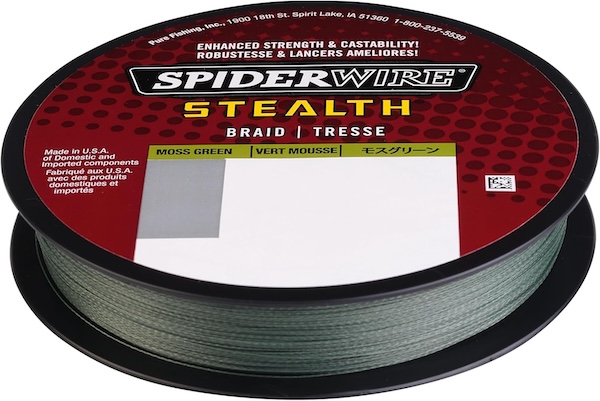
Spiderwire Stealth
Pros
- Super tough, very high abrasion resistance (for a braid)
- Low cost—great for those who want to try out braid or need a lot of line
- Extremely reliable build quality
Cons
- Not the thinnest braid
- Rough texture is tough on the hands
Specs
- Construction: 8-strand Dyneema braid
- Pound Test: 8-250
- Colors: Blue camo, moss green, hi-vis yellow
Spiderwire Stealth is extremely strong and abrasion resistant, making it a great choice for those fishing around demanding structure. While it isn’t the thinnest braid out there by a long shot, this actually plays to its strengths: that extra bit of diameter makes it harder to cut. If you’re someone who trolls high-test lines and aren’t looking for extremely thin lines, Stealth makes an excellent low-cost option. It also is great if you’re filling big conventional spools with a lot of line. It’s just as sensitive and powerful as other braids, and still far thinner than mono or fluoro, making it a good compromise if you want to try out braid for your trolling. Some of the best anglers across freshwater and saltwater angling still stick to Stealth for its tough reliability, despite it being a lower-cost, older-technology line.
The downside to Stealth is its rough texture and thicker diameter, which both mean less casting distance when compared to premium braids, like Sufix 832, which is made with eight strands. The roughness can be hard to get used to if you’re accustomed to modern higher thread-count braids, but if you’re trolling, it becomes a non-issue.
How We Tested Walleye Fishing Line
My choices on fishing line for walleye are based on nearly 30-years of angling experience. I’m meticulous when it comes to choosing my fishing gear, no matter what angling style I’m engaged in. I think that line, hooks, and terminal tackle are often overlooked by many anglers. Frankly, I would argue they are more important than the rod, reel, or even the lures you’re using.
I have carefully weighed the top factors I believe are most important to the diverse needs of walleye anglers all over the country (and the world) to come up with my picks. I evaluated each line here based on the following criteria:
- Stretch and sensitivity: How much stretch does the line have, and is this a positive or a negative for casting, trolling, or jigging for walleye?
- Abrasion resistance and durability: How does the line hold up to being rubbed against rocks and woody structure, or how will it handle highly vegetated areas and being? How long does it last after being subjected to water, sand and dirt, UV rays, and hours of casting?
- Handling and memory: Often overlooked, how limp and soft a line is has a dramatic impact on casting distance and lure action. The harder and stiffer a line is, generally the worse it will perform. However, thicker lines tend to also be more abrasion resistant, so it’s all about trade-offs.
- Quality and craftsmanship: Is the line consistent and reliable from spool to spool?
- Price: Does the line offer good value for its stated purpose? Will it outlast cheaper lines?
What to Look for When Choosing Fishing Line for Walleye
Just like with lures and bait, no single line can do everything the best. The strengths and weaknesses of each line type—which I’ll detail here—will directly impact catch rates, especially if you use the wrong line for the wrong technique.
Technique
To put it simply, your line choice should primarily be based on if you troll, jig, or cast for walleye—or a combination of two or three of these techniques. One line and pound-test will probably not do it all. But it’s not just the technique.
Instead of choosing a line based on marketing or purely on price, you should focus on what technique you use and what attributes are most important to you. For example, if you fish for walleye from the shore of a river in spring, then you’ll want something that casts well with small lures and has good sensitivity, but it doesn’t need to be overly powerful or get very deep. However, if you’re a boat fisherman trolling deep drop-offs around rocky structure, you might want a powerful line that gets down and allows you to feel every hit. If you’re a jigging fisherman, you might want a line that is thin and strong but hard for the fish to detect in the water. Technique is important.
Line Type
To answer this basic and common question, “what line will work best for my style of fishing,” let’s look at the three most-commonly used fishing lines for walleye.
Monofilament: Mono is abrasion-resistant and stretchy. It’s durable but not ideal for trolling, jigging, or anything where you want more line sensitivity. If you do buy mono, get a premium version, as it’ll pay dividends with better casting, more abrasion resistance, and less memory.
Braided: If I had to choose just one line for walleye fishing, it would be braided. Made of high-tech woven fibers, braid is very thin, with zero stretch. It casts incredibly well, and it’s super sensitive, perfect for trolling, jigging, and ultralight tackle. With braid you can feel every subtle tap or hit, and set a hook instantly. The downsides? Braid is the least abrasion-resistant type of line you can get; don’t throw it into serious structure. It also tangles easier than other lines, and it’s expensive.
Fluorocarbon: Fluorocarbon seems to be growing more popular with walleye fisherman, but it is still definitely the least used of the three most common lines. Fluoro has three main benefits. First and most important, it sinks, and it makes a substantial difference in how deep a jig, lure or bait can get at the same speed of troll or retrieve. Second, fluoro represents a middle ground between mono and braid in terms of stretch and sensitivity. Third, fluoro is nearly invisible underwater, so you’ve got a chance of getting a bite from a pressured population.
Leader
The short answer is yes. Braid has two negatives that make using a leader important. First, it has very little abrasion resistance, because of its design and thin diameter. This means rocks and other hard objects can mean instant breakoffs, and the teeth of a big walleye can snip through braid relatively easily (if using light-line). The second reason to use a leader is braid visibility, which is substantial. This is much less of an issue, but in shallow water or when trying to catch highly-pressured fish, it can definitely matter.
A mono or fluoro leader of 12 to 24 inches is a good idea when using braid for walleye. This makes your rigging a bit more complicated, but it’s definitely worth the few extra minutes to tie. I suggest using a uni-to-uni knot, but you can also use a small barrel swivel in between the braid and leader.
FAQs
The construction of the line determines sensitivity, independent of any marketing, branding or the specific species it’s designed for. Braid is by far the most sensitive type of line. If you want sensitivity, you use braid. When comparing mono and fluoro, it’s closer than you might think. It comes down more to the specific attributes and what the lines are built for. Generally lines that are made for extra abrasion resistance will be harder, stiffer, and provide a bit more sensitivity, but at the cost of casting distance, ease of knot tying, and shock absorption.
This is impossible to answer with just a single number. Those trolling with braid and conventional gear might use line strengths upwards of 30- or even 50-pound test. While this is overkill for the size of the fish, it makes handling easier, and tangles less likely with that type of tackle. If trolling with mono or fluoro, using line in the 8- to 20-pound range is far more common. If you’re casting with medium action gear, your best bet is between 8- and 20-pound-test. With mono or fluoro, you will start to sacrifice casting distance and have increased drag in the water the heavier you go, so best to stick to lighter line (8- to 12-pound).
My best advice: Ask your local shop what they use based on your local water and techniques. (This is the best way to pick the perfect pound-test for your water.)
The short answer is yes, but it won’t matter as much as you might think. Walleye don’t see details very well, but they have some of the best low-light vision in the animal kingdom. That said, walleye are generally seeing vague details all the time, and not sharp images. For this reason, they’re not really seeing your line. However, most fish have a lateral line and/or an inner ear that allows them to detect vibration. Walleye have both, and use them as much as their eyesight. So, walleye can sense your line in the water, without ever seeing it—especially if it’s thick, and especially if they’re conditioned to it. Another reason braid is such a powerful tool, it’s so thin, the fish have a harder time detecting its vibration in the water.
Final Thoughts
There is no single answer when it comes to fishing line for walleye fishing. You should evaluate which method you use the most, and match your line to that method. Braided line is a powerful tool for most walleye anglers, no matter what method you use most. I hope the recommendations I’ve made here for multiple techniques, and the most common types of lines, helps put more walleye in your hands, and more smiles on your face this season.
Why Trust Us
For more than 125 years, Field & Stream has been providing readers with honest and authentic coverage of outdoor gear. Our writers and editors eat, sleep, and breathe the outdoors, and that passion comes through in our product reviews. You can count on F&S to keep you up to date on the best new gear. And when we write about a product—whether it’s a bass lure or a backpack—we cover the good and the bad, so you know exactly what to expect before you decide to make a purchase.
EXCITING NEWS
Membership Now Includes