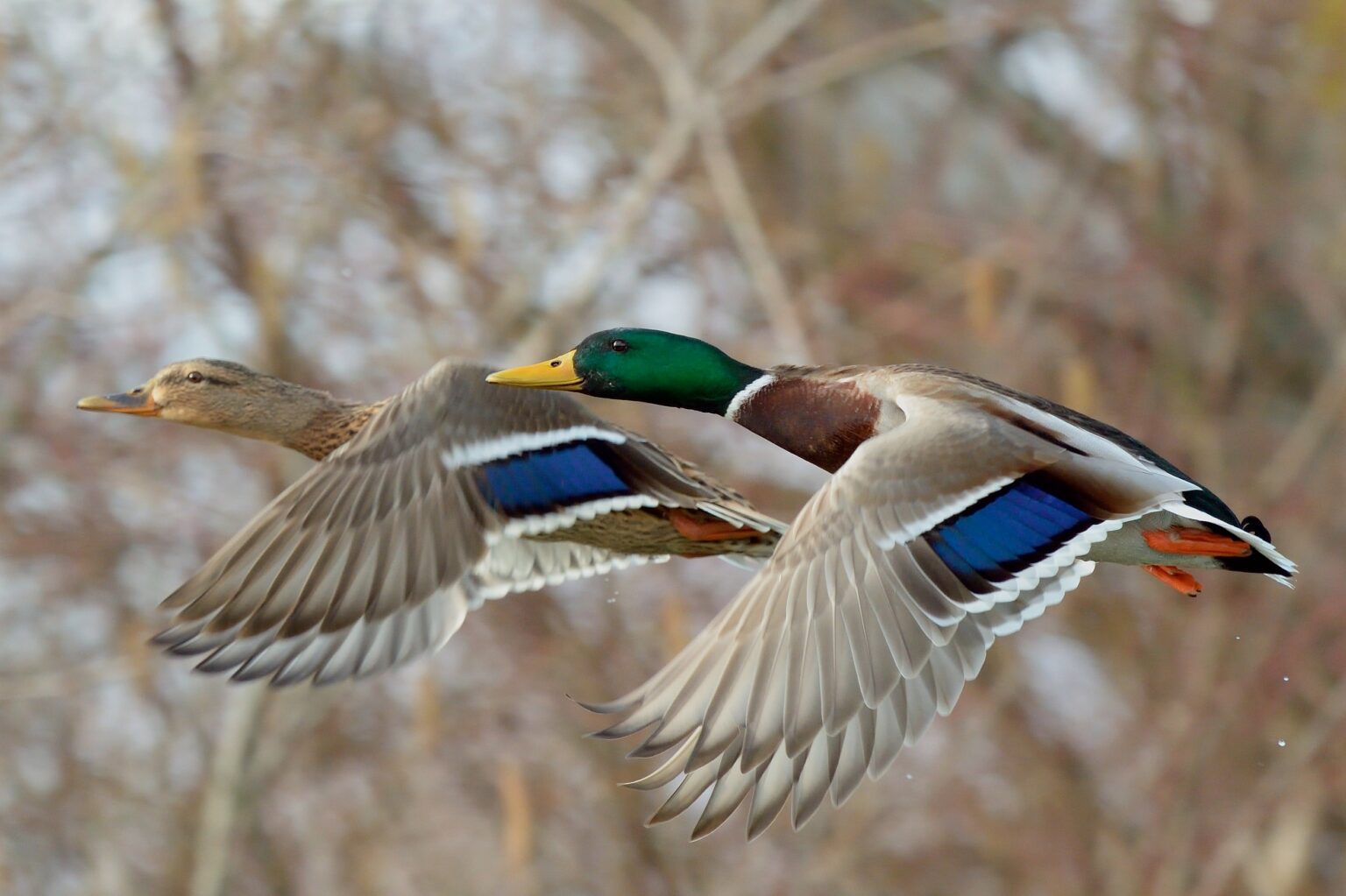
Have you ever wondered what the year in a life of a mallard looks like? Recent telemetry studies with “backpack” GPS transmitters are providing a better understanding of the annual flight patterns of ducks. These tools give researchers the ability to track the courses of specific birds over long durations.
Two visualizations posted on Instagram actually use data from mallards to show where they went throughout a year. The first one comes from Five Oaks, a research nonprofit based in Humphrey, Arkansas. It shows a drake mallard banded at Five Oaks in November 2024. The bird then travels south to the Tensas Basin before its spring migration north. On the way it stops at wetland complexes in Illinois and Minnesota before summering in the Prairie Pothole region of Canada. The following October, the duck moves south to the area where it was originally banded.
The second video shows a similar visualization of a year in the life of a mallard, except this one was tracked by the Cohen Wildlife Lab, which is based in Tennessee. “As we get ready for our first push of mallards, we look back to this drake that traveled over 3,500 miles in one year and was harvested in the same area it spent the previous winter,” wrote the lab.
Parsing the Data
GPS backpacks aren’t perfect and likely impact duck behavior to some degree. But they are still one of the best ways to study waterfowl movement and behavior. And they’re increasing our understanding of ducks and geese.
According to Dr. Ryan Askren, the Research Center Director at Five Oaks Ag Research & Education Center, researchers banded the mallard in November before hunting season. It was part of a project to look at how ducks use bottomland forests and wetlands, and how those habitats influence their movement, survival, and hunter-harvest opportunity.
Dr. Askren says the visualizations are an important tool for increasing public awareness. “We are trying to use [GPS data] to do a better job of telling a conservation story. A lot of people, especially down here at the southern end of the flyway, don’t appreciate their whole life history and how habitat and quality wetlands play a critical role throughout a duck’s annual cycle, not just during the winter.”
Read Next: 5 Tips for DIY Duck Hunting in the Prairie Pothole Region
The duck in the Five Oaks post, for instance, uses designated National Wildlife Refuges and The Nature Conservancy properties throughout the year. “It has been pretty universal across a lot of the ducks we put transmitters on,” says Askren. “These birds are finding quality habitat in far fewer places than most people would assume, and that makes managed wetland complexes critical for providing sanctuary and the energy they need.”
All new! 1871 Club Field Trips