The Trump administration has proposed a full repeal of the Roadless Rule, which has protected 44.7 million acres of national forest from road building since 2001. If finalized, the repeal would affect 36 states and could open critical elk, mule deer, and black bear habitat to logging, mining, and industrial road construction across inventoried roadless areas.
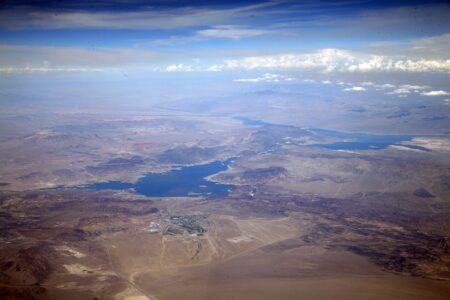
In a statement issued on August 18, Secretary of Agriculture Brooke Rollins announced the details of her long-expected plan to erase Roadless Rule protections on roughly 44.7 million acres of public land managed by the US Forest Service. Rollins’ proposed changes would fully repeal the Roadless Rule in 36 states across the country. The move comes just two months after Utah Sen. Mike Lee failed to repeal the Roadless Rule by adding a last-minute amendment to a routine wildfire preparedness bill.
“The rescission aligns with Executive Order 14192, Unleashing Prosperity Through Deregulation, to alleviate unnecessary regulatory burdens, Executive Order 14225, Immediate Expansion of American Timber Production, Executive Order 14154, Unleashing American Energy, and Executive Order 14153, Unleashing Alaska’s Extraordinary Resource Potential,” the statement reads. “Returning roadless-area decisions to forest-level land management planning provides flexibility the national rule did not.”
Roadless Rule Origins
The Forest Service created the Roadless Area Conservation Rule in 2001 under the leadership of then-USFS Chief Mike Dombeck. Dombeck tells Field & Stream that 90 percent of the 1.6 million comments submitted in the lead up to the rule supported Roadless Area protections. “We worked hard to make sure that we could maintain the management capabilities that were needed within these areas to deal with things like wildfire, insect outbreak, and disease,” he says, “while still providing adequate recreation and prior existing rights in these areas.”
According to Dombeck, the rule was an economic necessity. “We just couldn’t afford the road system that we already had,” he says. “And then we had an $8.6 billion maintenance backlog, which amounts to nothing more than a taxpayer liability.” Today, the USFS deferred maintenance backlog has ballooned to roughly $10 billion dollars, according to Taxpayers for Common Sense.
Roadless, by the Numbers
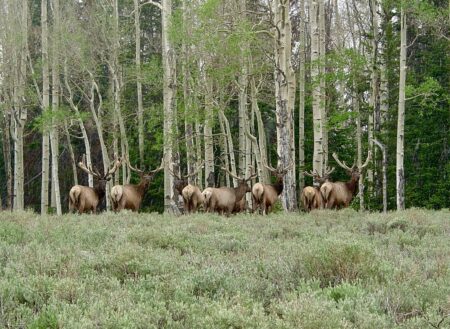
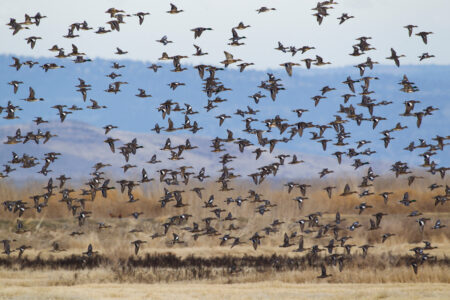
A recent report from onX Maps analyzed habitat and migration corridors for three game species and found that Roadless Rule Areas provide critical intact habitat for each. “For example,” the report states, “in Wyoming, 99% of Roadless Rule acres serve as elk habitat; in New Hampshire, 97% serve as black bear habitat, and in Arizona, 96% serve as mule deer habitat.”
The report also points out that inventoried roadless areas allow motorized access. That includes 7,201 miles of full-size motorized trails/primitive roads, 2,494 miles of ATV and side-by-side trails, 2,167 miles of motorized singletrack trails, and 1,295 miles of snowmobile trails. “Unlike Wilderness Areas, ‘roadless’ areas remain open to many forms of motorized and mechanized use,” onX says. “If the Rule is revised or rescinded, new forest management plans could open these areas to road building for industrial uses such as logging and mining activities.”
Trout Unlimited Roadless Report
A similar report from Trout Unlimited found that Roadless Areas provide the best public-land hunting and fishing opportunities found anywhere in the world. TU’s Roadless Report highlights the numerous negative impacts that road construction has on fish habitat. Those include heavy stream-bed sedimentation, habitat fragmentation from culverts, and accelerated runoff.
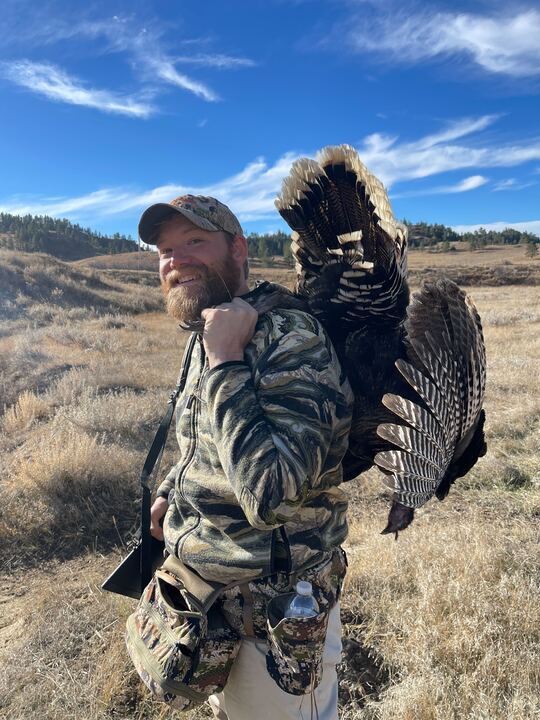
The TU report also shows that Roadless Areas provide quiet backcountry access that results in 10 times higher hunter success rates for elk than in similar public lands without Roadless protections. And it says that the type of accelerated road building activity that Rollins’ Roadless Rule repeal would usher in directly threatens that delicate balance.
Of particular concern to Trout Unlimited are the impacts that Rollins’ proposed repeal would have on the Tongass National Forest in southeast Alaska. This 16.9-million acre forest has roughly 9.3 million acres of inventoried Roadless Areas that make it one of the planet’s last great strongholds for salmon and sea-run trout.
“More than 70% of Chinook, coho, pink, and chum salmon, and over 65% of sockeye salmon and steelhead in the Tongass are found in areas without roads,” the report states. “And the forest produces more wild salmon than all other national forests combined.” Some say the Tongass’ Roadless acreage, with its vast stands of valuable, old-growth Sitka spruce, is the primary target of Rollins’ Roadless repeal.
Wildfire Realities
In her statement, Rollins claims that the Roadless Rule prevents the Forest Service from suppressing wildfire in backcountry areas. This has been a popular refrain from others attempting to dismantle the rule, from Utah’s Mike Lee to Wyoming House Rep. Harriet Haggeman.
But according to onX’s report, inventoried roadless areas see far less wildfire activity than the heavily roaded front country. “Analysis reveals that [just] 3% of the country’s historical wildfire ignition points over the past 50 years occurred within areas inventoried by the Roadless Rule,” the reports continues. “The Rule explicitly allows for wildfire suppression and fuel reduction, including road construction in emergency situations. Studies have also shown that 90% of all wildfires start within a half-mile of a road, likely due to increased human interaction.”
TU’s analysis of wildfire activity in Roadless Area shows similar results. “There’s absolutely no need to reverse the Roadless Rule – a policy that for 25 years has made hunting and fishing better [and] protected drinking water and threatened and endangered species,” said Chris Wood, TU’s president and CEO. Wood was an architect of the rule 25 years ago when he worked for Dombeck at USFS.
“Arguments that the 2001 Roadless Rule prevents forest health treatments in roadless areas are belied by the Forest Service’s own data. Its research demonstrates that treatments to reduce the risk of unnaturally intense fires actually occur more often in roadless areas than they do on other forested areas of the national forest system.”
Read Next: Feds Cave to Hunter Backlash After Considering Conservation Rollbacks in Prairie Potholes
Rollins’ announcement kicks off a 30-day public comment window. If you’d like to comment on the proposed Roadless Rule rollbacks, you can do so here when the 30-day window officially opens. All comments must be submitted by midnight on September 21.
The Roadless Rule has been the quiet backbone of big-game hunting on public land for more than two decades — not because it locked hunters out, but because it kept industrial development out while keeping motorized access in. Nearly 99 percent of Wyoming’s roadless acres are elk habitat. That number is not incidental. Road building fragments range, displaces animals, and invites pressure that backcountry hunters have long relied on to stay off most maps. A full repeal doesn’t just change land management policy — it changes the calculus for every public-land hunter who has ever counted on remoteness as a part of the hunt.

*WARNING - DANGER AHEAD*
THE FALL JOURNAL COMING SOON