Close Menu
  • Stories
    • Hunting
      • Big Game Hunting
        • Elk Hunting
        • Bear Hunting
      • Deer Hunting
        • Whitetail Hunting
        • Mule Deer Hunting
      • Predator Hunting
        • Bobcat Hunting
      • Small Game Hunting
      • Bird Hunting
      • Dogs
        • Hunting Dogs
        • Canine Gear & Accessories
      • Turkey Hunting
      • Waterfowl Hunting
        • Duck Hunting
    • Fishing
      • Freshwater Fishing
        • Bass Fishing
        • Catfishing
        • Trout Fishing
        • Pike & Muskie Fishing
      • Saltwater Fishing
        • Striped Bass Fishing
      • Ice Fishing
      • Fly Fishing
    • Guns
      • Ammo
        • Handguns Ammo
        • Shotguns Ammo
        • Rifles Ammo
      • Rifles
      • Handguns
      • Shotguns
    • Survival
      • Survival Food
      • Wilderness Survival
      • All Survival
    • Conservation
      • Hunting Conservation
      • Fishing Conservation
      • Public Lands & Waters
      • Wildlife Conservation
    • Cooking
      • Recipes
  • Outdoor Gear
    • Hunting
      • Big Game Hunting
      • Bird Hunting
      • Bow Hunting
        • Crossbows
        • Compound Bows
      • Boots
      • Hunting Calls & Decoys
      • Knives
      • Hunting Apparel & Accessories
      • Optics
        • Binoculars
        • Scopes and Sights
        • Rangefinders
      • Trail Cameras
      • Waterfowl Hunting
      • Turkey Hunting
    • Fishing
      • Baits, Lures, and Flies
      • Fishing Reels
      • Fishing Rods
      • Fly Fishing
    • Guns
      • Ammo
        • Shotgun Ammo
        • Rifle Ammo
        • Handgun Ammo
      • Handguns
      • Shotguns
      • Rifles
    • Camping & Outdoor Rec
      • Auto & Truck
      • Camping Gear
      • Hiking & Backpacking
    • Gift Guides
    • Cooking
      • Cooking Gear
  • Shop
    • Shop Field & Stream
      • F&S Shop
      • Hunting
      • Fishing
      • Camping & Hiking
      • Clothing
      • Footwear
      • Gear
      • Outdoor Living
      • Member Merch
      • Journals
      • Gift Cards
      • Membership Gift Card
      • Merchandise Gift Card
    • Shop Field & Stream at:
      • Tractor Supply Co.
      • Amazon
      • Moultrie
      • Yuengling
      • Old Wood Signs
      • Best Home Furnishings
      • Sugarlands Distilling Co.
      • Gokey
      • WearSPF
  • F&S TV
  • Membership
    • Subscription Plans
    • Free Membership
    • Member Login / Create an Account
    • Gift a Subscription
      • Premium Membership
      • Print Membership
Search
Facebook X (Twitter) Instagram
Join the 1871 Club to access two limited-edition Father's Day gifts · LEARN MORE
Field & Stream
  • Stories
    • Hunting
      • Big Game Hunting
        • Elk Hunting
        • Bear Hunting
      • Deer Hunting
        • Whitetail Hunting
        • Mule Deer Hunting
      • Predator Hunting
        • Bobcat Hunting
      • Small Game Hunting
      • Bird Hunting
      • Dogs
        • Hunting Dogs
        • Canine Gear & Accessories
      • Turkey Hunting
      • Waterfowl Hunting
        • Duck Hunting
    • Fishing
      • Freshwater Fishing
        • Bass Fishing
        • Catfishing
        • Trout Fishing
        • Pike & Muskie Fishing
      • Saltwater Fishing
        • Striped Bass Fishing
      • Ice Fishing
      • Fly Fishing
    • Guns
      • Ammo
        • Handguns Ammo
        • Shotguns Ammo
        • Rifles Ammo
      • Rifles
      • Handguns
      • Shotguns
    • Survival
      • Survival Food
      • Wilderness Survival
      • All Survival
    • Conservation
      • Hunting Conservation
      • Fishing Conservation
      • Public Lands & Waters
      • Wildlife Conservation
    • Cooking
      • Recipes
  • Outdoor Gear
    • Hunting
      • Big Game Hunting
      • Bird Hunting
      • Bow Hunting
        • Crossbows
        • Compound Bows
      • Boots
      • Hunting Calls & Decoys
      • Knives
      • Hunting Apparel & Accessories
      • Optics
        • Binoculars
        • Scopes and Sights
        • Rangefinders
      • Trail Cameras
      • Waterfowl Hunting
      • Turkey Hunting
    • Fishing
      • Baits, Lures, and Flies
      • Fishing Reels
      • Fishing Rods
      • Fly Fishing
    • Guns
      • Ammo
        • Shotgun Ammo
        • Rifle Ammo
        • Handgun Ammo
      • Handguns
      • Shotguns
      • Rifles
    • Camping & Outdoor Rec
      • Auto & Truck
      • Camping Gear
      • Hiking & Backpacking
    • Gift Guides
    • Cooking
      • Cooking Gear
  • Shop
    • Shop Field & Stream
      • F&S Shop
      • Hunting
      • Fishing
      • Camping & Hiking
      • Clothing
      • Footwear
      • Gear
      • Outdoor Living
      • Member Merch
      • Journals
      • Gift Cards
      • Membership Gift Card
      • Merchandise Gift Card
    • Shop Field & Stream at:
      • Tractor Supply Co.
      • Amazon
      • Moultrie
      • Yuengling
      • Old Wood Signs
      • Best Home Furnishings
      • Sugarlands Distilling Co.
      • Gokey
      • WearSPF
  • F&S TV
  • Membership
    • Subscription Plans
    • Free Membership
    • Member Login / Create an Account
    • Gift a Subscription
      • Premium Membership
      • Print Membership
JOIN THE 1871 CLUB
Join the 1871 Club Today - Spring Journal Ships in April
Field & Stream
Home / Stories / Hunting / Red Oak vs White Oak: A Complete Guide for Hunters
Hunting

Red Oak vs White Oak: A Complete Guide for Hunters

Scott BestulBy Scott BestulJanuary 23, 2026

FIELD & STREAM NEWSLETTERS

ALL F&S NEWSLETTERS

You don’t have to hunt deer for very long to realize that oak trees and the acorns they drop each fall are hugely important to deer. If fact, most hunters know that the majority oak trees fall into one of two main families: red oaks and white oaks. The question of red oak vs white oak, however, in terms of identification, which produces the tastier and more reliable crop, and which is more important to your hunting where you live is a little more complicated. At least two things can be said right off the bat though: first, both tree types provide a critical source of deer food, and second, being able to identify red and white oaks, as well as their acorns, can result in better deer hunting and more venison on your table. So, let’s start out with which is which.

Red Oak vs White Oak: Quick Identification Guide
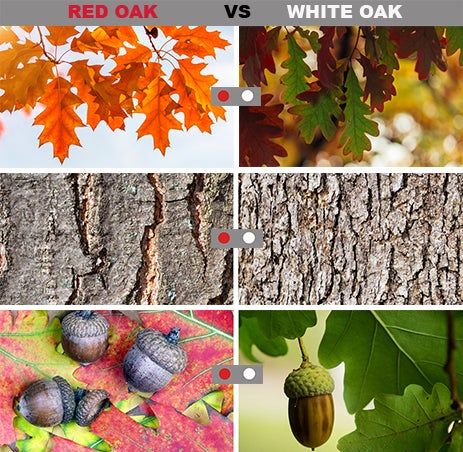
graphic showing the differences between red oak and white oak leaves, bark, and acorns.
The leaves, bark and nuts of both species. (Adobe Stock / Field & Stream)

There are three key things to look for to differentiate red oaks from white: the leaves, bark, and acorns. Red oak leaves have pointed lobes, whereas white oak leaves have rounded ones. Red Oak bark tends to be dark gray with ridges, whereas white oak, as the name implies, has white-looking bark. Red oak acorns tend to be shorter and fatter and white oak acorns tend to be elongated.

Table of Contents

  • Advanced I.D.

  • Red Oak vs White Oak Leaves

  • Bark Appearance

  • Red Oak vs White Oak Acorns

  • Tree Height and Shape

  • Which Do Deer Like Better—Red or White?

  • 6 Tips for Hunting Deer Near Red and White Oaks

Advanced Red Oak vs White Oak Identification

There are many red oak varieties, including the common pin oak, live oak, black oak, and willow oak, but the most important ones in the U.S. are the Northern red oak and the Southern red oak. As for white oaks, there are more than a dozen, including the bur oak, chestnut oak, swamp white, and post oak, but the one most people think of carries the same name as the group in general: white oak. The two families have some key differences, however, that make it fairly easy to tell a red oak from a white. Here they are.

Red Oak vs White Oak Leaves
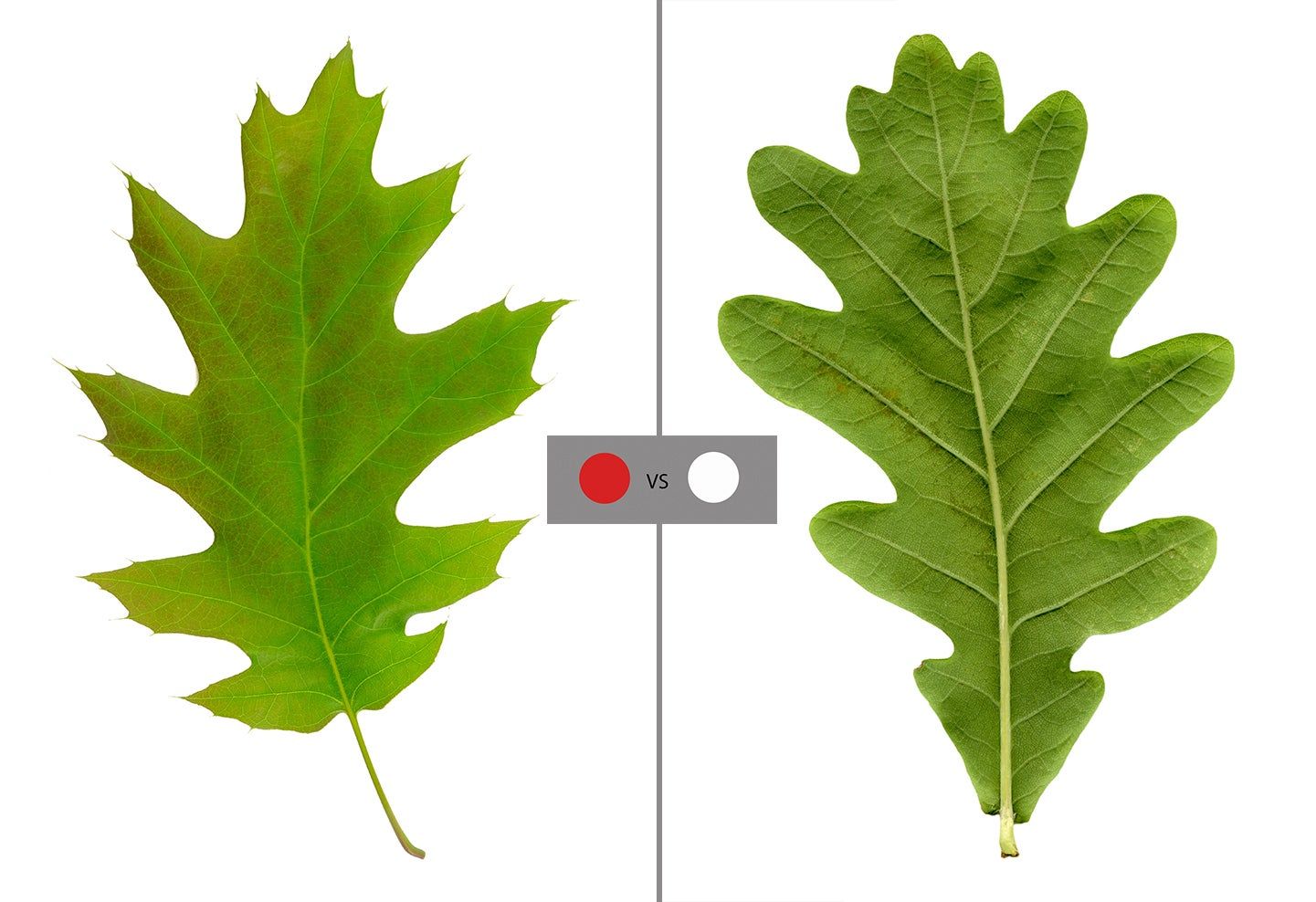
photo of red oak vs white oak leaves
One of the easiest ways to tell a red oak from a white oak is by looking at the leaves. Red oak leaves have pointed lobes and white oak leaves have rounded ones. (Adobe Stock / Field & Stream)

Leaves are a key indicator for oak family ID. Red oak leaves are almost always pointy and sharp-looking; the classic example is the pin oak, which sports leaves that taper to sharp points that appear needle-like. White oak leaves typically sport gently lobed leaves with no sharp points or edges. When the leaves change in fall, red oaks live up to their name and turn reddish-brown or russet, while white oak leaves are usually a softer shade of brown or tan, sometimes fringed in red.

Bark Appearance
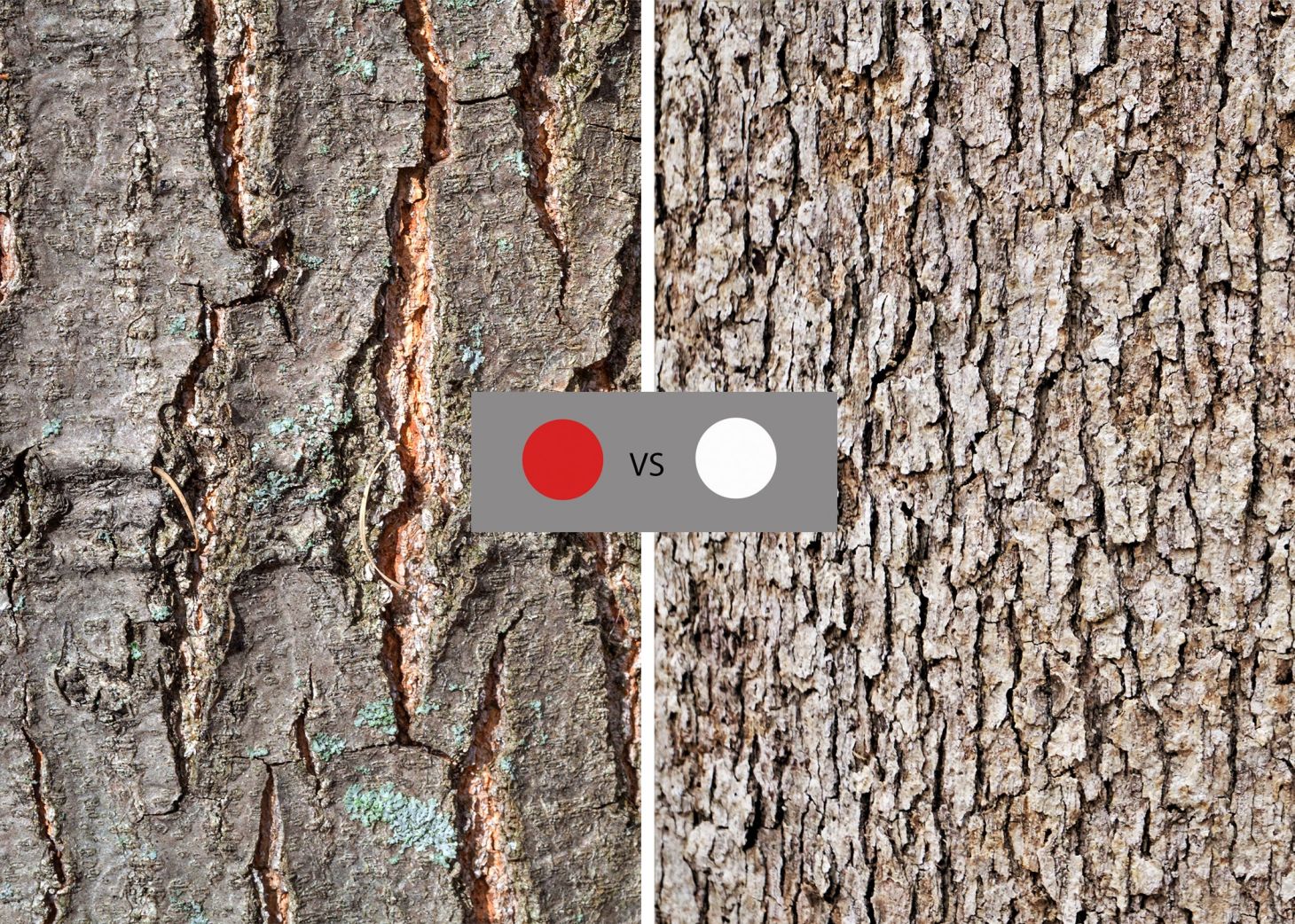
photo of red oak vs white oak bark
Red oak bark (left) is dark, appearing gray to almost ball, often revealing a reddish underbark. It’s alos fairly smooth and appears scaly. White oak bark (right) is light gray to almost white and tighly furrowed, appearing almost flakey. (Adobe Stock / Field & Stream)

The bark of red oaks tend to be gray to almost black, often somewhat smooth with scaly ridges, and commonly showing a reddish inner bark. White oaks tend to have paler bark, which, in a nod to their name, can appear almost white on some species. The bark is also rougher and can appear deeply furrowed; the bur oak, very common in the Midwest and on the prairie states, sports a thick bark with sharp crevices that make it look like the tree is wearing a fur coat. This bark is so dense it has allowed the bur oak to survive forest and prairie fires that killed other trees.

Red Oak vs White Oak Acorns
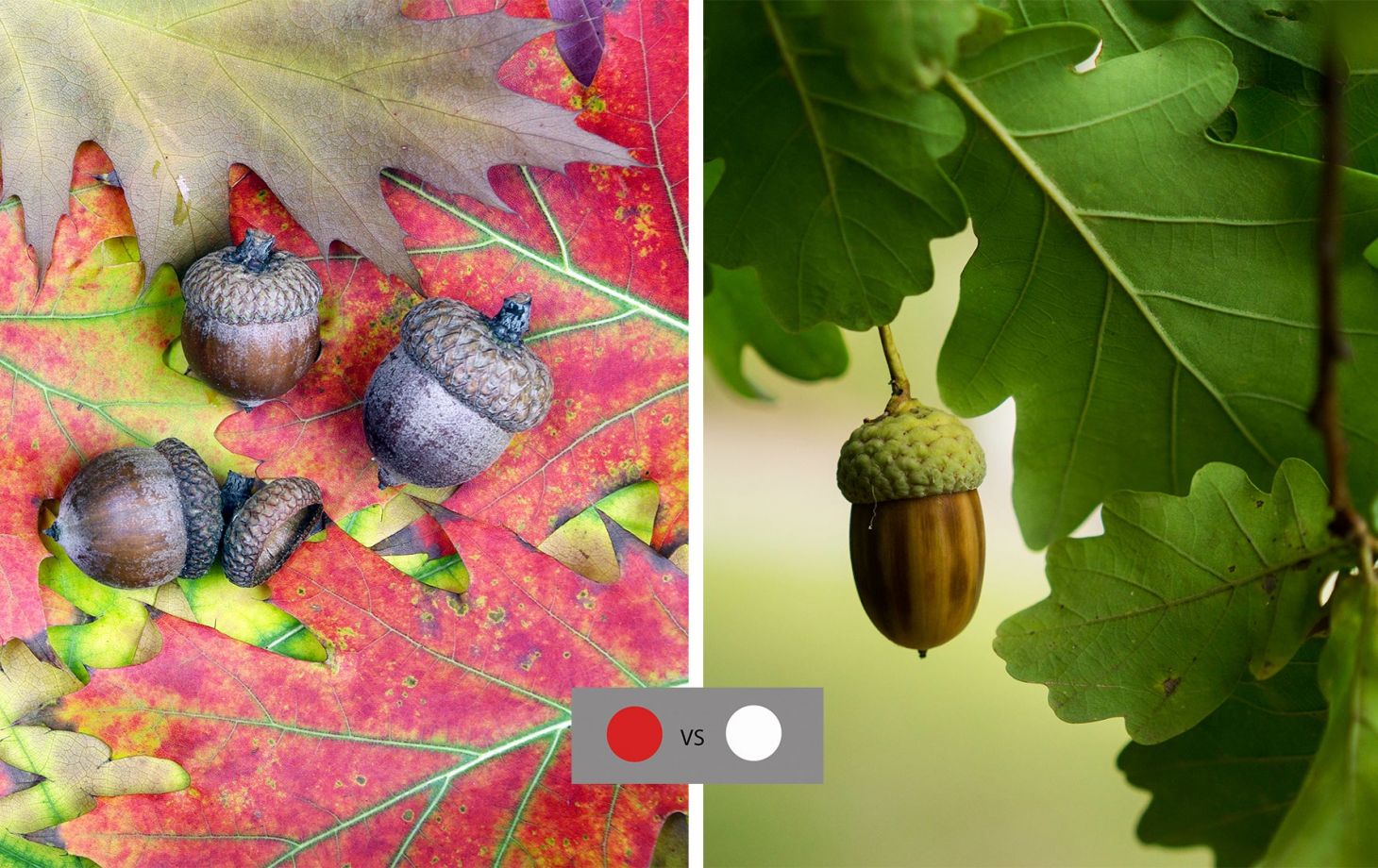
photo. of red oaks vs white oak acorns
Red oak acorns (left) tend to be rounder in shape compared to the typically more elongated white oak acorn. (Adobe Stock / Field & Stream)

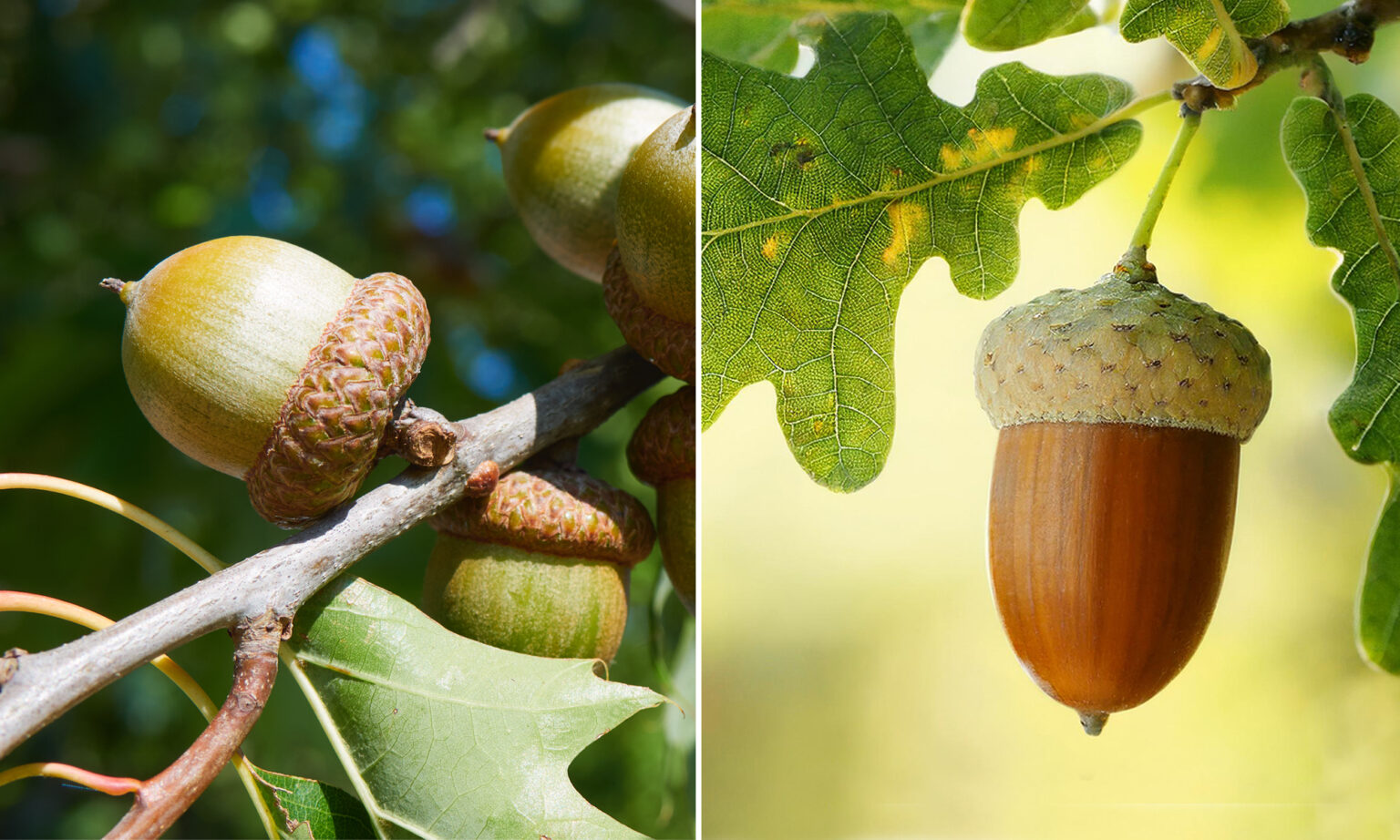
There are no hard and fast rules for red oak vs white oak when it comes to acorn size and shape, as both comes in a variety of forms. That said, generally speaking, red oak acorns tend to be shorter and fatter, while white oak acorns tend to be longer and skinnier.

Tree Height and Shape

The height and shape are red oak vs white oak trees is the final tipoff. White oaks are usually slow-growing trees, and they tend to grow more branches and consequently appear rounder or more igloo-shaped. Red oaks grow more quickly (up to 30 inches annually, with 24-inch an average rate) and average 65 to 85 feet in height. White oaks grow much more slowly (12-24-inches per year average) and are typically shorter than reds. However they’re generally longer-lived than reds.

Which Do Deer Like Better—Red or White?

Acorns, the nuts produced by both families of oak trees, are a highly preferred food for many wildlife species, but especially for deer. Acorns are higher in protein and fat than corn, which many hunters recognize as a major whitetail food in ag country, and as a result, whitetails are known to abandon ag crops and even your best food plots to feast on acorns as soon as they start dropping in earnest. But acorns are even more critical in big-woods environments, where other food sources may be scarce.

White oak acorns contain less tannin and therefore taste better to deer that reds. But that doesn’t mean that a white oak grove will necessarily hunt better than a red oak grove any given fall. The acorn crop from both species is highly unpredictable and often unreliable. White oak acorns take only 3 months to mature, so a white oak is capable of producing a crop every fall. However, environmental factors (a frost during an oak’s “flowering” season in spring, drought in the summer, or an insect infestation) can wipe out an entire season’s production—and white oaks tend to be particularly inconsistent producers.
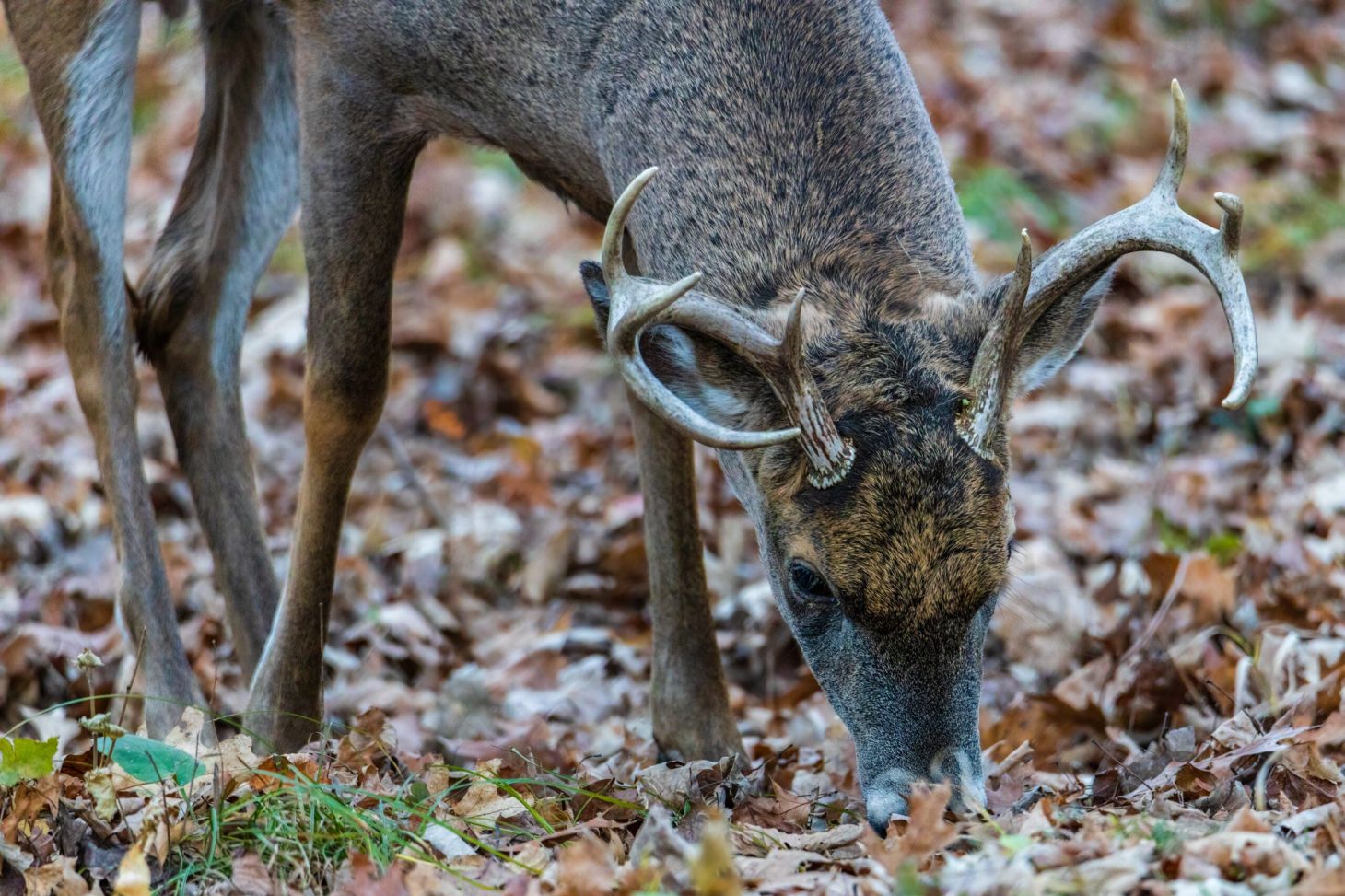
photo of whitetail deer eating acorns
A buck snuffles through the leaf litter to find the tastiest acorns. (Photo/Adobe Stock)

Red oak acorns take 15 months to mature, so the best one can hope for is a crop every other fall. But the same external factors that can wipe out a white oak crop can affect reds as well. While richer in tannin than their white oak cousins, red oak acorns are still high on the list of foods for deer, especially in habitats where other food sources might be less abundant. I’ve hunted Wisconsin’s big woods for years, and by far the best deer seasons (and bear hunts) I’ve experienced have coincided with good acorn crops. And because red oaks are more prevalent than whites and yield more consistent crops, I never turn up my nose at a red oak.

Find the Best Red and White Oak Trees

Outside forces, like weather, are only one factor influencing acorn production; some trees are just better at pumping out nuts than other, seemingly healthy, oaks. In a study conducted in Tennessee, researchers recorded acorn crops for over 100 white oak trees over a 10-year period. They divided trees into four categories according to production; excellent, good, moderate, and poor. After the study period ended, they crunched the numbers and found that while trees in the “excellent” and “good” categories comprised only 39 percent of the study trees, they accounted for nearly 70 percent of the acorn crop over that decade. In short, some oaks just don’t have the right stuff to drop many acorns, and some produce no nuts at all, even when conditions are perfect.

If you pay attention, you can often figure out which trees are the best producers in your area, which can be a big boost to your hunting prospects. While I don’t have numbers from a scientific study to back me up, I can tell you from years of hunting acorn crops across the Midwest (and especially in the Big Woods, where acorns are a huge deal), that the acorns from some trees simply taste better to deer. I’ve seen the ground carpeted by acorns under one oak and noted almost zero sign of feeding deer. Then I’ll walk to another oak nearby and practically roll on mounds of droppings left by hungry whitetails. My logger buddy Tom Vandoorn has shown me that many uneaten acorns are diseased or wormy, but sometimes apparently healthy nuts just must not taste that good to deer. So it pays to be able to recognize the trees that pump out acorns deer love (more on this below).

6 Tips for Hunting Deer Near Red and White Oaks

photo of tree-stand hunter in red oak tree
A bowhunter takes aim from high in a red oak tree. (Photo/Redav via Adobe Stock)

1. Get to Know Your Oaks

For starters, learn the dominant oak species in your hunting area(s). There are literally dozens of oak species, and if you travel to hunt, you can find oaks that don’t even exist on your home stomping grounds. Biologists, foresters, and local hunters can clue you in on the species most desired by deer locally.

2. Keep and Eye on Acorns

You can often forecast the season’s acorn crop weeks and sometimes months in advance. Pay attention to spring weather, when oaks (and other trees) first flower and start developing fruit. If there’s a snow or hard frost at this critical time, any possible acorn crop in the fall could be compromised. Conversely, if conditions are ideal, you can visit oak stands and see how things are shaping up. Last spring I used an afternoon walk in mid-May to visit a big stand of white oaks on public land and glassed the tops of trees to see a bumper acorn crop forming. This “scouting” process can be replicated at any time of the preseason.

3. Read the Sign

Finding a bunch of acorns lying on the ground in an oak stand might mean good hunting, but it can also signify a tree that drops poor-tasting nuts. Some of the best oaks I’ve hunted had almost zero acorns on the ground, because deer (and bear, and squirrels, etc) were scarfing them up as soon as they dropped. The tip-off to a tree like this is the ancillary sign nearby; look for droppings, rubs, scrapes, and kicked up leaves and grass left by feeding deer. Some of the best early-season buck sign I’ve found has been near mature oaks dropping acorns, very few of which lasted very long on the ground.

4. Shift from White to Red

White oaks get all the ink, but only a fool ignores a good red oak acorn crop. While deer may swarm to those white oaks, they’ll turn their attention immediately to reds as soon as the white oak crop is gone (which is typically pretty quickly, since whites drop early and so many species target them). I view the white oak acorn crop as an early-season opportunity, while the reds are there for the rut and late season.

5. ID the Duds
acorns lying on forest floor
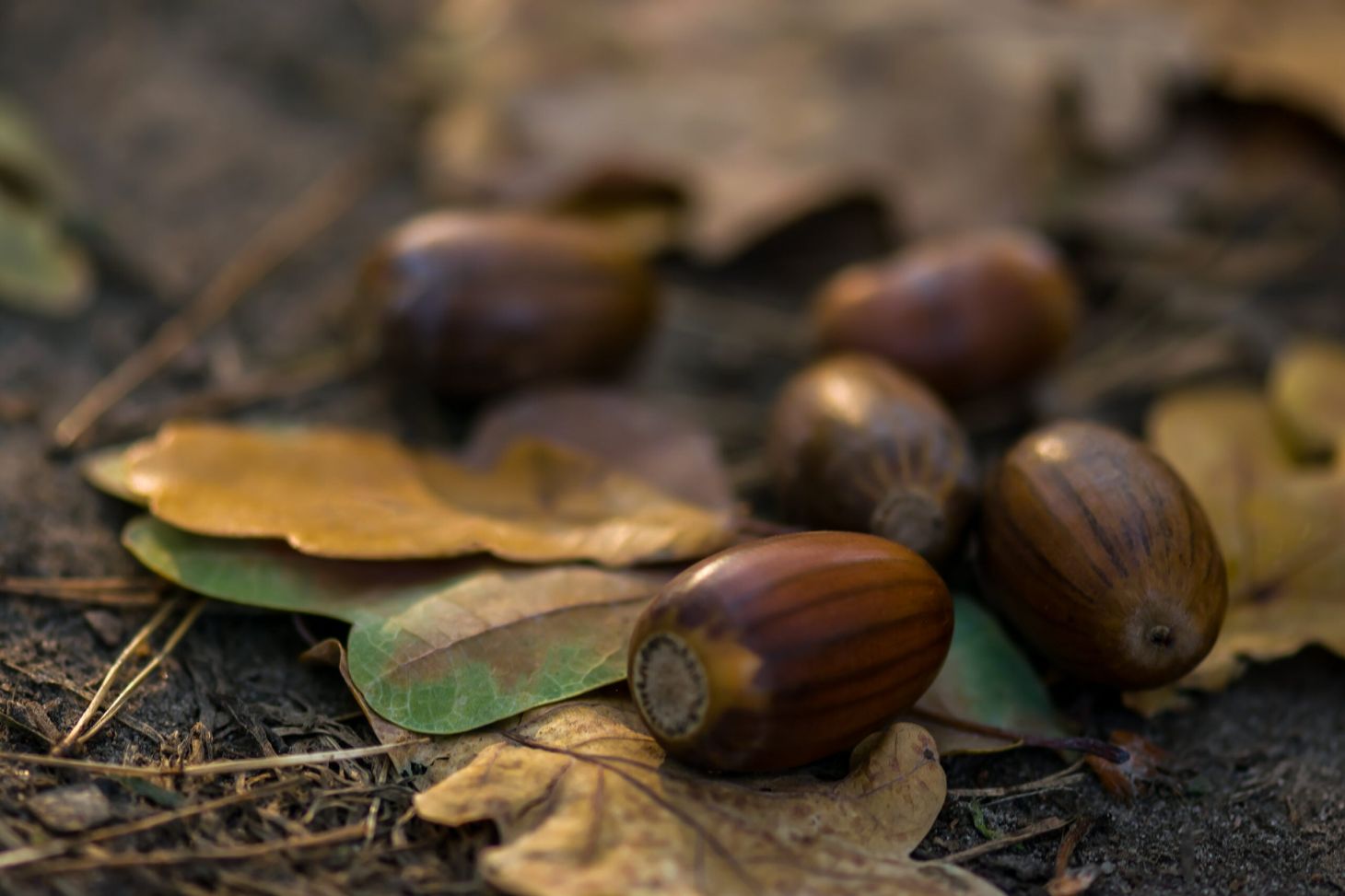
Acorns that drop without caps tend to have fine, firm flesh. (Photo/Valeriia via Adobe Stock)

One of the best tips I ever received on acorns was from my logger buddy Tom Vandoorn, who taught me that acorns on the ground that still have their caps on are almost always wormy. Like almost everything in Nature, this isn’t true 100 percent of the time, but it’s consistent enough to be considered a safe bet. So, if you see a pile of capped acorns carpeting the ground, don’t spend a lot of time hunting them; instead, focus on acorns without caps, which usually have firm, unspoiled flesh.

6. Mark the Best Trees

Pay attention to the prime producers. As noted in above, sometimes only a handful of trees produce the majority of the season’s acorn crop, and those superior trees are going to be very good for a very long time. So commit them to memory or, better yet, mark them on hunting apps so you can walk to them immediately as you hunt and scout.

content_hunting,content_stories
Field & Stream 1871 Club

THE 1871 CLUB

The best outdoor stories the way they were meant to be read: in print. 160+ pages. Coffee table-quality. 2 issues per year.

Club Magazines and Hat
JOIN THE CLUB

Recommended Products

Scott Bestul

    Trained as a high school English teacher and coach, Scott Bestul left that lucrative field to pursue another—as a full-time freelance writer in 1990. He sold his first story to Field & Stream a few years later and has been contributing to the brand ever since. Highlights Education Bestul graduated from Winona State University in 1985, with a B.S. in English (writing emphasis) and a coaching certificate. Experience Bestul has been the F&S whitetails columnist for more than a decade and has written dozens of articles and contributed to many feature packages since joining the brand. Additionally, he’s contributed to many national and regional outdoor magazines and newspapers. Bestul paired with F&S Executive Editor, Dave Hurteau, to write the The Total Deer Hunter Manual and The Total Bowhunting Manual. Bestul also co-authored The Last River Rat with Wisconsin resident Kenny Salwey in 2001. He was awarded the Quality Deer Management Association’s “Signpost Communicator of the Year” in 2013, and has given seminars at deer expos and sportsman’s shows across the country. Bestul will enjoy his 50th deer season this fall, and has been turkey hunting since the 1980s. He’s been an avid upland hunter and fisherman since boyhood. F&S Lightning Round Favorite Place to Fish: Driftless region trout streams in Minnesota, Wisconsin, and Iowa,Favorite Critter to Hunt: Whitetail deer in the woods behind his home,Bucket List Adventure: Float trip for archery moose in Alaska or the Yukon,Most Prized Piece of Gear: Recurve bow I helped build,All-Time Favorite F&S Story: “The Quicksand” by Bill Heavey Notable Work

    Related Posts

    Bowhunter in tree stand shooting Bear Archery compound bow

    The Best Cyber Monday Hunting Deals, According to Our Experts

    March 11, 2026
    Cabela-s Cyber Monday Deals

    The Best Cabela’s Cyber Monday Deals—Up to 53% Off

    March 11, 2026

    The 35 Best Deals on Hunting Gear at the Cabela’s Black Friday Sale

    March 11, 2026

    What’s Your 2025 Outdoor Resolution?

    February 25, 2026
    Leave A Reply Cancel Reply

    1871 CLUB
    Field & Stream 1871 Club

    JOIN THE CLUB

    Spoil your dad with a gift of a Field & Stream Membership, then go the extra mile with our exclusive Father's Day add ons.

    Father's Day Gifts
    JOIN THE CLUB TODAY

    NEWSLETTERS

    NEWSLETTERS

    Weekly recaps of the latest outdoor news, hunting and fishing tips - plus exclusive offers, giveaways and more!

    Field & Stream Newsletter Whitetail 365 The Strike Zone The Strike Zone
    SIGN UP
    F&S PICKS
    An ATV rider on public lands in the West. Conservation

    Trump Orders More Off-Road Vehicle Use on America’s Public Lands

    Federal’s new 6.5 Creedmoor +PEAK standing on a scope turret. Rifle Ammo

    Ammo Review: Federal’s New 6.5 Creedmoor +PEAK Is the Next Step in a Rifle Cartridge Revolution

    Knives

    The Best Early Prime Day Knife Deals—Starting at Just $11

    Weekly recaps of the latest outdoor news, hunting and fishing tips - plus exclusive offers, giveaways and more!

    SIGN UP
    Instagram Facebook-f X-twitter Tiktok Youtube
    Shopping
    • Military & First Responders Discount
    • Shipping
    • Returns
    Company
    • About Us
    • FAQs
    • Contact Us
    Legal
    • Affiliate Disclosure
    • Privacy Policy
    • Terms of Service
    • F&S Music Fest Refund Info
    • Privacy and cookie settings
    Partners
    • Nashville Race Weekend Sweepstakes
    • Amazon
    • Best Home Furnishings
    • F&S x Gokey Collection
    • Moultrie
    • Old Wood Signs
    • Sugarlands Distilling Co.
    • Tractor Supply Co.
    • Yuengling
    • WearSPF
    • Whiskey JYPSI
    • Field & Stream Lodge Co.
    Disclaimers

    Articles may contain affiliate links that enable us to share in the revenue of any purchases made.
    Registration on or use of this site constitutes acceptance of our Terms of Service.

    © 2026 Field & Stream All rights reserved.

    • Sitemap

    Type above and press Enter to search. Press Esc to cancel.