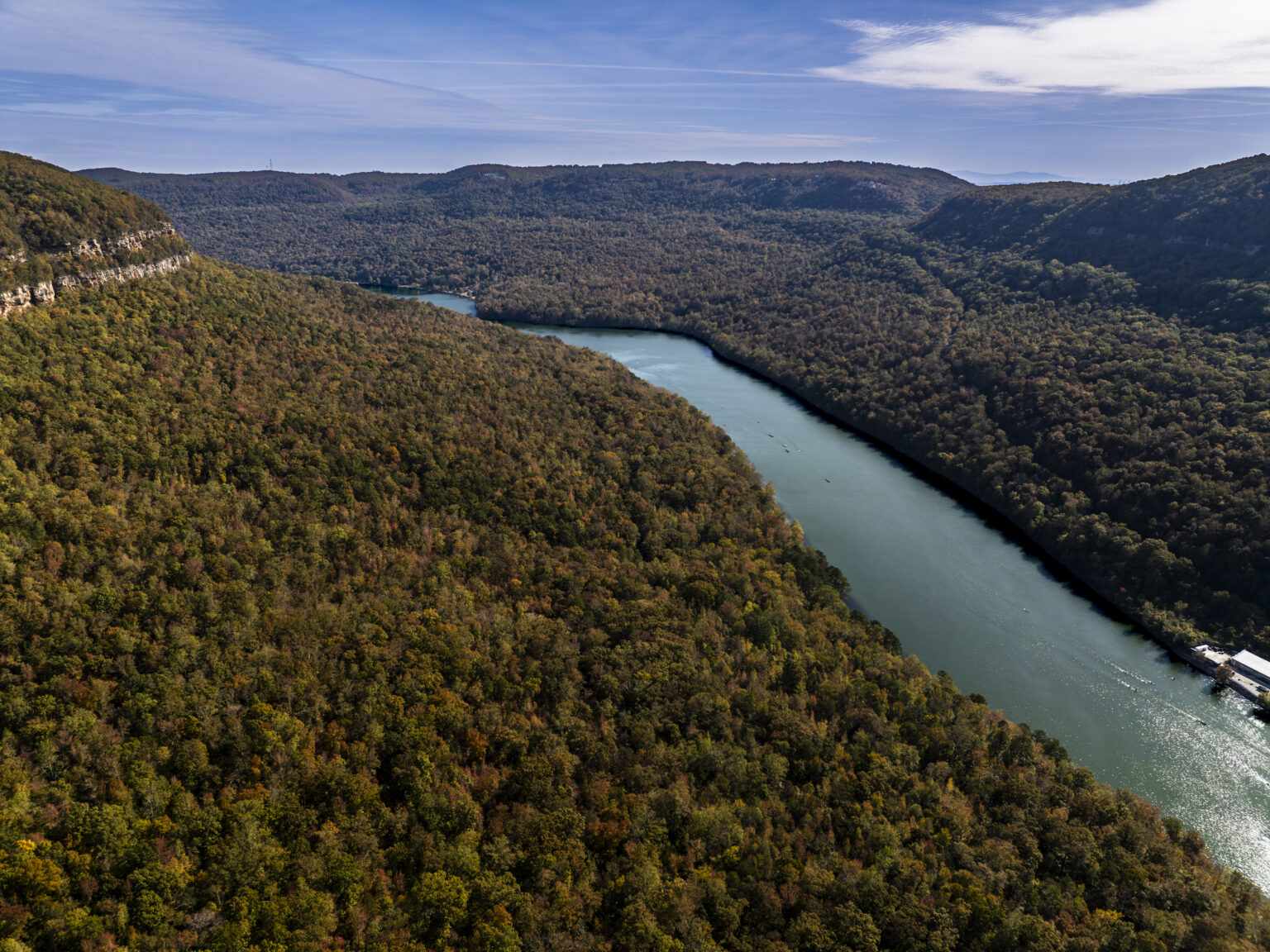
The Chattajack 31 is a 31-mile paddle race through the Tennessee River Gorge every October, drawing nearly 1,000 competitors in canoes, kayaks, and stand-up paddleboards. The gorge itself is a serious hunting and fishing destination, surrounded by 24,000 acres of public land known for trophy whitetails and productive bass and catfish water.
Just west of Chattanooga, the Tennessee River carves a 27-mile course through the Cumberland Plateau known as the Tennessee River Gorge. Often called the “Grand Canyon of the South,” this winding gorge is one of the most biodiverse areas in the state. The river itself is a hotspot for catfish and bass anglers. And because it’s surrounded by thousands of acres of protected public land, it draws whitetail deer and turkey hunters from all over the region.
In fact, the 24,000-acre Prentice-Cooper Wildlife Management Area, which borders the gorge to the south and the east, is known for producing big bucks in the 160-to-170-inch range. As recently as 2023, a public-land hunter killed an 18-point non-typical whitetail in the Prentice-Cooper, according to the Tennessee Wildlife Resource Agency.
Beyond hunting and fishing, the Tennessee River Gorge draws visitors from all over the country for its rock climbing, paddling, and scenic hiking. And every October, there’s a 31-mile paddle race through the gorge called the Chattajack 31.
Beginning in downtown Chattanooga and ending at the Tennessee’s confluence with the Nickajack Lake, the race hosts close to 1,000 paddlers every year, using everything from traditional canoes to stand-up paddle boards.
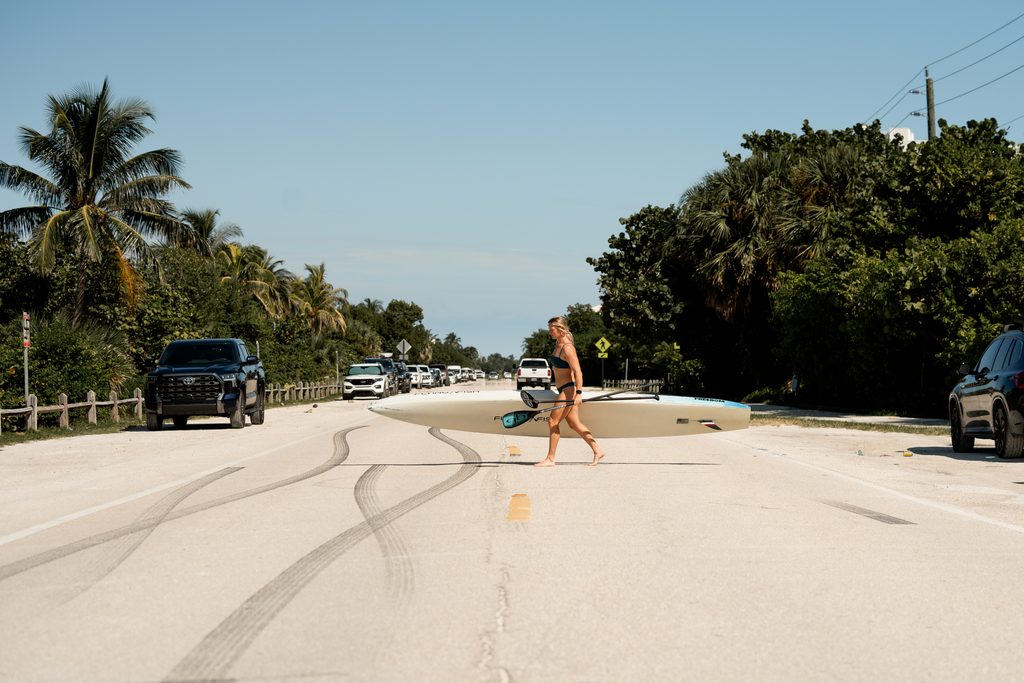
We caught up with last year’s winner of the stand-up paddleboard division, a personal trainer from Miami, Florida named Whitney Stephenson, to find out what it takes to win the race, and how the gorge’s protected landscape influences the experience.
Field & Stream: You have a background as a competitive swimmer and CrossFit athlete. How did you get pulled into the world of long-distance stand-up paddleboarding?
Whitney Stephenson: I grew up in California, where nature is built into everyday life—you’re always hiking, hitting the river, spending time in the ocean, or skiing. When I moved to Florida, I wanted to connect with nature, but I didn’t really understand the natural landscape yet. I found a local Tuesday-night paddle race series. It checked every box for me. I got immersed in the community, and eventually, the core group of local paddlers invited me to enter the Chattajack 31 in Chattanooga, Tennessee.
F&S: What is the race-day environment like?
WS: You have over 800 participants lining the river from one shore all the way to the next. There are canoes, kayaks, and paddleboards everywhere. It’s a rolling mass start, so everyone is creeping forward together in the dark. Once the sun starts waking up, you can hear distant gunfire from the opening day of the youth deer season in the surrounding woods. It’s pretty cool.
F&S: A mass start with 800 boats and boards sounds chaotic. What’s your strategy when the horn blows?
WS: It’s a complete mad dash. Everyone is paddling as fast as they can to get to the front. You want to get yourself out of the heavy wake created by hundreds of paddles and hulls. When the water gets that roughed up, it feels like navigating rapids. Getting out front early lets you settle into your own rhythm in calmer water.

F&S: The Chattajack has a strong conservation connection. How does that impact the race?
WS: The race supports and honors the Tennessee River Gorge Trust. What I love about their mission is that it isn’t conservation in a “don’t touch this” kind of way. They’re focused on keeping the resource wild and healthy so people can get out and use it. We’ve all seen sporting events where the aftermath is atrocious—trash everywhere, completely ruined environments. But this race is backed by a community that ensures that the river stays pristine, so we can come back and do it again year after year.
F&S: As an athlete sharing the water with hunters and boaters, how do you see the paddle and traditional sportsman communities intersecting to protect wild spaces?
WS: We have much more in common than people realize. Whether someone is hunting, fishing, boating, or paddling, we are all using the same resource in different expressions. Without a healthy ecosystem, none of us could enjoy it. Conservation shouldn’t mean putting up a fence; it is about protecting a place so people can continue to responsibly experience it.
F&S: Take us into the final miles of your victory last year. What does it take to cross the finish line first?
WS: In the last five miles, the river opens up and the water starts to feel heavy. I was neck-and-neck with another racer, so I knew it was time to put my head down and go to work. I sprinted as hard as I could for five straight miles without stopping. When I crossed the finish, line I was completely spent, only to look over and see my friends paddling right next to me in a canoe, screaming that I had won.
F&S: What are your expectations as you head back to the gorge this year?
WS: It will be another chase for the top of the podium. Going back as the returning champion will bring extra pressure that I didn’t have last year. But I’m ready to get back on the water and defend the title.
The Tennessee River Gorge is the kind of place that proves public land does more than one thing well. The same protected acres that push out 160-class bucks and hold catfish all winter also draw competitive paddlers from across the country every fall. Whitney Stephenson’s account of hearing distant rifle shots from the youth deer opener while racing at dawn captures something Field & Stream readers understand instinctively: wild land holds multiple worlds at once, and the people who use it well tend to see all of them.
All new! 1871 Club Field Trips